Menu & categories

Yogurt

Creamy dairy product with live cultures – versatile for sweet and savory dishes.

Wiki about yogurt Nutri-Score A Vegan No Gluten-free Yes Lactose-free No Nut-free Yes
NUTRITION / 100 g
61 kcal 3.5 g Protein 4.7 g Kohlenhydrate 3.3 g Fett

Introduction

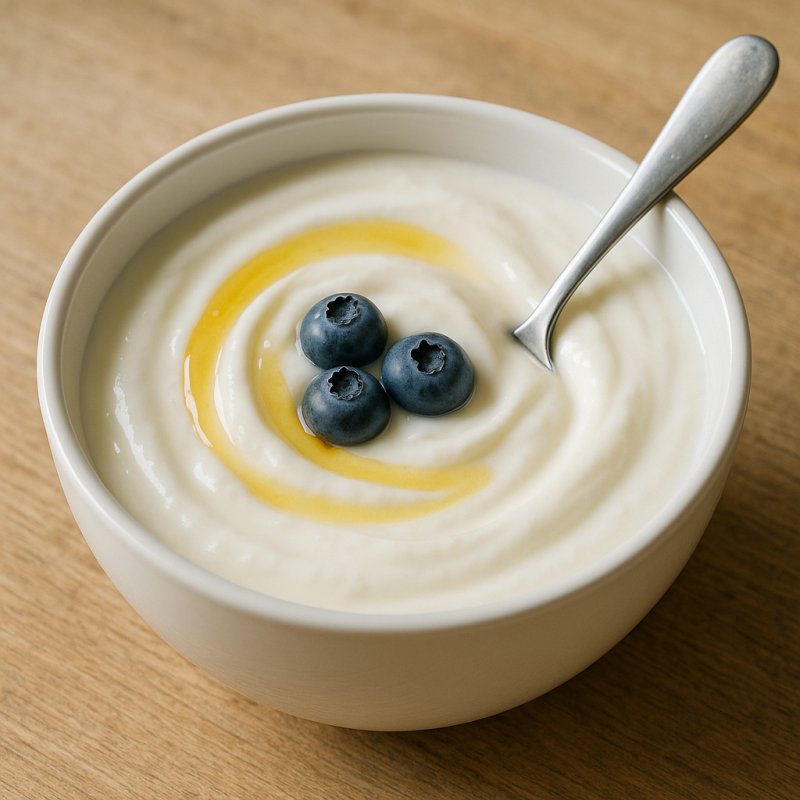
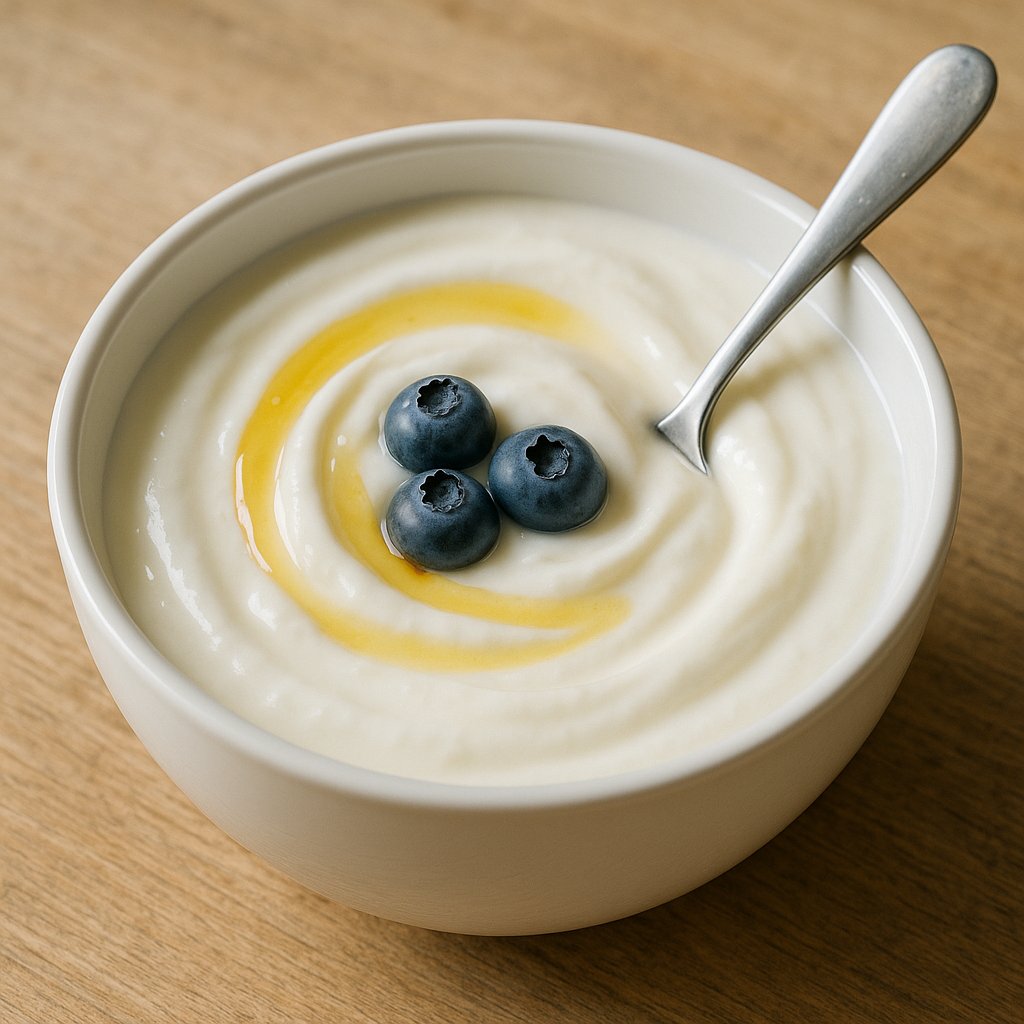
Cup of yogurt with fresh fruit
I have a long, slightly obsessive relationship with yogurt, and not only because it accompanies my coffee in the morning, but because it is a food that can tell so many stories. I still remember a market visit when a producer explained to me with shining eyes how the texture of his yogurt depends on how the cows are fed. It sounded almost sentimental, but I believe it was true.

For me yogurt is more than a cup in the fridge. It is a versatile all-rounder that can be both sweet and savory, that brings creaminess to dressings and can act as a substitute for fattier ingredients. A colleague of mine once amazed everyone effortlessly when he whipped up a dip from Greek yogurt and a few herbs that even convinced grumpy gourmets. I love those little everyday triumphs.

I'm fascinated by how many variants there are: from set natural yogurt to creamy yogurt to plant-based alternatives made from almonds or oats. Each type has its place in my kitchen. I like trying new combinations, sometimes with honey and walnuts, other times with cucumber, dill and lemon juice.

When I buy yogurt, I pay attention to a few simple things that make a difference:

  • The ingredient list should be short and understandable.
  • For savory dishes I prefer set natural yogurt.
  • For desserts I like to choose creamier varieties or Greek yogurt.
  • I use plant-based alternatives in case of lactose intolerance or out of curiosity.
  • Homemade yogurt is worth it if you have time and a calm patience.
Yogurt for me is a unifying element at the table: it comforts, refines and surprises. I like how a simple spoonful can change flavor and texture, and I enjoy the small aha moments when friends try new combinations and smile in disbelief. That keeps the love for this modest but generous food fresh.

Availability & types


Availability and types of yogurt

Yogurt is a very widespread food and is available almost everywhere. The idea of preserving and refining milk originally comes from regions where people have long practiced animal husbandry, for example Central Asia, the Near East and southeastern Europe. Back then people discovered that milk treated with certain good bacteria becomes sour and stays fresh longer. These bacteria thicken the milk and give it the typical taste.

Today yogurt is produced where milk is produced: in Europe, North and South America, Asia, Australia and also in many regions of Africa. In supermarkets you find products from large dairies, at weekly markets often artisanal yogurts from farms. Some yogurts come from countries known for particular varieties, for example:

  • Greek yogurt – very thick because a large part of the whey (the clear liquid) has been drained off.
  • Skyr – from Iceland, similar to Greek yogurt but often even firmer.
  • Labneh – from the Near East, a very firm, spreadable yogurt.
  • Set or stirred yogurt – with set yogurt the milk solidifies directly in the cup; stirred yogurt is mixed after setting and is airier.
The variety is large. You will find yogurts from different kinds of milk:

  • Cow's milk yogurt – the most common.
  • Goat's or sheep's milk yogurt – often more intense in flavor.
  • Plant-based yogurts – from soy, oat, coconut or almonds; for people who do not tolerate milk or who live vegan.
There are also differences in fat content and texture:

  • Full-fat – very creamy and smooth.
  • Low-fat or skimmed yogurt – lighter, sometimes a bit more runny.
  • Drinking yogurt – more liquid and meant to be drunk with a straw or in a beverage cup.
In terms of taste you can choose between natural (without additives), sweetened or with fruit (in the cup or as fruit pieces at the bottom), vanilla or with honey. There are also special variants:

  • Probiotic yogurt – contains additional live bacteria that can be good for the gut (you can imagine them as little helpers working in the gut).
  • Lactose-free yogurt – for people who do not tolerate regular milk sugar well; an enzyme has split the sugar beforehand.
  • Organic yogurt – made from milk of animals kept according to ecological rules.
Yogurt is well available in supermarkets year-round. Some special varieties or fresh farm products are more local and seasonal because they are produced directly on site. When shopping it helps to read the best-before date and the ingredient list, especially if you want to avoid sugar or prefer a specific type of milk.

Overall yogurt is a very flexible food: it can be eaten plain, mixed with muesli, used as a dressing or in warm dishes. Its forms, flavors and origins make it a popular companion for many people around the world at breakfast or as a snack.
Details & nutrition

Property Value
Unit g
Calories per 100 61
Protein per 100 3.5
Carbohydrates per 100 4.7
Sugar per 100 4.7
Fat per 100 3.3
Saturated fat per 100 2.1
Monounsaturated fat 0.9
Polyunsaturated fat 0.1
Fiber per 100 0.0
Vitamin C (mg) per 100 0.0
Vitamin D (IU) per 100 2
Calcium (mg) per 100 120
Iron (mg) per 100 0.05
Nutri-Score A
CO₂ footprint 1.4 kg CO2e/kg
Origin Germany/EU (milk)
Gluten-free Yes
Lactose-free No
Nut-free Yes
Vegan No
Note Information refers to plain cow's milk yogurt (approx. 3.5% fat). Values may vary depending on variety (low-fat, Greek, fruit yogurt).

Technical & scientific information


Yogurt is a fermented milk product produced by the metabolic activity of specific lactic acid bacteria on milk. The usual starter flora consists mainly of Streptococcus thermophilus and Lactobacillus delbrueckii subsp. bulgaricus, whose synergistic interaction during fermentation converts milk proteins and carbohydrates into acid and flavor compounds. The characteristic yogurt texture arises from the denaturation and cross-linking of milk proteins, particularly caseins, while whey proteins aggregate under heat and strengthen gel formation.

Chemical composition and nutritional values vary depending on fat level and manufacturing, but can be roughly characterized as follows:

  • Water: main constituent, typically over 80 percent.
  • Proteins: predominantly caseins and whey proteins; contents are usually between 3 and 6 g per 100 g in commercial yogurt.
  • Fat: dependent on milk type; skim yogurt contains near 0 g fat, full-fat yogurt about 3–4 g per 100 g, high-fat variants much more.
  • Carbohydrates: mainly lactose and partially its breakdown products like glucose and galactose; total content is often around 4–6 g per 100 g.
  • Minerals and vitamins: notable are calcium, phosphorus and B vitamins, present in bioavailable form.
Industrial production includes several characteristic steps:

  • Milk preparation: pasteurization to inactivate unwanted microorganisms and enzymes, followed by homogenization to reduce fat globule size.
  • Heating and cooling: a high-temperature treatment (e.g. 85–95 °C for a short time) promotes denaturation of whey proteins and improves gel structure after fermentation.
  • Inoculation: addition of defined starter cultures to cooled milk.
  • Fermentation: incubation at controlled temperature, typically 40–45 °C, until a target pH (usually around 4.5) or a certain acid level is reached.
  • Cooling and maturation: stopping fermentation by cooling; optionally cutting, stirring or draining (for Greek yogurt) to adjust texture.
Functional and technological aspects influence product quality. Exopolysaccharide-producing strains improve viscosity and reduce syneresis (water release). Stabilizers such as pectin or modified starch are used to optimize texture and shelf life. Control parameters include pH, titratable acidity, viscosity and viable cell counts of the cultures.

Health aspects are widely studied. Yogurt provides readily digestible protein, calcium and B vitamins. Fermentation partly reduces lactose content, so some people with lactose intolerance tolerate yogurt better than fresh milk. Probiotic cultures can transiently influence the gut microbiota and support digestive functions, although effects depend on product and strains. People with a milk protein allergy must avoid yogurt because allergenic milk proteins remain. Hygienic production and refrigeration are important to prevent spoilage and unwanted microbial contamination.

In summary, yogurt is a technically well-understood fermented food with variable composition and diverse textural and nutritional properties. Product quality is controlled by choice of starter cultures, heat treatment, mechanical processing and additives, while health effects depend on composition and the viability of the bacteria.

Wiki entry for: yogurt
Active now: 11 visitors of which 2 logged-in members in the last 5 minutes