Availability and types of yeast
Yeast is an amazingly practical ingredient that you can find in almost every part of the world. You can think of yeast as tiny, living bakers: they eat sugar and produce gases that make dough light and airy. The yeast we use in the kitchen originates from natural microorganisms that have been used for thousands of years in bread and beer production. People once discovered these powers by chance; today yeast is deliberately produced and sold.
Where does it come from and where is it made? Industrially produced yeast is made in factories where the microorganisms are "fed" in large vessels with nutrient solutions. Such production sites exist around the globe, especially where lots of bread or beer are consumed. That means: yeast is readily available in Europe, North and South America, Asia and other regions. For you this means: in the supermarket, at the baker's, in health food stores or online you'll always find a type that fits.
There are different kinds of yeast. Here is a simple overview to help you get the picture:
- Fresh yeast (also called „pressed yeast“): It looks like a soft, crumbly block and is often kept in the refrigerator. It has a short shelf life, tastes mild and is popular with bakers.
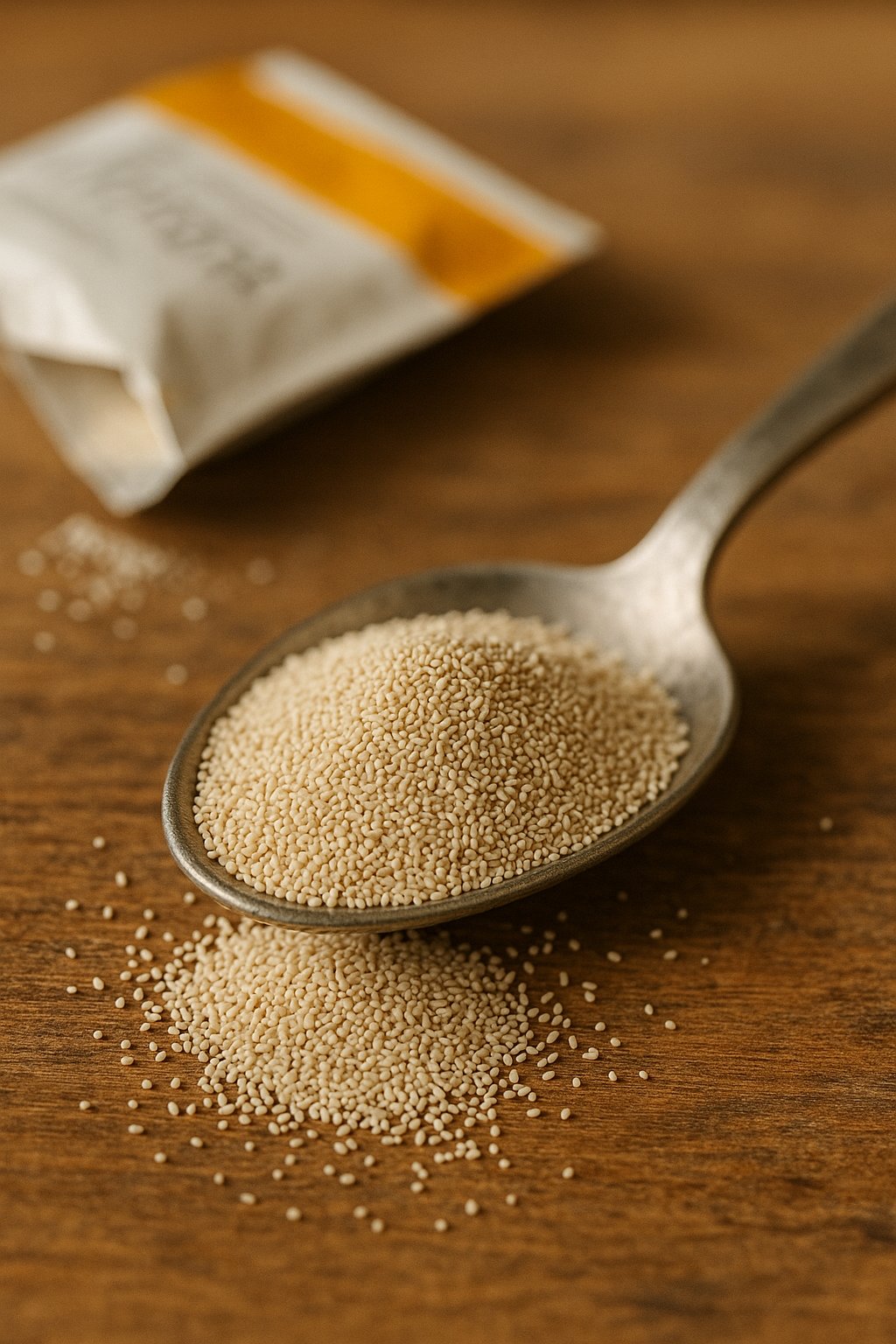
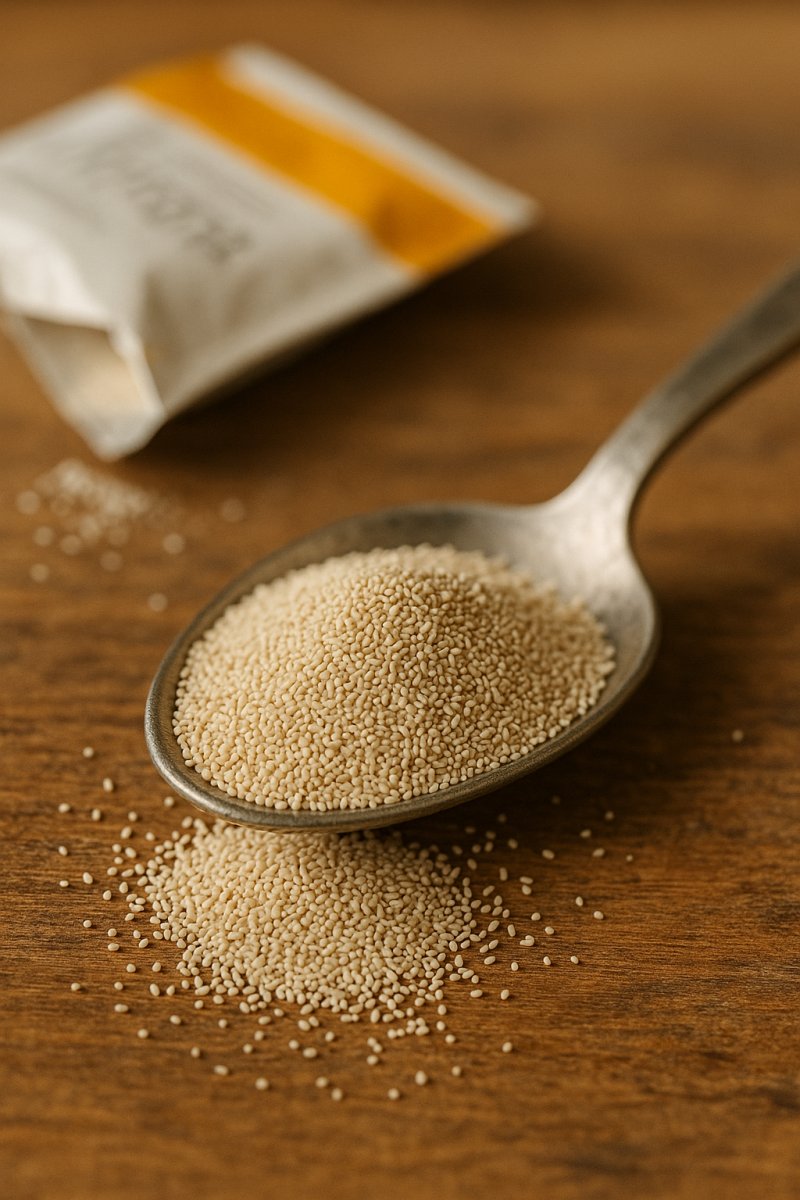
- Dry yeast: This variant is dried and more shelf-stable. It is sold in small sachets for home use. Dry yeast sometimes needs a bit of water to activate; some varieties are ready to use immediately.
- Instant yeast (fast-acting yeast): It is a form of dry yeast that can be added directly to the flour without being dissolved first. It works faster than conventional dry yeast.
- Sourdough (or „wild yeast“): This is not a single factory-made yeast strain but a mixture of wild yeasts and lactic acid bacteria that people cultivate over days or weeks. Sourdough gives bread its own slightly tangy flavor and extended freshness.
- Brewer's yeast: These yeasts are used in beer brewing. Some varieties are also dried after brewing and sold in health food stores as a so-called "baker's or brewer's yeast" ingredient.
- Nutritional yeast (deactivated yeast): This yeast is dead and can no longer leaven. It often tastes "cheesy" and is used as a seasoning or source of vitamins in vegan cooking.
How do you find the right yeast in the store? Fresh yeast is in the refrigerator section, dry yeast in small packets usually among baking ingredients. Nutritional yeast is more often found in the health food aisle. Many packages include instructions — this helps because dry yeast is more concentrated than fresh. If you want to know exactly how much to use, check the package or ask the baker.
One final simple tip: if you want to make bread quickly, use instant yeast. If you want strong flavor and a special crust, try sourdough. And if you want something to season with, nutritional yeast is a good choice. So yeast is not only available in many places, but also comes in different roles — each type has its own job in the kitchen.