Availability and types of whole-grain pasta
Whole-grain pasta are pasta made from the whole grain of a cereal. That means: if you look at a grain like wheat, it consists of several parts. In wholemeal flour all parts are used, not just the inner part. That is why whole-grain pasta have more fiber and often more flavor than regular pasta. You can buy them in many supermarkets, health food stores or organic shops, and they are now available almost everywhere.
Origin and growing regions
Many whole-grain pasta are made from wheat, because wheat grows well in many countries. Major growing regions for wheat and therefore for whole-grain pasta production include, for example:
Many whole-grain pasta are made from wheat, because wheat grows well in many countries. Major growing regions for wheat and therefore for whole-grain pasta production include, for example:
- Europe: Countries such as Italy, Germany, France and Poland grow a lot of wheat.
- North America: In the USA and Canada there are vast fields of wheat.
- Asia: Grain for pasta is also grown in parts of Asia.
There are also whole-grain pasta made from other cereals, such as spelt, rye, millet or oats. These cereals grow in different places: spelt and rye often prefer cooler regions, millet grows well in warmer, drier areas. In many countries local cereals are used as well, so the origin of pasta can vary.
Available types and variants
There are many kinds of whole-grain pasta. Some look like regular pasta, others are somewhat darker or coarser. Here are the most common variants, explained simply:
There are many kinds of whole-grain pasta. Some look like regular pasta, others are somewhat darker or coarser. Here are the most common variants, explained simply:
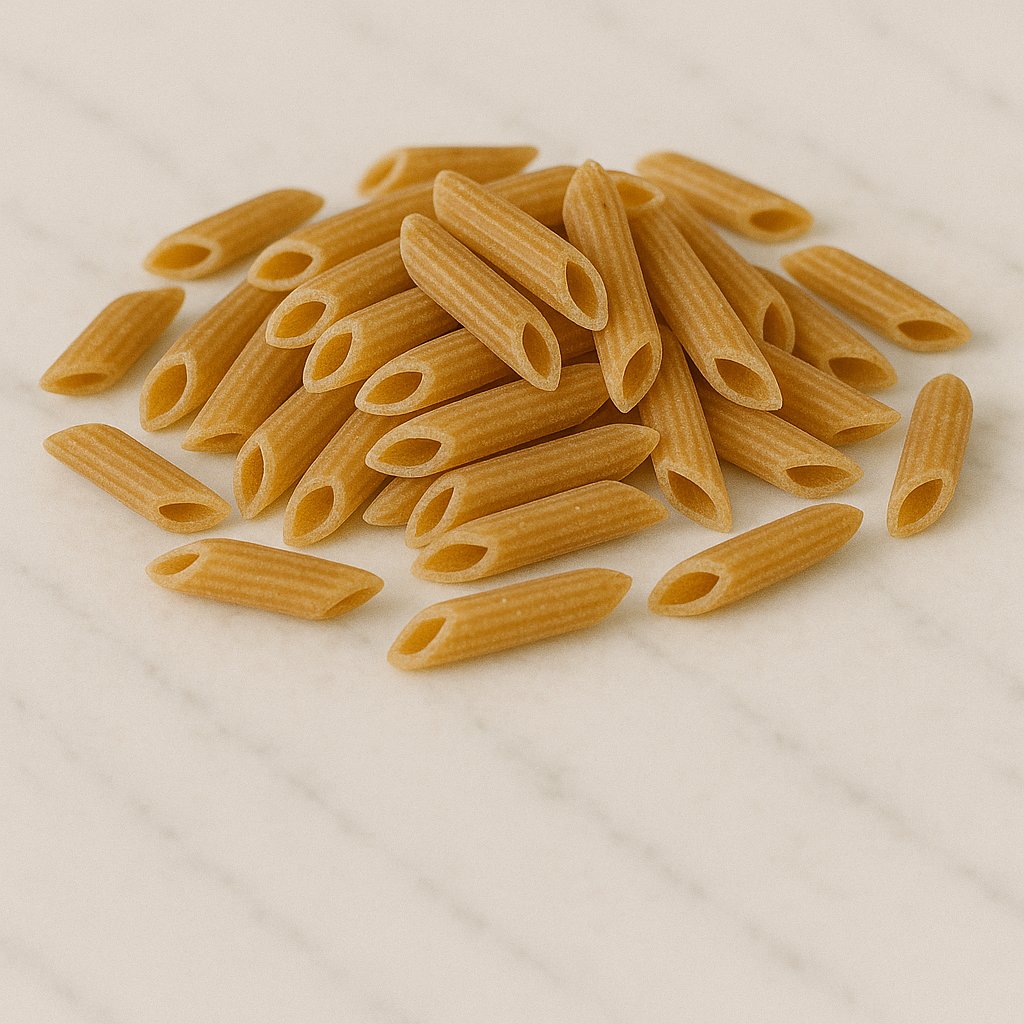
- Whole-wheat pasta: These are the most widespread type. They taste a bit nutty and are shaped similarly to regular spaghetti, fusilli or penne.
- Whole-spelt pasta: Spelt is an ancient grain and tastes mild. The pasta is tender and often a bit more expensive.
- Multigrain pasta: These are made from a mix of several cereals, for example wheat, oats and barley. It's like a mix of different ingredients, which makes the flavor varied.
- Gluten-free whole-grain alternatives: For people who cannot tolerate gluten, there are pastas made from rice, corn or buckwheat (the latter is often called “soba” in Japan). Some are still 'whole-grain' if the whole kernels are used.
- Filled or special shapes: There are also whole-grain fillings in ravioli or small pasta shapes for children. They often look fun and have extra flavor.
How to find good whole-grain pasta?
When you look for whole-grain pasta in the store, watch for words like “whole-grain” or “wholemeal flour” on the packaging. Some packages show images of whole grains or carry an organic seal. Organic means the plants were grown without many chemical inputs. Try different varieties: some are firmer after cooking, others softer. A small test is to open a pack and smell the pasta or look at the color — whole-grain pasta are usually a bit darker than white pasta.
When you look for whole-grain pasta in the store, watch for words like “whole-grain” or “wholemeal flour” on the packaging. Some packages show images of whole grains or carry an organic seal. Organic means the plants were grown without many chemical inputs. Try different varieties: some are firmer after cooking, others softer. A small test is to open a pack and smell the pasta or look at the color — whole-grain pasta are usually a bit darker than white pasta.
In summary, whole-grain pasta can be found in many stores and come in many variants: made from various cereals such as wheat, spelt or rice, as multigrain mixes or in gluten-free versions. This way you can choose a suitable type according to taste and need and put something healthy and tasty on the plate.