Menu & categories

Wholemeal flour

Nutrient-rich flour made from the whole grain

Wiki about whole-wheat flour Nutri-Score A Vegan Yes Gluten-free No Lactose-free Yes Nut-free Yes
NUTRITION / 100 g
340 kcal 13 g Protein 60 g Kohlenhydrate 2.5 g Fett

Introduction

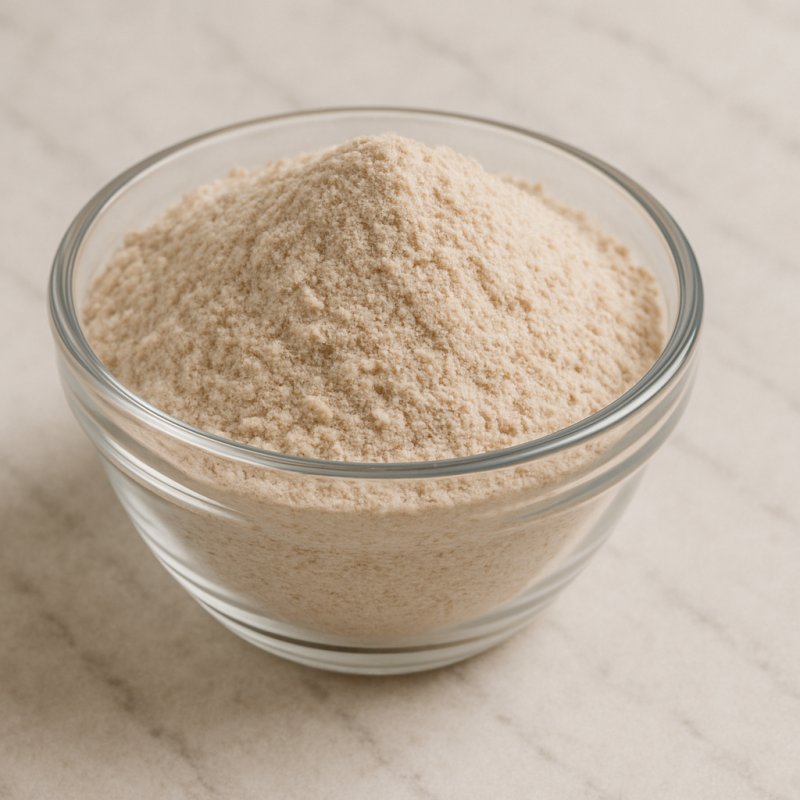
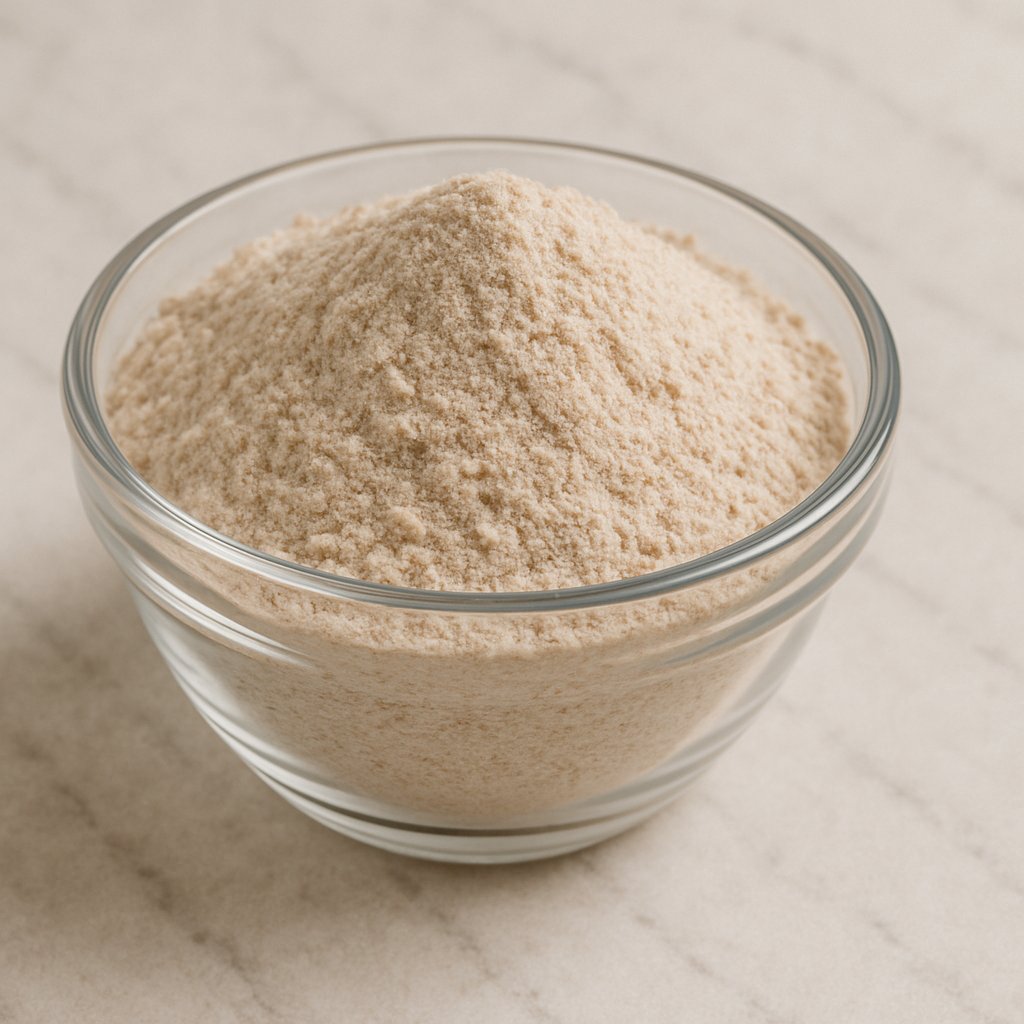
Wholemeal flour in a bowl with cereal grains beside it
I still clearly remember the first cake I intentionally baked with wholemeal flour: it smelled earthy and warm, and my apartment looked like a bakery after hours. Back then I was curious, not dogmatic, and that remains my approach today. Wholemeal flour is not for me a sacrifice but an exploration into depth of flavor and texture. It brings a nutty, slightly bitter note to doughs that white flour simply does not offer, and it has the wonderful quality of giving more substance to every baked good.

When I use wholemeal flour I don't only think of bread. There are so many surprising uses:

  • For savory scones it works wonderfully, because it makes the bite more interesting.
  • In pancakes it provides a velvety density that contrasts beautifully with butter and maple syrup.
  • In cookies it adds depth when combined with dark chocolate.
I've experimented with different varieties — spelt, rye, wheat — and each has its own character. Spelt is often a bit sweeter, rye brings earthy, slightly sour notes, and whole wheat is a reliable all-rounder. A colleague of mine swears by the mix: half light flour, half wholemeal, to balance structure and airiness. That has worked wonders in many of my recipes.

What I particularly appreciate is its everyday versatility. Wholemeal flour stays fresh for a long time if stored correctly, and it's an easy way to increase the nutritional value of dishes. I take care to handle it gently: not overworking the dough so the crumb doesn't become tough, and sometimes I let the dough rest a little longer so the moisture distributes evenly.

For me baking is about patience and enjoyment of the process. Wholemeal flour is a faithful companion that continuously supplies small wonders of flavor. When I pull a bread from the oven that is crisp on the outside and hearty inside, I almost always think: this is why experimenting was worth it. And I usually share a piece with someone who is surprised at how good wholegrain can taste.

Availability & types

Availability and types of wholemeal flour

Origin: Wholemeal flour is made from the whole grain of the cereal plant. That means: manufacturing keeps the three parts of the grain intact – the hull (outer layer), the endosperm and the germ. These parts together give the flour a stronger taste and more nutrients than white flour. You can think of it like an apple: instead of using only the white flesh, you eat the whole fruit including the peel, so more of the good stuff is retained.

Growing regions: Wholemeal flour comes from cereals grown in many parts of the world. The most common cereal types are:

  • Wheat: Grown in Europe, North America, China and many other regions. Wheat is the flour used in many breads and cakes.
  • Rye: Grows particularly well in cooler regions such as Northern Europe (e.g. Germany, Poland, Scandinavia). Rye flour has a stronger, slightly sour flavor.
  • Barley and oats: Are also grown, often in colder areas. Oats are popular for oatmeal but are also available as wholemeal flour.
  • Spelt: An ancient type of wheat grown in parts of Europe and milder in taste than rye.
  • Rice, maize and millet: Are common in warmer regions such as Asia, Africa and the Americas. Wholemeal flours are also made from these grains.
Available types and variants: Wholemeal flours differ depending on the cereal and the processing method. Here are the main types explained in simple terms:

  • Whole wheat flour: Very common. It has a darker color than white flour and a nutty taste. Often used for bread, rolls and cakes.
  • Whole rye flour: Darker and stronger in flavor. It makes bread denser and more aromatic. Many traditional breads, like German mixed bread or sourdough, use rye.
  • Whole spelt flour: An alternative to wheat, with a slightly fine aroma. Some people tolerate spelt better, although it is still related to wheat.
  • Whole oat and whole barley flour: Used less often for pure baking but good for mixing into bread dough or as an addition to muesli and pancakes.
  • Gluten-free wholemeal flours: For people who cannot tolerate gluten there are wholemeal flours from rice, maize, millet, buckwheat or amaranth. They behave differently in baking but are important alternatives.
Forms in the store and at the baker: You can find wholemeal flour in the supermarket in bags or packages and often in organic versions. At the baker it is used fresh for bread. Sometimes there are also premixed flours, for example a wholemeal mix with different grains or extra flakes for more bite. If the packaging says wholemeal, it means the whole grain was used.

Simple comparison to understand: Imagine a grain is like a chocolate bar with wrapping, filling and a nut at its core. White flour would be only the sweet filling, wholemeal flour is the whole bar including wrapping and nut — that is why it is more wholesome and more filling.

In summary: Wholemeal flour comes from many cereal types grown worldwide. There are various types such as wheat, rye, spelt or gluten-free variants, and you can find it in the supermarket, health food store or at the baker. Each variety has its own flavor and baking properties, so you can choose according to the recipe and preference.
Details & nutrition

Property Value
Unit g
Calories per 100 340
Protein per 100 13
Carbohydrates per 100 60
Sugar per 100 1.0
Fat per 100 2.5
Saturated fat per 100 0.4
Monounsaturated fat 0.3
Polyunsaturated fat 1.2
Fiber per 100 11
Vitamin C (mg) per 100 0
Vitamin D (IU) per 100 0
Calcium (mg) per 100 35
Iron (mg) per 100 3.5
Nutri-Score A
CO₂ footprint 0.8 kg CO2e/kg
Origin Depending on the product, typically regional or European grain cultivation
Gluten-free No
Lactose-free Yes
Nut-free Yes
Vegan Yes
Note Nutritional values refer to average whole wheat flour; values may vary slightly depending on the cereal variety and the manufacturer.

Technical & scientific information

Wholemeal flour refers to milled grain in which the three main anatomical components of the kernel — hull (bran), germ and endosperm — are retained in their original proportions. In contrast to refined flours, where bran and germ are largely removed, wholemeal flour contains all natural fractions of the seed and therefore provides a broader spectrum of nutrients, fiber and phytochemicals.

Chemical composition and constituents: The composition depends on the cereal species (wheat, rye, spelt, oat etc.), but grains generally consist of:

  • Endosperm: Mainly starch (amylose, amylopectin) and storage proteins (in wheat: glutenin and gliadin), as well as soluble proteins and small amounts of lipids.
  • Germ: Rich in lipids (unsaturated fatty acids), vitamins (especially B vitamins, vitamin E), minerals and enzymes.
  • Bran: Contains predominantly indigestible and partly fermentable dietary fiber (cellulose, hemicelluloses, arabinoxylans), plus mineral components and secondary plant compounds such as phenols and phytic acid.
Nutritional values vary by cereal; typical values for whole wheat flour per 100 g are about 330–360 kcal, 10–15 g protein, 2–3 g fat and 8–12 g fiber, alongside relevant amounts of magnesium, iron, zinc and B vitamins. The combination of fiber and protein leads to a lower glycemic load compared with refined flour.

Processing methods: Wholemeal flour is produced by milling whole grains. Technically, different milling principles are used:

  • Roller mill: A multi-stage roller system crushes the grain and separates fractions that are then recombined to obtain a homogeneous wholemeal product.
  • Stone mill: Gentle, low-heat milling that yields a coarser grind and leaves parts of the germ more intact.
  • Vibration and hammer mills: Used less often for wholemeal to control fineness, but they can generate stronger shear forces.
The choice of milling technique affects particle size and distribution of the flour, nutrient availability and baking behavior. Finely milled wholemeal flour can absorb water more quickly and tends to produce denser baked goods, while coarser fractions provide more texture.

Biochemical and functional properties: The presence of the germ brings fats and enzymes like lipases, which can lead to rancidity during prolonged storage. Phytic acid in the bran binds minerals such as iron, zinc and calcium partially, reducing their bioavailability; fermentation (sourdough) and sprouting can break down phytates and improve micronutrient availability. Gluten-containing wholemeal flours form a protein network that is important for gas retention and volume during baking, whereas low-gluten varieties need other structure builders.

Health aspects: Regular consumption of wholegrain products is associated in epidemiological studies with reduced risk of cardiovascular disease, type 2 diabetes, certain cancers (e.g. colorectal cancer) and more favorable body weight patterns. Fibers promote gut health by increasing stool bulk, shortening transit time and serving as substrate for the gut microbiota, which produces short-chain fatty acids. Downsides mainly occur with individual intolerances: celiac disease requires strict gluten-free diets, while phytic acid and certain FODMAPs can cause symptoms in sensitive individuals.

Storage and quality assurance: Due to the higher fat content, wholemeal flour is more prone to oxidation; cool, dry storage and light-protected packaging extend shelf life. Sensory quality checks include smell (fresh vs. rancid), taste and fineness. Microbiological standards and testing for mycotoxins are important, as the bran layer can be more exposed to contamination than the endosperm.

Culinarily, wholemeal flour offers a wide range of uses from bread and pastries to doughs and sauces. The choice of cereal species, milling fineness and possible blending with other flours allows adjustment of texture, flavor and nutritional properties. Overall, wholemeal flour is a nutrient-dense, functional food whose health benefits can be optimized by appropriate processing and storage.

Wiki entry for: whole-wheat flour
Active now: 15 visitors of which 2 logged-in members in the last 5 minutes