Menu & categories

Whole milk 3.5% fat

Classic cow's milk with a creamy taste and natural fat content.

Wiki about whole milk 3.5% fat Nutri-Score B Vegan No Gluten-free Yes Lactose-free No Nut-free Yes
NUTRITION / 100 ml
64 kcal 3.3 g Protein 4.8 g Kohlenhydrate 3.6 g Fett

Introduction

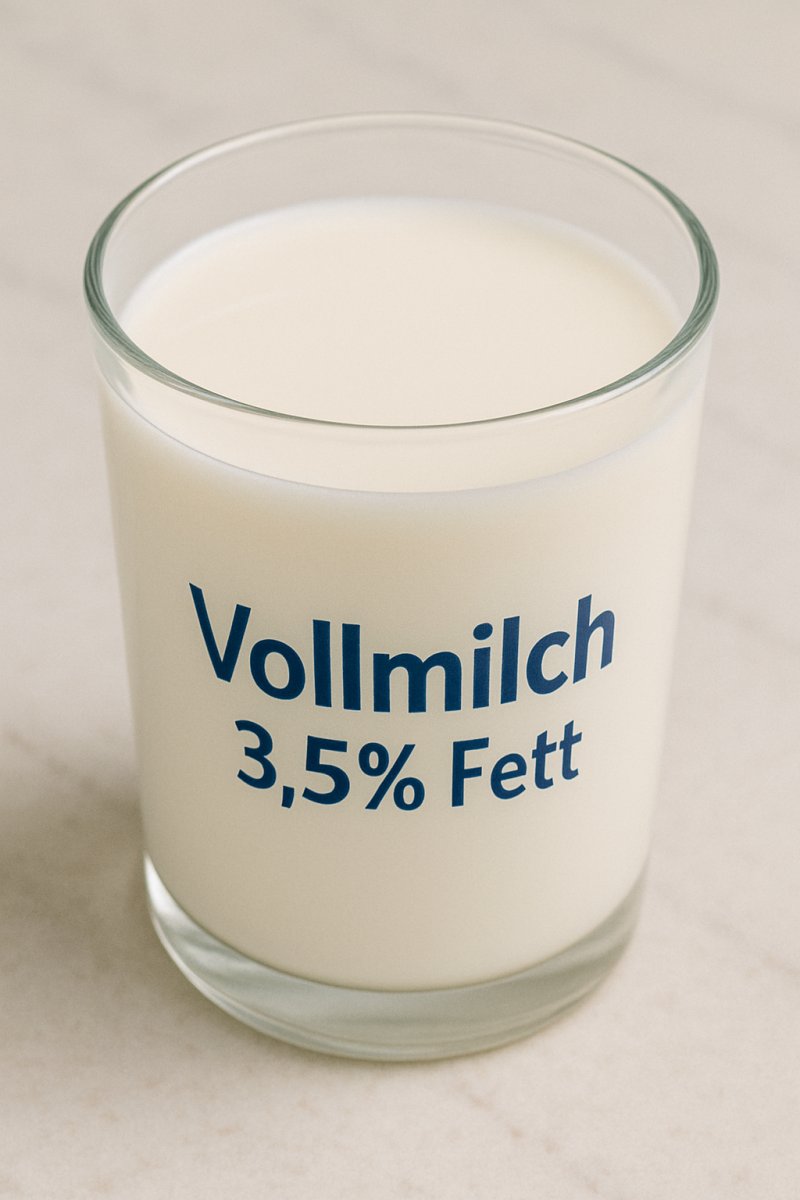
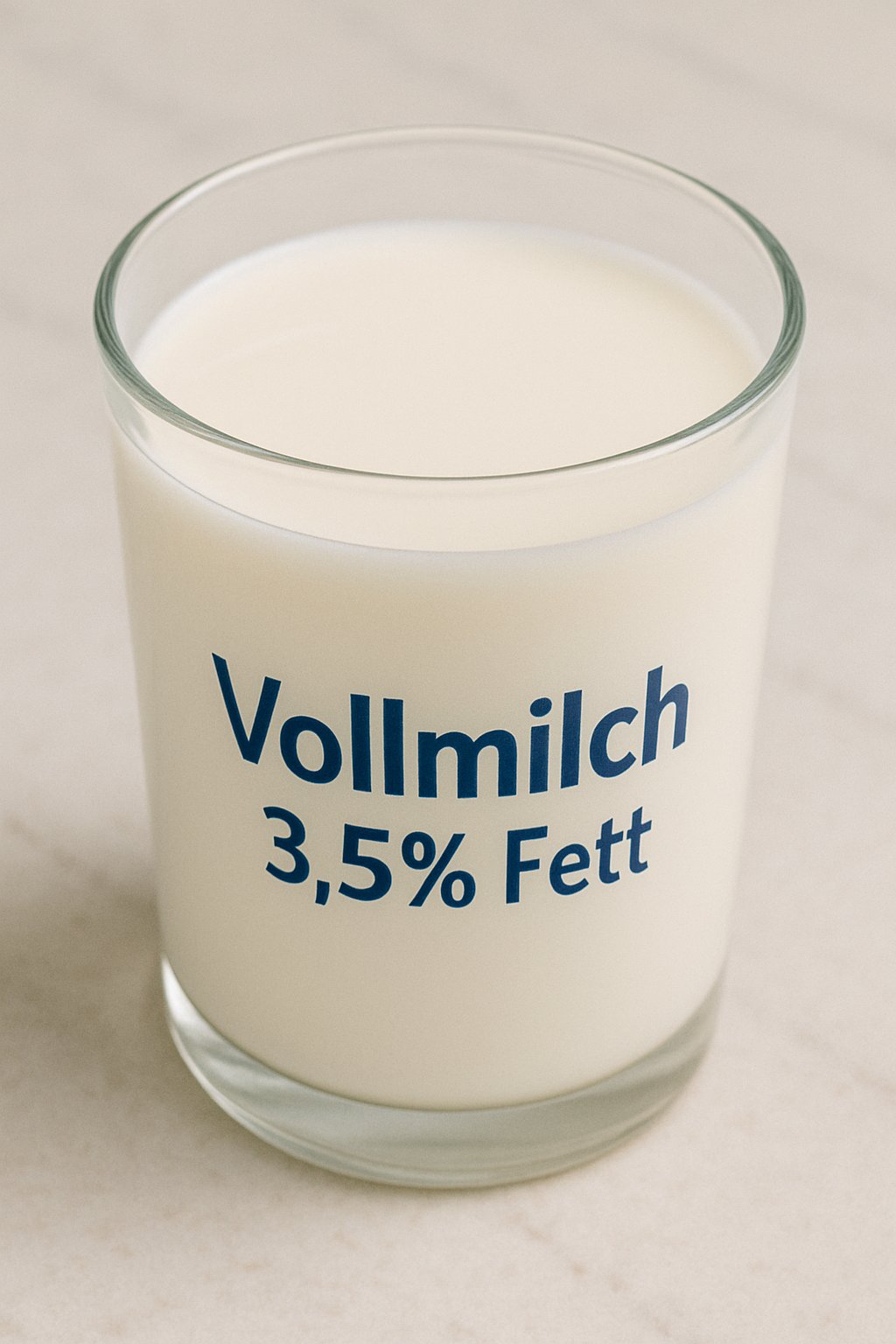
A glass of whole milk with 3.5% fat
I have a special relationship with whole milk 3.5% fat, because to me it hits the sweet spot between creaminess and everyday practicality. I still remember Sundays when the aroma of freshly brewed coffee and the light hint of milk came together in the kitchen and breakfast felt like a small ritual. Then as now, this milk is the ingredient that reliably holds together both simple cornflakes and an elaborate dessert.

What I appreciate about whole milk is its versatility. It has enough fat to bind sauces, make puddings silky and make whipped cream appear more stable, without feeling too heavy. A colleague of mine swears that his tomato soup would never have reached that comforting warmth you sense on the first spoonful without the small amount of whole milk.

At the same time whole milk is a practical source of nutrients. It provides protein, calcium and the fat‑soluble vitamins A and D in a balanced amount. When I want to improvise something healthy after a long day, sometimes a glass of milk is enough to quell a small hunger pang and still give a feeling of comfort.

Here are some concrete points I often mention in my recipes and tips:

  • Cooking stability: whole milk curdles less often when heated than lower‑fat variants.
  • Taste: round and slightly sweet, with a pleasant texture.
  • Nutritional aspects: good source of calcium and protein.
  • Storage: once opened keep refrigerated and consume within a few days.
In my kitchen whole milk is often the little insider tip that rounds dishes off. Sometimes I invent stories when guests ask curiously: for example the anecdote about how an improvised café au lait turned a rainy evening into a cozy salon. In the end whole milk 3.5% fat for me is more than just an ingredient; it is a familiar companion that provides comfort, structure and flavor.

Availability & types


Availability and types of whole milk 3.5% fat

Where does whole milk come from?
Whole milk comes from cows. On farms cows produce milk which is then processed in a dairy. Many countries have their own milk producers: in Germany, Austria and Switzerland these are often small and medium farms, while in other countries there are larger farms. The milk you see in the supermarket can therefore come from very nearby or from another country. Sometimes the packaging says “regional” – that means the milk comes from the surrounding area.

In which regions is it produced?
Milk is produced almost everywhere there is enough grassland or feed for cows. Examples include:

  • Central Europe (e.g. Germany, Netherlands, France)
  • Scandinavia (Sweden, Denmark)
  • Parts of North and South America
  • New Zealand and Australia
Depending on the region the milk's taste can vary slightly, because cows eat different grasses or feed. You can think of it like tea: depending on which herbs or leaves you use, the tea tastes different.

What varieties and variants exist?
Whole milk with 3.5% fat is a standard variety, but there are different variants and processing methods. The main ones are:

  • Fresh milk (pasteurized): this milk is heated briefly so that fewer microbes remain. This is called pasteurization. It's like washing hands for milk – safer, but the taste stays fresh.
  • UHT milk: this milk is treated very briefly at very high temperature, so it remains shelf‑stable for a long time even without refrigeration until opened. This is practical for stocking up.
  • Homogenized milk: in this processing the cream is distributed so it does not separate. That means the milk stays evenly creamy – like a well‑stirred hot chocolate.
  • Non‑homogenized milk: here a cream layer can form on top, similar to cream. Some people like that because they can remove or use the cream layer.
  • Organic milk: this milk comes from cows kept according to specific rules. For example they get more outdoor access and organic feed. The packaging will say “Organic” or show the EU organic logo.
  • Hay milk: this is milk from cows that mainly eat hay and grass instead of much silage (fermented feed). Many say it tastes particularly natural.
  • Lactose‑free whole milk: here the milk sugar (lactose) is split so people who are lactose intolerant can still drink it.
  • Fortified milk: some milk varieties have extra vitamin D or other nutrients added, similar to fortified breakfast cereals.
  • Packaging types: whole milk is available in cartons, plastic or glass bottles and in some countries even in pouches. Glass bottles are often more expensive, but look nice and are more reusable.
Whole milk 3.5% fat is what many families know as “regular milk”: it is creamy, suitable for drinking, for cereal and for cooking. Whether you buy long‑life UHT milk or fresh pasteurized milk from the region depends on how you plan to use it and what matters to you – for example regional origin or organic quality.
Details & nutrition

Property Value
Unit ml
Average weight per piece 200
Calories per 100 64
Protein per 100 3.3
Carbohydrates per 100 4.8
Sugar per 100 4.8
Fat per 100 3.6
Saturated fat per 100 2.3
Monounsaturated fat 1.0
Polyunsaturated fat 0.2
Fiber per 100 0.0
Vitamin C (mg) per 100 0.0
Vitamin D (IU) per 100 0
Calcium (mg) per 100 120
Iron (mg) per 100 0.03
Nutri-Score B
CO₂ footprint 0.13 kg CO2e pro 100 ml
Origin Germany/EU (depending on the filling/packaging facility)
Gluten-free Yes
Lactose-free No
Nut-free Yes
Vegan No
Note Nutritional values may vary slightly by brand and season; values refer to whole milk with approx. 3.5% fat (not lactose-free, not vegan).

Technical & scientific information

Whole milk 3.5% fat refers to cow's milk that has an average fat content of about 3.5% by weight and is offered in many countries as a standard fat class. It is a minimally processed food product obtained from the raw material cow's milk after common processing stages such as filtration, heat treatment and, where applicable, homogenization. Whole milk differs from lower‑fat variants mainly by the higher proportion of milk fat, which affects flavor, texture and caloric content.


Chemical composition

  • Water: approximately 87–88% of the weight, acting as a solvent for sugars, salts and proteins.
  • Milk fat: about 3.5% in the form of milk fat globules (Milk Fat Globules), mainly triacylglycerols with a variable composition of saturated, monounsaturated and polyunsaturated fatty acids.
  • Milk protein: around 3.3%, mainly caseins (≈80% of the proteins) and whey proteins such as β‑lactoglobulin and α‑lactalbumin.
  • Lactose: roughly 4.7–5%, the main carbohydrate component.
  • Minerals: calcium, phosphate, potassium and trace elements; calcium levels typically around 110–125 mg per 100 g.
  • Vitamins: fat‑soluble vitamins A and D as well as water‑soluble B vitamins, notably riboflavin (B2) and vitamin B12.
Nutritional values (typical per 100 g)

  • Energy: approx. 60–70 kcal (250–300 kJ).
  • Fat: 3.5 g, of which saturated fatty acids about 2.2 g.
  • Protein: 3.3 g.
  • Carbohydrates (lactose): approx. 4.7 g.
  • Calcium: approx. 110–125 mg.
Processing methods and technical aspects

Before sale whole milk is usually pasteurized (e.g. HTST process: 72 °C for 15 seconds) to kill pathogenic microorganisms. Homogenization mechanically reduces the size of milk fat globules so that creaming is prevented and a more uniform texture is obtained. With UHT treatment (ultra‑high temperature, e.g. 135–150 °C for a few seconds) long‑life milk (H‑milk) is produced, where higher temperatures can cause changes to whey proteins and Maillard reactions.

Biochemical effects of heat treatment

Heat treatment partially denatures whey proteins and can inactivate enzymes. This affects foaming properties, coagulation behavior and sensory characteristics. Intense heating can also cause minor losses of heat‑sensitive vitamins. Homogenization creates a finer distribution of fat and can change the perception of sweetness and creaminess.

Health aspects

  • Whole milk provides highly bioavailable calcium and high‑quality protein, which are important for bone formation and muscle metabolism.
  • The content of saturated fatty acids is higher compared with low‑fat varieties; dietary guidelines therefore recommend paying attention to amounts depending on risk profile and total fat intake.
  • Lactose intolerance is relevant because of the milk sugar present, as adults with reduced lactase activity may develop digestive complaints.
  • Milk protein allergy is an immunologically mediated reaction, especially in infants and young children, and requires strict avoidance.
Applications in culinary and food technology

Whole milk serves as a base for numerous dairy products (yogurt, cheese, cream) and is an important source of emulsifying components as well as a flavor carrier in sauces, confectionery and baked goods. The proteins influence coagulation, foam stability and browning during heating.

When properly stored in the refrigerator, whole milk remains consumable for several days; however, sensory and microbiological changes can occur quickly if the product is not kept at the correct temperature. Overall, whole milk 3.5% fat is a nutrient‑rich, technically versatile food ingredient whose benefits and risks should be considered in the context of a balanced diet.

Wiki entry for: whole milk 3.5% fat
Active now: 21 visitors of which 2 logged-in members in the last 5 minutes