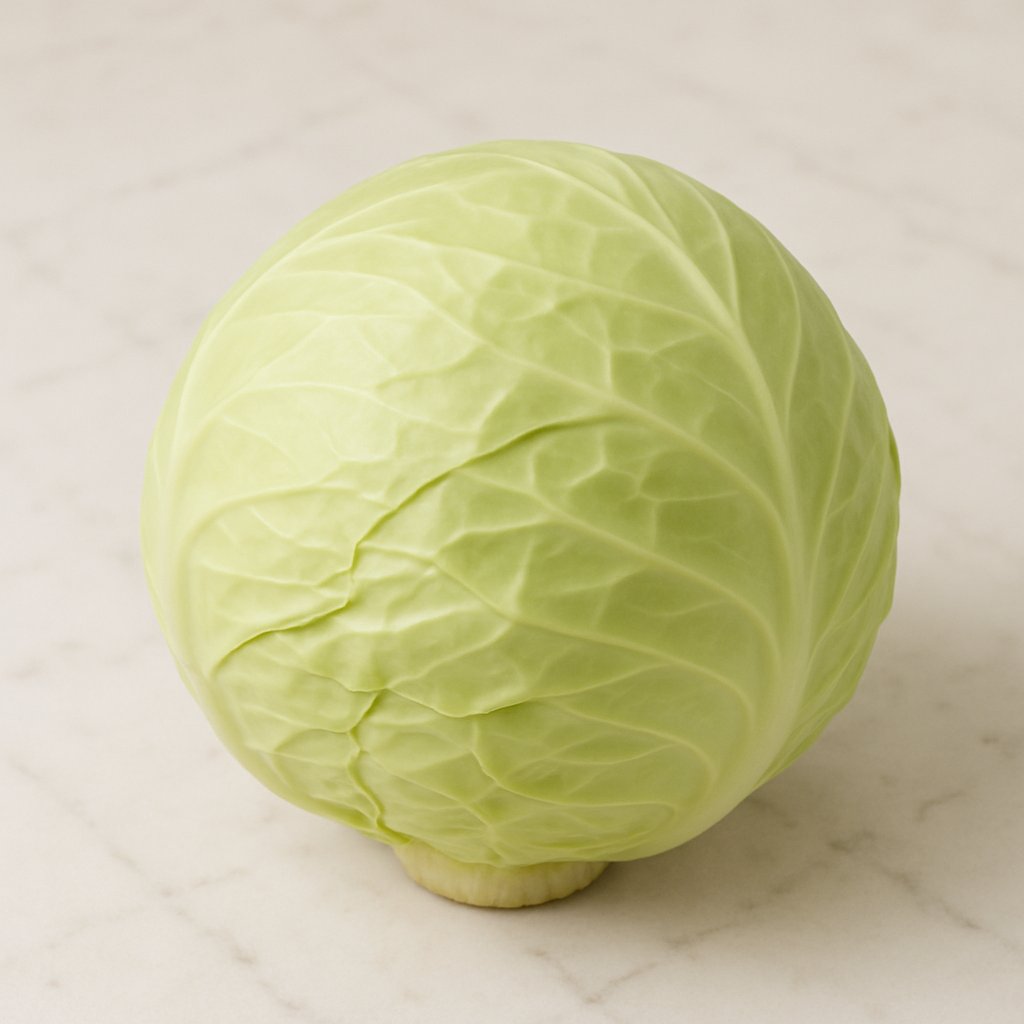
Availability and types of white cabbage / head cabbage
Origin: White cabbage originally derives from a wild plant that grew on the coasts of western Europe. Over many hundreds of years people have bred this wild cabbage plant until the round, firm heads developed that we know today as white cabbage. You can imagine it like a tree from which, through care and breeding, different varieties grow – but here they are small heads of leaves.
Growing areas: White cabbage grows almost anywhere the climate is not too warm. In Europe, Germany, Poland, the Netherlands and France are major growing regions. Large amounts are also grown in North America, China and other parts of Asia. Farmers plant it in fields, and because it likes cool temperatures, autumn and early spring months are often the main harvest times.
When is white cabbage available?
Fresh cabbage is mainly available in autumn and early winter. Because cabbage is very hardy, it stores well – cellars or cold rooms keep cabbage fresh for weeks to months. Therefore you often find it year-round in supermarkets. Cabbage is also sold pre-cut, vacuum-packed or as sauerkraut in jars and cans, which further extends its availability.
Fresh cabbage is mainly available in autumn and early winter. Because cabbage is very hardy, it stores well – cellars or cold rooms keep cabbage fresh for weeks to months. Therefore you often find it year-round in supermarkets. Cabbage is also sold pre-cut, vacuum-packed or as sauerkraut in jars and cans, which further extends its availability.
Important varieties and types (simply explained):
- Round white cabbage: This is the classic headed cabbage most people know. It is firm and has smooth leaves. It is suitable for stews, coleslaws and sauerkraut.
- Pointed cabbage (spitzkohl): It tapers to a point, is more tender and milder in flavor. Because it has less firm leaves, it is great for raw dishes or quick stir-fries.
- Savoy cabbage: It looks crinkly and has wavy leaves. Although it belongs to the cabbage family, savoy is somewhat softer and is often cooked or braised.
- Mini or baby cabbage: Small heads that cook faster and often taste sweeter. Good when cooking for few people.
- Varieties for sauerkraut: Some cabbage varieties are particularly dense and firm. These are best for fermenting – i.e. for sauerkraut – because they remain crisp.
Forms sold: White cabbage is available whole, halved or already cut (e.g. into strips). There are also vacuum-packed cabbage, frozen cabbage and pickled or cooked cabbage preserves. At farmers' markets you often find freshly harvested cabbage directly from the farmer – especially aromatic.
Tip for selection and storage: Choose heads that feel heavy and have firm leaves. Avoid cabbage with brown spots or wilted leaves. At home cabbage keeps longest in the vegetable drawer of the refrigerator or in a cool cellar – much like an apple that stays juicy longer in the fridge.
So white cabbage is very versatile: it is grown in many countries, comes in different shapes and varieties for raw use, cooking or fermenting, and through storage or preserves it is available almost year-round. This way everyone – for salad, soup or sauerkraut – finds the suitable variant.