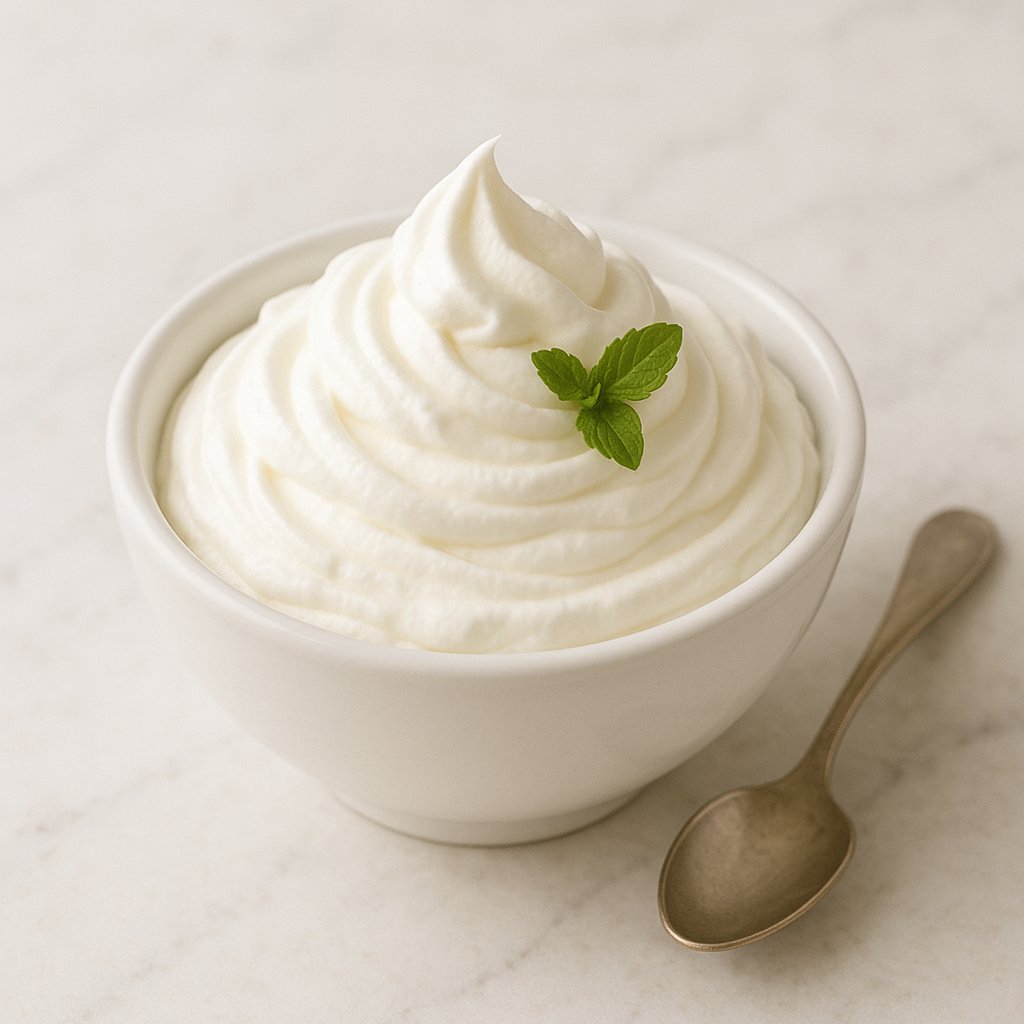
Availability and types of whipping cream 30% fat
Where does whipping cream come from?
Whipping cream is made from cow's milk. The milk is left to stand briefly or centrifuged so that the higher-fat fraction – the cream – separates from the skim milk. This cream usually has about 30% fat in commercially available whipping cream. You can imagine it as a cream that is somewhat thicker and richer than regular milk, which is why it whips well and forms a firm, airy mass.
Whipping cream is made from cow's milk. The milk is left to stand briefly or centrifuged so that the higher-fat fraction – the cream – separates from the skim milk. This cream usually has about 30% fat in commercially available whipping cream. You can imagine it as a cream that is somewhat thicker and richer than regular milk, which is why it whips well and forms a firm, airy mass.
Growing or production areas
The cows whose milk is used for cream are often kept in regions with a lot of grassland. In Germany whipping cream and the underlying milk often come from states like Lower Saxony, Schleswig-Holstein, Bavaria or other rural regions. Much milk for cream is also produced in other European countries (for example the Netherlands, France or Ireland) and worldwide (for example New Zealand or the USA). In supermarkets you mostly find cream from regional production, but also products imported from other countries.
The cows whose milk is used for cream are often kept in regions with a lot of grassland. In Germany whipping cream and the underlying milk often come from states like Lower Saxony, Schleswig-Holstein, Bavaria or other rural regions. Much milk for cream is also produced in other European countries (for example the Netherlands, France or Ireland) and worldwide (for example New Zealand or the USA). In supermarkets you mostly find cream from regional production, but also products imported from other countries.
Where can you buy whipping cream?
Whipping cream is very readily available: in supermarkets, discounters, organic shops, on weekly markets and directly from the farm. You find it in the refrigerated section in cartons or in plastic tubs. There are also spray cans with pre-aerated cream, which are long-lasting and practical for cakes or coffee.
Which kinds and variants are there?
Whipping cream comes in different forms. Here is a simple overview:
Whipping cream comes in different forms. Here is a simple overview:
- Fresh whipping cream (refrigerated) – kept in the fridge, tastes fresh and whips well.
- Long-life whipping cream (UHT) – has a longer shelf life and only needs refrigeration after opening. Practical if you rarely use cream.
- Cream spray – already aerated in a can, quick and convenient, but often contains propellant gas and additives.
- Stabilized whipping cream – contains small aids like gelatin or vegetable starch so it keeps its shape longer (for example on cakes).
- Organic cream – comes from cows in organic farming; often subject to stricter rules for feeding and animal welfare.
- Lactose-free cream – for people who cannot tolerate milk sugar; tastes similar but is processed so the sugar is split.
- Plant-based alternatives – cream from soy, oat or coconut; can be used like dairy cream, some varieties can also be whipped.
- Different fat levels – 30% is the usual whipping cream; there are also lighter variants (less fat, usually not as good for whipping) or heavier creams with more fat (hold their shape even better).
In summary: whipping cream with 30% fat is widespread and available in many variants – fresh or long-life, from conventional or organic farming, in spray cans or as plant-based alternatives. Depending on whether you need it for whipping, cooking or decorative topping, you choose the appropriate type. This selection ensures that for nearly every taste and use the right whipping cream can be found.