Menu & categories

Whipping cream

Creamy cream with 30% fat for whipping and flavoring.

Wiki about whipping cream Nutri-Score E Vegan No Gluten-free Yes Lactose-free No Nut-free Yes
NUTRITION / 100 ml
292 kcal 2.1 g Protein 3 g Kohlenhydrate 30 g Fett

Introduction

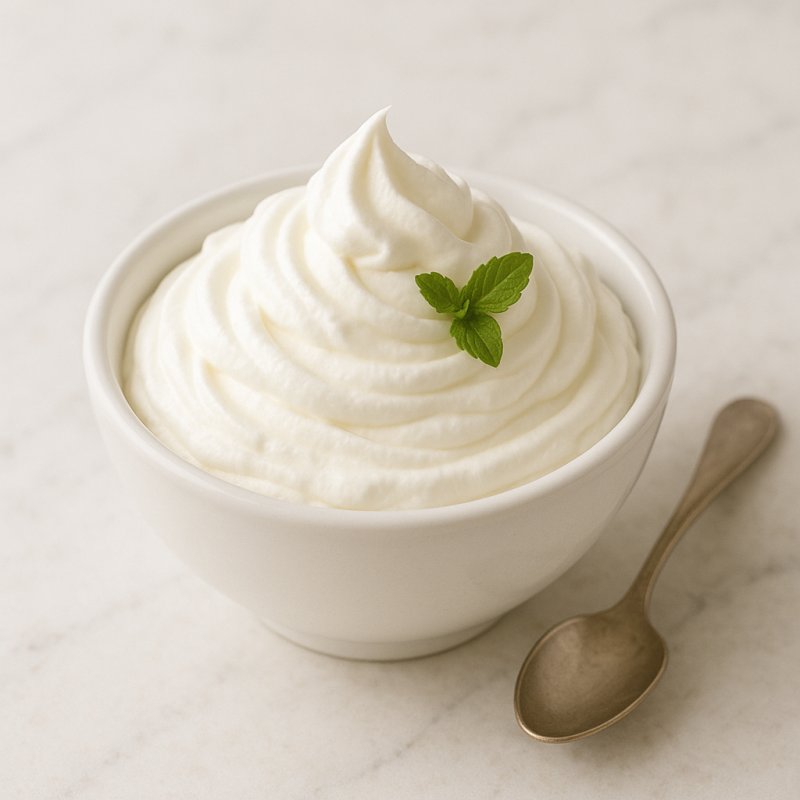
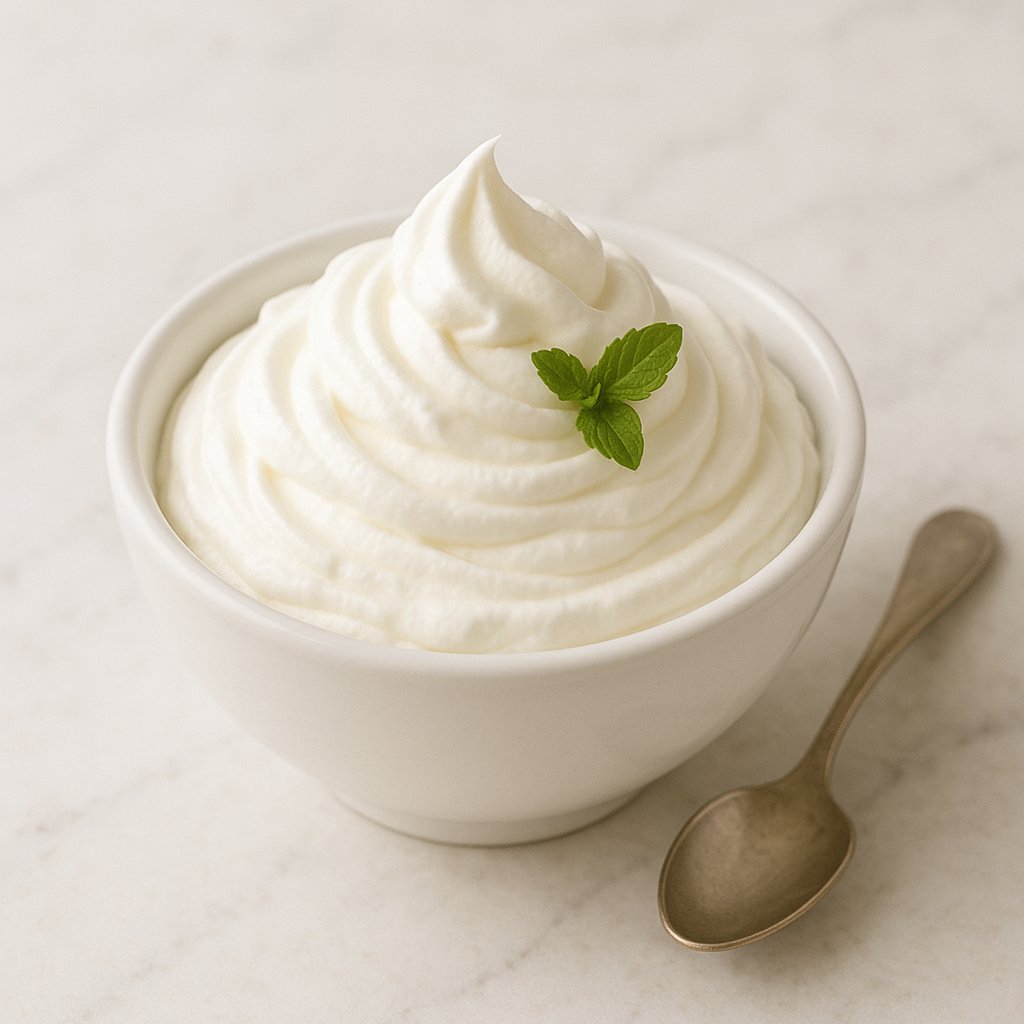
Whipping cream in a bowl

I have a particular weakness for whipping cream 30% fat. It's for me the reliable friend in the kitchen: smooth, easy to handle and yet rich enough to refine both desserts and savory sauces. I still remember a rainy afternoon when I spontaneously wanted to bake a cake and found only this cream in the fridge – the result was so good that I almost forgot the rain.

What makes this cream so likeable? First the consistency: with 30 percent fat it whips up stably without quickly turning into "butter." Second the versatility: whether as a airy topping on a fruit salad, as a gentle binder in sauces or as a base for creams – it always brings the right mouthfeel. A colleague of mine swears by adding it to his mushroom cream sauce; he calls it a "small luxury upgrade" and laughs every time.

A few practical points I've learned from years of experimenting:

  • Start cold: cream, bowl and beaters should be cold – then whipping succeeds best.
  • Whip stability: 30% is a good compromise between stability and lightness; for particularly firm results a dash of cream stabilizer or a packet of gelatin helps.
  • Heating: the cream tolerates short heating, but separates more easily at very high heat than richer variants.
  • Storage: consume within a few days after opening and seal tightly.
I'm also fascinated by the culinary pragmatism: with the same pack you can create an elegant dessert and shortly after thicken a velvety soup. Once at a family gathering I made a faux pas with vanilla sugar – instead of a fine aroma the cream became a bit sweet for a moment, but the laughter and improvised decoration only made it more endearing.

In summary, whipping cream 30% fat for me is an uncomplicated, reliable ingredient that in many situations provides the right balance between creaminess and manageability. It's not a gourmet miracle, but often exactly the little extra that completes a dish and makes guests smile.

Availability & types

Availability and types of whipping cream 30% fat

Where does whipping cream come from?
Whipping cream is made from cow's milk. The milk is left to stand briefly or centrifuged so that the higher-fat fraction – the cream – separates from the skim milk. This cream usually has about 30% fat in commercially available whipping cream. You can imagine it as a cream that is somewhat thicker and richer than regular milk, which is why it whips well and forms a firm, airy mass.

Growing or production areas
The cows whose milk is used for cream are often kept in regions with a lot of grassland. In Germany whipping cream and the underlying milk often come from states like Lower Saxony, Schleswig-Holstein, Bavaria or other rural regions. Much milk for cream is also produced in other European countries (for example the Netherlands, France or Ireland) and worldwide (for example New Zealand or the USA). In supermarkets you mostly find cream from regional production, but also products imported from other countries.


Where can you buy whipping cream?
Whipping cream is very readily available: in supermarkets, discounters, organic shops, on weekly markets and directly from the farm. You find it in the refrigerated section in cartons or in plastic tubs. There are also spray cans with pre-aerated cream, which are long-lasting and practical for cakes or coffee.
Which kinds and variants are there?
Whipping cream comes in different forms. Here is a simple overview:

  • Fresh whipping cream (refrigerated) – kept in the fridge, tastes fresh and whips well.
  • Long-life whipping cream (UHT) – has a longer shelf life and only needs refrigeration after opening. Practical if you rarely use cream.
  • Cream spray – already aerated in a can, quick and convenient, but often contains propellant gas and additives.
  • Stabilized whipping cream – contains small aids like gelatin or vegetable starch so it keeps its shape longer (for example on cakes).
  • Organic cream – comes from cows in organic farming; often subject to stricter rules for feeding and animal welfare.
  • Lactose-free cream – for people who cannot tolerate milk sugar; tastes similar but is processed so the sugar is split.
  • Plant-based alternatives – cream from soy, oat or coconut; can be used like dairy cream, some varieties can also be whipped.
  • Different fat levels – 30% is the usual whipping cream; there are also lighter variants (less fat, usually not as good for whipping) or heavier creams with more fat (hold their shape even better).
In summary: whipping cream with 30% fat is widespread and available in many variants – fresh or long-life, from conventional or organic farming, in spray cans or as plant-based alternatives. Depending on whether you need it for whipping, cooking or decorative topping, you choose the appropriate type. This selection ensures that for nearly every taste and use the right whipping cream can be found.
Details & nutrition

Property Value
Unit ml
Calories per 100 292
Protein per 100 2.1
Carbohydrates per 100 3
Sugar per 100 3
Fat per 100 30
Saturated fat per 100 19
Monounsaturated fat 8.5
Polyunsaturated fat 1
Fiber per 100 0
Vitamin C (mg) per 100 0.7
Vitamin D (IU) per 100 12
Calcium (mg) per 100 95
Iron (mg) per 100 0.1
Nutri-Score E
CO₂ footprint 0.32
Origin EU (milk from cattle farming; depending on the product, regional)
Gluten-free Yes
Lactose-free No
Nut-free Yes
Vegan No
Note Store refrigerated; use well chilled for whipping.

Technical & scientific information


Whipping cream 30% fat denotes a cream with a fat content of about 30 percent by weight, specifically intended for whipping and for use in both cold and warm dishes. It essentially consists of milk components, with fat present as droplets dispersed in an aqueous phase. The fat content largely determines the physical properties and suitability for whipping.

Composition and ingredients

  • Fat: mainly triglycerides with a mixture of saturated and unsaturated fatty acids; the proportion of saturated fatty acids is relatively high and affects melting and firmness properties.
  • Proteins: primarily casein and whey proteins, which act as natural emulsifiers and adsorb at the interface of fat droplets.
  • Lactose and minerals: carbohydrates and dissolved salts are present in the aqueous phase and influence taste as well as osmotic properties.
  • Added substances: some products include stabilizers (e.g. carrageenans, guar gum) or emulsifiers (mono- and diglycerides) to keep the whipping cream more stable.
Manufacturing process

  • Fresh milk is separated by centrifugation to obtain cream with the desired fat content.
  • The cream is pasteurized or thermized to ensure microbiological quality. In some cases homogenization is performed, which breaks up fat droplets and affects emulsion stability.
  • Before filling, stabilizers, sugar or flavorings may be added depending on the product definition.
Physical and technological properties

When mechanically processed, whipping cream forms a firm foam by incorporating air and through partial coalescence of fat droplets. Proteins and sometimes emulsifiers stabilize the air bubbles by adsorbing at the interface. Critical parameters are temperature (cold, about 4 °C, improves whipping), fat content (a minimum of around 30% is typical for stable whipping cream) and mechanical stress. Excessive whipping leads to phase inversion: the liquid phase separates from the solid fat and butter with buttermilk is formed.

Nutritional values (typical per 100 g)
Energy: approx. 290–320 kcal; Fat: approx. 30 g (of which saturated fatty acids are significant); Protein: 2–3 g; Carbohydrates (lactose): 2–4 g. Exact values vary by manufacturer and any additives.

Shelf life and microflora

Pasteurization reduces the natural microflora, however psychrotrophic bacteria and lactic acid bacteria can still be possible spoilage organisms. Closed packages should be stored refrigerated; shelf life is often a few weeks, after opening it decreases to a few days. Diacetyl and other volatile compounds produced by bacterial activity can change odor and taste.

Health aspects

Whipping cream is energy-dense and contains a relatively high amount of saturated fatty acids, which with excessive consumption can influence the risk of elevated cholesterol levels and cardiovascular disease. It contains lactose and is therefore unsuitable for people with lactose intolerance; it is contraindicated for milk protein allergy. In moderation it can, however, be part of a balanced diet.

In the kitchen, whipping cream 30% fat serves as a versatile ingredient due to its balance of stability when whipped and relatively lower fat content compared with double cream, suitable for desserts, sauces and finishing. The technological fundamentals – emulsion, interfacial behavior of proteins and the interplay of temperature and mechanical energy – explain its typical behavior during processing and storage.

Wiki entry for: whipping cream
Active now: 18 visitors of which 2 logged-in members in the last 5 minutes