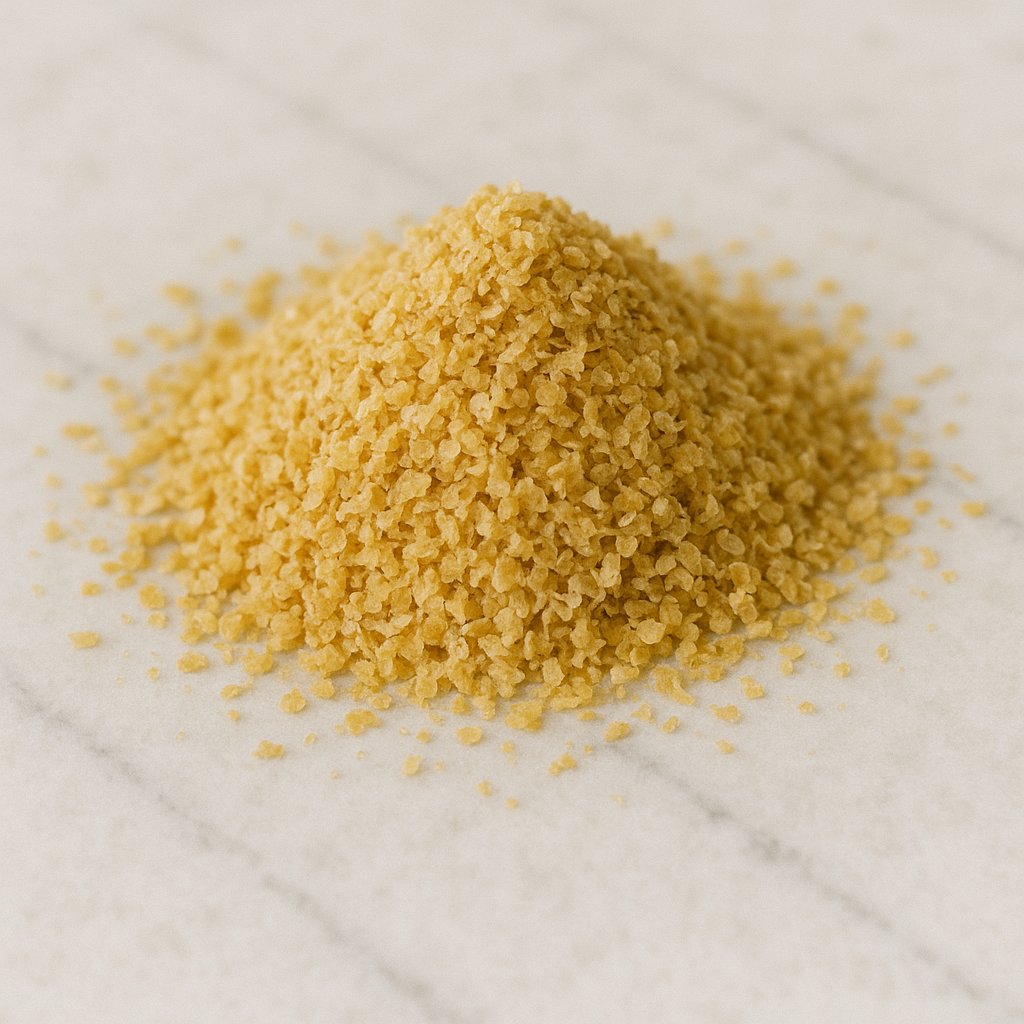
Availability and types of wheat germ
Wheat germ is the small, nutritious kernel part of the wheat grain that is often removed during milling. Picture a wheat grain like an apple core: on the outside is the husk, inside the starchy center, and very small within sits the germ — the part from which a new plant would grow. Because wheat germ contains many vitamins, minerals, and healthy fats, it is sold as a separate product.
Origin
Wheat germ always comes from wheat fields: it is recovered as a by-product during milling of whole wheat kernels or collected specifically for food production. They often come from countries where a lot of wheat is grown, for example Europe (Germany, France), North America (USA, Canada) and parts of Asia. Because wheat is cultivated worldwide, wheat germ is widely available in many regions.
Wheat germ always comes from wheat fields: it is recovered as a by-product during milling of whole wheat kernels or collected specifically for food production. They often come from countries where a lot of wheat is grown, for example Europe (Germany, France), North America (USA, Canada) and parts of Asia. Because wheat is cultivated worldwide, wheat germ is widely available in many regions.
Growing regions
Growing regions are usually large fields where wheat is cultivated. These fields are often located in regions with mild climates and good arable soil. In Europe these include areas in Germany, France and Eastern Europe. In North America it is mainly the wide plains of the USA and Canada. Smaller quantities may also come from countries that grow wheat for their own population. Harvest time depends on the climate, but farmers harvest the grains when they are dry and ripe so the germ will not spoil.
Growing regions are usually large fields where wheat is cultivated. These fields are often located in regions with mild climates and good arable soil. In Europe these include areas in Germany, France and Eastern Europe. In North America it is mainly the wide plains of the USA and Canada. Smaller quantities may also come from countries that grow wheat for their own population. Harvest time depends on the climate, but farmers harvest the grains when they are dry and ripe so the germ will not spoil.
Available types and variants
Wheat germ does not come in many different “varieties” like apples or tomatoes, since it is always the same part of the grain. Still, there are different variants that differ in processing, purity and quality:
Wheat germ does not come in many different “varieties” like apples or tomatoes, since it is always the same part of the grain. Still, there are different variants that differ in processing, purity and quality:
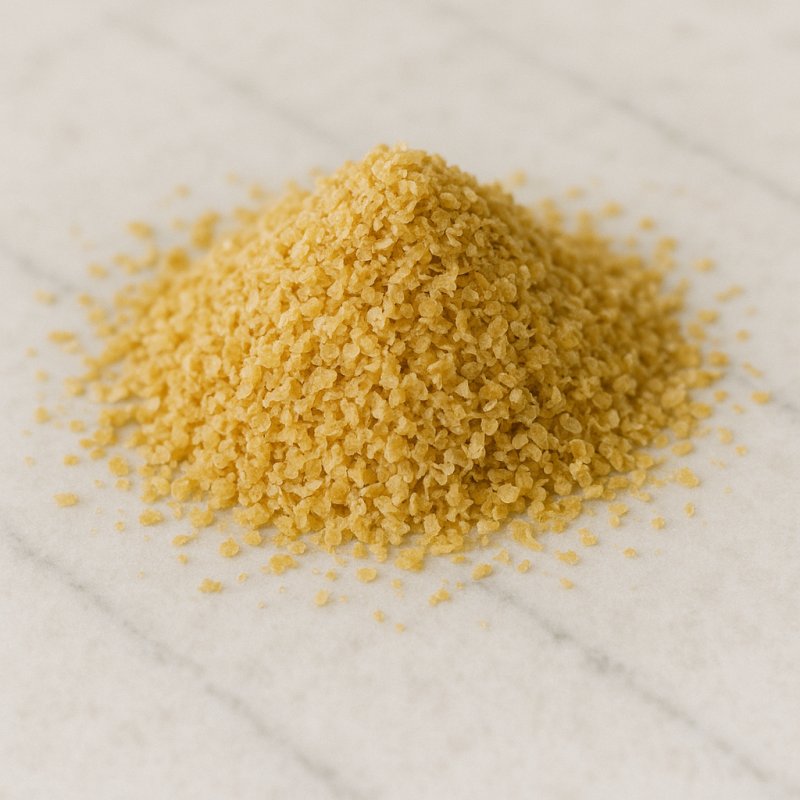
- Raw and dried: This is the most common form. Wheat germ is dried after milling so it keeps longer. They look like small golden-brown flakes.
- Toasted: Some wheat germ is lightly toasted, which makes it more shelf-stable and gives it a nutty flavor. Toasted germ works well as a topping for yogurt or muesli.
- Full-fat or partially defatted: Wheat germ naturally contains fat. Sometimes part of the fat is removed so they last longer. Full-fat germ are more flavorful; defatted ones keep longer and are often used in baking.
- Organic: Organic wheat germ comes from wheat grown without chemical pesticides or synthetic fertilizers. This can be important for people who value environmentally friendly farming.
- Finely or coarsely milled: Sometimes the germ is milled very finely so it mixes more easily into doughs or smoothies. Coarser germ remain chunkier and add more bite when eaten.
Where to find them
Wheat germ can be found in supermarkets, health food stores and online shops. They are often located with grains, muesli or baking ingredients. When buying wheat germ, pay attention to the expiration date and packaging that protects from light and air — this keeps the healthy fats fresh longer.
Wheat germ can be found in supermarkets, health food stores and online shops. They are often located with grains, muesli or baking ingredients. When buying wheat germ, pay attention to the expiration date and packaging that protects from light and air — this keeps the healthy fats fresh longer.
In summary, wheat germ is a small, nutrient-dense part of the wheat grain that comes from many wheat-growing regions worldwide. It is available in different variants such as raw, toasted, defatted or organic, so you can choose the form that best fits your taste and use.