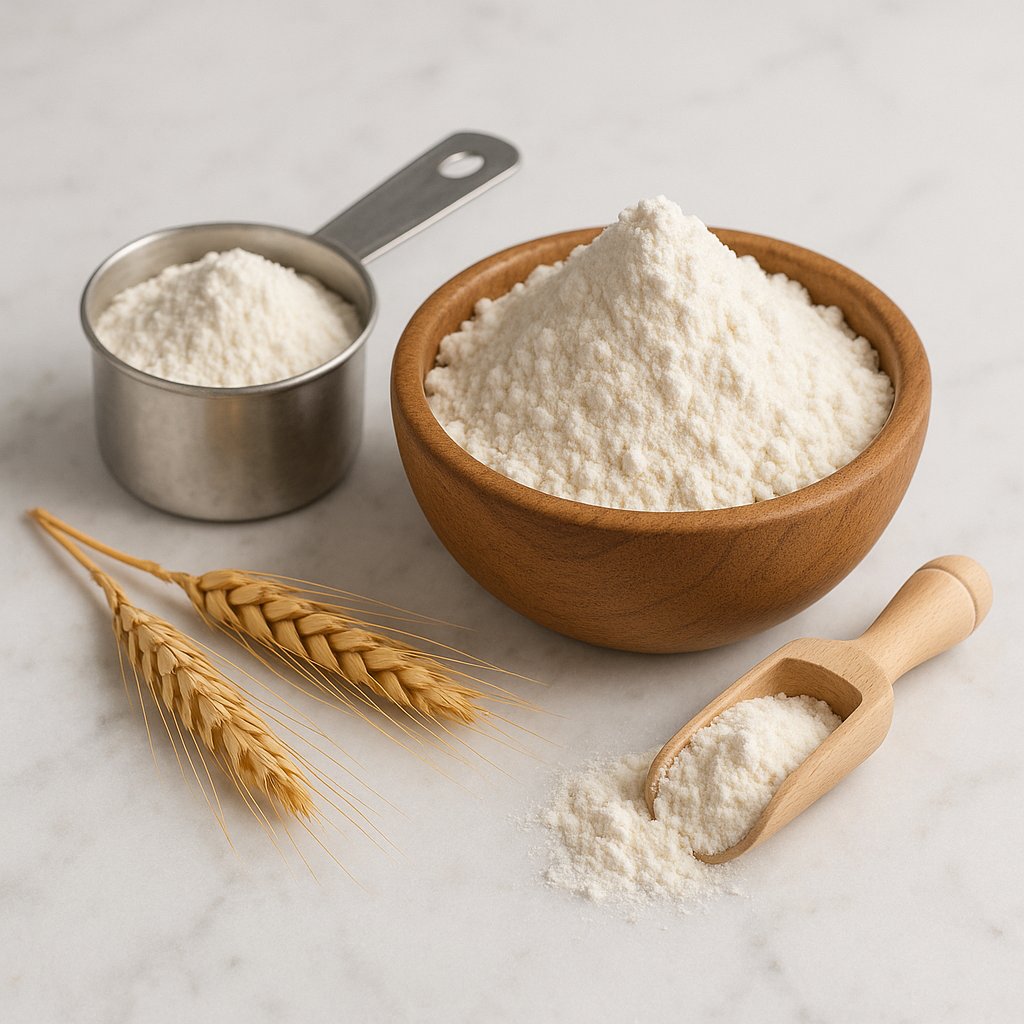
Wheat flour Type 550 is a widely used flour variety in bakeries and kitchens. When you ask about availability and types, it’s about where the flour comes from, what variants exist and how you can buy it. I explain it simply so a 12‑year‑old can understand.
Origin and growing regions
The flour comes from wheat, a cereal plant that grows in fields. In Germany wheat is mainly grown in regions like Lower Saxony, North Rhine‑Westphalia, Bavaria and Brandenburg. But wheat is also found in many other countries: in Canada, the USA, Australia, Russia and many European countries. Imagine: the grain doesn't travel by itself, but countries ship the milled flour or the grain in sacks so bakers and supermarkets can obtain it.
The flour comes from wheat, a cereal plant that grows in fields. In Germany wheat is mainly grown in regions like Lower Saxony, North Rhine‑Westphalia, Bavaria and Brandenburg. But wheat is also found in many other countries: in Canada, the USA, Australia, Russia and many European countries. Imagine: the grain doesn't travel by itself, but countries ship the milled flour or the grain in sacks so bakers and supermarkets can obtain it.
What does “Type 550” mean?
The number 550 indicates how much of the whole grain remains in the flour. Simply put: the higher the number, the more outer layers and germ of the grain are still present. These layers contain many minerals and a bit of color. Type 550 is lighter than wholemeal flour but somewhat "stronger" than very fine flour that often has the number 405. You can imagine it like clothing: 405 is like a thin T‑shirt, 550 like a warmer sweater – both useful, but for different things.
The number 550 indicates how much of the whole grain remains in the flour. Simply put: the higher the number, the more outer layers and germ of the grain are still present. These layers contain many minerals and a bit of color. Type 550 is lighter than wholemeal flour but somewhat "stronger" than very fine flour that often has the number 405. You can imagine it like clothing: 405 is like a thin T‑shirt, 550 like a warmer sweater – both useful, but for different things.
Available kinds and variants
Type 550 is not available in just one version. Here are the main variants you can find in stores:
Type 550 is not available in just one version. Here are the main variants you can find in stores:
- Conventional wheat flour Type 550 – the regular flour from conventional fields. It’s the most common in supermarkets.
- Organic flour Type 550 – comes from farms that avoid chemical pesticides. For people who value sustainable farming.
- Strong baking flour (sometimes called “strong Type 550”) – has a bit more protein and is particularly suitable for rolls and breads that should rise high.
- Stone‑milled flour – is milled more slowly and can have a slightly different aroma. It feels a bit coarser.
- Prebaked or premixed variants – some flours are mixed with ingredients like malt or enzymes so doughs are quicker or easier to make. These flours are practical if you have little experience.
- Packaging sizes – flour is sold in small packets (500 g or 1 kg) for home use, as well as 5 kg or 25 kg sacks for bakers.
Where can you buy Type 550?
You can get it in supermarkets, health food stores, from the regional miller or online. Bakers often buy larger sacks from specialist wholesalers. If you’re looking for a specific variety (for example organic or stone‑milled), check specialty shops or online.
You can get it in supermarkets, health food stores, from the regional miller or online. Bakers often buy larger sacks from specialist wholesalers. If you’re looking for a specific variety (for example organic or stone‑milled), check specialty shops or online.
In summary: wheat flour Type 550 is slightly darker and a bit stronger than very light flour, it is grown in many countries and is available in many variants – from standard to organic, from stone‑milled to strong baking flour. So almost everyone can find the right type for rolls, bread or cakes.