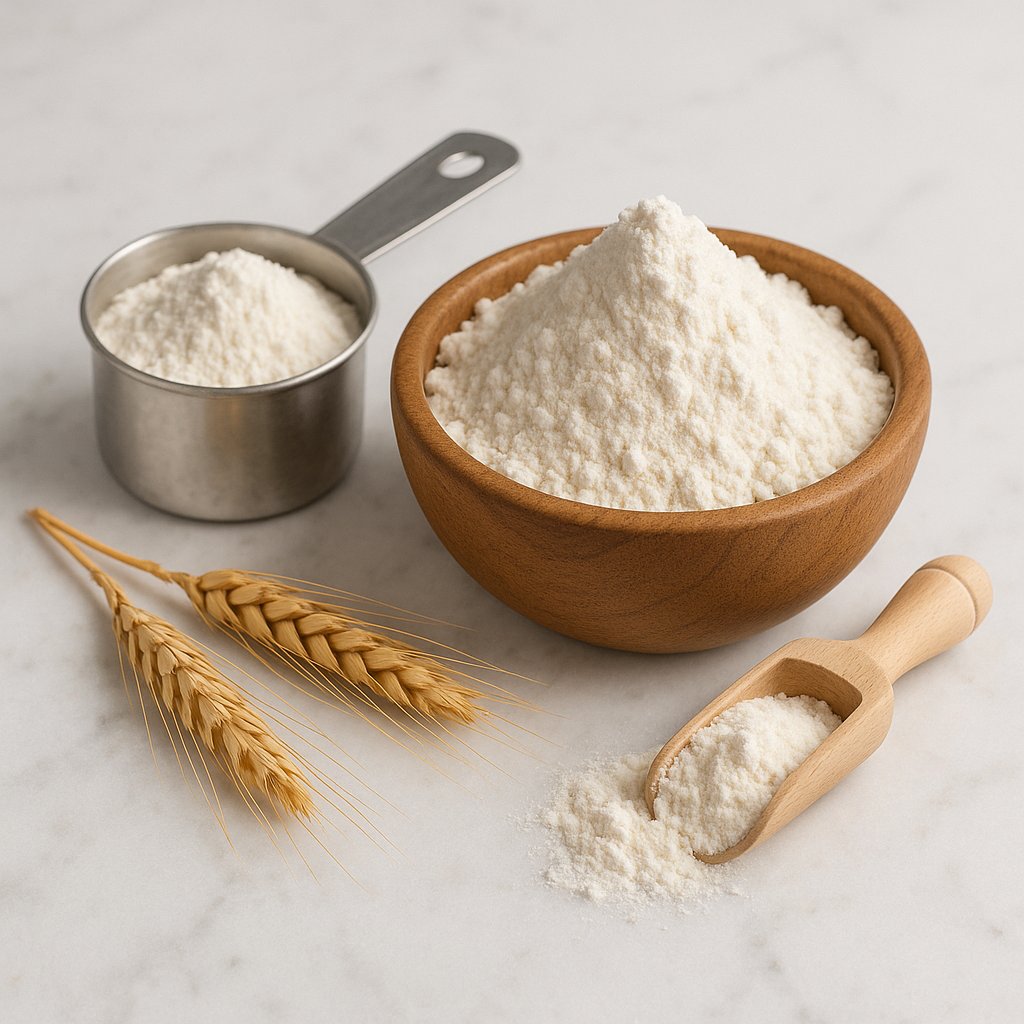
Wheat flour Type 1050 is a type of flour popular in many bakeries and kitchens. The name says something about how "whole" the flour is: Type 1050 contains more of the darker parts of the grain than very light flour, but it is not as coarse as wholemeal flour. You can picture it this way: if light flour is like white sand and wholemeal like coarse gravel, then Type 1050 is somewhere in between – a bit heartier and more flavorful.
Origin and growing regions
The flour comes from wheat, a cereal grown in many countries. In Europe major growing areas include:
- Germany – especially in the flat regions and fields of the north and east,
- France and Poland – well-known producers of bread cereals,
- other countries such as Ukraine, Russia, Canada and the USA also supply large amounts of wheat that is milled into flour.
Wheat needs a temperate climate, sun and sufficient rain. After harvest the grain is stored and then milled into flour so that Type 1050 can be bought year-round.
Available kinds and variants
Type 1050 is not a single product – there are different variants that differ in taste, processing and quality. Here is an overview, simply explained:
Type 1050 is not a single product – there are different variants that differ in taste, processing and quality. Here is an overview, simply explained:
- Conventional Type 1050: the regular flour from industrial mills. Good for bread, rolls and hearty baked goods.
- Organic Type 1050: from organically grown wheat, without synthetic pesticides. For people who value environmentally friendly farming.
- Regional or locally milled: flour from nearby mills. Great if you want to know exactly where the grain comes from.
- Stone-milled flour: the grain is ground more slowly and gently between stones. The flour remains more aromatic and often feels more rustic.
- Roller-milled flour: the common industrial process. Very consistent and suitable for many recipes.
- Lighter or darker variants: some producers vary how much of the bran remains in the flour – so the flour can be slightly lighter or darker in color and taste.
Availability
Type 1050 is easy to find in supermarkets, bakeries, health food stores, directly from mills and online. Many bakers like to mix it with other flours because it gives bread flavor and structure. If you have a recipe that calls for "Type 1050", you'll usually find a suitable package in the store. Look for labels like "regional", "organic" or "stone-milled" if origin or processing are important to you.
Type 1050 is easy to find in supermarkets, bakeries, health food stores, directly from mills and online. Many bakers like to mix it with other flours because it gives bread flavor and structure. If you have a recipe that calls for "Type 1050", you'll usually find a suitable package in the store. Look for labels like "regional", "organic" or "stone-milled" if origin or processing are important to you.
In short: wheat flour Type 1050 comes from wheat, is grown in many countries and is available year-round. It comes in various variants – from organic to regional to stone-milled – and is particularly suitable for rustic breads and baked goods that should have more flavor and bite.