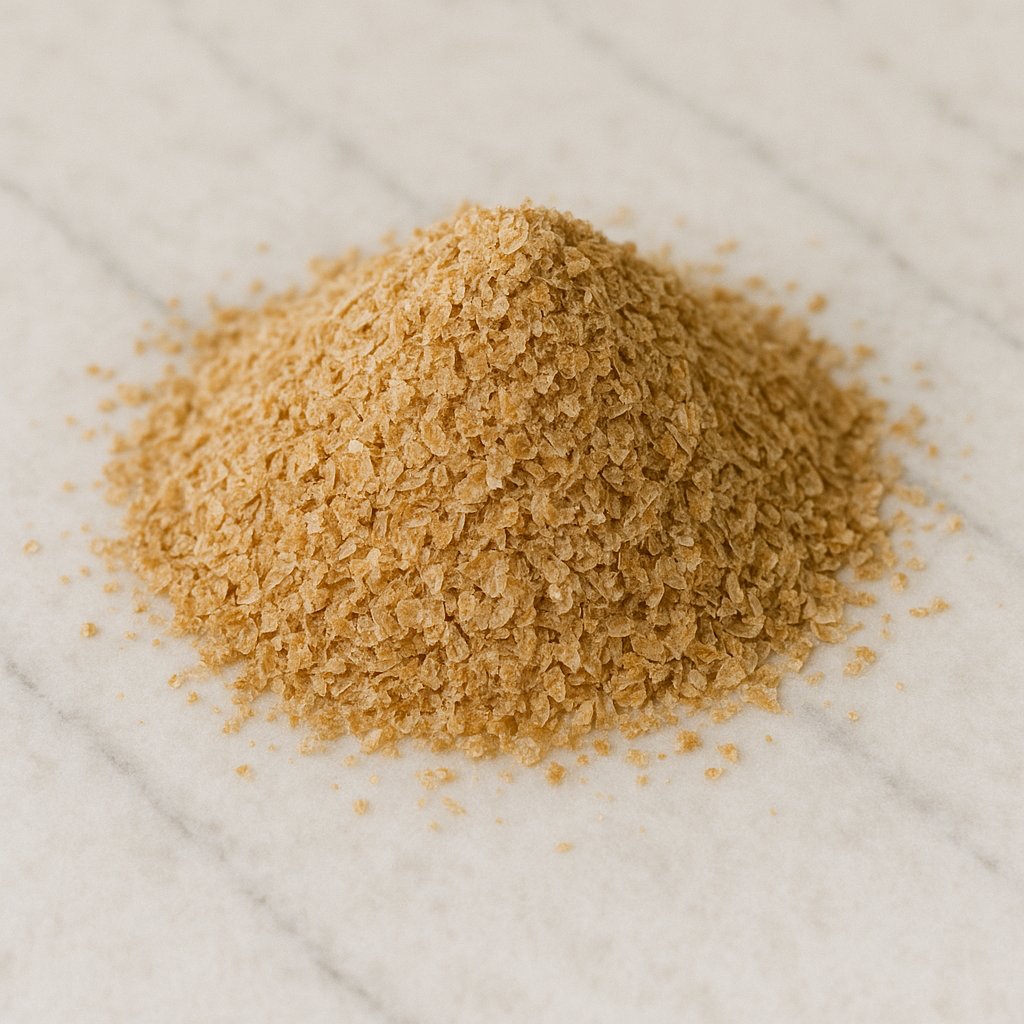
Availability and types of wheat bran
Wheat bran is a simple, healthy food derived from the outer layers of the wheat kernel. When whole grain is milled into flour, the individual parts are separated: the endosperm (the flour), the germ (the small sprout) and the bran (the husk). Bran is what remains when the kernel is “peeled.” You can think of it like an apple: when you peel it, the peel remains — for wheat that peel is the bran.
Origin and cultivation areas
Wheat bran comes from regions where wheat is grown. Wheat grows on large fields in many parts of the world. The main cultivation areas are:
- Europe – countries like Germany, France and Poland grow a lot of wheat. Many bran products are available in supermarkets there.
- North America – especially the USA and Canada have large wheat-growing areas. Bran is often used in breakfast products there.
- Asia – countries such as China and India also grow considerable amounts of wheat, particularly in flat regions with adequate rainfall.
- Australia – wheat is also an important crop here, particularly in drier regions with wide fields.
Wheat bran is therefore easy to find because wheat is grown globally. In supermarkets it is usually located near muesli or baking ingredients, and it is often also available in health food stores.
Available forms and variants
Wheat bran is available in different forms depending on how coarsely or finely it has been milled and which parts of the kernel are included. The main variants are:
- Coarse bran – larger pieces of the husk are visible. It feels fibrous and is well suited when you want some chew, for example in yogurt or bread.
- Fine bran – ground more finely, almost like a fine powder. It mixes more easily into batters or smoothies because the pieces are barely noticeable.
- Whole-grain bran – still contains more parts of the kernel, including small amounts of the germ. This is particularly nutritious because many vitamins and fats are located in the germ.
- Dehulled bran – sometimes bran is additionally cleaned to make it milder in taste and longer-lasting. This variant is often found on the market.
There are also ready-made mixes, for example wheat bran combined with oats, seeds or dried fruits. Such mixes are practical for breakfast or as a baking ingredient.
How to recognize and buy it
When buying, check the label: it often states whether the bran is fine or coarse and whether it comes from organic farming. Organic products indicate lower pesticide use. Bran is usually offered in packages, sometimes sold loose in larger quantities.
Wheat bran is thus a versatile, widely available product. Whether coarse for more bite in bread or fine for light cakes and smoothies — there is a suitable variant for almost every taste and use. Because wheat grows in many countries, bran is easy to find in supermarkets, health food stores or online. This variety makes it easy to choose the right bran for your own cooking and baking.