Menu & categories

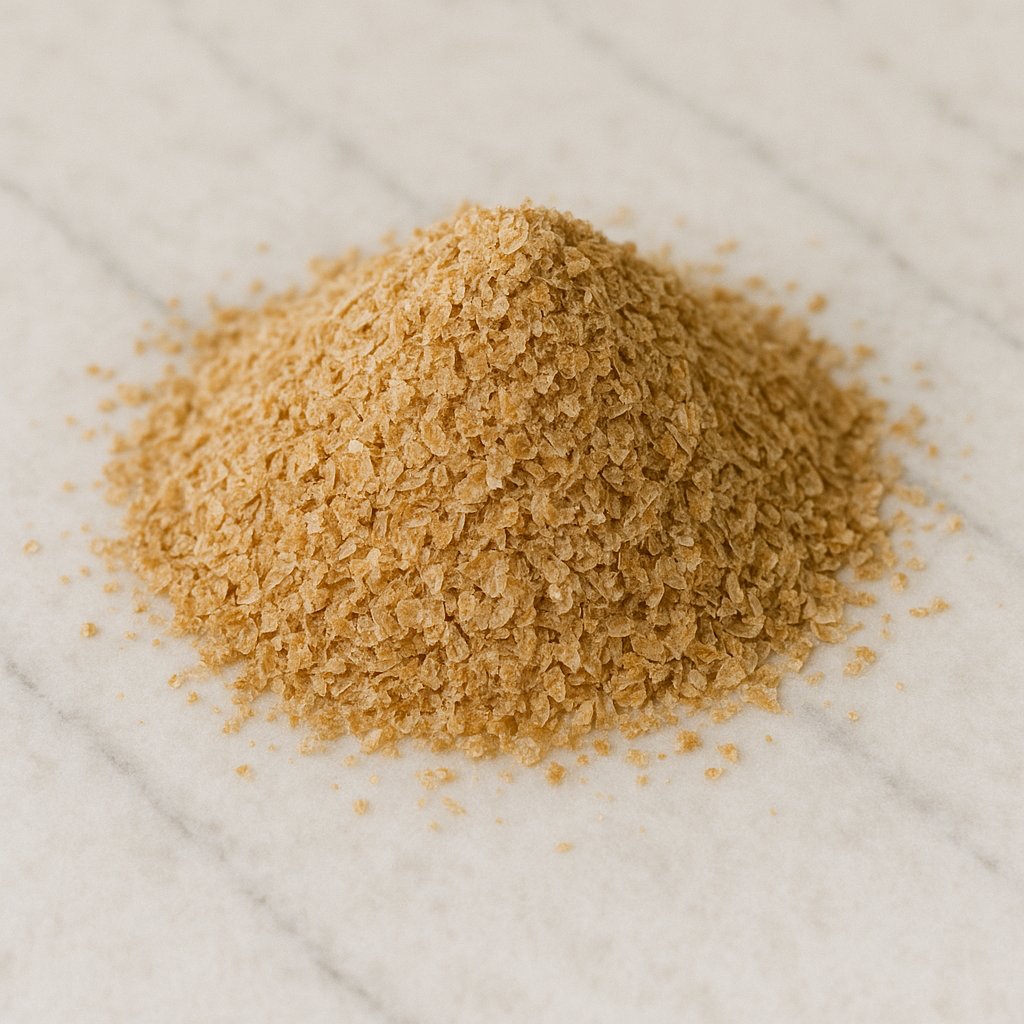
Wheat bran

Fiber-rich bran from the wheat grain

Wiki about wheat bran Nutri-Score A Vegan Yes Gluten-free No Lactose-free Yes Nut-free Yes
NUTRITION / 100 g
216 kcal 16.0 g Protein 64.5 g Kohlenhydrate 4.3 g Fett

Introduction

Wheat bran in a bowl
I admit it: the first time I consciously brought wheat bran into my kitchen, it was less a culinary revelation and more a pragmatic rescue attempt after a baking mishap. A colleague of mine casually mentioned how his grandmother stirs a spoonful of bran into yogurt to start the day. I was skeptical — and curious enough to try. After just a few days I noticed how this unassuming ingredient changed my daily routine.

Wheat bran is the outer, fiber-rich part of the wheat kernel that remains after milling. It has a rustic texture and a nutty, slightly earthy flavor that adds depth to breads and mueslis. In my kitchen I use it in many ways: a tablespoon in pancake batter for more bite, a splash in smoothies for volume, and a topping on roasted vegetables that becomes crispy without dominating.

What fascinates me most are the health benefits. Wheat bran is rich in fiber, especially insoluble fiber, which stimulates digestion and promotes long-lasting satiety. I remember a colleague who, after a long night of research, always reached for a glass of water with bran — a small routine that helped her feel lighter. Of course it’s important to drink enough fluids when consuming bran so it can exert its effect.

Its versatility in baking is also practical: it provides structure and moisture, but cannot fully replace wheat flour if you want airy doughs. For savory recipes like patties or breadings, however, bran is ideal. I even once experimented and baked muffins with part bran — the texture was surprisingly pleasant, with a slight whole-grain core.

  • Taste: nutty, slightly earthy.
  • Use: baking, smoothies, toppings, yogurts.
  • Benefits: high in fiber, filling, versatile.
In the end, wheat bran for me is one of those ingredients that remind us small additions in everyday life can have big effects. It is down-to-earth, practical and full of possibilities — exactly what I value in a good pantry.

Availability & types

Availability and types of wheat bran

Wheat bran is a simple, healthy food derived from the outer layers of the wheat kernel. When whole grain is milled into flour, the individual parts are separated: the endosperm (the flour), the germ (the small sprout) and the bran (the husk). Bran is what remains when the kernel is “peeled.” You can think of it like an apple: when you peel it, the peel remains — for wheat that peel is the bran.

Origin and cultivation areas

Wheat bran comes from regions where wheat is grown. Wheat grows on large fields in many parts of the world. The main cultivation areas are:

  • Europe – countries like Germany, France and Poland grow a lot of wheat. Many bran products are available in supermarkets there.
  • North America – especially the USA and Canada have large wheat-growing areas. Bran is often used in breakfast products there.
  • Asia – countries such as China and India also grow considerable amounts of wheat, particularly in flat regions with adequate rainfall.
  • Australia – wheat is also an important crop here, particularly in drier regions with wide fields.
Wheat bran is therefore easy to find because wheat is grown globally. In supermarkets it is usually located near muesli or baking ingredients, and it is often also available in health food stores.

Available forms and variants

Wheat bran is available in different forms depending on how coarsely or finely it has been milled and which parts of the kernel are included. The main variants are:

  • Coarse bran – larger pieces of the husk are visible. It feels fibrous and is well suited when you want some chew, for example in yogurt or bread.
  • Fine bran – ground more finely, almost like a fine powder. It mixes more easily into batters or smoothies because the pieces are barely noticeable.
  • Whole-grain bran – still contains more parts of the kernel, including small amounts of the germ. This is particularly nutritious because many vitamins and fats are located in the germ.
  • Dehulled bran – sometimes bran is additionally cleaned to make it milder in taste and longer-lasting. This variant is often found on the market.
There are also ready-made mixes, for example wheat bran combined with oats, seeds or dried fruits. Such mixes are practical for breakfast or as a baking ingredient.

How to recognize and buy it

When buying, check the label: it often states whether the bran is fine or coarse and whether it comes from organic farming. Organic products indicate lower pesticide use. Bran is usually offered in packages, sometimes sold loose in larger quantities.

Wheat bran is thus a versatile, widely available product. Whether coarse for more bite in bread or fine for light cakes and smoothies — there is a suitable variant for almost every taste and use. Because wheat grows in many countries, bran is easy to find in supermarkets, health food stores or online. This variety makes it easy to choose the right bran for your own cooking and baking.
Details & nutrition

Property Value
Unit g
Calories per 100 216
Protein per 100 16.0
Carbohydrates per 100 64.5
Sugar per 100 0.4
Fat per 100 4.3
Saturated fat per 100 0.8
Monounsaturated fat 0.7
Polyunsaturated fat 2.4
Fiber per 100 42.8
Vitamin C (mg) per 100 0
Vitamin D (IU) per 100 0
Calcium (mg) per 100 73
Iron (mg) per 100 10.6
Nutri-Score A
CO₂ footprint 0.8
Origin Cereal product from the wheat grain
Gluten-free No
Lactose-free Yes
Nut-free Yes
Vegan Yes
Note Wheat bran is particularly high in fiber and is often used to enrich baked goods, mueslis, or yogurt. Not suitable for people with celiac disease or gluten intolerance.

Technical & scientific information

Wheat bran refers to the outer layers of the wheat kernel that arise as a by-product during milling to flour. It consists mainly of the seed coat (pericarp), the aleurone layer and partially of the germ fraction. Technically, bran is a structural and dietary fiber carrier used in the food industry both as an ingredient to enrich baked goods and as animal feed.

Chemical composition and constituents
Wheat bran has a complex composition. Typical components include:

  • Dietary fiber: 40–50 % of dry matter, mainly insoluble fibers such as cellulose, hemicelluloses (e.g. arabinoxylans) and lignin.
  • Proteins: 12–17 %, qualitatively similar to those of whole wheat but with lower biological value than whey or soy proteins.
  • Fats: 4–8 %, with a large portion of polyunsaturated fatty acids; the fat content can be higher than in white flour due to the included germ.
  • Minerals and trace elements: relatively high concentrations of magnesium, phosphorus, iron and zinc, as well as B vitamins (particularly thiamine and niacin).
  • Phytochemicals: phenolic compounds and ferulic acid, which may exhibit antioxidant properties.
Nutritional values
Per 100 g of dry wheat bran there are typically about 200–250 kcal. Energy content varies with fat and fiber content. Due to the high fiber content, the metabolizable energy is reduced compared with refined flour. The satiating effect is relatively strong, which is why bran is used in dietary applications.

Processing methods
Wheat bran is produced primarily during the milling process of wheat into various flour types. Industrial processing steps can include:

  • Separation and classification of husk components by sieves and air-stream techniques.
  • Drying to defined moisture levels to ensure storage stability and microbial safety.
  • Thermal treatment or extrusion to reduce enzymatic activities (e.g. lipases that promote rancidity) and increase shelf life.
  • Fine grinding or sieving to adjust particle size for different application fields (bakery products, muesli, animal feed).
Physiological and health aspects
The physiological effects of wheat bran are mainly due to its content of insoluble fibers. Relevant effects include:

  • Increase in stool bulk and shortening of intestinal transit time, which can help prevent constipation.
  • Potential reduction in risk of colorectal diseases through mechanical effects and binding of substances in the gut lumen.
  • Low impact on postprandial glucose peaks compared to rapidly available carbohydrates, although soluble fibers (present to a lesser extent in bran) have a stronger glucose-regulating effect.
  • Possible adverse effects at high intake: flatulence, feeling of fullness and, with insufficient fluid intake, risk of intestinal blockage.
Safety and quality aspects
Wheat bran tends to oxidize and become rancid due to its higher fat content and enzymatic activity in the germ. Controlled storage conditions (cool, dry, airtight) and appropriate pre-treatments are important for product quality. Furthermore, bran can contain higher concentrations of so-called antinutrients such as phytic acid, which can inhibit mineral absorption; this can be partly reduced in certain applications by fermentation or heating.

Applications
Wheat bran is used in a variety of applications:

  • as a fiber source in baked goods, breakfast cereals and muesli blends;
  • as a functional additive to improve texture and water-binding capacity in doughs;
  • in animal feeds to provide energy and fiber;
  • industrially as a raw material for biogas production or as a substrate in biotechnology applications.
In summary, wheat bran is a nutrient-rich by-product of wheat milling with a high proportion of insoluble fiber, important minerals and secondary plant compounds. Its properties are relevant both nutritionally and technologically, with shelf life and possible antinutritional factors to be considered during processing and application.

Wiki entry for: wheat bran
Active now: 17 visitors of which 2 logged-in members in the last 5 minutes