Menu & categories

Baking wafers

Thin edible wafers serving as a neutral base for pastries

Wiki about wafer sheet Nutri-Score C Vegan Yes Gluten-free No Lactose-free Yes Nut-free Yes
NUTRITION / 100 g
370 kcal 8 g Protein 82 g Kohlenhydrate 0.5 g Fett

Introduction

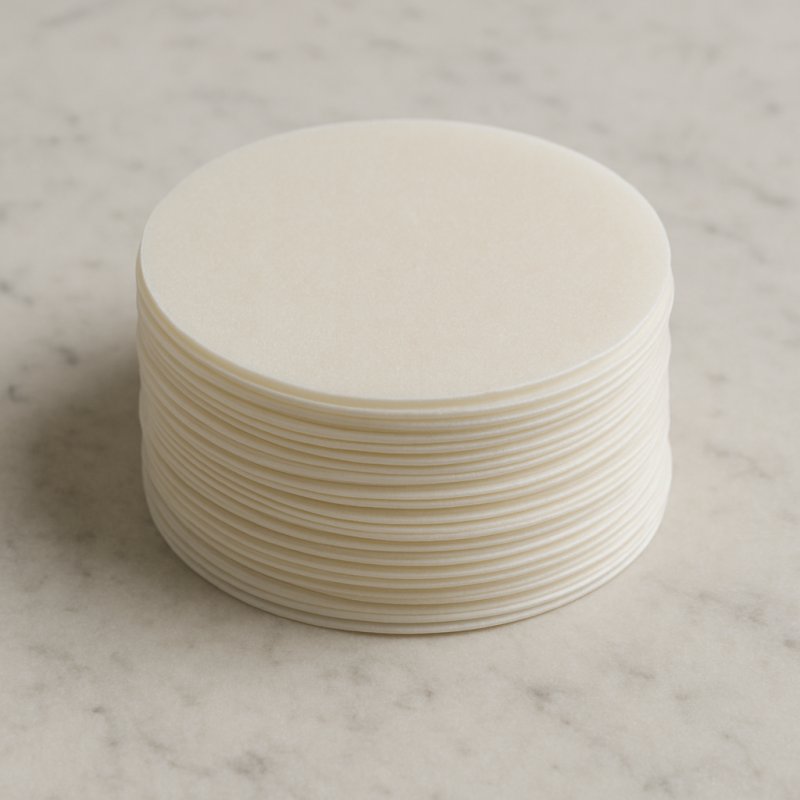
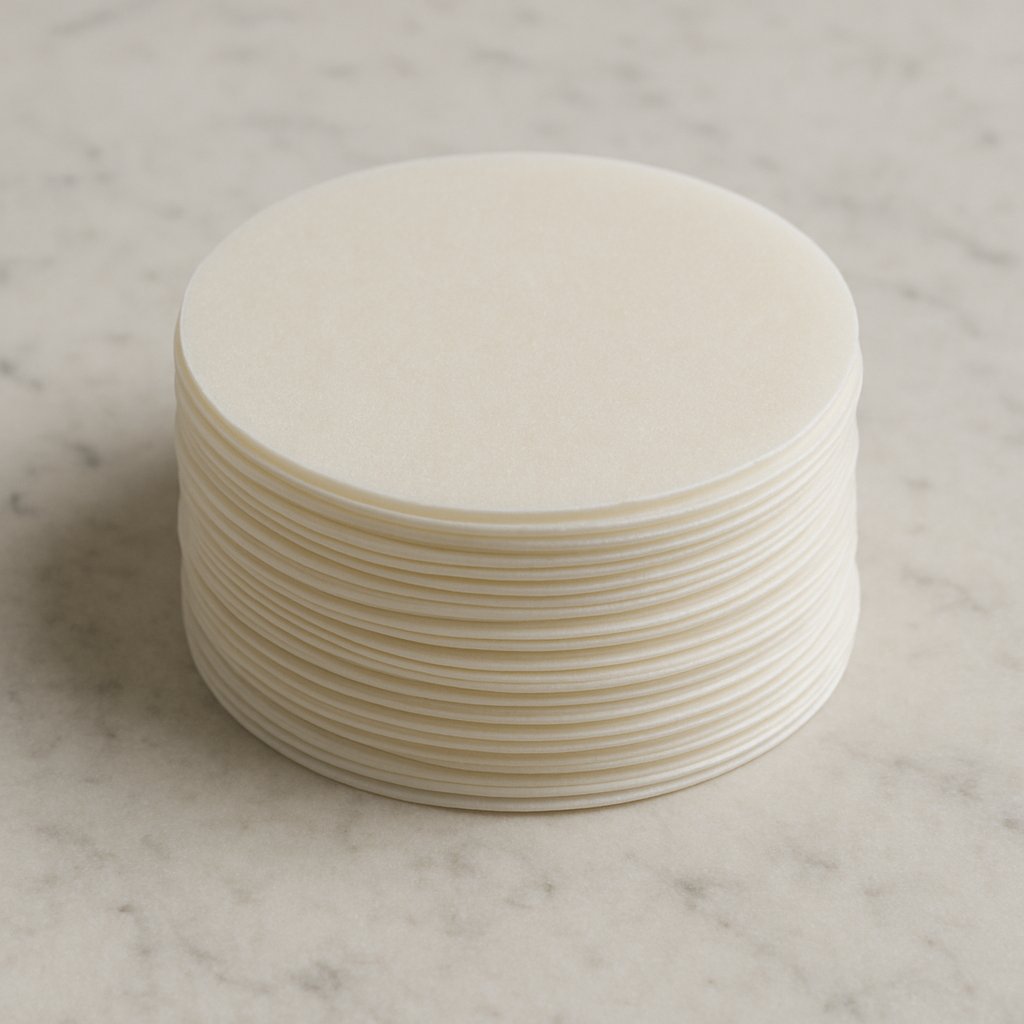
Round white baking wafers on a wooden board
I still remember my first real contact with baking wafers: an afternoon coffee at a friend's house, on the table a pile of homemade gingerbread that looked delicate and almost weightless. When I cut into it I asked in surprise why the pieces stayed so uniform – and she smiled: “The secret is the wafers.” Since then these thin, often overlooked companions have accompanied me through cookie baking, praline-making and occasional kitchen experiments, where I learned more about shape, texture and tradition than I expected.

Baking wafers are very thin, round or rectangular bases made of pure starch (usually wheat starch), water and sometimes a little salt. They are baked – hence the name – and are flavorless but wonderfully practical. Their strength lies in protection and presentation: they prevent moist or sticky baked goods from sticking to the baking tray, they make transporting chocolates easier and at the same time provide a smooth, clean surface for artistic decoration.

What I particularly like about baking wafers is their versatility. In the Christmas season I put them under slices of stollen so the powdered sugar doesn't slip. A colleague of mine uses them as a discreet base for cheese morsels on buffets, and once I used them creatively as an edible separating layer in a layer cake to prevent filling from escaping. They are also a practical help when portioning: with wafers you can weigh and shape dough cleanly without sticky hands.

A small tip from my kitchen: if you're afraid of boring shapes you can cut wafers or tint them slightly with food coloring. There are now variants made from corn or rice flour for allergy sufferers. They are usually sustainable, as they are used sparingly and can be composted.

  • Characteristics: thin, neutral in taste, heat-resistant
  • Uses: gingerbread, pralines, cake bases, portioning
  • Varieties: wheat, corn, rice wafers
Whether as an unassuming helper when baking or as a stylish foundation for sweet works of art – baking wafers have found a firm place in my kitchen because they simply work and often make the difference.

Availability & types

Availability and types

Baking wafers are thin, round wafers made from fine wheat or rice flour and are often used to protect candies, pastries or the bottoms of spirit bottles. They are easy to find in many supermarkets, bakery shops and online. You can sometimes spot them on the same shelf as baking paper or cake accessories. In smaller shops they are sometimes particularly visible only during Advent or Christmas time, because many cookies are baked then. Online shops and larger specialist baking stores, by contrast, have a wider selection year-round.

The origin of baking wafers is straightforward: they are manufactured in bakeries and small artisan producers. These businesses use simple ingredients like flour, water and sometimes a little oil or sugar. Historically wafers come from Europe and the Near East, where similar thin baked goods have long been known. Today they are produced in many countries, especially where a lot of baking takes place.

Growing regions and raw materials

Baking wafers themselves do not grow in fields, since they are not plants but flour-based products. But the flour used for wafers of course comes from cereals. The main cereals for wafers are:

  • Wheat: Wheat is grown in many countries – major producing regions include Europe, North America and parts of Asia. Wheat flour makes wafers elastic and light.
  • Rice: Rice flour is used particularly where gluten-free wafers are desired. Rice is grown mainly in Asia, for example in China, India and Southeast Asia.
  • Corn: Sometimes corn flour is also used, specifically for certain regional recipes or for people who cannot tolerate wheat.
You can picture it like this: wafers are like very thin pancakes, but instead of growing on the farm they come from the mill (the flour) and then to the bakery, where they are baked.

Available types and variants

Baking wafers come in different shapes and properties so they suit different purposes. Here are some common types:

  • Standard wafers: Round, very thin discs made from wheat flour. These are the best known and are used for pralines, gingerbread or as supports under bottles.
  • Gluten-free wafers: Made from rice or corn flour. They look almost identical to regular wafers but are ideal for people who cannot tolerate gluten. You can compare them to lactose-free milk compared to regular milk.
  • Preformed wafers: Sometimes there are wafers with grooves or shapes that fit specific sweets directly. This saves cutting or punching out shapes.
  • Coated wafers: Some wafers have a thin coating of fat or sugar so they do not absorb moisture so easily and remain crispy longer. This is similar to a small protective layer.
  • Colored or flavored: Rare, but possible: wafers with dyes or a light flavor, such as vanilla. These are usually used for special decorations.
When buying you can also pay attention to size: there are very small wafers for pralines and larger ones for pastry pieces. A handy way to remember: wafers are like the “plates” or “coasters” for sweets — in different sizes and materials depending on what you need.

In summary: baking wafers are readily available, made from flour cultivated in many countries, and come in several variants – from regular wheat wafers to gluten-free and specially coated types. This way you can find a suitable wafer for almost any baking project.
Details & nutrition

Property Value
Unit g
Average weight per piece 0.7
Calories per 100 370
Protein per 100 8
Carbohydrates per 100 82
Sugar per 100 1
Fat per 100 0.5
Saturated fat per 100 0.1
Monounsaturated fat 0.1
Polyunsaturated fat 0.3
Fiber per 100 3
Vitamin C (mg) per 100 0
Vitamin D (IU) per 100 0
Calcium (mg) per 100 20
Iron (mg) per 100 1
Nutri-Score C
CO₂ footprint 0.6
Origin Europe
Gluten-free No
Lactose-free Yes
Nut-free Yes
Vegan Yes
Note Nutritional values may vary slightly by manufacturer; typically made from wheat starch or wheat flour and water.

Technical & scientific information

Baking wafers are thin, round wafer sheets made from starch and water, traditionally used as a separating layer between baked goods or as packaging material for sweets. They are composed mainly of plant starch, usually wheat or potato starch, supplemented with water and occasionally small amounts of binders or emulsifiers. Physically, baking wafers show high dry strength at very low thickness (typically 0.2–0.5 mm), are brittle when dry and become softer when heated or in moist environments. Their structure is amorphous to slightly crystalline, depending on the production and drying conditions.

Chemical composition and ingredients: The main component of baking wafers is starch, a polysaccharide consisting of amylose and amylopectin. The ratio of these two fractions largely determines the physical properties: a higher amylose content leads to a firmer, more brittle structure, while amylopectin makes it softer and stickier. In addition to starch, small amounts of vegetable oils, salt, sugar or food additives (e.g. lecithins as emulsifiers or antioxidants) may be present. Industrially produced wafers may also contain traces of flour proteins (gluten, if wheat starch was used).

Nutritional values are mainly determined by the high starch content. Per 100 g pure starch preparations provide about 330–360 kcal, although the energy value of baking wafers is minimal due to the small weight per serving. Nutritionally, carbohydrates dominate; proteins, fats and fiber are typically present only in trace amounts. Micronutrients are negligible unless the wafers have been fortified or contain additional ingredients.

Manufacturing process includes several standardized steps:

  • Starch preparation: cleaning and, if necessary, milling or dispersing the raw starch in water.
  • Gelation or liquefaction: the starch is processed into a uniform suspension; in some procedures it is pretreated thermally to achieve specific gelation characteristics.
  • Forming: the starch suspension is applied thinly to a hot metal or ceramic plate and spread evenly; the typical round shape is then cut out or formed by a die.
  • Drying: controlled heat removes the water, with speed and temperature determining the final structure and crispness.
  • Packaging: after cooling, wafers are hygienically packaged to prevent moisture uptake and breakage.
Physiological and health aspects: As a product consisting almost entirely of starch, baking wafers are easily digestible and are rapidly broken down to glucose. For people with celiac disease or gluten intolerance, wafers made from wheat starch can be problematic if residual proteins are present; alternatively, gluten-free variants made from potato or corn starch are offered. Allergic reactions are rare but may occur due to additives or cross-contamination. Given the low calorie contribution per serving, wafers are nutritionally insignificant, but excessive consumption can contribute to increased carbohydrate intake.

Technological applications and properties: Baking wafers are mainly used as a separating layer in baking to prevent sticking to the baking tray and as an edible base for chocolates, confectionery or marzipan. Their hygienic, neutral taste and the ability to bridge moisture temporarily make them useful in pastry and confectionery production. Coatings (e.g. thin fat films) can improve barrier properties to delay moisture penetration or preserve aromatic compounds.

Storage and shelf life: Wafers are hygroscopic and should be stored dry, cool and protected from light to avoid embrittlement or swelling. Packaging with moisture barriers extends shelf life; with proper handling storage time is several months up to a year.

In summary, baking wafers are a simply structured, function-oriented food product whose properties are largely determined by the type of starch used, the amylose/amylopectin ratio and the manufacturing process. They offer practical technological advantages in baking and confectionery applications, but require targeted selection of raw materials for allergy sufferers or gluten-free diets.

Wiki entry for: wafer sheet
Active now: 15 visitors of which 2 logged-in members in the last 5 minutes