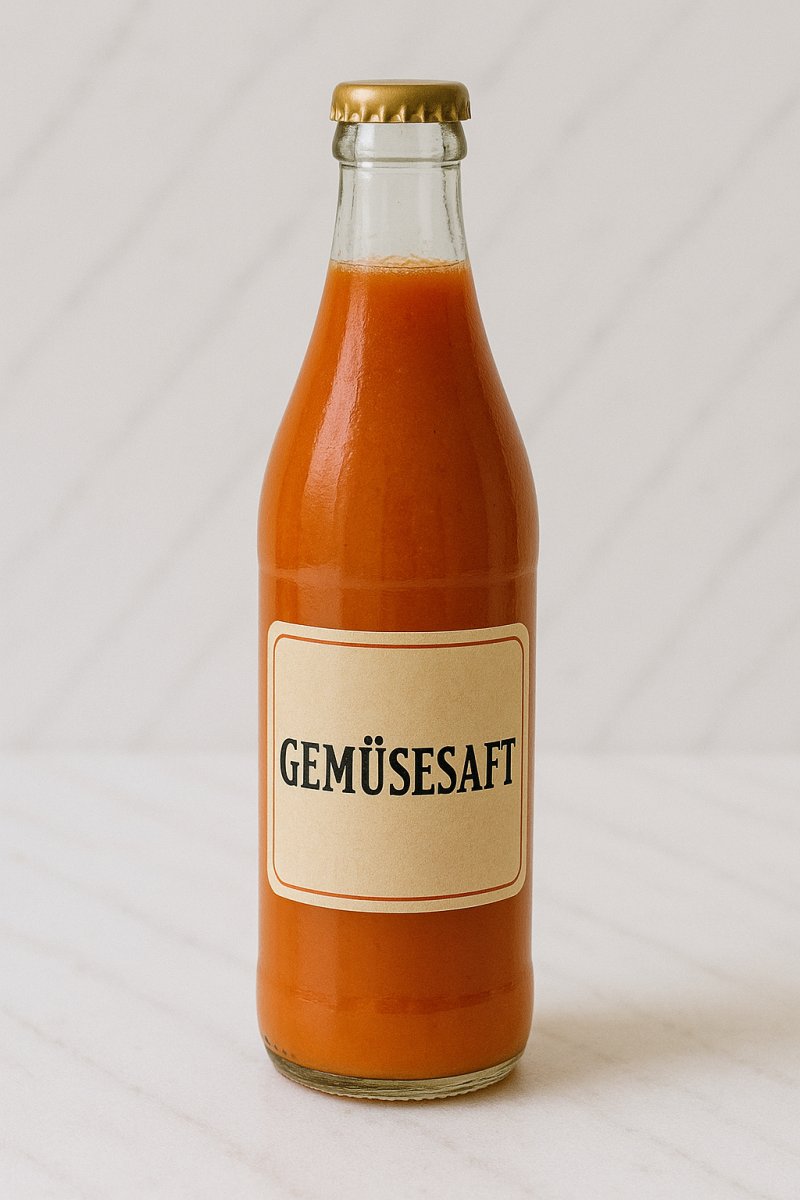
Availability and types of vegetable juice
Vegetable juice is made from many different kinds of vegetables. The ingredients usually come from fields or gardens where carrots, tomatoes, beetroot, celery and many other plants grow. These plants are grown in different parts of the world — for example in Europe (Spain, Italy, the Netherlands), in the USA (California) and in large producing countries like China or India. Which vegetable grows where depends on the climate: tomatoes and peppers like warm places, while carrots also do well in cooler regions.
Where to find vegetable juice
Vegetable juice is available almost everywhere: in supermarkets, health food stores, farmers' markets, juice bars and online. Fresh juice is often found in the refrigerated section to keep it longer. Shelf‑stable varieties are also available in cartons or cans that do not need refrigeration until opened. At farmers' markets you often find very fresh varieties sold immediately after pressing — it's like buying fruit and vegetables directly from the farmer.
Different types of vegetable juice
- Pure vegetable juice: made from a single vegetable, for example pure carrot juice or pure tomato juice. It tastes exactly like that plant — like a juice made from a single fruit.
- Blends: several vegetables are pressed together here, for example carrot + apple + beetroot or various vegetables for a “vegetable cocktail”. It's like a salad in a glass.
- With spices or herbs: some juices have added salt, pepper, celery or herbs for more flavor. A well‑known example is the juice used for a “Bloody Mary” cocktail.
- With fruit content: small amounts of fruit are often mixed in to make the juice sweeter, for example apple or pear.
- Unfiltered (with pulp): these juices look denser and cloudier because fiber pieces remain — almost like a thin smoothie.
- Filtered/clear: here the pulp has been removed so the juice looks clearer.
- Concentrate: some juices are first concentrated (water removed) and later reconstituted with water. This saves space in transport, like when you use instant soup and reconstitute it with water.
- Cold‑pressed: with this method the juice is gently pressed without much heat. It often retains more flavor and some vitamins — you can think of it as slow pressing rather than high‑speed blending.
- Organic variants: these come from controlled cultivation without many synthetic agents. Organic is like “naturally grown” with special rules for the farmer.
- Powder or concentrate to reconstitute: for travel there are also vegetable powders to mix with water — convenient, but different in taste.
In summary: vegetable juice is available fresh or shelf‑stable, pure or blended, with or without pulp, from concentrate or cold‑pressed and even as organic variants. You can buy it in supermarkets, from farmers or at juice shops — depending on how fresh or special you want it. That way you can easily find the variety that suits your taste best.