Menu & categories

Vanilla flavoring

Flavoring with an intense vanilla taste for desserts and baked goods

Wiki about vanilla flavoring Nutri-Score C Vegan Yes Gluten-free Yes Lactose-free Yes Nut-free Yes
NUTRITION / 100 ml
250 kcal 0 g Protein 1 g Kohlenhydrate 0 g Fett

Introduction

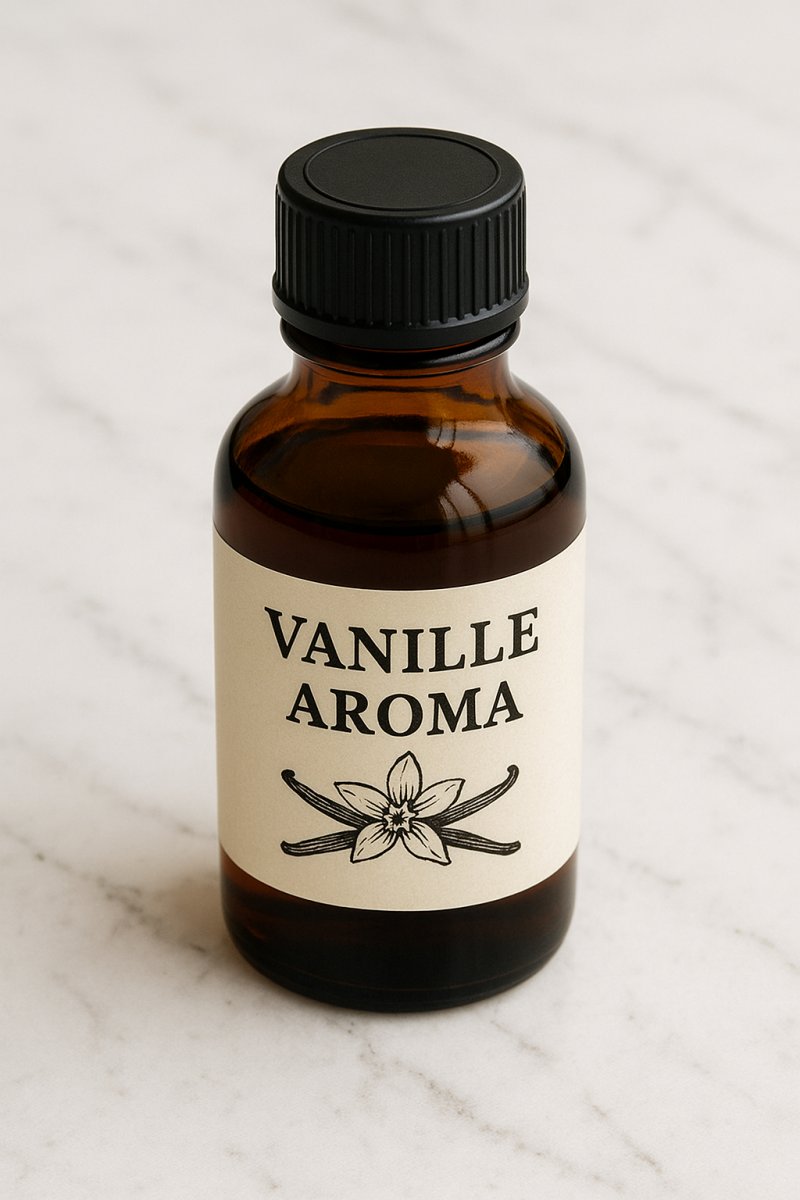
Vial of vanilla flavoring in front of baking ingredients
I still clearly remember the first scent that captivated me with a vanilla aroma: not the heavy, dark sweetness of real vanilla pods, but a clear, sweet-creamy aroma that immediately brought to mind freshly baked cakes and warm kitchens. I was standing in a small country bakery when a colleague handed me a jar of the concentrated liquid; I was amazed how a few drops could transform an entire tray of muffins. Since then vanilla flavoring has been for me more than an ingredient; it is a little bit of kitchen magic.

Vanilla flavoring is a reliable companion in many households and professional bakeries because it quickly and easily delivers the familiar vanilla taste. There are different variants: synthetic vanillin solutions, nature-identical flavorings, and blends that add additional aromatic notes. For me this means I can choose depending on the recipe and the desired result — sometimes I want the pure, inexpensive sweetness, sometimes a more complex, almost floral nuance.

In practice I particularly value three properties of vanilla flavoring:

  • Flexibility: A few drops are enough to elevate creams, puddings, ice creams, or even savory dishes.
  • Shelf life: Unlike fresh pods, the flavor remains stable for a long time, which makes storage easier.
  • Consistency: The flavor delivers reproducible results, which is very reassuring when baking.
Of course there is debate about whether vanilla flavoring should replace real vanilla. Personally I pay attention to when I reach for the pod — for example in desserts where appearance and the little black specks matter — and when the flavoring is entirely sufficient, for instance in pound cakes or flavored milk drinks. A good trick a friend told me is the combination: a hint of real vanilla pod plus a drop of vanilla flavoring for intensity without a bitter aftertaste.

When I introduce someone to the world of flavors I like to tell the anecdote of a Sunday breakfast where a simple vanilla-mascarpone cream made from only a few ingredients surprised everyone. A friend who is usually skeptical of artificial flavors asked for the recipe at the end — his compliment was for me the best proof that vanilla flavoring can do meaningful, delicious work.

Availability & types

Availability and types

When people talk about vanilla flavoring they often mean the scent and taste known from vanilla pods. Vanilla flavoring exists in many forms and is fairly easy to obtain. In supermarkets you can find it in small bottles as a liquid flavoring, in powdered form, as vanilla extract (a liquid made from vanilla) or as natural vanilla pods, the whole beans. Sometimes the label says “natural vanilla flavoring” — this means it was made from real vanilla plants. If the label only says “vanilla flavoring,” it can also be an artificially produced taste recreated chemically.

Where does vanilla come from?

Vanilla originally comes from the rainforests of Central America. The vanilla plant is a climbing orchid, meaning it grows up other plants and needs warm, humid places. Today it is also cultivated in other warm regions. The best-known growing areas are:

  • Madagascar: This island off Africa's east coast supplies a large part of the world's vanilla and is regarded as very aromatic.
  • Indonesia: A lot of vanilla is also grown here, often somewhat cheaper than Madagascar vanilla.
  • Mexico: This is the original homeland of the vanilla plant. Mexican vanilla often has a distinctive, slightly spicy flavor.
  • Comoros, Tahiti and other tropical islands: Some islands produce their own vanilla variety with a different aroma.
What varieties and forms exist?

Vanilla can be classified in different ways depending on how it is grown and processed or whether it is true or artificial flavoring. The main variants are:

  • Real vanilla pods: These are the black beans that come from the vanilla plant. They contain the small aromatic seeds. They are very intense in flavor and are for example split open to add the seeds to cream or batter.
  • Vanilla extract: This is a liquid produced by steeping vanilla pods in alcohol. The alcohol draws the flavor out of the pods. Vanilla extract is practical for cooking and baking.
  • Vanilla paste and vanilla powder: Paste is thick and contains the pod seeds, powder is dried vanilla content. Both are good alternatives to whole pods.
  • Artificial vanilla flavoring (vanillin): Vanillin is the main compound that gives vanilla its taste. It can be produced in a lab and is often cheaper. Artificial vanilla flavoring can taste very much like vanilla, but sometimes lacks the depth or the rounder taste of real vanilla.
  • Natural vs. artificial flavor: Labels sometimes read “natural vanilla flavoring,” meaning the flavors were derived from real plants. The term “flavoring” alone may indicate an artificial product. A simple example: apple juice can be pressed from whole apples (natural), or made from a flavoring that tastes like apple (artificial).
Why are there so many types?

Vanilla is expensive and labor-intensive to harvest: flowers often must be pollinated by hand, and pods require long curing to develop their aroma. Therefore there are cheaper artificial variants and many convenient forms like extract or paste so everyone can use the vanilla type that fits their budget and recipe. If you want a particularly fine result in a cake or pudding, choose real pods or extract. If speed and cost are priorities, an artificial vanilla flavoring can be a good choice. This way there is a suitable vanilla variant for every situation.
Details & nutrition

Property Value
Unit ml
Calories per 100 250
Protein per 100 0
Carbohydrates per 100 1
Sugar per 100 1
Fat per 100 0
Saturated fat per 100 0
Monounsaturated fat 0
Polyunsaturated fat 0
Fiber per 100 0
Vitamin C (mg) per 100 0
Vitamin D (IU) per 100 0
Calcium (mg) per 100 0
Iron (mg) per 100 0
Nutri-Score C
CO₂ footprint 2.0
Origin Industrial flavoring, often derived from synthetic vanilla or biotechnological fermentation
Gluten-free Yes
Lactose-free Yes
Nut-free Yes
Vegan Yes
Note Nutritional values refer to liquid vanilla flavoring based on ethanol; actual values may vary depending on the manufacturer.

Technical & scientific information

Vanilla flavoring refers to synthetically produced or nature-identical flavors that mimic the characteristic smell and taste of vanilla. Unlike real vanilla, which is obtained from the fermented pods of the vanilla orchid (primarily Vanilla planifolia), vanilla flavoring typically consists of a combination of chemical compounds, of which vanillin is the most important and taste-defining component. Vanillin contributes the sweet-spicy, warm scent note and defines much of the vanilla-typical aroma profile.

Chemically, vanillin (4-hydroxy-3-methoxybenzaldehyde) is an aromatic aldehyde compound with the molecular formula C8H8O3. Vanillin can be produced by several routes:

  • From lignin or lignin derivatives, available as by-products of the wood and paper industry.
  • By chemical synthesis from guaiacol or compounds such as eugenol.
  • By biotechnological processes in which microorganisms or enzymes convert precursors like ferulic acid into vanillin.
Commercial vanilla flavorings often contain, in addition to vanillin, other substances to round out the aroma. These include ethylvanillin (stronger and sweeter than vanillin), various phenols, aldehydes, esters and solvent-based carriers such as propylene glycol or alcohol. Exact composition varies by manufacturer and intended use (e.g. baked goods, confectionery, beverages).

In laboratory analysis the aroma profile is frequently determined by gas chromatography coupled with mass spectrometry (GC–MS). This method allows separation and identification of individual aroma components and helps distinguish natural from synthetic profiles as well as check purity and concentration. Sensory tests complement chemical analysis because human perception evaluates complex mixtures.

Regarding nutritional values, pure vanilla flavoring does not provide significant macronutrients at common usage levels. Flavors are typically used in milligram to gram amounts, so their contribution to calories, protein, fat or carbohydrates is negligible. What matters more are the listed carriers, alcohol content and additives on the product label.

From a health perspective, natural and synthetic vanillin are generally considered safe at usual amounts. The European Food Safety Authority (EFSA) and other institutions have established limits and approvals for flavorings. At very high concentrations, however, aldehyde-based aroma substances can be irritating; additionally some consumers are allergic or sensitive to certain carriers or solvents. Biotechnologically produced vanillin is often promoted as a more sustainable alternative because it relies on renewable feedstocks and reduces the use of petrochemical precursors.

Processing methods for vanilla flavoring distinguish between liquid solutions, powder preparations and oil-based extracts. Liquid flavors often contain water- or alcohol-based solvents; powder variants use carriers such as maltodextrin. When applying them, temperature stability and volatility of aroma compounds must be considered: high baking temperatures can partly break down or alter volatile components, so recipes and dosages should be adjusted accordingly.

Economically, synthetic vanilla flavoring is considerably cheaper than natural vanilla, whose prices fluctuate strongly due to laborious harvesting and curing processes. For this reason vanilla flavoring is widely used in the food industry, in cosmetics and in fragrances. Consumers who value natural ingredients increasingly choose products labeled as “natural vanilla extract” or biotechnologically produced vanillin, while industrial applications often rely on synthetic variants.

Wiki entry for: vanilla flavoring
Active now: 17 visitors of which 2 logged-in members in the last 5 minutes