Menu & categories

Vanilla bean

Aromatic pod from the vanilla orchid with an intense vanilla aroma

Wiki about vanilla bean Nutri-Score A Vegan Yes Gluten-free Yes Lactose-free Yes Nut-free Yes
NUTRITION / 100 g
288 kcal 0.1 g Protein 12.7 g Kohlenhydrate 0.1 g Fett

Introduction

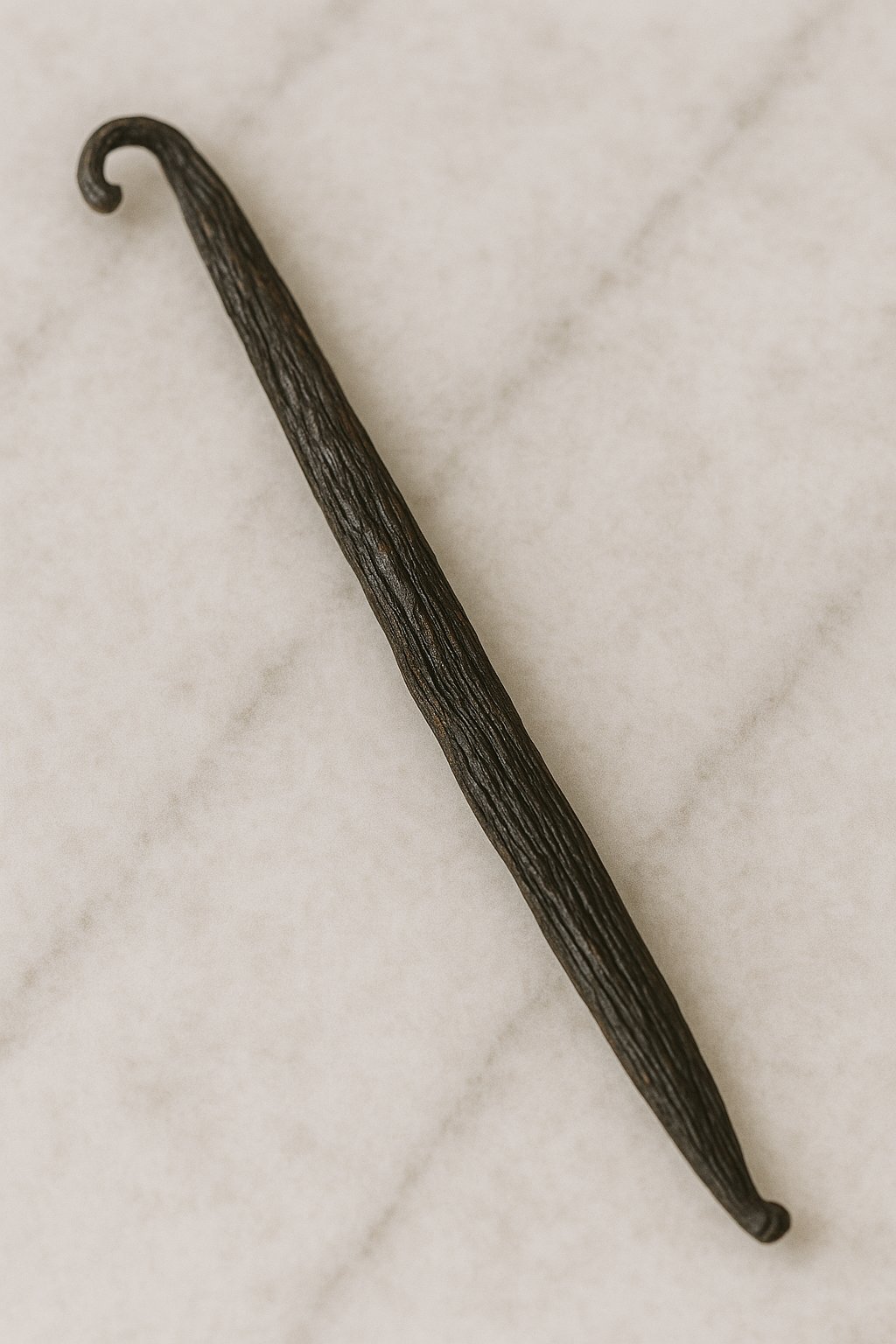
Dried vanilla beans on a light background
I still clearly remember the first intense scent that met me when I split open a fresh vanilla pod: warm, sweet, a hint of caramel and flowers, which seemed to immediately muffle all the sounds in the room. To me the vanilla pod is more than just an ingredient; it is a small aromatic wonder, an ingredient that elevates recipes, evokes memories and occasionally even sparks debate while shopping at the market. A colleague once claimed that real vanilla turns every dessert into a poem — I smiled and knew he was right.

I admit that I prefer to work with vanilla pods directly and without shortcuts. The scent only fully unfolds when you cut the pod lengthwise and scrape out the black paste with the back of a knife. Not only the tiny seeds are drawn from the pod, but also a complex spectrum of aromas that extracts often only hint at. Still, I understand bottles of vanilla extract — they are practical and reliable, especially when time is short.

A few facts I like to tell repeatedly:

  • Origin: Vanilla originally comes from Central America, but it is now cultivated in tropical regions around the world.
  • Use: It is versatile: baked goods, creams, sauces, beverages and even savory dishes benefit from its depth.
  • Quality: Fresh pods are expensive because they are labor‑intensively hand‑pollinated and harvested.
I once tried to use a vanilla pod completely: the paste for a crème brûlée, the boiled pod for a syrup with lemon peel and finally the dried pod crumbled into sugar to make flavored vanilla sugar. The result was astonishing — even the coffee the next morning tasted like a little celebration. Such DIY ideas have shown me how resource‑efficient and rewarding working with real ingredients can be.

When I bake with friends, we exchange stories about the best brands, the most unusual combinations (vanilla and black pepper, anyone?) and the little tricks: simmering the pod in milk, placing the pod in sugar to give extra power. For me the vanilla pod remains a kitchen classic that brings harmony to a dish and shows its own subtle personality. I rejoice every time I open a new pod — a small moment of wonder that reminds us how rich and surprising the world of flavors can be.

Availability & types

Availability and types of the vanilla pod

The vanilla pod is the hard, elongated pod of a climbing plant that grows in warm countries. You can think of it as a small but great spice used in many desserts and beverages. Although vanilla is known worldwide today, it only grows in certain places because the plant needs warmth, humidity and special care.

Origin
Vanilla originally comes from Mexico. There people discovered long ago that the pods of the vanilla plant have a distinctive aroma and flavor. Later explorers brought the plant to other warm regions such as Madagascar, Indonesia and Réunion. Today most vanilla comes from Madagascar, an island off the east coast of Africa. One could say: vanilla is at home in recipes everywhere, but it prefers to grow in tropical areas.

Growing regions
The main growing regions are:

  • Madagascar – world‑famous for very aromatic vanilla; many pods come from there.
  • Indonesia – also supplies a lot of vanilla, often at somewhat lower prices.
  • Mexico – the region of origin, where vanilla was originally cultivated.
  • Réunion and other islands in the Indian Ocean – historically important for vanilla.
  • Tropical regions of Central and South America – smaller quantities, but often special varieties.
Vanilla plants grow on support plants or trellises and must be hand‑pollinated if natural pollinators like certain bees are not present. This manual work makes vanilla expensive and special.

Available varieties and variants
There are several varieties of vanilla pods that differ in taste, aroma and price. Here are some well‑known types, simply explained:

  • Bourbon vanilla – often comes from Madagascar. It has a warm, classic vanilla flavor that many people prefer. The name “Bourbon” comes from an old name for the island Réunion, not from the whiskey.
  • Tahitian vanilla – smells more floral and fruity than Bourbon vanilla. It is grown on Tahiti and in the Pacific region and tastes somewhat more exotic.
  • Mexican vanilla – often has a slight chocolate note in its flavor. Since vanilla originates from Mexico, this variety is particularly traditional.
  • Indonesian vanilla – strong in aroma, sometimes a bit earthier. It is widely used for baked goods and desserts.
There are also differences in the pod shape, size and processing:

  • Whole pods – they look like long brown sticks and contain the aromatic vanilla paste. Most intense in flavor.
  • Extracted vanilla paste – the dark interior of the pod, already removed and ready to use, without the pod itself.
  • Vanilla extract – a liquid form in which vanilla has been steeped in alcohol. Practical and longer‑lasting.
  • Ground vanilla and vanilla paste – convenient variants that can be used in many recipes.
If you want to buy vanilla, pay attention to the color (deep brown is good), the smell (strong and sweet) and the flexibility of the pod (it should be supple, not dry or brittle). Whole pods are often more expensive, but they give the best aroma and can be used multiple times. Vanilla is a special spice that, with some knowledge about origin and variety, makes cooking even more enjoyable.
Details & nutrition

Property Value
Unit g
Average weight per piece 5
Calories per 100 288
Protein per 100 0.1
Carbohydrates per 100 12.7
Sugar per 100 12.7
Fat per 100 0.1
Saturated fat per 100 0.0
Monounsaturated fat 0.0
Polyunsaturated fat 0.0
Fiber per 100 0.0
Vitamin C (mg) per 100 1.0
Vitamin D (IU) per 100 0.0
Calcium (mg) per 100 11
Iron (mg) per 100 0.9
Nutri-Score A
CO₂ footprint 7.0
Origin Tropical regions, especially Madagascar, Indonesia, and Mexico
Gluten-free Yes
Lactose-free Yes
Nut-free Yes
Vegan Yes
Note Nutritional values refer to dried vanilla beans; in typical consumption amounts (a few grams) the nutrient and calorie content is very low.

Technical & scientific information

Vanilla pod refers to the dried fruit of the genus Vanilla, primarily the species Vanilla planifolia, which belongs to the orchid family (Orchidaceae). Originally native to Mexico, vanilla is now cultivated in tropical regions such as Madagascar, Indonesia and Réunion. Botanically, the vanilla pod is an elongated capsule fruit that develops its characteristic aroma after harvest through fermentation and drying.

Chemical composition and main aroma compounds
The characteristic aroma of the vanilla pod is based on a complex mixture of volatile and non‑volatile compounds. Dominant is the phenol vanillin (4‑hydroxy‑3‑methoxybenzaldehyde), which is responsible for the sweet‑spicy smell and taste. Other important constituents include:

  • Guaiacol and related phenols, which contribute smoky and spicy notes.
  • p‑Hydroxybenzoic acid and other organic acids, which contribute to acidity balance.
  • Glycosidic compounds, for example vanillin glucosides, which are hydrolyzed during fermentation to release vanillin.
  • Several hundred volatile compounds, including aldehydes, ketones, lactones and alcohols, which together create the complexity of the vanilla bouquet.
Nutritional values and secondary constituents
Vanilla pods are used in the kitchen in very small quantities, so their contribution to macronutrients is generally negligible. Per 100 g of dried pod there are small amounts of carbohydrates, fiber and proteins and traces of fats. More relevant are secondary plant compounds such as antioxidant phenols and small amounts of minerals (e.g. potassium, calcium) and vitamins. Vanillin itself shows in vitro antioxidant properties, which, however, at usual consumption levels, are expected to have only limited physiological effects.

Processing methods
The quality and aroma of the vanilla pod are largely determined by post‑harvest processing. Important steps include:

  • Harvest: Pods are cut while green and still immature to prevent splitting.
  • Wilting (fermentation): Heating and cooling in airtight containers initiates enzymatic reactions (e.g. β‑glucosidases) that hydrolyze glycosidically bound vanillin.
  • Drying: Slow drying under controlled conditions stabilizes the aroma and prevents mold formation.
  • Maturation: A storage period of several months promotes the development of secondary aroma compounds.
Scientific aspects of cultivation and yield optimization
Vanilla is a labor‑intensive crop because plants in commercial growing regions need to be artificially pollinated. Research focuses on breeding disease‑resistant varieties, optimizing fermentation procedures and reducing fluctuations in vanillin yield. Analytical methods such as gas chromatography–mass spectrometry (GC–MS) and high‑performance liquid chromatography (HPLC) are used to quantify aroma profiles and vanillin contents.

Health aspects
Vanilla is considered safe at customary culinary amounts and is appreciated worldwide as a flavoring agent. The pure vanilla pod contains natural flavor compounds and small amounts of antioxidant‑acting substances. Allergic reactions are rare but can occur in sensitive individuals. From an ecotoxicological perspective, natural sources of vanillin are often more sustainable than synthetic vanillin, which is usually produced from lignin or petrochemical precursors; however, sustainability strongly depends on agricultural practices and socio‑economic conditions.

Forms of use and quality attributes
Vanilla is handled in various forms: whole pods, paste (the seed paste inside), powder, alcohol extracts and concentrates. Quality criteria include aroma intensity, moisture content, pod flexibility, size and uniformity of fermentation. Chemical analyses examine vanillin content and characteristic minor components to distinguish natural from synthetic vanilla.

Overall, the vanilla pod is a botanically and chemically complex natural product whose unique aroma arises from the interplay of numerous substances and careful processing. Scientific studies aimed at optimizing cultivation, fermentation and analytical characterization help to improve quality, sustainability and transparency in vanilla production.

Wiki entry for: vanilla bean
Active now: 18 visitors of which 2 logged-in members in the last 5 minutes