Menu & categories

Unfilled candy

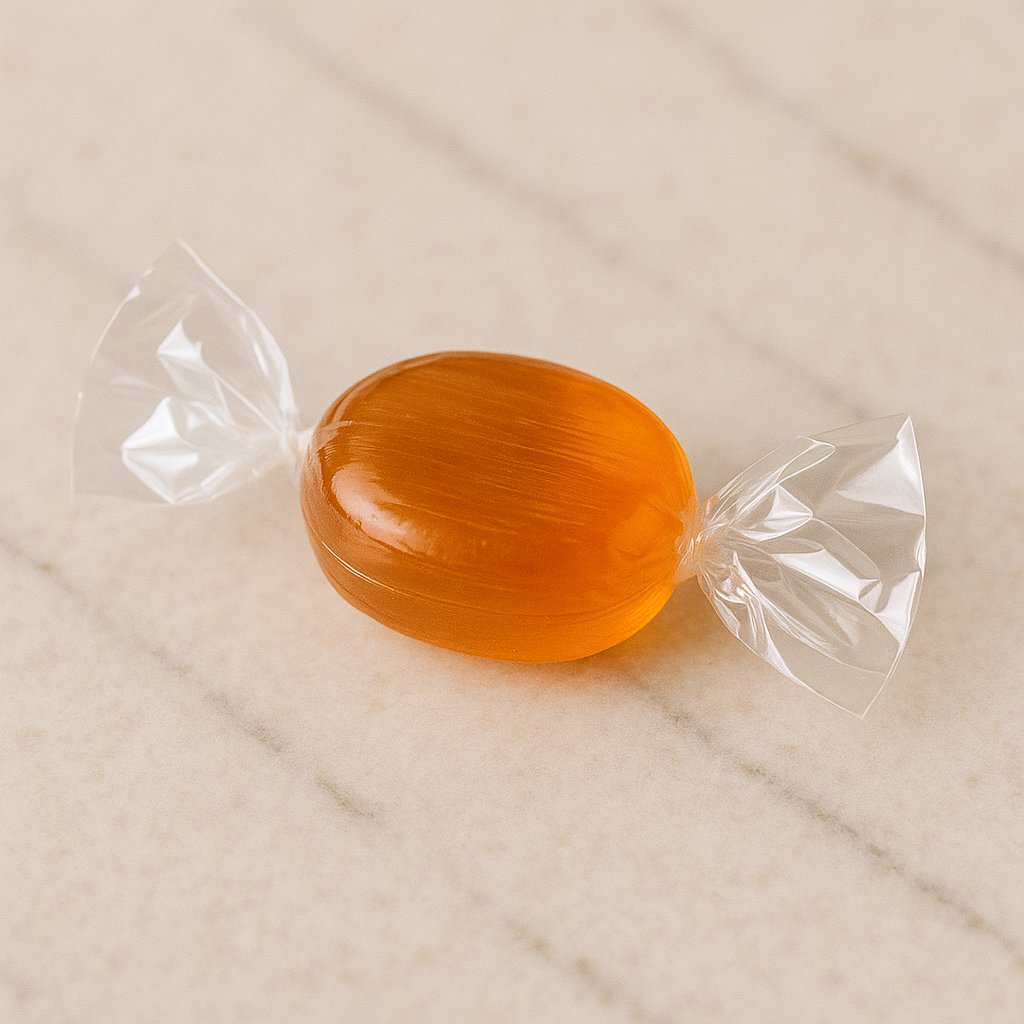
Hard candy without filling, classic sugar candy

Wiki about unfilled candy Nutri-Score E Vegan Yes Gluten-free Yes Lactose-free Yes Nut-free Yes
NUTRITION / 100 g
390 kcal 0 g Protein 98 g Kohlenhydrate 0 g Fett

Introduction

Unfilled colorful candies
Unfilled bonbon – the term sounds so plain, almost old-fashioned, and yet this small, unassuming sweet has an astonishing presence in my life. I still remember a rainy afternoon when I sat alone on the sofa with a bag of colorful, hard candies and thought about how much these simple little spheres or strips can comfort me in taste and texture. No liquid heart, no creamy filling, just pure, concentrated flavors in a crunchy shell.

Unfilled candies are as varied as one can hardly imagine. Some have a crystalline sugar coating, others shine silky, some are matte and tart. They range from fruity-tart to deeply spiced, often carried by classic ingredients like sugar, glucose syrup, natural or artificial flavorings and sometimes real fruit extracts. Once I bought a small bag at a market stall whose label had only two words: “Lemon. Love.” No further explanation was needed.

What I especially love about unfilled candies is their versatility in the kitchen and at the table:

  • As a digestif companion: a couple of peppermint candies after a heavy meal dissolve the heaviness and provide a fresh finish.
  • In desserts: crushed over ice cream or pudding they add crunch and concentrated flavor.
  • As a flavor source: when caramelizing sugar, a candy can serve as a quick flavor donor.
I've also learned that the art of unfilled candies often lies in balance: too dominant quickly becomes artificial, too restrained stays bland. A colleague of mine swears by old childhood recipes, others appreciate modern, reduced ingredient lists. Both sides are right; taste is, after all, personal.

In the end unfilled candies are small, reliable bringers of joy. They remind me of simple moments, pauses in everyday life and the pleasure that can be contained in a single, solid bite. Sometimes it is precisely this simplicity that tempts me most.

Availability & types

Availability and types

The unfilled candy is a very simple sweet: a small, hard or soft piece of sugar with flavor but without cream or filling inside. Because it is so uncomplicated, you can find it almost everywhere. In supermarkets they are sold in large bags or in small checkout bags. In drugstores and bakeries they are often individually wrapped next to chewing gum and other snacks. At fairs, in department stores or in confectionery shops they are usually kept in colorful jars or tins so you can see the varieties directly.

When it comes to where these candies come from and how they are made, it's useful to know that candies do not "grow" on plants. Instead, they are made in factories from sugar, water and flavorings. You can imagine it like cooking: sugar is heated and then mixed with flavors, colors and sometimes a bit of fat. These factories are located in many countries, especially where there is a high demand for sweets. Large manufacturers are found in Europe, North America and Asia. Small artisan producers or small candy businesses are often located in towns or in regions with a long candy-making tradition, for example in certain parts of Germany, Great Britain or France.

Although candies are not planted, some of their ingredients come from nature. For example:

  • Sugar – is usually obtained from sugar beet or sugar cane. Sugar beets grow in cooler regions such as parts of Europe, while sugar cane grows in warmer, tropical areas.
  • Fruit flavors – can be derived from real fruit or manufactured artificially. Real fruit concentrates come from fruit-growing regions.
  • Herbal and plant extracts – such as peppermint or sage for cough drops come from gardens or fields where those plants are cultivated.
There are many varieties and variants of unfilled candies to suit every taste. Some of the most common are:

  • Fruit candies – taste of strawberry, lemon, orange, apple or cherry. They are sweet and often colorful.
  • Menthol and peppermint candies – provide a cool sensation in the mouth and sometimes help to free breathing. These are popular for colds.
  • Caramel- or toffee-like candies – slightly softer and with a malty or buttery taste.
  • Sour candies – often have a sour coating that gives a tingling sensation, similar to tasting a lemon.
  • Sugar-free candies – use sugar substitutes instead of sugar. They are intended for people who want or need to eat less sugar.
  • Traditional candies – in some regions there are typical recipes, for example herbal candies with old formulations that grandparents already knew.
Candies come in many sizes and packages: individually wrapped, in rolls, tins or large bags. When choosing a candy, pay attention to the flavor, whether you want sugar and whether there are any special ingredients like honey or herbs. That way you can easily find the candy you like best.
Details & nutrition

Property Value
Unit g
Average weight per piece 4
Calories per 100 390
Protein per 100 0
Carbohydrates per 100 98
Sugar per 100 98
Fat per 100 0
Saturated fat per 100 0
Monounsaturated fat 0
Polyunsaturated fat 0
Fiber per 100 0
Vitamin C (mg) per 100 0
Vitamin D (IU) per 100 0
Calcium (mg) per 100 0
Iron (mg) per 100 0
Nutri-Score E
CO₂ footprint 0.6
Origin EU
Gluten-free Yes
Lactose-free Yes
Nut-free Yes
Vegan Yes
Note Nutritional values for typical unfilled sugar-based hard candies; actual values may vary slightly by manufacturer.

Technical & scientific information

Unfilled bonbon refers to a confectionery product in a compact, usually homogeneous form that does not contain a separate filling such as creams, caramel or liquids. Typically these are solid-shaped candies, lozenges or lollipops without a core. Such candies are manufactured industrially or artisanally and differ in composition, texture and processing from filled variants.

Chemical composition and ingredients
The basic components of unfilled candies are sugar (sucrose, glucose/fructose syrup), water and often acidulants such as citric acid. Invert sugar or glucose syrup are used for stabilization and texture modification to prevent crystallization and increase plasticity. Flavorings and colorants (natural or synthetic) define taste and appearance, while emulsifiers and humectants such as lecithin or glycerin influence structure and shelf life. Some formulations may include acidity regulators (e.g. sodium citrate), preservatives or antioxidants.

Nutritional values
Unfilled candies consist predominantly of rapidly available carbohydrates. The energy content typically lies around 350–400 kcal per 100 g, with almost the entire caloric value coming from sugars. Fat and protein contents are generally negligible unless fat coatings or protein-based flavors are used. Dietary fiber is not significantly present. Due to the high sugar content, candies can quickly contribute to daily sugar intake and should therefore be consumed in moderation.

Processing methods
The manufacture of unfilled candies involves several technological steps:

  • Dissolving and cooking: Sugar and water are heated to form a syrup base. The final temperature and thus the water content determine the final hardness (e.g. hard candies vs. chewable candies).
  • Addition of flavors/colors: After cooking but before cooling, heat-sensitive additives are added to minimize flavor losses.
  • Shaping: The cooled mass is poured or extruded and then cut, shaped or processed into lollipops. For hard candies a rolling and punching process often takes place; for chewable candies kneading and extrusion methods are used.
  • Surface treatment and drying: Glazing agents (e.g. carnauba wax) and hardening cycles affect mouthfeel and shelf life. Subsequent drying reduces the water content to the desired level.
  • Quality control: Physical tests (hardness, water activity, tendency to crystallize) as well as microbiological and sensory tests ensure product consistency.
Physical and chemical properties
The structure of an unfilled candy depends on the state of the sugar (amorphous vs. crystalline) and the water content. Hard candies are usually based on an amorphous, glass-like sugar phase with low water activity, which is fracture-resistant but brittle. Chewable candies contain plastic polymer phases, often modified by plasticizers like glycerin, which create elasticity. The glass transition temperature (Tg) of the sugar matrix is a key parameter for storage stability and stickiness.

Health aspects
From a nutritional perspective, unfilled candies provide quickly available energy without significant micronutrients. Considerations include the risk of dental caries from frequent sugar transport in the mouth and possible effects on blood glucose levels, particularly in people with insulin resistance or diabetes. Some additives, such as artificial colorings or sweeteners, may cause intolerances or allergic reactions in sensitive individuals. For certain consumer groups, sugar-free variants with polyols (sorbitol, maltitol) or intense sweeteners offer an alternative; however, these can have laxative effects if consumed excessively.

Regulatory and quality aspects
Food law regulations require declarable ingredients, allergen notices and permitted maximum levels for additives. For production, Good Manufacturing Practices (GMP) and HACCP-based safety concepts are relevant to minimize contamination and microbiological risks. Sensory standards and consumer preferences guide recipe selection and packaging to ensure taste, shelf life and safety.

Unfilled candies are technically simple but chemically interesting confectionery products, whose physical properties and shelf life are largely determined by sugar ratios, water content and additives. Their manufacture combines classical sugar-cooking processes with modern process controls to achieve reproducible quality with acceptable food safety.

Wiki entry for: unfilled candy
Active now: 11 visitors of which 2 logged-in members in the last 5 minutes