Menu & categories

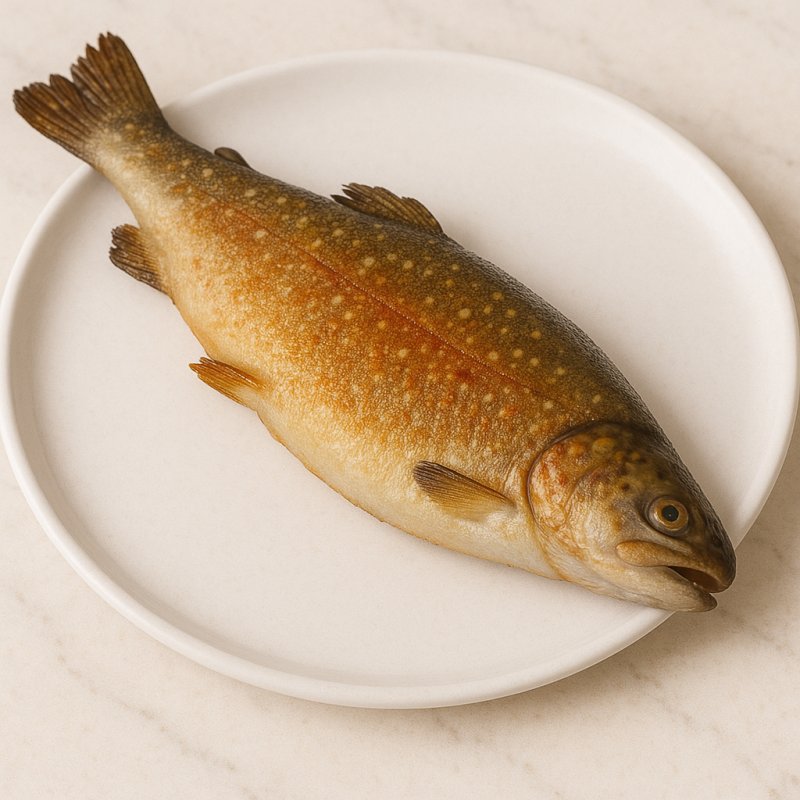
Trout

Lean freshwater fish with high-quality protein and omega-3 fatty acids

Wiki about trout Nutri-Score A Vegan No Gluten-free Yes Lactose-free Yes Nut-free Yes
NUTRITION / 100 g
141 kcal 20 g Protein 0 g Kohlenhydrate 6 g Fett

Introduction

Fresh raw trout on a cutting board
I still clearly remember the first direct encounter with a freshly smoked trout: the scent of wood chips and the sea that spread like a little magic over the market, and the surprisingly tender flesh that practically melted on the tongue with the first bite. Since then this unassuming, silver‑shimmering fish species has never left me. For me trout is more than just an ingredient; it is a feeling somewhere between campfire romance, the weekend market and fine dining.

What I particularly appreciate about trout is its versatility. Whether pan‑fried, poached or roasted whole in the oven, it stays juicy while showing a delicate, nutty flavor that is never overpowering. A colleague of mine swears by a simple preparation: salt, pepper, plenty of butter and fresh herbs – a minimalism that lets the quality of the fish speak. At another gathering a friend surprised me with trout fillets coated in oats; crispy on the outside, tender inside — a combination that was new to me and from then on became a regular in my repertoire.

A few practical notes that I always pass on:

  • Checking freshness: Clear eyes, a fresh smell (not “fishy”) and elastic flesh are good signs.
  • Shelf life: Fresh trout should be used within one to two days; smoked trout keeps longer.
  • Cooking: Low to medium heat preserves juiciness; too high heat quickly dries out the delicate flesh.
Trout also always has an emotional value for me. On a family outing to a mountain lake we sat on a blanket, and a little later freshly smoked trout was on our plates – simple enjoyment that lingered. Such memories make the ingredient special to me personally: it connects everyday life with small celebrations and invites you to create something delicious with simple means.

When I cook trout today, I think of those markets, the smoky aroma and the conversations with friends. I love how it is complemented by lemon zest, dill or a crispy crust, and how it repeatedly draws a satisfied smile from guests. For me trout is an invitation to achieve a lot of flavor with little effort – and to let stories arise in the process.

Availability & types

Availability and types of trout

Trout is a popular food fish found in many supermarkets, fish shops and markets. If you picture a trout, you might imagine a slim, silvery‑green fish with small spots – but there are different species and forms that are all called “trout”. Here I simply explain where trout come from, which varieties exist and how you can obtain them.

Origin and habitat
Trout mostly live in cool, clean waters. Some trout swim in streams and rivers, others in lakes or even near the sea. Fresh mountain streams are like their favorite places: clear, cold water and plenty of stones under which small creatures hide that trout feed on. Sometimes trout migrate short distances to spawn – that is, to lay their eggs.

Where trout are farmed
Not all trout come from the wild. Many trout are raised in fish farms. These farms are often in countries with many clear waters, for example Germany, Norway, Ireland, Scotland or the USA. In a trout farm there are large tanks or flowing water channels where the fish live and grow. This has the advantage that you can buy trout year‑round and they are usually clean and fresh.

Available species and variants
There are several trout species and variants that can be eaten. Here are the most important, explained simply:

  • Rainbow trout: It is very widespread and often has colorful stripes or a pinkish sheen. Rainbow trout are frequently farmed and taste mild.
  • Brown trout (stream trout): This is the classic trout from rivers and streams. It has many small spots and a somewhat more pronounced flavor than the rainbow trout.
  • Lake trout: These trout live in lakes and are often larger. Sometimes they spend parts of their life in the sea and then return to lakes or rivers – a bit like little adventurers on a journey.
  • Golden trout: It is a special color variant with golden or yellow tones. It is rarer but looks very attractive.
Fresh, smoked or frozen?
Trout is available in different preparations that you can find in stores:

  • Fresh: Whole trout or fillets sold in the refrigerator. They should smell fresh but not unpleasant.
  • Smoked: Many people like smoked trout on bread. Smoking exposes the fish to wood smoke and gives it a special aroma – a bit like cookies that give off a scent while baking in the oven.
  • Frozen: Trout fillets are often deep‑frozen so they keep longer. This is practical if you do not want to eat the fish immediately.
Seasonality and availability
Especially in regions with natural rivers, the availability of wild trout depends on the season: in spring and early summer they are often easier to catch. Farmed trout, however, are available year‑round. If you ask at the supermarket or fishmonger for a specific variety, they can tell you whether the trout is wild‑caught or farmed.

In summary: trout come in different shapes and flavors, they originate from rivers, lakes or fish farms and are available fresh, smoked or frozen. When buying trout it helps to ask where it comes from – that way you know whether it came from a clear mountain stream or from a controlled farm. This allows you to choose the trout that best suits your taste or recipe.
Details & nutrition

Property Value
Unit g
Average weight per piece 300
Calories per 100 141
Protein per 100 20
Carbohydrates per 100 0
Sugar per 100 0
Fat per 100 6
Saturated fat per 100 1.5
Monounsaturated fat 2.0
Polyunsaturated fat 2.0
Fiber per 100 0
Vitamin C (mg) per 100 1
Vitamin D (IU) per 100 200
Calcium (mg) per 100 20
Iron (mg) per 100 0.8
Nutri-Score A
CO₂ footprint 3.0
Origin Freshwater fish, mostly from aquaculture in Europe
Gluten-free Yes
Lactose-free Yes
Nut-free Yes
Vegan No
Note Nutritional values refer to raw trout fillet without skin; values may vary slightly depending on farming, feed and fat content.

Technical & scientific information

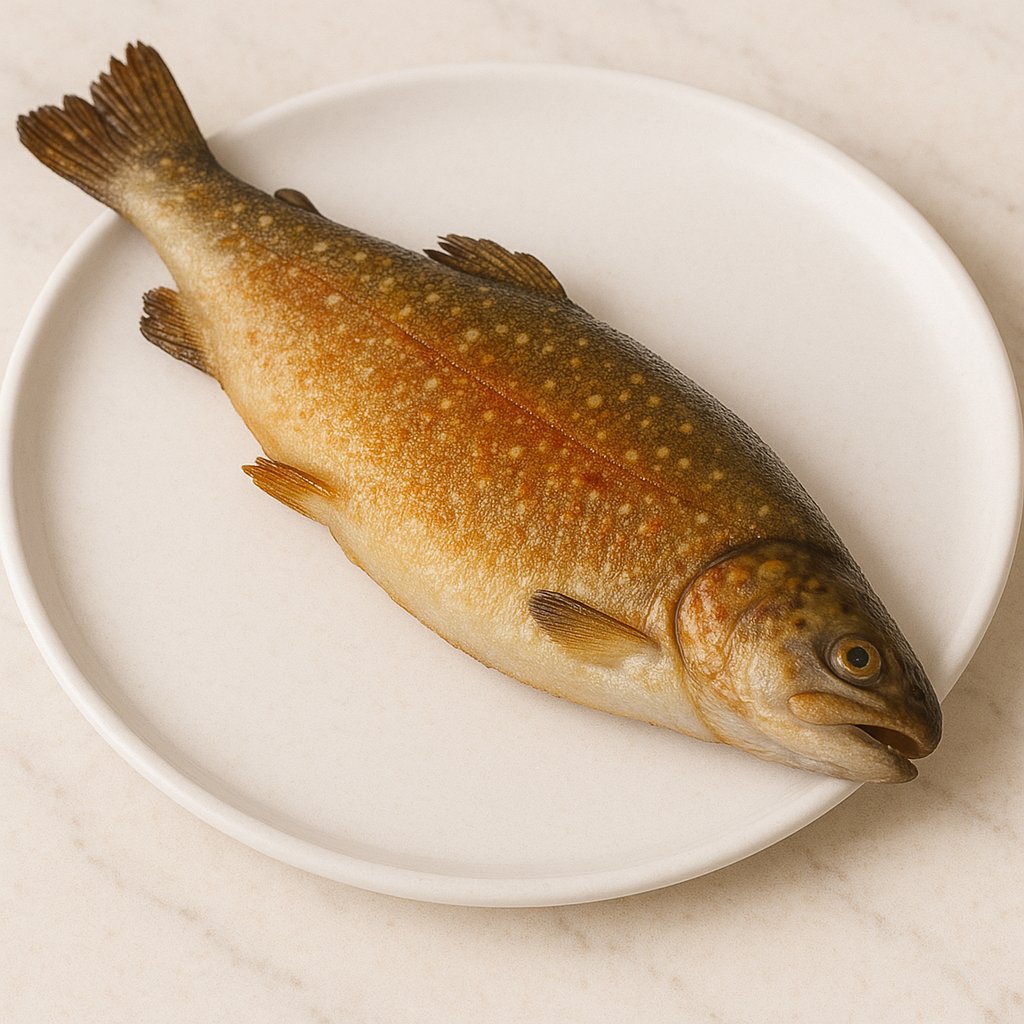
Trout refers to fishes of the family Salmonidae, which occur predominantly in freshwater ecosystems such as streams, rivers and lakes. In cooking the rainbow trout (Oncorhynchus mykiss), the brown/stream trout (Salmo trutta fario) and occasionally the lake trout (Salmo trutta lacustris) are mainly used. Trout have a torpedo‑shaped body with fine scales and characteristic marbling or spotting, depending on species and habitat, and can be sourced from both wild capture and aquaculture.

Chemical composition and nutritional values
Trout flesh consists mainly of water (typically 65–75 %), protein (about 18–24 %) and lipids (around 4–12 %, strongly dependent on species, season and feeding condition). Lipids are made up of neutral fats, phospholipids and sterols. Trout are a relevant source of polyunsaturated fatty acids, particularly the omega‑3 fatty acids eicosapentaenoic acid (EPA) and docosahexaenoic acid (DHA), although in lower amounts than fatty marine fish. Other nutrients include water‑soluble vitamins (especially vitamin B12 and niacin) and fat‑soluble vitamins such as vitamin D. Mineral contents include notable amounts of phosphorus, selenium and potassium.

Proteins and amino acid profile
The protein in trout is rich in essential amino acids, including lysine, leucine and methionine, and has a high biological value. The structure of muscle proteins (actin, myosin and sarcoplasmic proteins) determines texture and cooking behavior; on heating the proteins denature and form the characteristic firm yet tender texture of cooked flesh.

Fats and fatty acids
Trout fat is predominantly unsaturated and contains a favorable proportion of omega‑3 to omega‑6 fatty acids. Exact content varies with diet and rearing: farmed trout fed different diets show different fatty acid profiles compared with wild specimens, depending on feed composition (plant‑based vs. marine sources). Fatty acids influence flavor, oxidative stability and processing properties.

Processing and preservation
Trout can be processed fresh, smoked, cured, marinated, frozen or canned. Important technological aspects are:

  • Shock freezing: Prevents formation of large ice crystals and preserves cell structure and texture.
  • Smoking: Cold or hot smoking changes flavor and extends shelf life through dehydration, smoke components and antimicrobial effects.
  • Curing: Addition of salt and nitrites reduces water activity and inhibits lipid oxidation; typical aroma compounds develop in the process.
  • Pasteurization/Heating: Inactivates pathogenic microorganisms, though with effects on texture and losses of nutrients, especially heat‑sensitive vitamins.
Food safety and health aspects
Trout are generally safe to eat if handled correctly and cooked sufficiently. Potential contaminants to consider include environmental chemicals (e.g. PCBs, dioxins) and heavy metals, whose concentrations depend on water contamination and feed. Aquaculture practices can influence the risk of zoonotic pathogens and antibiotic resistance; responsible farming methods and monitoring programs minimize these risks. When consumed raw or undercooked (e.g. as carpaccio) the risk of infection by parasites such as nematodes should be considered; deep‑freezing at appropriate temperatures kills many parasite species.

Functional properties and culinary relevance
Trout flesh has a mild, slightly nutty flavor and a fine texture. Due to its moderate fat content it is suitable for frying, grilling, poaching or smoking. Protein denaturation and collagenous connective tissue respond favorably to controlled heating, yielding juicy results. From a formulation perspective trout can serve as a protein source that pairs well with acids, fats and herbs to optimize flavor and digestibility.

Conclusion
Trout is a valuable food source with a balanced nutrient profile: high‑quality protein, beneficial unsaturated fatty acids and relevant micronutrients such as vitamin B12, vitamin D and selenium. Quality and nutrient composition are strongly influenced by species, habitat and feed. Hygiene, correct processing and sustainable farming or fishing practices are crucial for food safety and minimizing ecotoxicological risks.

Wiki entry for: trout
Active now: 18 visitors of which 2 logged-in members in the last 5 minutes