Menu & categories

Tomato ketchup

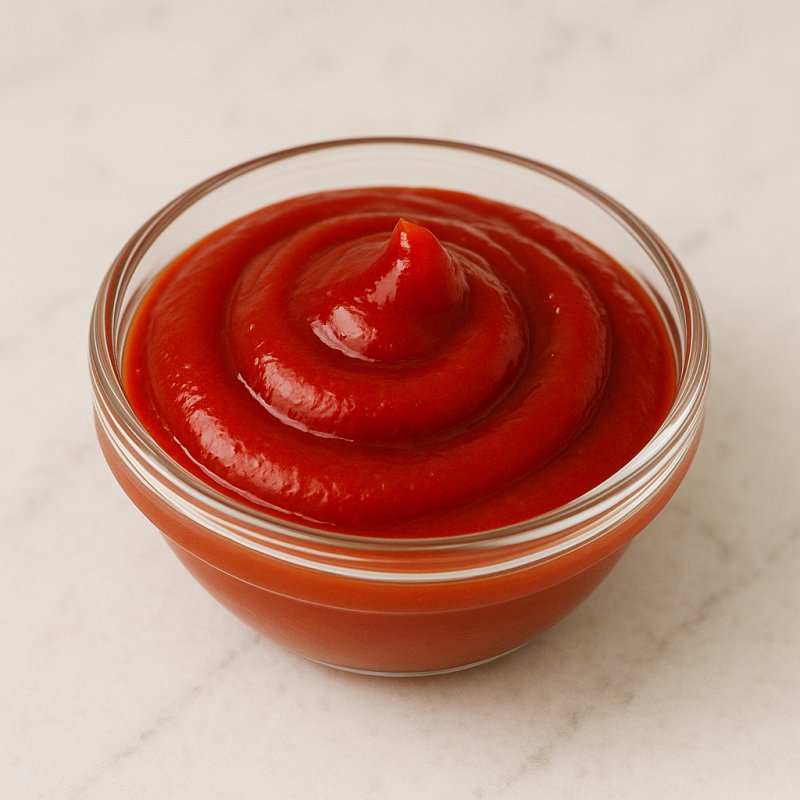
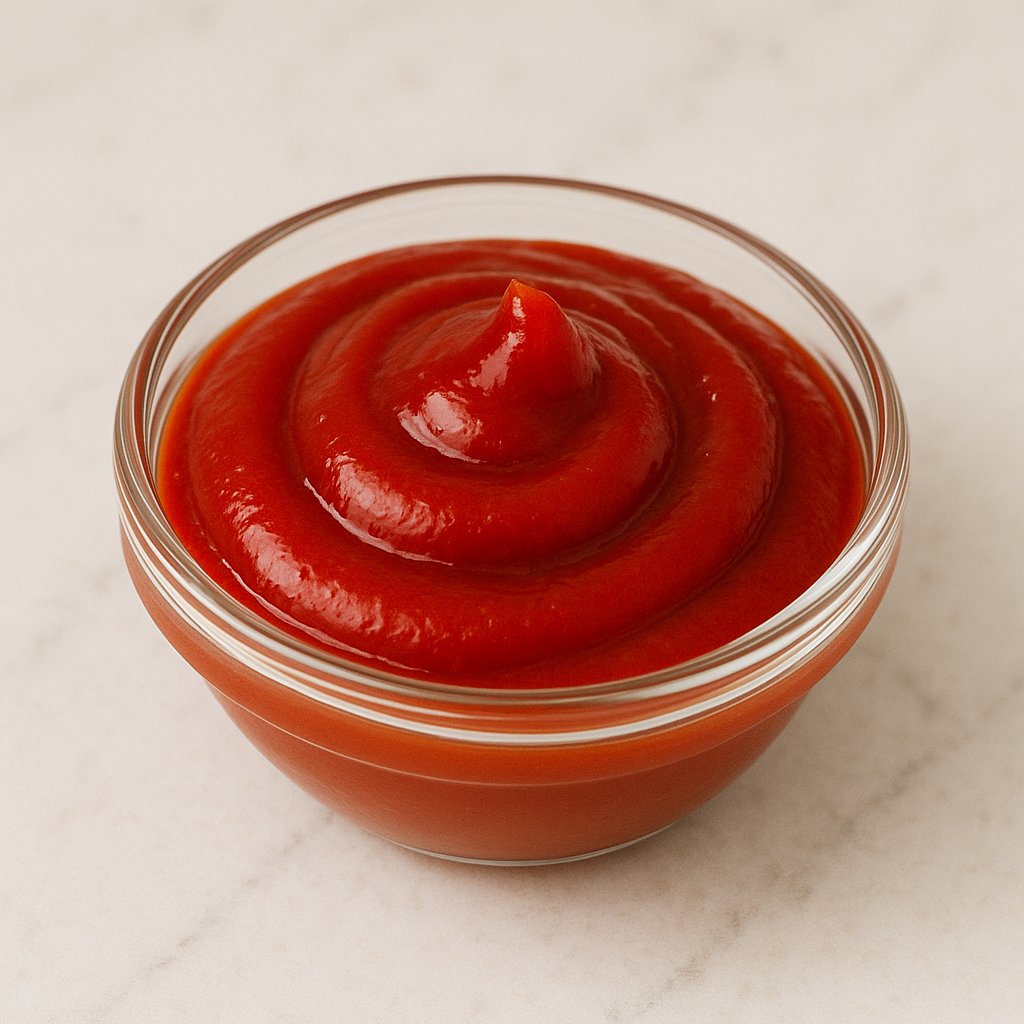
Spicy tomato sauce with a sweet-and-sour note – a classic companion to fries & burgers.

Wiki about tomato ketchup Nutri-Score D Vegan Yes Gluten-free Yes Lactose-free Yes Nut-free Yes
NUTRITION / 100 g
102 kcal 1.3 g Protein 24.6 g Kohlenhydrate 0.2 g Fett

Introduction

Bottle of tomato ketchup
I confess: tomato ketchup is my little culinary comfort, and it has been for years. I still remember a rainy business trip when a simple sandwich and a tiny bottle of ketchup saved my mood. Moments like that showed me ketchup is much more than just a dip for fries; it is a flavor component that completes dishes and tells stories.

My relationship with tomato ketchup is practical and sentimental at the same time. A colleague of mine swears by stirring ketchup into his tomato soup, and although I was skeptical at first, the depth of flavors convinced me. I have learned that the best ketchups offer a balance of sweetness, acidity, and a subtle spice. Industrial variants score for consistency, while homemade sauces win with freshness and a personal touch.

What I pay special attention to in ketchup I have summarized for myself in a few points:

  • Taste: A fine balance between ripe tomatoes, vinegar and a light sweetness never feels overpowering.
  • Texture: Creamy but not too thick, so the ketchup spreads well.
  • Use: Versatile from burgers to marinades to simple dressings.
I like experimenting with ketchup. A squeeze of lemon, a pinch of smoked paprika or a touch of Worcestershire sauce can turn a standard jar into something distinctive. I also find it fascinating how differently ketchup is interpreted regionally, and how small ingredient changes can alter entire flavor profiles.
Some call ketchup kitschy, others consider it an everyday wonder. I remain with the latter judgment.

In the end, tomato ketchup is for me a reliable companion in the kitchen and at the table. It is uncomplicated, comforting and full of possibilities, and that is exactly what makes it so lovable.

Availability & types


Availability and types of tomato ketchup

Tomato ketchup is a very common ingredient and available almost everywhere. You can find it in supermarkets, discount stores, organic shops, at service stations, in fast-food stands and even online. Because ketchup is made from processed tomatoes, it is available year-round – unlike fresh tomatoes, which have a season. Unopened bottles or pouches keep for a long time in the pantry; opened ketchup is usually stored in the refrigerator to stay fresh longer.

Origin of ingredients
The main ingredient is the tomato. Tomatoes originally come from Central and South America, but they were cultivated across Europe, Asia and elsewhere many hundreds of years ago. Today tomatoes for ketchup come from many countries. Many are grown in warm regions because tomatoes like sun and heat. In addition many tomatoes are grown in greenhouses – protected spaces where temperature and light are controlled so the plants grow well even in cooler countries.

Main growing regions

  • Warm Mediterranean countries like Italy, Spain and Turkey – known for large tomato fields.
  • Large producing countries like China, India and the USA, which supply many tomatoes to the food industry.
  • Northern countries (e.g. the Netherlands or Germany) often use greenhouses to produce consistently good tomatoes.
Available varieties and variants
Ketchup comes in many variants – similar to different ice cream flavors, except here the tastes and ingredients vary. Here is an overview to make it easy to understand:

  • Standard ketchup: The classic taste, sweet and slightly sour. Often contains sugar, vinegar, salt and spices.
  • Reduced sugar / Light: Less sweet to have fewer calories. Sometimes sweeteners are used instead of sugar.
  • No added sugar: Contains no added sugar; the taste comes mainly from the tomato itself.
  • Organic ketchup: Made from organically grown tomatoes. “Organic” means fewer or no synthetic fertilizers and pesticides were used.
  • Spicy or seasoned ketchup: With chili, paprika or garlic for those who like bold flavors.
  • Gourmet or delicatessen variants: With special ingredients like smoked paprika or herbs – often in glass bottles and more expensive.
  • Allergy-friendly and special diet versions: Gluten-free, vegan or without certain additives for people with food intolerances.
Formats
Ketchup is available in glass bottles, plastic squeeze bottles, single-serve packets and bulk containers for restaurants. For children squeeze bottles are often practical because they are easy to press. In fast-food restaurants there are small sachets or dispensers from which ketchup is poured.

In summary: ketchup is widely available because tomatoes are grown in many countries and the finished ketchup is shelf-stable. There are simple varieties for everyday use and many specialty variants for particular tastes or dietary needs. Just as there are different types of chocolate, there are many flavors and packaging options for ketchup – something for everyone.
Details & nutrition

Property Value
Unit g
Calories per 100 102
Protein per 100 1.3
Carbohydrates per 100 24.6
Sugar per 100 22.0
Fat per 100 0.2
Saturated fat per 100 0.0
Monounsaturated fat 0.0
Polyunsaturated fat 0.1
Fiber per 100 0.9
Vitamin C (mg) per 100 5
Vitamin D (IU) per 100 0
Calcium (mg) per 100 15
Iron (mg) per 100 0.4
Nutri-Score D
CO₂ footprint 1.7 kg CO2e/kg
Origin Depends on the manufacturer (often EU/international)
Gluten-free Yes
Lactose-free Yes
Nut-free Yes
Vegan Yes
Note Recipes vary by brand; sugar and salt content can vary significantly.

Technical & scientific information


Tomato ketchup is a thick seasoning paste based on tomatoes, used worldwide as an ingredient and table condiment. Chemically and technologically it is a juice/fruit concentrate to which water, sweeteners, acidulants, salt, spices and thickeners are added. The product combines several functional properties: flavor carrier, preservation through low pH and controlled rheology for good spreading and pouring properties.

Composition and ingredients. The main component is concentrated tomato juice or tomato paste, which contains natural components such as fruit sugars, organic acids (mainly citric and malic acid), fiber and secondary plant compounds like lycopene. Common additives include:

  • Sweeteners: sucrose, corn syrup or other sugars to balance flavor and partially preserve.
  • Acidulants: acetic acid (vinegar) and/or citric acid for pH control.
  • Salt: For taste and osmotic effect.
  • Thickeners and stabilizers: modified starch, xanthan or locust bean gum to set viscosity and prevent separation.
  • Spices and flavorings: onion, garlic or mustard flavors as well as other spices or natural extracts.
  • Preservatives: In some recipes benzoates or sorbates are used; many manufacturers, however, rely on low pH and pasteurization.
Nutritional and microbiological aspects. Typical ketchup contains a relatively high proportion of available carbohydrates per 100 g (mainly sugars) and low amounts of fat and protein. Energy content is often around 100–130 kcal/100 g, with sugar and salt content nutritionally relevant. Typical values are a pH of about 3.2–3.9 and a dry matter content (Brix) in the range of about 20–30 °Brix. Water activity (aw) is relatively high; therefore low acidity is primarily used to prevent the growth of pathogenic microorganisms. Thermal treatment and aseptic filling further secure shelf life.

Processing technology. Industrial production includes several steps: selection and cleaning of raw materials, heating (blanching), chopping and sieving to remove seeds and skins, evaporation/concentration of the tomato purée, homogenization to set particle size, subsequent mixing with sugar, vinegar, salt and additives, and final pasteurization and packaging. During heating, physicochemical changes occur such as the breakdown of plant cell walls and isomerization of lycopene, which increases its bioavailability.

Rheology and sensory properties. Ketchup exhibits non-Newtonian flow behavior with shear thinning and a pronounced yield stress. The viscoelastic structure is determined by tomato solids and additives and affects the perception of thickness, flavor and “pourability”.

Health aspects. Positive aspects include micronutrient-containing components such as lycopene and traces of vitamin C and minerals; lycopene availability increases with heating and the addition of fat. Critical aspects are the high sugar and sodium content, which with regular excessive consumption can contribute to overweight, tooth decay and high blood pressure. People on special diets should opt for reduced-sugar or low-salt variants. Allergic reactions are rare, and ketchup is generally gluten-free and vegan unless specific additives are used.

Regulatory and quality aspects. In many countries there are requirements for minimum tomato content, labeling of ingredients and limits for additives. Sensory tests, microbiological assays and measurements of pH, Brix and water activity are standard procedures for quality control.

Overall, tomato ketchup is a technologically mature food product whose properties are governed by composition, thermal treatment and rheological adjustments; nutritionally it provides both beneficial secondary plant compounds and relevant amounts of sugar and salt, which should be considered when evaluating food consumption.

Wiki entry for: tomato ketchup
Active now: 17 visitors of which 2 logged-in members in the last 5 minutes