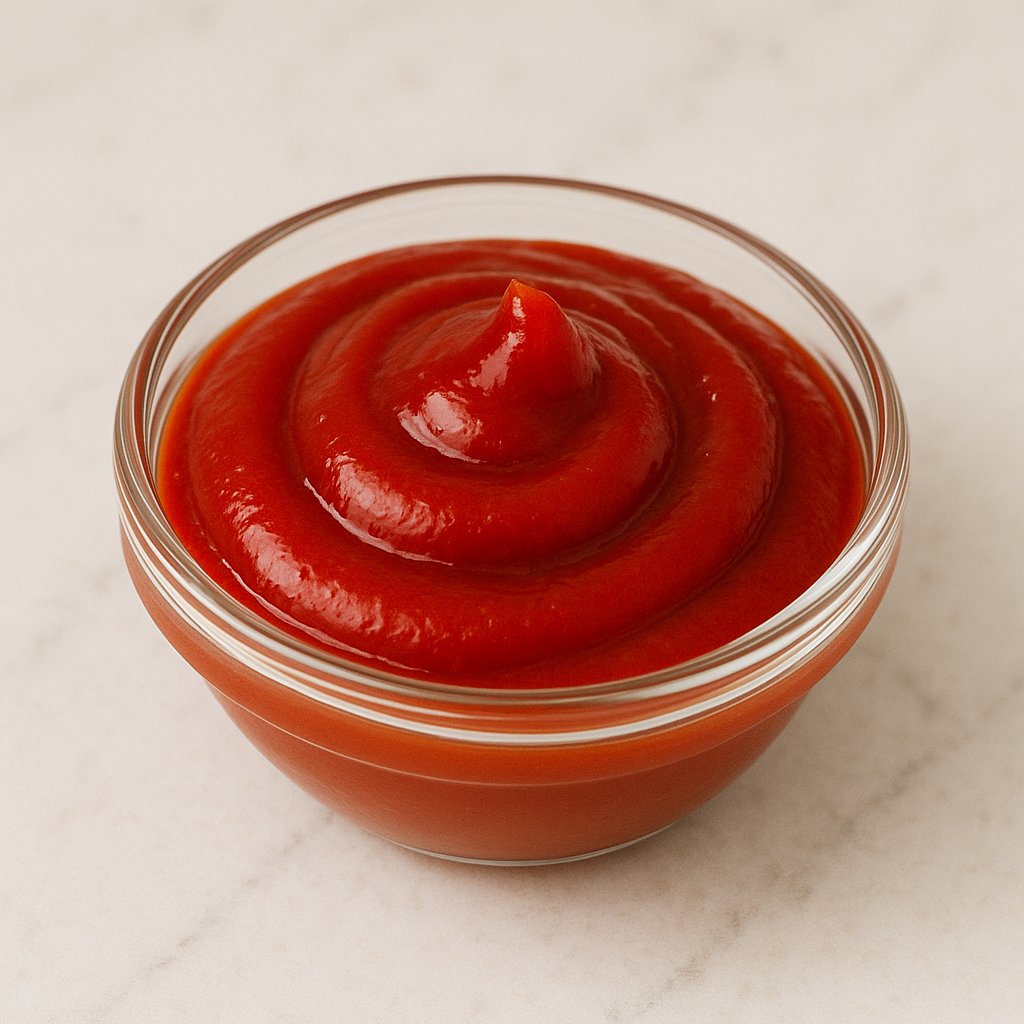
Availability and types of tomato ketchup
Tomato ketchup is a very common ingredient and available almost everywhere. You can find it in supermarkets, discount stores, organic shops, at service stations, in fast-food stands and even online. Because ketchup is made from processed tomatoes, it is available year-round – unlike fresh tomatoes, which have a season. Unopened bottles or pouches keep for a long time in the pantry; opened ketchup is usually stored in the refrigerator to stay fresh longer.
Origin of ingredients
The main ingredient is the tomato. Tomatoes originally come from Central and South America, but they were cultivated across Europe, Asia and elsewhere many hundreds of years ago. Today tomatoes for ketchup come from many countries. Many are grown in warm regions because tomatoes like sun and heat. In addition many tomatoes are grown in greenhouses – protected spaces where temperature and light are controlled so the plants grow well even in cooler countries.
Main growing regions
- Warm Mediterranean countries like Italy, Spain and Turkey – known for large tomato fields.
- Large producing countries like China, India and the USA, which supply many tomatoes to the food industry.
- Northern countries (e.g. the Netherlands or Germany) often use greenhouses to produce consistently good tomatoes.
Available varieties and variants
Ketchup comes in many variants – similar to different ice cream flavors, except here the tastes and ingredients vary. Here is an overview to make it easy to understand:
Ketchup comes in many variants – similar to different ice cream flavors, except here the tastes and ingredients vary. Here is an overview to make it easy to understand:
- Standard ketchup: The classic taste, sweet and slightly sour. Often contains sugar, vinegar, salt and spices.
- Reduced sugar / Light: Less sweet to have fewer calories. Sometimes sweeteners are used instead of sugar.
- No added sugar: Contains no added sugar; the taste comes mainly from the tomato itself.
- Organic ketchup: Made from organically grown tomatoes. “Organic” means fewer or no synthetic fertilizers and pesticides were used.
- Spicy or seasoned ketchup: With chili, paprika or garlic for those who like bold flavors.
- Gourmet or delicatessen variants: With special ingredients like smoked paprika or herbs – often in glass bottles and more expensive.
- Allergy-friendly and special diet versions: Gluten-free, vegan or without certain additives for people with food intolerances.
Formats
Ketchup is available in glass bottles, plastic squeeze bottles, single-serve packets and bulk containers for restaurants. For children squeeze bottles are often practical because they are easy to press. In fast-food restaurants there are small sachets or dispensers from which ketchup is poured.
Ketchup is available in glass bottles, plastic squeeze bottles, single-serve packets and bulk containers for restaurants. For children squeeze bottles are often practical because they are easy to press. In fast-food restaurants there are small sachets or dispensers from which ketchup is poured.
In summary: ketchup is widely available because tomatoes are grown in many countries and the finished ketchup is shelf-stable. There are simple varieties for everyday use and many specialty variants for particular tastes or dietary needs. Just as there are different types of chocolate, there are many flavors and packaging options for ketchup – something for everyone.