Menu & categories

Toffifee

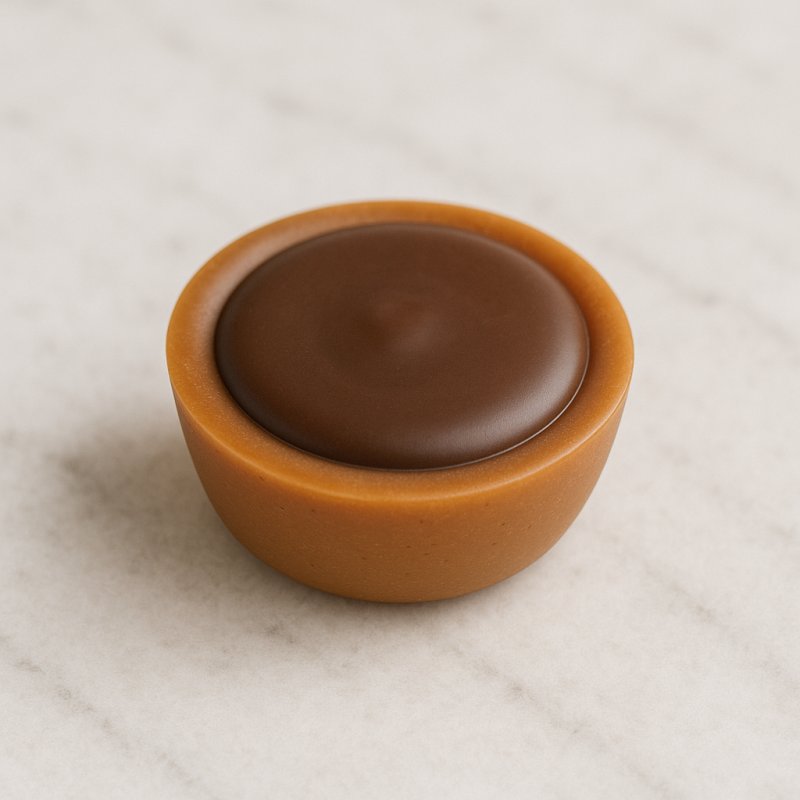
Hazelnut praline with caramel, nougat cream and chocolate

Wiki about Toffifee Nutri-Score E Vegan No Gluten-free Yes Lactose-free No Nut-free No
NUTRITION / 100 g
535 kcal 6.3 g Protein 59.0 g Kohlenhydrate 31.0 g Fett

Introduction

Several Toffifee pralines with hazelnut, caramel and chocolate
I still remember exactly the first Toffifee moment of my life: it was after a long winter walk, my hands still cool, and someone offered me the small, shiny cardboard box. I opened it like a little treasure chest and found those perfectly proportioned little mounds of hazelnut, caramel, nougat cream and a delicate chocolate dome. Toffifee is for me a small work of art of the confectionery world, turning simple ingredients into a tempting whole.

What I particularly like about Toffifee is the balance of textures. The crunchy hazelnut in the center gives an earthy crunch, the caramel surrounds it with sticky-sweet warmth, the nougat cream provides creamy depth and the chocolate on top brings everything together harmoniously. It sounds simple but works like a well-tuned orchestra in the mouth. A friend once aptly described it as a "four-seasons taste", because each component contributes its own note.

Over the years I have enjoyed Toffifee in different situations: as a quick comfort for writer's block, as part of an improvised coffeehouse tasting with colleagues, or as a small hostess gift when visiting. Sometimes I put one on the saucer with an espresso, sometimes I let it slowly melt during a cozy movie night. This versatility is what makes the praline so likeable to me.

There are surprisingly many ideas for variations in the kitchen. I have roughly chopped them over vanilla ice cream, folded them into chocolate cookie dough and once even hidden them in a makeshift tart. The combination of caramel and hazelnut pairs well with warm spices like cinnamon and nutmeg, so Toffifee also performs well in autumn desserts.

  • Taste: sweet, caramel-like, nutty, chocolatey
  • Texture: crunchy, creamy, delicately melting
  • Occasions: everyday, celebrations, baking ideas
In conclusion: Toffifee is for me a small pleasure that evokes memories while leaving room for creative kitchen experiments. It is not a gourmet manifesto, but precisely for that it is so charming and reliable – a sweet constant in my snack-drawer treasures.

Availability & types

Availability and types

Toffifee is a well-known confection that many people enjoy. Before we talk about availability and types, it is important to know: Toffifee is not a single natural ingredient like a fruit or a vegetable, but a finished product – a small praline. It consists of several components, for example chocolate, caramel, hazelnut and a soft filling. Because it is a processed product, when we talk about "availability" we mainly refer to where and in which variants you can buy Toffifee.

Origin
Toffifee originally comes from Germany and was developed there by a confectionery company. Although the recipe and the name come from Germany, Toffifee is now sold in various countries. You can imagine it like a favourite book: the book was written in one country, but it is read in many countries. The same applies to Toffifee – the idea and production have an origin, but the product has become international.

Growing regions (for the main ingredients)
Since Toffifee contains composite ingredients, let's look at where the main raw materials come from:

  • Hazelnuts: Many hazelnuts for confectionery come from countries such as Turkey, Italy or the USA. Hazelnuts grow on trees, similar to apples on apple trees, except you remove the nut from a shell.
  • Cocoa (for the chocolate): Cocoa grows in warm regions near the equator, for example in West African or South American countries. The cocoa bean is like the seed of a fruit, from which chocolate is later made.
  • Sugar and milk components: Sugar can come from sugarcane (in warm countries) or sugar beet (in cooler regions). Milk for milk chocolate typically comes from countries with many dairy farms.
Available varieties and variants
Toffifee is available in different pack sizes and sometimes in small variants that differ slightly in taste or colour. Here are some typical types you find in stores:

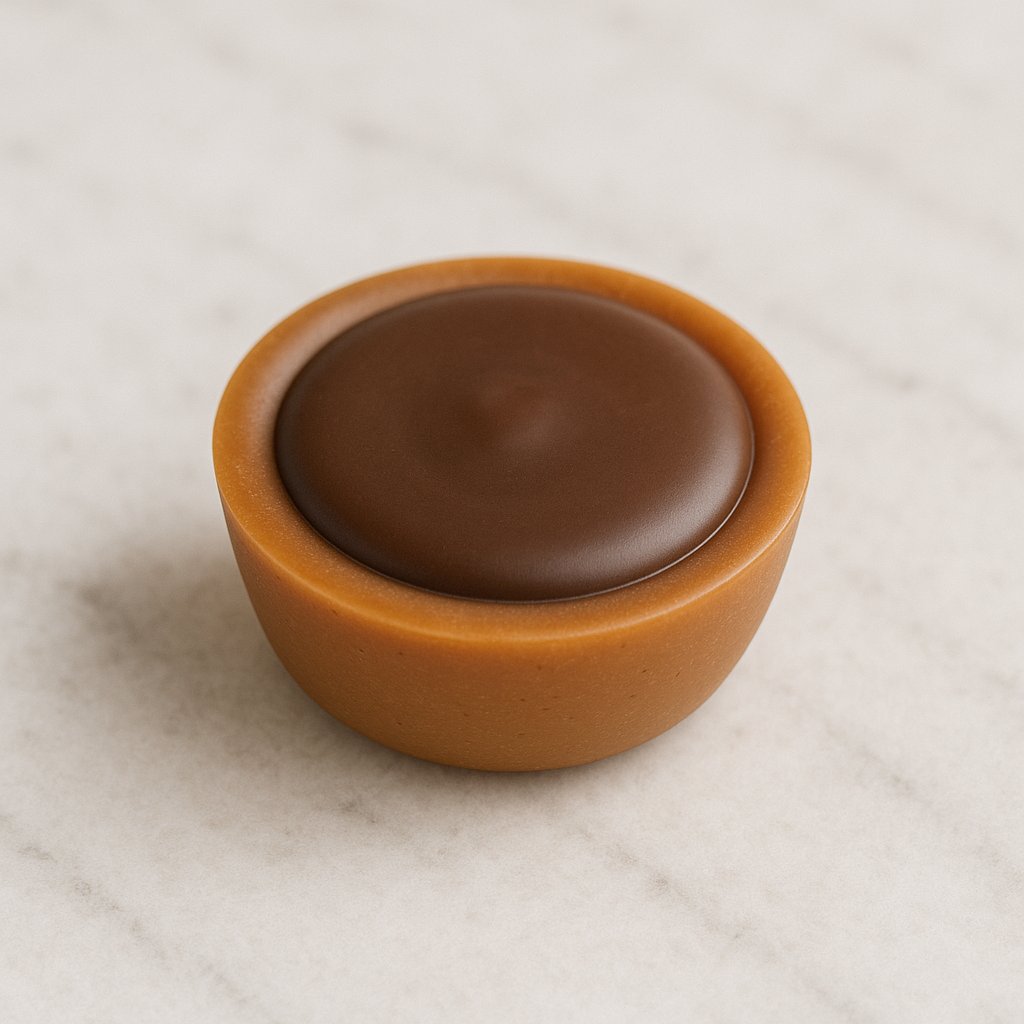
  • Standard Toffifee: The classic variant: a hazelnut in caramel, topped by a layer of a soft nougat or cream filling and a drop of chocolate on top. This is the variety most people know.
  • Family packs: Larger packages with more pralines, practical for home or for sharing at parties.
  • Smaller travel or sample packs: Small bags or boxes that are easy to take with you – like mini portions for on the go.
  • Seasonal or limited editions: Sometimes there are special packs or decorations for holidays like Christmas or Easter. The recipe often remains similar, but the packaging or quantity may differ.
  • Purpose-oriented variants: In some countries there are variants with a slight taste difference, such as slightly darker chocolate or less sugar. These are not always available everywhere.
Where to find Toffifee
Toffifee can be bought in many supermarkets, confectionery shops and online stores. In larger cities it is more likely that different pack sizes and limited versions are available. If a special variant is not in the store, you can often check and order it online.

In summary: Toffifee is a praline made of several ingredients that originated in Germany. The main raw materials such as hazelnut and cocoa come from different growing regions worldwide. There is the classic variety in many pack sizes, occasionally special or seasonal variants. You can usually find Toffifee in supermarkets or online – like many other popular sweets.
Details & nutrition

Property Value
Unit g
Average weight per piece 8
Calories per 100 535
Protein per 100 6.3
Carbohydrates per 100 59.0
Sugar per 100 49.0
Fat per 100 31.0
Saturated fat per 100 10.0
Monounsaturated fat 15.0
Polyunsaturated fat 3.0
Fiber per 100 3.0
Vitamin C (mg) per 100 0
Vitamin D (IU) per 100 0
Calcium (mg) per 100 120
Iron (mg) per 100 1.5
Nutri-Score E
CO₂ footprint 3.5
Origin Made in Germany
Gluten-free Yes
Lactose-free No
Nut-free No
Vegan No
Note Nutritional values rounded and given as typical average values for Toffifee; may contain traces of other allergens.

Technical & scientific information

Toffifee is a branded confectionery product, typically offered as a single sweet in a small caramel cup with a nut, chocolate and cream filling. Chemically and technologically, Toffifee is a multi-phase food system made up of different components with specific physicochemical properties: a caramel matrix, a solid hazelnut, a fat-based chocolate layer and a sugar- and fat-containing cream filling.

Composition and ingredients
The main components can be summarised as:

  • Caramel cup: An amorphous to partly crystalline sugar- and glucose-syrup-based matrix that acquires viscoelastic properties on cooling. Caramel is formed by heating sucrose and/or invert sugars, with Maillard reactions and caramelisation processes developing colour and flavour.
  • Hazelnut: Whole or halved hazelnut kernels (Corylus avellana), rich in lipids (predominantly monounsaturated fatty acids), proteins, fibre, vitamins (e.g. vitamin E) and minerals (e.g. magnesium).
  • Chocolate or fat coating: Often a cocoa-butter-alternative or cocoa-mass layer with sugar and milk components, which crystallises on cooling and forms a firm coating. This phase is lipophilic and influences melting behaviour and texture.
  • Cream or nougat filling: An emulsified fat- and sugar-rich cream that may contain milk fat, vegetable fats, emulsifiers (e.g. lecithin) and stabilisers. This filling is hygroscopic and interacts with adjacent layers through water and fat migration.
Nutritional values and energy density
Toffifee is an energy-dense product with a high share of carbohydrates (mainly simple sugars and complex sugars in the form of sucrose, glucose/fructose syrup), lipids (milk and vegetable fats, nut lipids) and a moderate protein share (mainly from nuts and milk components). Typical macronutrient distribution per 100 g is generally about 50–60 g carbohydrates, 20–30 g fat and 5–10 g protein, corresponding to an energy content of approximately 450–550 kcal/100 g. The specific values vary by product and must be taken from the respective nutrition declaration.

Processing methods
Industrial production combines several process steps:

  • Caramel production: Control of temperature profiles during sugar processing is crucial to achieve the desired viscosity and glass transition temperature. Additives such as invert sugar or glucose syrup are used to prevent crystallisation and stabilise texture.
  • Forming and portioning: The still-plastic caramel mass is deposited into moulds, into which hazelnut kernels are then placed.
  • Filling and coating: The liquid cream/nougat filling is dosed, followed by a tempered chocolate or fat-coating phase. Tempering controls the crystal form of the fats, affecting gloss, fracture behaviour and melting point.
  • Cooling and packaging: Targeted cooling sets the desired structure. Packaging is carried out in a controlled environment to minimise moisture uptake and migration of flavours.
Physical and chemical interactions
Major technical challenges are water and fat migration between the phases, which over time can lead to softening, fat bloom or flavour loss. Emulsifiers and stabilisers are used to increase phase stability. Sugar and fat crystallisation affect texture and storage stability; therefore raw material choice and process control are critical.

Health aspects
As a sweet, fat-rich product Toffifee is nutritionally a treat and not a staple food. Regular excessive consumption can contribute to increased calorie intake, weight gain and adverse metabolic effects. Allergic individuals must be aware of the hazelnut; traces of other nuts, milk and soy may also be present. For people with fructose intolerance or diabetes, the high sugar contents should be considered. From a hygiene perspective, correct processing is important to minimise microbiological risks associated with milk components.

Final remark
From a technical point of view, Toffifee is an example of a multi-phasic confectionery product where materials science (e.g. crystallisation, glass transition), food chemistry (Maillard reactions, lipid oxidation) and process engineering (temperatures, cooling, dosing) interact to achieve stable flavour, texture and shelf life. The final product combines sensory properties such as sweetness, caramel and chocolate notes and nutty aromas, with food safety and labelling playing central roles in consumer decisions.

Wiki entry for: Toffifee
Active now: 6 visitors of which 2 logged-in members in the last 5 minutes