Availability and types of Toffees
Toffees are soft, chewy sweets found in many countries around the world. Although they don't grow in a field like fruit or vegetables, they still have an origin: toffees are manufactured in factories, usually from sugar, butter, milk and flavorings. The basic ingredients come from different regions – sugar, for example, from sugar beet or sugar cane, milk often from dairy farms near creameries, and butter from cow's milk. These ingredients are heated and mixed in large kettles until the mass becomes thick and sticky. Afterwards it is cooled, cut into pieces and often wrapped individually.
Where to find toffees
- Supermarkets: the most common place to buy. Many varieties are on shelves or in large bins to serve yourself from.
- Confectionery shops: particularly many and special varieties, sometimes handmade or from old recipes.
- Bakeries and cafés: some make toffees themselves or sell small packs.
- Online shops: here you often find international brands and rare variants that are hard to find in stores.
Types and variants
Toffees come in a wide range of variants. You can think of them like different ice cream flavors: the basic idea is the same, but small changes create entirely new tastes and shapes.
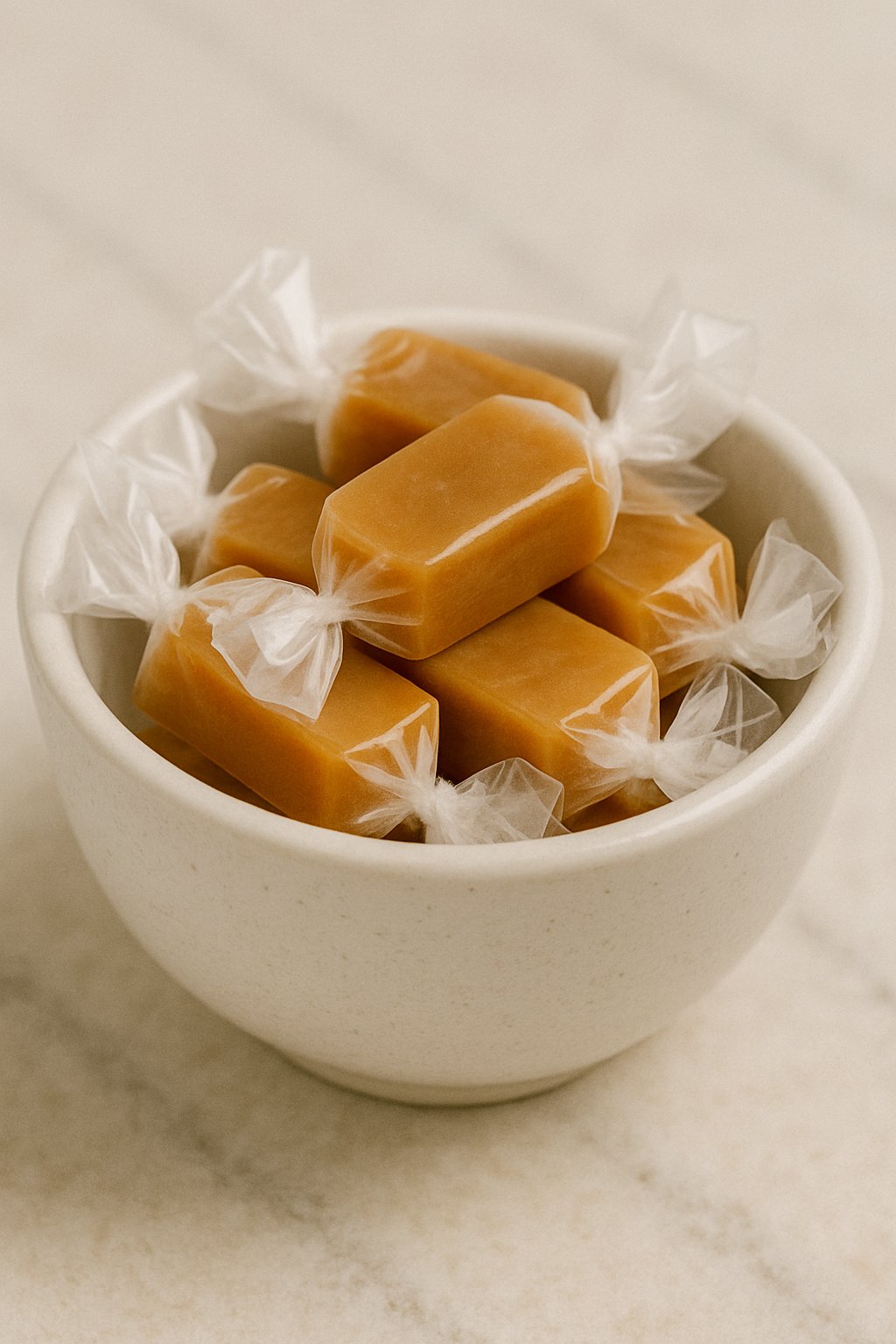
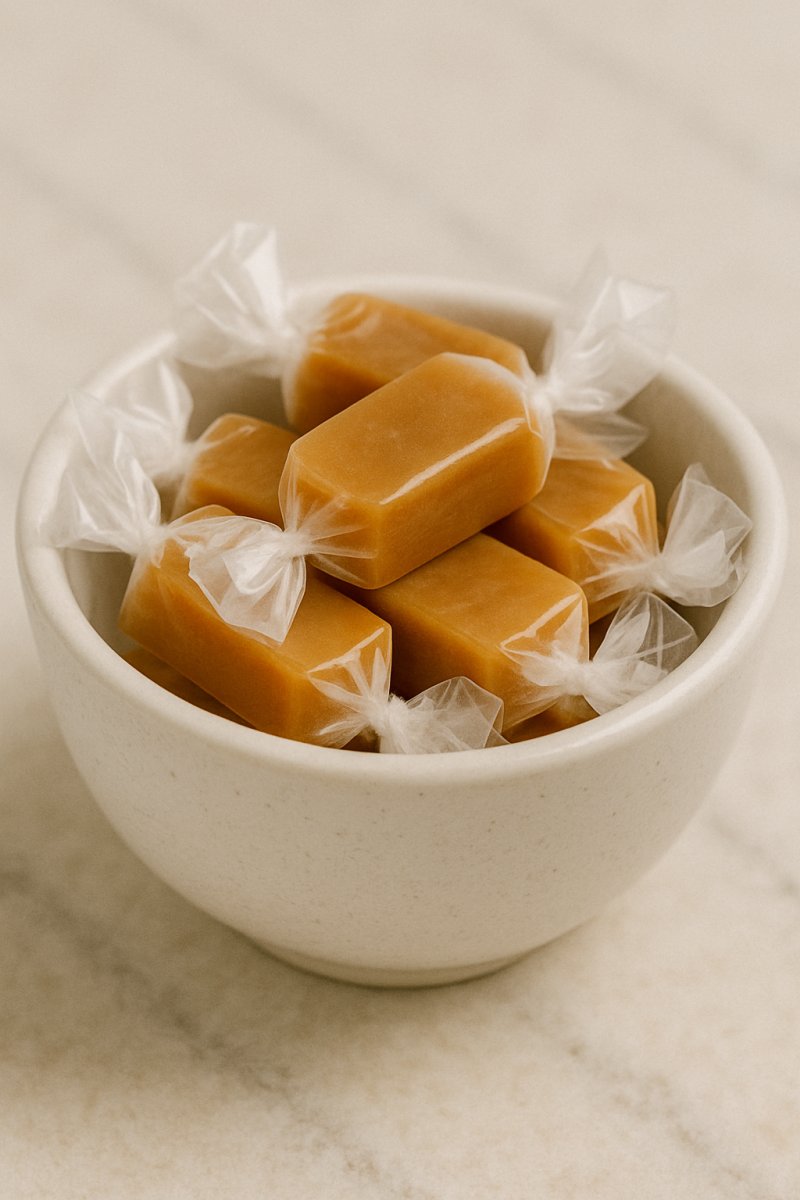
- Classic-Toffee: the simple, typical toffee is brown, chewy and tastes of butter and caramel. It is like the basic recipe many people know.
- Butter-Toffee: particularly buttery in flavor. Often a step creamier and less hard than the Classic-Toffee.
- Caramel-Toffee: very sweet and slightly melting. Caramel forms when sugar is heated strongly and takes on a nutty-brown color.
- Fruit-filled toffees: on the outside it's normal toffee, inside is a soft fruit filling like strawberry or lemon – like a surprise inside.
- Nut toffees: with whole nuts or nut pieces, for example almonds or hazelnuts. That adds extra crunch and flavor.
- Salty toffees: a combination of sweet and salty (e.g. sea salt). This mix is popular with many because it tastes different to plain sugar.
- Dentist-friendly or sugar-free toffees: for people who need to avoid sugar. They taste similar but use sugar substitutes.
- Handmade/Artisan toffees: smaller batches, often with special ingredients like Madagascar vanilla or sea salt from the coast. They are often more expensive but particularly flavorful.
Why there are so many varieties
Manufacturers like to experiment with flavor and shape because people have different preferences. Some like them soft and creamy, others prefer chewy and long-lasting to suck on. Regional preferences also play a role: in some countries nutty varieties are popular, in others fruity or salty variants.
Simple tips for trying them
- If you try toffees, start with a classic variety to know what toffee actually tastes like.
- Then try variants like caramel or nut to find out what you like best.
- If you need to watch your sugar intake, there are sugar-free alternatives that taste similar.
In summary: toffees are available worldwide and come in many variants – from simple butter toffees to fruit-filled or nutty types to special handmade varieties. You can buy them in supermarkets, specialty shops or online, and the wide selection ensures that almost everyone can find a variety they like.