Menu & categories

Tea

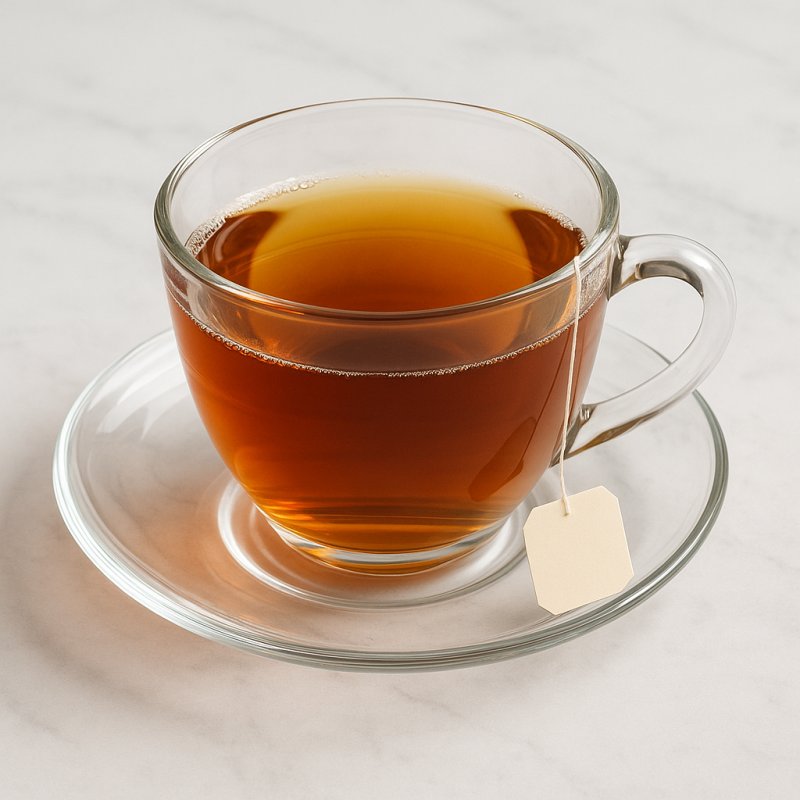
Low-calorie hot beverage made from infused tea leaves – unsweetened, practically calorie-free.

Wiki about tea Nutri-Score A Vegan Yes Gluten-free Yes Lactose-free Yes Nut-free Yes
NUTRITION / 100 ml
1 kcal 0.0 g Protein 0.2 g Kohlenhydrate 0.0 g Fett

Introduction

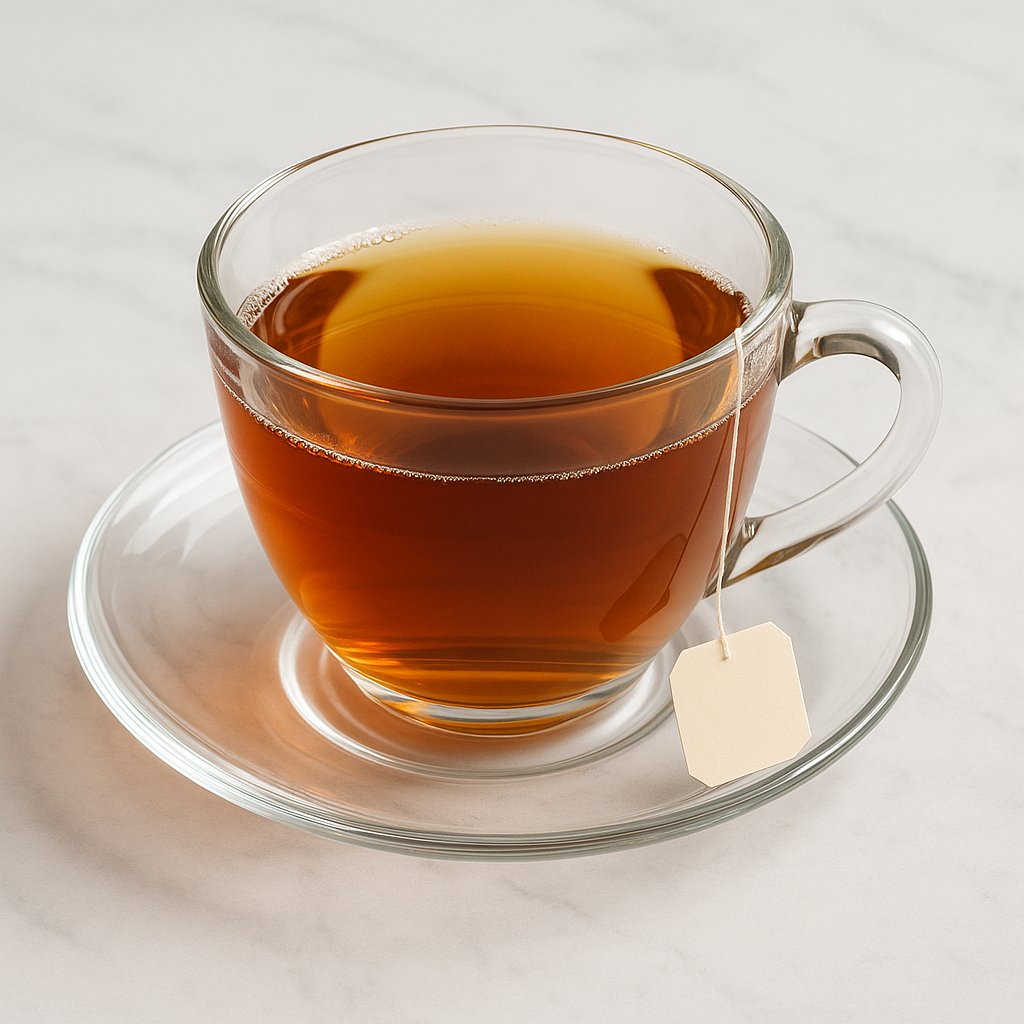
Cup of freshly brewed tea
I love tea in a way that sometimes feels almost ritualistic and that continually gives small everyday pleasures. When I put a teapot on, a moment of focus and enjoyment begins for me that goes far beyond simply drinking. I still remember a rainy day when I was in a tiny tea shop with a friend and we guided ourselves by the scents until we finally walked out with two completely different varieties and each of us thought our choice was the right one — and of course we were both right.

Tea accompanies me through different moods: it comforts, invigorates, helps with reading and with thinking. A colleague of mine swears by a particular blend before long work meetings because it supposedly clears his head, while another acquaintance prefers a mild herbal tea in the evening to gently end the day. Such small rituals are what make tea so special.

I like the variety of the tea world: black tea, green tea, oolong, white tea and the countless herbal and fruit teas each offer their own language of aromas. Some varieties taste floral, others more earthy or fruity. Preparation is as important as choosing the variety. A rushed steeping time can turn a delicate leaf into a bitter brew.

I've summed up my favorite basic rules in a short list that always helps me get the best out of every cup:

  • Pay attention to water quality: fresh, not too hard water brings out the aromas best.
  • Adjust the temperature: green tea prefers lower temperatures, black tea tolerates boiling water.
  • Control steeping time: a timer can work wonders and avoid bitterness.
  • Enjoy without hurry: a cup of tea deserves attention.
In the end, for me tea is less a beverage than a companion through small everyday stories. It creates connection, invites conversation and lets me discover new nuances again and again. That's what excites me most.

Availability & types

Tea is one of the oldest and most popular drinks in the world. If you want to know where tea comes from, how it is grown and what types there are, you can read everything here in simple language. I explain the main points so that even a 12‑year‑old child can understand them well.

Origin
Almost all "real" teas come from a plant called Camellia sinensis. You can picture this plant as a shrub or small tree. It originally grew in China and parts of South Asia. From there people brought cultivation to many countries.

Growing regions
Tea grows best in areas with a lot of rain, mild temperatures and often at higher elevations. Well‑known growing regions include:

  • China – a very wide range of different teas, for example from Yunnan or Fujian.
  • India – regions like Assam (robust and malty) or Darjeeling (delicate and floral).
  • Japan – known for green teas such as Sencha or Matcha.
  • Sri Lanka (formerly Ceylon) – produces a lot of black tea with a fresh flavor.
  • Kenya – often supplies large quantities of tea used for tea bags.
  • Taiwan – famous for oolong teas that have very distinctive aromas.
Why does tea taste different?
The taste depends on several things: where the plant grew (soil and climate), how fast it grew (altitude plays a role) and how the leaves were handled after picking. You can compare it to apples: an apple from a cool mountain tastes different than an apple from a warm field.

Main types of tea
All real teas (i.e. from Camellia sinensis) are created by processing the same leaves in different ways. The main types are:

  • Black tea – the leaves are "oxidized" (it's like an apple turning brown), which makes the flavor stronger and darker.
  • Green tea – the leaves are heated briefly so they stay green; the taste is fresher.
  • White tea – very lightly processed, delicate in taste, because only young leaves or buds are used.
  • Oolong – sits between black and green, with a wide range of different aromas.
  • Pu‑erh – a fermented tea that can age over time and then tastes very deep and earthy.
  • Herbal and fruit teas (tisanes) – technically not real teas because they do not come from Camellia sinensis; they are made from herbs, fruits or spices (e.g. peppermint or hibiscus).
Available varieties and formats
Today you can get tea almost everywhere: in the supermarket, at the tea shop, on markets and online. It is available as:

  • Loose leaves – often better flavor because the leaves have more room.
  • Tea bags – convenient and quick.
  • Instant tea – powder that dissolves immediately.
  • Blended or flavored teas – with fruits, flowers or flavors like vanilla or lemon.
  • Matcha – a very fine green tea powder from Japan; you drink the powder mixed with water.
  • Decaffeinated variants – for people who do not want caffeine.
In summary: tea is versatile and mostly comes from one plant that grows in many parts of the world. Depending on where and how the leaves are treated, very different flavors emerge. You can find tea in many forms – loose leaves, bags, powder or herbal blends – so there is something suitable for everyone.
Details & nutrition

Property Value
Unit ml
Calories per 100 1
Protein per 100 0.0
Carbohydrates per 100 0.2
Sugar per 100 0.0
Fat per 100 0.0
Saturated fat per 100 0.0
Monounsaturated fat 0.0
Polyunsaturated fat 0.0
Fiber per 100 0.0
Vitamin C (mg) per 100 0
Vitamin D (IU) per 100 0
Calcium (mg) per 100 1
Iron (mg) per 100 0.02
Nutri-Score A
CO₂ footprint 0.01
Origin Variable (e.g. China, India, Sri Lanka, Kenya)
Gluten-free Yes
Lactose-free Yes
Nut-free Yes
Vegan Yes
Note Information applies to unsweetened, brewed tea (without milk/sugar). Depending on the variety and steeping time, traces of minerals may vary.

Technical & scientific information

Tea refers to the infusion or distillate prepared from the leaves and buds of the plant Camellia sinensis and represents, botanically, a uniform starting material that is differentiated into green, black, oolong, white or fermented teas (e.g. Pu‑Erh) by different processing methods. The composition of a cup of tea is complex and includes hydrophilic and lipophilic compounds, minerals and volatile aroma compounds, with concentrations that vary greatly depending on variety, harvest time and processing.

Major chemical constituents are polyphenolic compounds, especially flavanols (catechins such as EGCG, EGC, ECG, EC), which are responsible for antioxidant properties. Tea leaves also contain caffeine, which acts as a central nervous system stimulant, and the amino‑like compound L‑theanine, which modulates neurochemical systems. Other components include tannins, organic acids (e.g. chlorogenic acid), minerals (potassium, magnesium, fluoride in variable amounts) and a complex mixture of volatile aromas (terpenes, aldehydes, ketones) that are formed or released during oxidation and roasting.

Processing methods strongly influence the chemical signature:

  • Green tea: immediate inactivation of enzymes by steaming or pan‑firing prevents oxidation; catechins remain largely preserved.
  • Black tea: full enzymatic oxidation (often with rolling to disrupt cells) leads to the formation of theaflavins and thearubigins, which shape color and flavor.
  • Oolong: partial oxidation yields an intermediate spectrum of polyphenols and aromatic compounds.
  • Fermented teas (e.g. Pu‑Erh): microbial fermentation alters polyphenol profiles and can produce new metabolites.
From a nutritional perspective, an unsweetened infusion provides virtually no energy, since macronutrients are extracted in very small amounts. Mineral contents are moderate; fluoride can become relevant with regular high consumption. The bioactive effects result mainly from secondary plant compounds, whose bioavailability is influenced by complex formation with proteins, temperature and extraction duration.

Health aspects are intensively studied. Epidemiological and clinical studies suggest possible positive effects, including antioxidant mechanisms, a modulating effect on cardiovascular risk and improved cognitive function with moderate consumption. Caffeine causes the expected stimulant effects and can, in sensitive individuals, trigger sleep disturbances or increased heart rate. At very high concentrations or with extracts, cases of hepatotoxicity have been reported, which is why standardized dosages and quality controls are important.

Practical technical parameters influence extraction: higher water temperatures and longer steeping times increase caffeine and polyphenol contents, while lower temperatures favor milder, less bitter infusions. Quality and safety issues concern pesticide residues, heavy metals and microbiological contamination; appropriate analyses (e.g. HPLC for polyphenols, GC‑MS for aromas) ensure product quality. Industrial decaffeination is performed using supercritical CO2 or solvent‑based methods to selectively reduce pharmacologically active substances.

Overall, tea is a chemically complex food with a wide spectrum of secondary plant compounds and sensorily relevant compounds. Its health effects are dose‑dependent and depend on variety and preparation, which is why consumer quality, correct preparation and moderate consumption are central criteria for benefit.

Wiki entry for: tea
Active now: 11 visitors of which 2 logged-in members in the last 5 minutes