Menu & categories

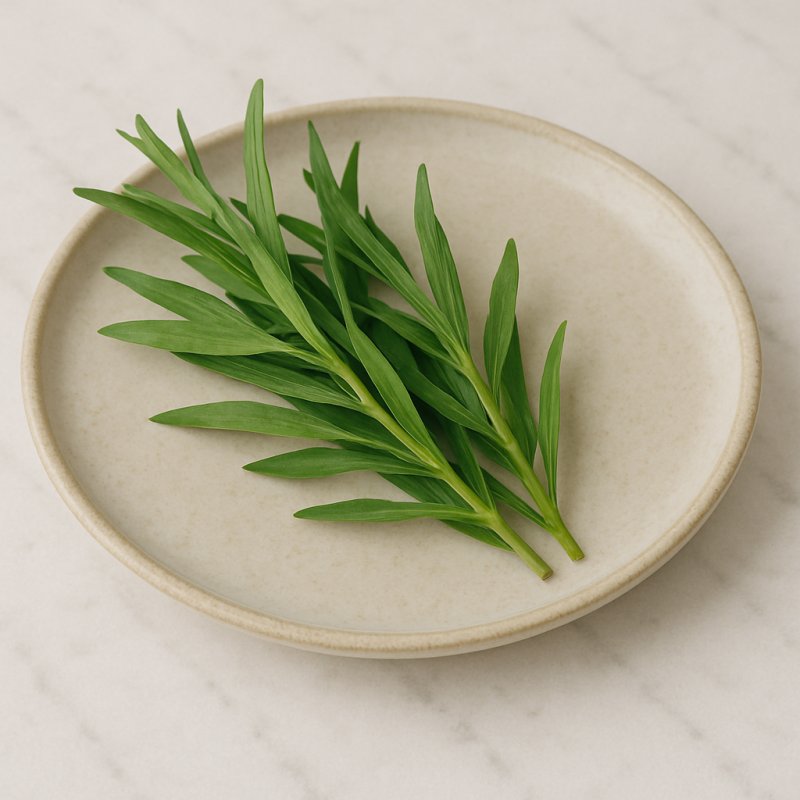
Tarragon

Aromatic culinary herb with a subtle anise note

Wiki about tarragon Nutri-Score A Vegan Yes Gluten-free Yes Lactose-free Yes Nut-free Yes
NUTRITION / 100 g
295 kcal 22.8 g Protein 50.2 g Kohlenhydrate 7.2 g Fett

Introduction

Fresh tarragon sprigs on a wooden board
I first really noticed tarragon when a neighbour put a small pot on my windowsill and said, "Try this with eggs." I was skeptical, because most of the herbs on my windowsill had similar, modest personalities. Tarragon, however, was different: its long, narrow leaves gave off a licorice-like scent that immediately made me curious. Since that day tarragon has been one of my favourite herbs, because it changes dishes in a surprisingly elegant way.

Tarragon has a distinctive, slightly sweet anise note that pairs especially well with poultry, fish and egg dishes. In my kitchen I use it freshly chopped in sauces, but also dried in marinades. I still remember a dinner where a friend finished an otherwise ordinary chicken breast with a tarragon-lemon butter — after that the dish seemed a little more luminous.

The regard tarragon receives in French recipes is not unfounded: it is a classic component of Béarnaise and gives vinaigrettes depth. At the same time it is more modern than people think; combined with tomatoes and fresh bread or as a subtle note in vegetable pans it shows its versatility. I once experimented with tarragon ice cream. It sounded crazy, but it worked surprisingly well as a light, aromatic finish to a summer menu.

When I choose tarragon, I look for strong, intact leaves. Over the years I've picked up a few practical tips:

  • Fresh is more intense: Fresh leaves release the aroma best.
  • Use sparingly: Tarragon can quickly dominate, so it's better to adjust than to overdo it at first.
  • Good pairings: Lemon, butter, cream, mustard and salmon are among its favourite partners.
For me tarragon is a small culinary secret that gives dishes a refined note without overburdening them. Anyone who gives it a chance will discover an herb world full of subtle nuances and surprising taste moments.

Availability & types

Availability and types of tarragon

Tarragon is a popular herb used in many cuisines. It smells and tastes a bit of anise or licorice, which makes it especially interesting for sauces, salads and meat dishes. If you want to know where tarragon comes from, which varieties exist and how to find or grow it, this is explained simply so that even a 12-year-old can understand it well.

Origin and natural growing areas
Tarragon originally comes from the regions around the Mediterranean, parts of Asia and Eastern Europe. The herb likes sunny but not too hot locations. Many people plant tarragon in their gardens because it is relatively easy to care for. It can also be found at farmers' markets and in supermarkets, especially in areas with moderate temperatures.

Growing regions
Today tarragon is cultivated in many parts of the world:

  • Europe: Particularly common in France and Germany. France is famous for its gourmet cuisine, in which tarragon is often used.
  • North America: In the USA and Canada tarragon is grown in gardens and on small farms.
  • Asia: In some parts of Asia tarragon grows wild or is cultivated in fields.
Main varieties and types
There are several varieties of tarragon that differ in flavour and growth habit. The most important are:

  • French tarragon (Artemisia dracunculus var. sativa): This is the best-known variety. It has the typical fine anise flavour that many chefs love. French tarragon grows well in the garden, but it is difficult to raise from seed and is often propagated by dividing the plant — that is, splitting a larger plant into smaller pieces to obtain new plants.
  • Russian tarragon (Artemisia dracunculoides): This variety is more robust and germinates more easily from seed. Its flavour is somewhat milder and less aromatic than that of French tarragon. In return it is more cold-tolerant and suitable if your region experiences frost more often.
  • Mexican tarragon (Tagetes lucida): Although called tarragon, it actually belongs to a different plant family. Its flavour is sweet-anise-like and it is used in some countries as a substitute for French tarragon. It is sometimes called Mexican anise.
Fresh, dried or frozen?
Tarragon is available in different forms:

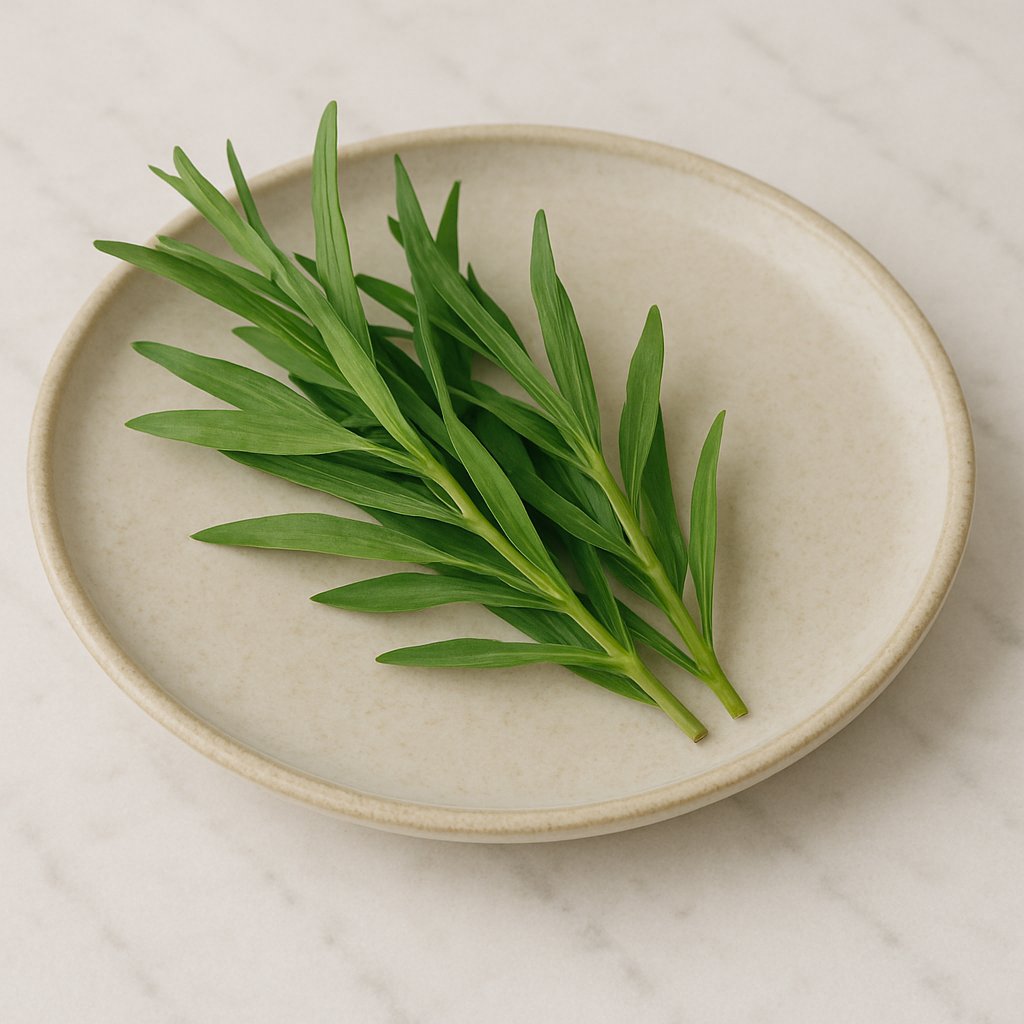
  • Fresh: Fresh tarragon has the strongest aroma. You can find it in supermarkets, weekly markets or your own garden. The leaves are narrow and glossy.
  • Dried: Dried tarragon keeps longer but loses some of the delicate flavour. It is suitable for dishes in which the herb is cooked for a long time.
  • Frozen: Tarragon can also be frozen. Chop the leaves and put them into ice cube trays with a little water or oil. This preserves the flavour better than drying.
Buying tips
When buying tarragon, look for fresh, green leaves without yellow spots. French tarragon is best in terms of flavour, but Russian tarragon is more robust and usually cheaper. Mexican tarragon is a good alternative if you like the typical flavour or live in a warmer region.

In summary: tarragon is widespread, originally from Europe and Asia, and available in several varieties — French, Russian and Mexican — which differ in flavour and cultivation. You can find tarragon fresh, dried or frozen, depending on how long you want to store it and how intense you want the flavour to be.
Details & nutrition

Property Value
Unit g
Average weight per piece 2
Calories per 100 295
Protein per 100 22.8
Carbohydrates per 100 50.2
Sugar per 100 0.0
Fat per 100 7.2
Saturated fat per 100 1.9
Monounsaturated fat 1.6
Polyunsaturated fat 3.0
Fiber per 100 7.4
Vitamin C (mg) per 100 50.0
Vitamin D (IU) per 100 0.0
Calcium (mg) per 100 1139.0
Iron (mg) per 100 32.3
Nutri-Score A
CO₂ footprint 1.5
Origin Europe and Central Asia; today cultivated in many temperate regions
Gluten-free Yes
Lactose-free Yes
Nut-free Yes
Vegan Yes
Note Nutritional values refer to dried tarragon; fresh tarragon has significantly lower nutrient densities per 100 g.

Technical & scientific information

Tarragon (Artemisia dracunculus) is a perennial herbaceous plant of the family Asteraceae, cultivated mainly as a culinary and medicinal herb. Several varieties exist, including French tarragon (A. dracunculus var. sativa), which is preferred in the kitchen for its pronounced anise-like aroma, and Russian tarragon (A. dracunculoides), which has a weaker aroma and spreads vegetatively more easily. The characteristic narrow leaves and the essential oil give tarragon its intense smell and taste profile, reminiscent of anise, fennel and licorice.

Botanical and morphological features: Tarragon typically reaches a height of 40 to 120 cm. The plant forms upright, branched stems with lanceolate, alternately arranged leaves. The flowers are small, yellowish to greenish, and appear in late summer. Tarragon prefers well-drained, sunny sites and moderately fertile soils.

Chemical composition and constituents: The product decisive for aroma and effects is the essential oil, which occurs in the leaves and stems. Major components of the oil include estragole (methyl chavicol), trans-anethole, linalool, ocimene and various terpenes. The estragole content varies depending on variety and location and is typically higher in French tarragon. In addition to the essential oil, tarragon contains flavonoids, phenolic compounds, coumarins, tannins and small amounts of bitter substances. Mineral analyses show that fresh leaves provide small amounts of potassium, calcium, iron and vitamin A–like carotenoids.

Nutritional values: Tarragon is normally used in small amounts as a spice; accordingly its contribution to macronutrient intake is minimal. Fresh leaves provide per 100 g only a small amount of energy (typically under 300 kJ), low amounts of carbohydrates, proteins and fats, but notable levels of plant secondary compounds and vitamins in concentrated form. Typical serving sizes (a few grams) supply mainly aromatic compounds and trace elements, not relevant calorie amounts.

Processing and use: Tarragon is used fresh or dried. Drying processes lead to a loss of volatile aroma components, particularly estragole and other easily evaporating terpenes, which is why fresh tarragon is preferred gastronomically. Methods such as hydro- or steam distillation are used to obtain the essential oil. For culinary purposes, the tender leaves are often added raw or toward the end of cooking to preserve the aroma. In classical cuisine tarragon is an ingredient of sauces like Sauce Béarnaise, marinades, vinegar preparations and fish dishes.

Pharmacological and health aspects: In folk medicine tarragon has traditionally been used as an appetite stimulant, antispasmodic and mildly sleep-promoting agent. Scientific investigations are mostly limited to in vitro and animal studies that suggest antioxidant, antimicrobial and inflammation-modulating effects of certain extracts or oil fractions. The pharmacological activity is often attributed to the secondary plant compounds mentioned above.

It is important to note estragole, an aromatic compound that has shown carcinogenic effects in animal experiments. Following these findings, food and health research is examining safe limits for estragole in food preparations, especially in concentrated extracts or essential oils. Normal culinary use of fresh leaves in customary amounts is generally considered safe, while highly concentrated products should be treated with caution. Pregnant people and young children should avoid high doses of essential oils.

Safety and quality characteristics: Tarragon quality is determined by aroma intensity, green leaf colour and low levels of contaminants. For dried products, gentle drying and packaging are important to preserve volatile components and limit oxidation. For medicinal or industrial applications, standardized extracts and analytical testing (e.g. by gas chromatography–mass spectrometry) are used to determine estragole content and other markers.

Overall, tarragon is a characterful culinary herb with a complex chemical composition and diverse culinary as well as potential health-related properties. Its contribution to nutrition is primarily sensory, while scientific studies on health effects require further standardized research and safety assessments.

Wiki entry for: tarragon
Active now: 23 visitors of which 2 logged-in members in the last 5 minutes