Menu & categories

Tabasco sauce

Spicy condiment sauce based on chilies, vinegar and salt

Wiki about Tabasco sauce Nutri-Score A Vegan Yes Gluten-free Yes Lactose-free Yes Nut-free Yes
NUTRITION / 100 ml
12 kcal 0.5 g Protein 1.5 g Kohlenhydrate 0.3 g Fett

Introduction

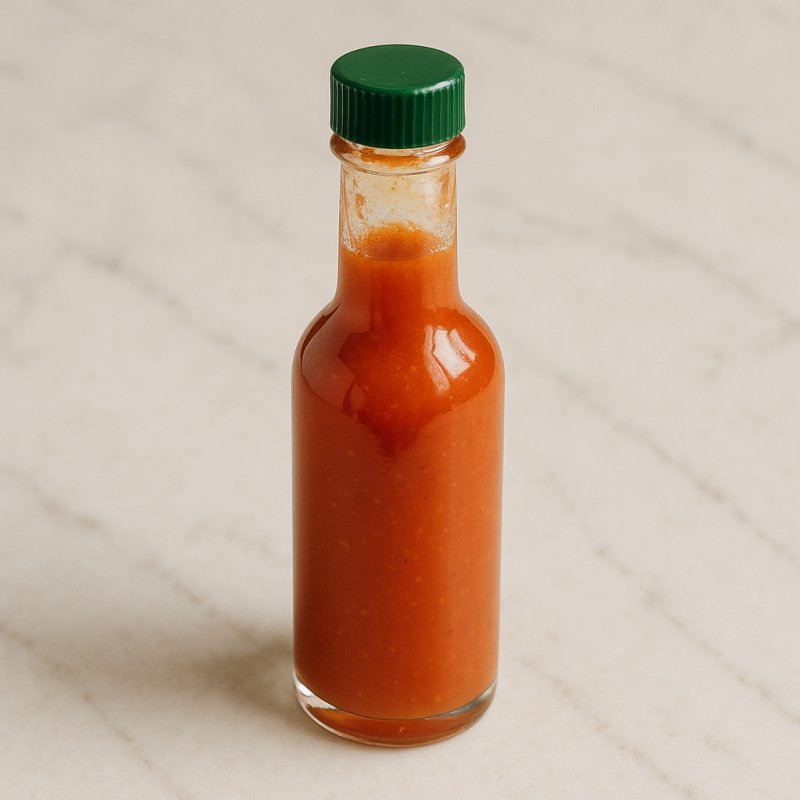
Bottle of Tabasco sauce with red chili sauce
I still clearly remember the first bottle of Tabasco sauce I put in my kitchen: a small, red‑shimmering bottle that immediately gave the impression of holding a secret. Tabasco sauce is for me more than just a seasoning; it is one of those simple but powerful ingredients that can transform a dish at the right moment. Often, after a long day, I reach for a drop on a bowl of scrambled eggs or a spoonful of tomato soup, because the acidity and subtle heat instantly bring brightness and structure.

The sauce has a fascinating blend of heat, vinegar and a slightly fruity note. When I tell guests that it is made from fermented chili peppers, vinegar and salt, I often get a small gasp of surprise. A colleague of mine was once surprised how little is needed to change the flavor of an entire dish. A few drops on mayonnaise or a marinade are enough, and suddenly everything seems more harmonious, more lively, almost as if retouched with an invisible brush.

Over the past years I have used Tabasco sauce in a wide variety of kitchens:

  • As a secret ingredient in dressings, to balance acidity.
  • In braised dishes, as it provides deep flavor without intrusive heat.
  • In cocktails or Bloody Marys, to add a tingling note.
What fascinates me most is its versatility. I use it not only in typically savory dishes, but also sparingly in sweet‑and‑sour combinations or even in chocolate desserts when I want to achieve a surprising contrast. Once a friend took a miniature bottle home after a tapas evening and later confessed to me that she uses it to 'elevate' her tomato sauces – that's the curious thing about this sauce: it manages to move into almost any kitchen without being loud.

For anyone who wants to experiment with Tabasco, I recommend starting small and dosing deliberately. The discreet but persistent aftertaste makes the sauce a reliable companion that slowly shifts to the center of the flavor without overdoing it. When I try a new combination, I first take a tiny drop, then another, until the balance is right. In the end, Tabasco sauce is for me a culinary friend: modest in appearance, but always ready to surprise and enliven dishes.

Availability & types

Availability and Types

Tabasco sauce is a hot seasoning sauce that can be bought almost anywhere in the world today. It originally comes from the United States, more precisely from the state of Louisiana. There, in the 19th century, the McIlhenny company began producing the famous Tabasco sauce on a small island. The basic idea was simple: take hot chilis, mix them with salt and store them in barrels so the flavor can mature. This mixture is then diluted with vinegar, producing a hot but liquid sauce.

Where the chilis grow

The peppers important for Tabasco grow best in warm, sunny areas. The classic Tabasco peppers come from Avery Island in Louisiana, but similar varieties are also grown in other warm regions. Today raw materials sometimes come from different countries, depending on where the plants are currently thriving. It's a bit like buying bananas from Costa Rica and oranges from Spain: fruits prefer certain climates and are grown where conditions suit them best.

Available varieties and variants

  • Original Tabasco: This is the classic red variety that most people know. It has the typical hot, slightly acidic taste because the chilis are mixed with vinegar. Many people use it on pizza, eggs or soups.
  • Milder variants: There are also less hot versions suitable for people who like heat but don't want it to burn too much. These often contain a combination of milder chilis or are more diluted with vinegar and other ingredients.
  • Green (Green Jalapeño): This variant is made from green jalapeño chilis and is usually somewhat milder and fresher in taste. The color is green and the flavor is reminiscent of freshly harvested vegetables.
  • Chipotle Tabasco: Smoked chilis (chipotle) are used here. That gives the sauce a smoky, savory flavor that goes well with grilled meats or burgers. You can think of it like the difference between a raw and a grilled pepper.
  • Exotic or limited editions: The brand sometimes releases special editions with unusual ingredients, for example fruit or herb combinations. These are often available only for a short time and are useful for trying new flavors.
How and where to buy it

Tabasco sauce can be found in supermarkets, delicatessens and online. In large supermarkets it is usually in the spices or international foods section. You can buy small sample sizes if you want to test it first, or larger bottles if you use the sauce often. In some regions there are also local products made in the style of Tabasco but with different names.

Tips for choosing

  • If you're not used to heat, start with a milder variety or use a small amount first. A few drops are often enough.
  • Try different types: the red original sauce is different from the green or smoked variant – like different ice cream flavors that are all sweet but taste different.
  • Pay attention to the expiration date and store the bottle in a cool, dark place so the flavor stays fresh longer.
In summary: Tabasco sauce is a globally available, versatile seasoning sauce originating in Louisiana. It comes in many varieties — from very hot to mild, from fresh‑green to smoky — and is easy to find in the supermarket or online. That way almost everyone can find the variety that suits their taste.
Details & nutrition

Property Value
Unit ml
Calories per 100 12
Protein per 100 0.5
Carbohydrates per 100 1.5
Sugar per 100 0.8
Fat per 100 0.3
Saturated fat per 100 0.05
Monounsaturated fat 0.1
Polyunsaturated fat 0.15
Fiber per 100 1.0
Vitamin C (mg) per 100 15
Vitamin D (IU) per 100 0
Calcium (mg) per 100 10
Iron (mg) per 100 0.5
Nutri-Score A
CO₂ footprint 0.5
Origin USA
Gluten-free Yes
Lactose-free Yes
Nut-free Yes
Vegan Yes
Note Typical ingredients are red chilies, distilled vinegar and salt; very intense flavor, therefore usually used in small amounts.

Technical & scientific information

Tabasco sauce refers to a hot seasoning sauce originally produced from fermented chili peppers of the genus Capsicum. Its name is closely associated with the US brand Tabasco, which has produced a characteristic hot sauce since the 19th century; in a broader sense the term is also used for comparable sauces made from chili, vinegar and salt. Technically, it is a simple but chemically interesting food product whose sensory heat and shelf life depend on ingredients, fermentation processes and reaction conditions.

Composition and ingredients
Typical ingredients of a Tabasco sauce are Capsicum chilis, vinegar as a source of hydrogen ions, salt and occasionally spices or preservatives. The most important chemical components are:

  • Capsaicinoids: Capsaicin and related compounds (dihydrocapsaicin, nordihydrocapsaicin) are lipophilic alkaloids responsible for the heat. Heat perception is mediated via TRPV1 receptors in mucous membranes and is dose‑dependent.
  • Water and organic acids: Acetic acid is the dominant acid source; its content lowers pH and inhibits many microorganisms. Other organic acids from fermentation (e.g. lactic acid, acetic acid from microbial conversion) may be present.
  • Salt (sodium chloride): Salt acts as a flavor carrier and microbial inhibitor; it also affects osmolarity during fermentation.
  • Colorants and secondary plant compounds: Carotenoids (e.g. capsanthin, capsorubin) and flavonoids give the red to orange color and contribute antioxidant properties.
  • Residual matter: Cellulose, pectin and other polysaccharides from plant cell walls remain in the matrix and influence viscosity and stability.
Production and processing methods
Traditional production includes the following steps: cleaning and grinding ripe chilis, mixing with salt, subsequent storage or fermentation in wooden barrels, and finally addition of vinegar followed by filtration and bottling. Fermentation can occur via local microflora (lactobacilli, yeasts) or, in some industrial processes, be replaced by acidified conditions. Important parameters are temperature, salt content, pH and oxygen availability. Fermentation modulates flavor, reduces bitter components and can promote the release of volatile aroma compounds. The subsequent addition of vinegar typically lowers the pH to values below 4.0, which significantly increases microbiological safety and shelf life.

Nutritional values and food chemistry
Tabasco sauce is low in calories, as it mainly consists of water, vinegar and small amounts of plant matter. Nutritionally relevant values per 100 g are usually in the range of a few kilocalories (typically under 50 kcal), very low fat content, minimal protein and carbohydrates, but measurable amounts of vitamin C, provitamins (carotenoids) and secondary plant compounds. Salt content can vary by recipe and is nutritionally relevant for sodium intake.

Health aspects
Capsaicinoids have various physiological effects: they trigger pain and heat sensations, but can also influence metabolic reactions such as increased thermogenesis and appetite modulation. Epidemiological and experimental data point to potentially beneficial effects on circulation, pain relief (topical) and antimicrobial activity. On the other hand, high doses can cause gastrointestinal irritation, burning and, in sensitive individuals, gastroesophageal complaints. Due to the low pH, Tabasco sauce is considered a low microbiological risk, yet hygiene during production and storage remains important.

Sensory properties and application
Sensorially, Tabasco sauce is characterized by hot spiciness, an acidic note and a fruity chili base character. The pigments and aroma esters from the chili plant as well as compounds formed during fermentation contribute to the complex flavor profile. It is used in small amounts as a condiment to increase flavor depth, heat and acidity balance in dishes.

In summary, Tabasco sauce is a technically simple but chemically multifaceted condiment: its property profile is mainly determined by capsaicinoids, acetic acid and secondary plant compounds. Traditional fermentation steps and subsequent acidification influence both safety and sensory quality. For consumers, moderate use brings gustatory benefits; medically, both potential positive effects and possible irritations are documented, so individual tolerance should be considered.

Wiki entry for: Tabasco sauce
Active now: 17 visitors of which 2 logged-in members in the last 5 minutes