Menu & categories

Simple syrup

Sugar-water solution used as a base for beverages and sweet dishes

Wiki about sugar syrup Nutri-Score E Vegan Yes Gluten-free Yes Lactose-free Yes Nut-free Yes
NUTRITION / 100 ml
260 kcal 0 g Protein 65 g Kohlenhydrate 0 g Fett

Introduction

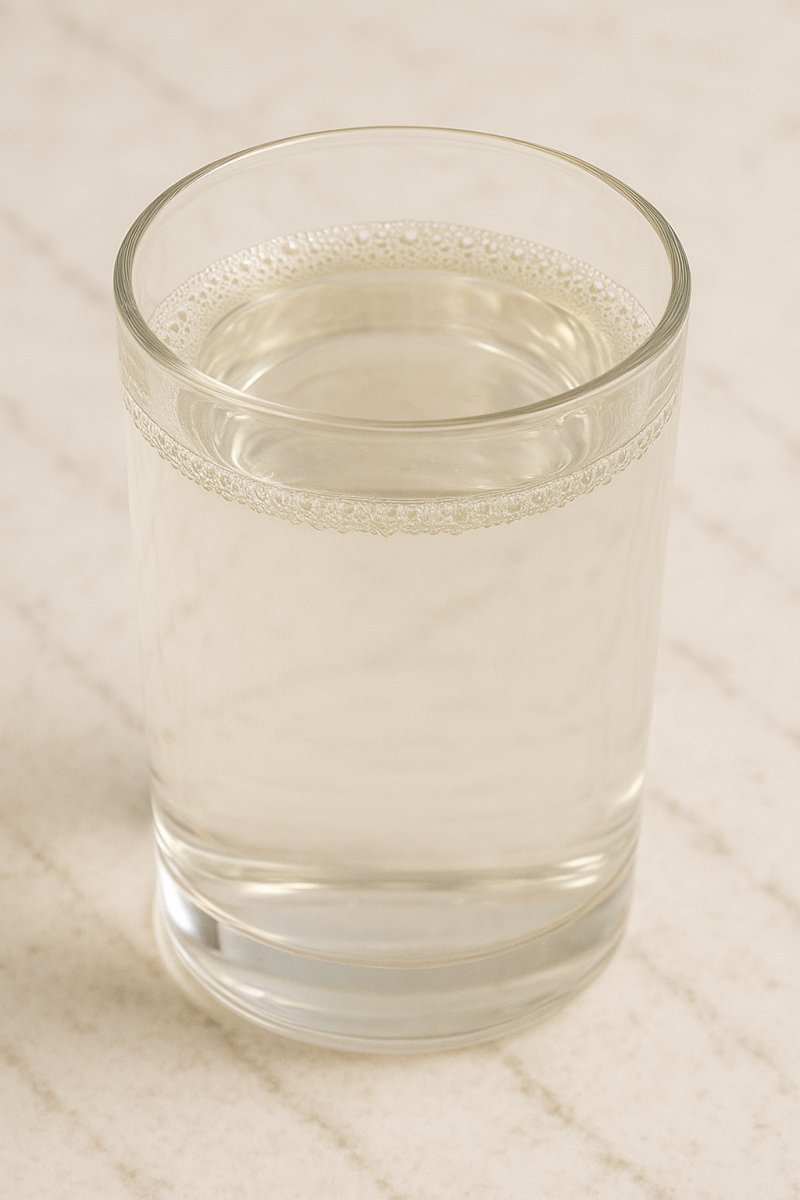
A glass of simple syrup next to sugar crystals
I admit: simple syrup was for a long time the unassuming chameleon of my kitchen. I still remember the first time I tried to mix a simple cocktail: I panicked and rummaged through the kitchen cupboard for 'something sweet' and came across a small bottle of simple syrup someone had left after a summer party. From then on a small liaison began between me and this versatile ingredient that seems sweet, smooth and unpretentious, yet can do so much.

Simple syrup is basically a clear sugar syrup made from equal parts sugar and water, sometimes in other proportions depending on how thick or runny you want it. Its strength lies in its ability to blend seamlessly into drinks, desserts and sauces without changing their structure. I particularly appreciate that it dissolves immediately in cold liquids — a real luxury when making iced tea, lemonades or cocktails and you don't have time for long stirring.

A few practical things I've learned over time:

  • The 1:1 ratio is standard; 2:1 yields a heavier syrup that keeps longer.
  • You can warm vanilla pods, lemon peel or herbs to make flavored variations.
  • Simple syrup stores well in the fridge and is a lifesaver for quick dessert preparations.
I remember a cold autumn evening when a colleague dropped by with friends and I only had berries and yogurt at home. Two tablespoons of simple syrup and a squeeze of lemon turned it into a surprisingly elegant dessert. Moments like that make me realize how versatile and useful this ingredient is.

Culinarily, simple syrup gives dishes balance: it softens acidity, rounds off bitter notes and binds flavors. In pastry it's unbeatable when making glazes or compotes, and in the cocktail world it's an invisible hero that creates texture without weighing things down. I've also used it to glaze fruit toppings so they don't dry out in the fridge.

If you haven't discovered simple syrup yet, try making a small bottle yourself and play with herbs or citrus. To me it remains one of those little kitchen pleasures: unobtrusive, reliable and always ready to make an everyday dish a little bit finer.

Availability & types

Availability and types of simple syrup

What is simple syrup and where does it come from?
Simple syrup is a simple mixture of sugar and water, sometimes with a small addition of acid such as lemon juice. It is often used to sweeten drinks, cocktails or desserts because it dissolves better in cold liquids than dry sugar. The sugar in simple syrup usually comes from sugar beets or sugar cane. Both plants grow in fields but in different places: sugar beets are mainly grown in cooler regions like Europe, while sugar cane grows in warm, tropical regions, for example in Brazil, India or parts of Africa.

Growing regions – short and simple
You can think of the origin like fruit: some plants prefer cold, others warm. Sugar beets are like apples – they do better in temperate climates. Sugar cane is more like bananas – it needs lots of sun and heat. That's why sugar for simple syrup often comes from countries near the equator (sugar cane) or from countries with a cooler climate (sugar beets). In supermarkets you usually don't see a difference on the label, because processed sugar looks very similar.

What varieties and versions of simple syrup exist?
Simple syrup doesn't come in just one form. Here are the common variants, explained plainly:

  • Basic simple syrup (1:1) – This is the most common mix: equal parts sugar and water. It's like a normal sugar solution that sweetens quickly and works well in cold drinks.
  • Rich simple syrup (2:1) – Here there are two parts sugar to one part water. It is sweeter and more viscous, more like a syrup. It's used when you want the sweetness to last longer or the drink to be thicker.
  • Light simple syrup – Sometimes less sugar is used, for example 1 part sugar to 2 parts water. This is less sweet, similar to adding just a little sugar to tea.
  • Flavored simple syrup – Aromas or herbs are added here, such as vanilla, lemon peel or mint. It's like giving your syrup a little flavor so it's not only sweet but also aromatic.
  • Vegan/ethically traded versions – Sugar can be produced in different ways. Some products are labeled vegan or fair trade. This means certain labor or environmental standards were considered during production. It's similar to how some apples are labeled as organically grown.
How easy is it to find simple syrup in trade?
Simple syrup is very easy to obtain. You can buy it ready-made in supermarkets, liquor stores or online. Often it's also very easy to make yourself: heat sugar and water until the sugar dissolves, let cool – done. That's why it is popular in households, cafés and bars.

What to pay attention to
When you buy or make simple syrup, keep these points in mind: do you want it rather thick or thin? Do you want a flavor added? And is it important to you that the sugar comes from fair or organic production? Depending on that you can choose the appropriate variant.

In summary: simple syrup is a simple, versatile ingredient made from sugar and water that can come from sugar beets or sugar cane. There are different ratios and flavored versions, and it is widespread and easy to obtain – both ready-made and homemade.
Details & nutrition

Property Value
Unit ml
Calories per 100 260
Protein per 100 0
Carbohydrates per 100 65
Sugar per 100 65
Fat per 100 0
Saturated fat per 100 0
Monounsaturated fat 0
Polyunsaturated fat 0
Fiber per 100 0
Vitamin C (mg) per 100 0
Vitamin D (IU) per 100 0
Calcium (mg) per 100 1
Iron (mg) per 100 0
Nutri-Score E
CO₂ footprint 0.3
Origin Made from refined sugar and water
Gluten-free Yes
Lactose-free Yes
Nut-free Yes
Vegan Yes
Note Simple syrup is a basic sugar-and-water mixture, typically in a 1:1 or 2:1 ratio, used mainly for beverages, desserts, and for soaking cakes.

Technical & scientific information

Simple syrup is a common term in culinary and pastry contexts for a clear, homogeneous sugar solution frequently used for sweetening, glazing, preserving or as a base for further sweet preparations. Technically, it is a saturated or slightly supersaturated solution of sucrose (table sugar) in water, prepared by heating and, if needed, further processed with different concentrations of syrups or syrup-like components. The name is derived from the historical process of 'clarifying', in which impurities were removed to obtain a clear liquid.

Chemical composition and properties
The main component of simple syrup is sucrose, a disaccharide of glucose and fructose. In aqueous solution sucrose does not dissociate into ions but exists as dissolved molecules. The solubility of sucrose in water increases with temperature; at 20 °C about 200 g of sucrose per 100 g of water are soluble, and much more at 100 °C. In preparation a specific mass proportion is often chosen (e.g. 1:1 or 2:1 sugar to water) in order to obtain, depending on the application, a low-viscosity solution or a thicker syrup. By heating, controlled evaporation of the water can be achieved, increasing the sugar concentration and making the solution more viscous upon cooling.

Manufacturing process
The classic production includes the following steps:

  • Dissolving granulated sugar in warm water while stirring until a clear solution is obtained.
  • Skimming and, if necessary, filtering to remove suspended matter and impurities; this ensures optical clarity.
  • Heating to defined temperatures to reach the desired sugar concentration and viscosity; for preservation purposes a higher concentration is often aimed for.
  • Optional thickening by boiling down to a syrup or leaving it thinner for cold storage conditions.
Variants and additives
Simple syrup is produced in various ratios, the most common being 1:1 (equal parts sugar and water) and 2:1 (double sugar content). Additional components can influence functional properties:

  • Acids such as lemon juice or citric acid are sometimes added to stabilize clarity and inhibit crystallization.
  • Invert sugar or glucose syrups are blended in to alter sweetness, color stability and humectant properties, as well as to prevent crystallization.
  • Colorants or flavorings are introduced in small amounts for specific applications.
Physical and technological aspects
The viscosity, boiling point and crystallization behavior of simple syrup depend on sugar concentration and temperature. A high sugar content increases viscosity and elevates the boiling point (ebullioscopic elevation), which is used during thickening. Crystallization occurs when the solution becomes supersaturated or when impurities act as nucleation sites; targeted measures such as the use of invert sugar and careful filtration reduce this risk.

Nutritional and health aspects
Simple syrup consists almost entirely of utilizable carbohydrates in the form of sucrose and provides about 4 kcal (17 kJ) per gram. It contains practically no proteins, fats, vitamins or minerals. From a health perspective simple syrup, like other concentrated sugar solutions, is energy-dense and excessive consumption can contribute to increased energy intake, caries risk, weight gain and metabolic effects. The liquid form leads to faster oral availability of sugar, which can amplify the glycemic effect. For people with diabetes or other metabolic disorders mindful dosing is required.

Applications
Simple syrup is used widely:

  • As a sweetening and glazing agent in pastry and beverage production.
  • As a preservation component in canning processes and syrup preparations.
  • As a starting material for producing syrups with specific properties (e.g. inverted syrup).
  • In scientific and technological contexts as a model system for studies of solution properties and crystallization.
Overall, simple syrup is a technically simple but functionally versatile ingredient with well-defined physicochemical properties, whose targeted control in production and use is crucial for quality, shelf life and suitability for use.

Wiki entry for: sugar syrup
Active now: 15 visitors of which 2 logged-in members in the last 5 minutes