Menu & categories

Sugar pearls

Crispy sugar decoration for pastries, cakes and desserts.

Wiki about sugar pearl Nutri-Score E Vegan Yes Gluten-free Yes Lactose-free Yes Nut-free Yes
NUTRITION / 100 g
400 kcal 0 g Protein 100 g Kohlenhydrate 0 g Fett

Introduction

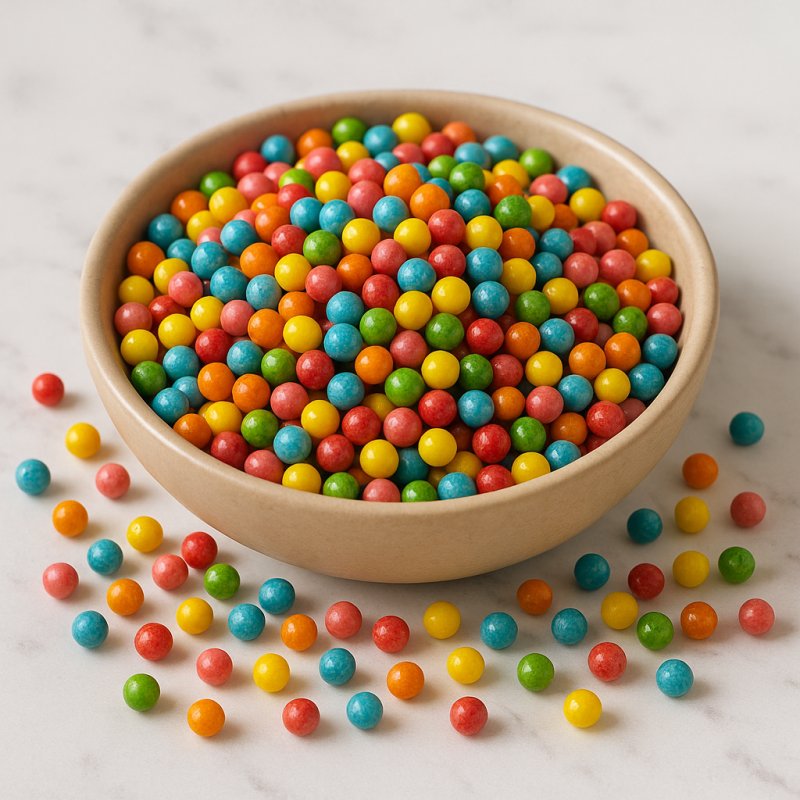
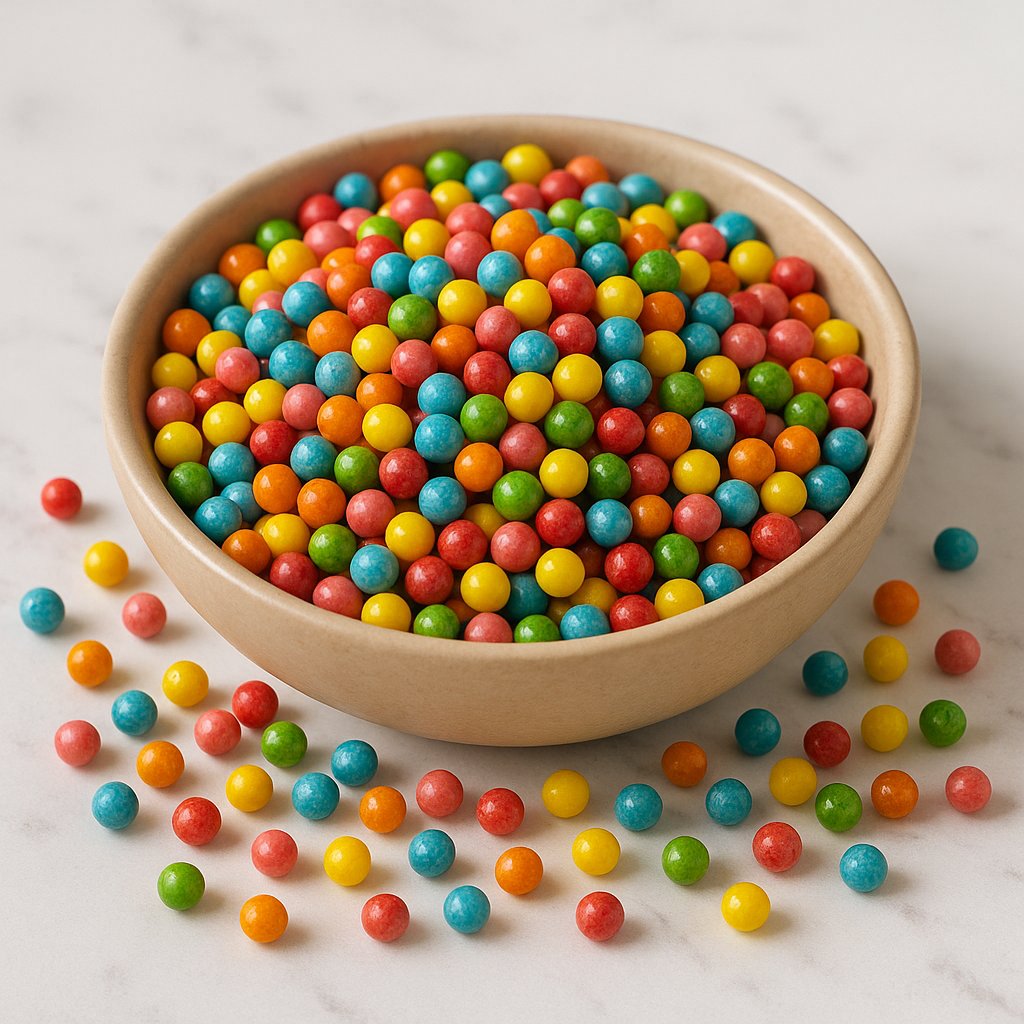
Colorful sugar pearls as decoration

I still clearly remember my first cake with sugar pearls: the surface sparkled like a little starry sky, and suddenly that plain sheet cake piece looked like a celebration. Since then these tiny sugar jewels have surprised me again and again because they are so inconspicuous and yet can create so much atmosphere. For me sugar pearls are more than mere decoration; they are a small, uncomplicated detail of joy that evokes memories and turns plates into festive moments.

What I particularly like about sugar pearls is their versatility. They are ideal for cake edges, cupcakes and cookies, but I have also seen a friend use them on a cheese board as a playful contrast, making everyone smile. In terms of taste they mainly add a sweet crunch, but their true strength lies in the appearance: glossy, matte or in pastel shades they add accents without competing with the flavors of the baked goods.

A few practical things I've learned and don't want to withhold:

  • Composition: sugar pearls usually consist of sugar, starch and binders; sometimes colorings and coatings are included.
  • Usage: they adhere well to firm icing and fondant, but on a very moist topping they can dissolve.
  • Storage: kept dry and protected from light they remain crunchy for a long time; moisture is their biggest enemy.
I've also learned to be cautious about allergies and artificial colorings. When decorating I now make a point of reading the ingredient list and recommending alternative pearls without artificial colorings if guests are sensitive. Once an impromptu craft session with children led us to lay a small mosaic of sugar pearls on a butter biscuit; it was a chaotic result, but everyone's eyes lit up.

In my pantry you'll always find a few jars of sugar pearls in different colors. They are a quick, reliable way to give a pastry character, and sometimes it only takes a single, tiny accent to turn everyday baking into a small experience.

Availability & types


Availability and types

What are sugar pearls and where do they come from?
Sugar pearls are tiny, round confections often used to decorate cakes, cookies or ice cream. They are usually made of sugar and a few other ingredients such as water and starch. The original raw material is sugar, which is obtained either from sugar beet or sugar cane. Sugar beets are grown in cooler regions such as parts of Europe and North America, while sugar cane grows in warmer, tropical areas like Brazil, India or Thailand. So when you see sugar pearls, the sugar in them usually comes from one of these plants.

Where are sugar pearls manufactured?
Sugar pearls are produced in factories specialized in baking accessories and confectionery. Such factories exist in many countries with a large food industry, for example Germany, the Netherlands, the USA, Turkey and China. Often the pearls are colored, glazed and sorted there before being packed into bags or jars and sent to shops. You can buy them in supermarkets, specialist baking shops and online.

What kinds and variants are there?
There are many different types of sugar pearls. The main groups are:

  • Sizes: Very small spheres are often called “nonpareils” and look like tiny grains of salt. Larger, smooth pearls are also called “dragées” – they are like little marbles.
  • Shapes: Mostly round, but there are also hearts, stars or other shapes for special occasions.
  • Colors: From snow-white to delicate pastels to bright rainbow colors. Some are single-colored, others mixed like a bowl full of colorful sweets.
  • Sheen and effects: Some pearls are matte, others are highly glossy or have a metallic effect (gold or silver). A thin layer is applied for the shine, sometimes made from natural substances and sometimes using specific coatings.
  • Taste: Most sugar pearls taste simply sweet. There are also variants with a slight vanilla or chocolate flavor. Sometimes they are completely neutral and serve only as decoration.
  • Materials: In addition to pure sugar pearls there are similar decorations made of chocolate, marzipan or sugar paste (fondant). These are softer or creamier than hard sugar pearls.
What should you watch out for?
Some shiny pearls are coated with a finish that is not suitable for everyone – for example a coating called “shellac” is a natural lacquer derived from small insects. This is not necessarily a problem, but people who follow vegetarian or vegan diets may prefer to avoid it. Therefore it is good to read the ingredient list on the package. Allergens such as soy or milk can also occur in some variants.

Simple comparison image:
Think of sugar pearls like the little colorful pebbles in a toy shop: some are tiny, some are larger, some shine like pearls in a jewelry box, others are colorful like chalk. Depending on what you want to decorate, you'll find the right type.

In summary, sugar pearls are easy to find and come in many shapes, colors and sizes. They are made from sugar, whose raw material is either sugar beet or sugar cane, and they are produced where many confectionery factories are located. When buying it is worth checking the ingredients, especially if you follow a specific diet.
Details & nutrition

Property Value
Unit g
Calories per 100 400
Protein per 100 0
Carbohydrates per 100 100
Sugar per 100 100
Fat per 100 0
Saturated fat per 100 0
Monounsaturated fat 0
Polyunsaturated fat 0
Fiber per 100 0
Vitamin C (mg) per 100 0
Vitamin D (IU) per 100 0
Calcium (mg) per 100 0
Iron (mg) per 100 0
Nutri-Score E
CO₂ footprint 1.0 kg CO2e/kg
Origin EU/Non-EU (depending on the manufacturer)
Gluten-free Yes
Lactose-free Yes
Nut-free Yes
Vegan Yes
Note Sugar pearls consist mainly of sugar and may, depending on the product, contain colorings, glazing agents or anti-caking agents. Traces of allergens may be possible depending on the manufacturer.

Technical & scientific information

Sugar pearls are small, spherical sugar decorations used in confectionery and home baking. They are composed predominantly of crystalline table sugar (sucrose) and serve primarily as a visual and textural accent on pastries, cakes and sweets. Typical production forms are solid, glossy pearls with uniform size (“pearls”) or very small nonpareils that function as sprinkles.

Composition and ingredients
The main component is sucrose, complemented by secondary constituents that provide shape stability, color and gloss. These may include:

  • Water and sugar syrup (as binders during production)
  • Stabilizers and carrier materials such as starch or maltodextrin
  • Food colorings (water- or alcohol-based dyes, synthetic or natural)
  • Glazing agents such as carnauba wax or shellac (confectionery glaze)
  • Glidants/anti-caking agents such as talc or silicon dioxide (in some products)
Nutritional values
Sugar pearls provide mainly energy in the form of carbohydrates. Typical nutritional values per 100 g are about 380–400 kcal (≈1600 kJ) and approx. 95–100 g of available sugars. Protein, fat and fiber are generally negligible or present only in traces. It follows that sugar pearls are nutritionally an energy-dense, nutrient-poor additive.

Manufacturing process
The classic production is carried out using the confectionery panning process (drum- or pan-coating process). A starter core (e.g. a grain of sugar, a starch core or a small almond in the case of dragées) is continuously coated in a rotating drum with hot sugar syrup. After each application a drying step follows until the desired layer thickness is reached. The surface is finally coated with a thin layer of glazing agent to provide light reflection and a moisture barrier. Coloring can be performed stepwise by adding dye solutions.

Chemical and physical properties
Being composed mainly of crystalline sucrose, sugar pearls exhibit high solubility in water; they are hygroscopic and tend to stick together or dissolve at high humidity. Mechanical strength depends on layer thickness and drying. Glaze layers made of waxes reduce hygroscopicity and improve fracture resistance.

Health aspects and regulatory notes
Sugar pearls contribute to daily sugar intake and promote tooth decay. People with diabetes or an increased risk of metabolic diseases should limit their consumption. Allergic reactions are rare but can occur due to additives (e.g. colorants such as tartrazine). Some glazing agents like shellac are animal-derived and are not suitable for a vegan diet. White pigments formerly used such as titanium dioxide (E171) are no longer authorized as food additives in the European Union after re-evaluation; manufacturers must declare this accordingly. Labels provide information on ingredients and any declarable additives.

Storage and use
To preserve shape and gloss, sugar pearls should be stored dry, cool and protected from light. In use they serve mainly as decoration and are applied in small amounts; due to their chemical nature they dissolve on contact with moisture.

Overall, sugar pearls are a technologically simple but production-wise interesting product, whose quality depends on raw material purity, layering technique and additives and which from a nutritional perspective should be classified as a purely decorative, sugar-rich ingredient.

Wiki entry for: sugar pearl
Active now: 20 visitors of which 2 logged-in members in the last 5 minutes