Availability and types of strawberry juice
Strawberry juice originally comes from strawberries, which have been cultivated by people for a long time. There are wild strawberries, which are very small and aromatic, and larger cultivated strawberries that we usually buy in the supermarket. The plants grow well in warm, sunny regions with good soil.
Origin and growing regions
Strawberries are grown in many countries. In Europe important growing regions include Spain, Poland and Germany. In North America much is grown in California; in Central and South America there are plantings in countries such as Mexico and Peru. Some fruit comes from nearby fields, others are shipped long distances. Freshly harvested strawberries and juice pressed from them are found mainly in season in spring and summer, while processed products are available year-round.
Available types and variants
Strawberry juice is not always just “one juice” – there are several types. Here is a simple list so you can see the difference:
- Not-from-concentrate (direct) juice: This juice is made directly from freshly pressed strawberries and is usually only briefly heated to make it shelf-stable. It often tastes very fresh, as if the strawberries had just been crushed.
- Juice from concentrate: In this case water is removed from the juice, leaving a thick concentrate that is later mixed back with water. Advantage: it has a longer shelf life and is offered year-round.
- Strawberry nectar / juice drink: These are beverages to which water and sugar or sweeteners are often added. They are usually cheaper and less intense in flavor than 100% juice.
- Puree or fruit spread: Thicker than juice, with fruit pieces. Good for smoothies, yogurts or desserts.
- Cold-Pressed / cold-pressed: Processed at low temperature so more flavor and vitamins are retained. Usually more expensive but very aromatic.
- Organic variants (organic): Strawberries from ecological farming without synthetic pesticides. Often a bit more expensive; some people prefer the taste or the feeling of buying more sustainably.
Packaging and sale
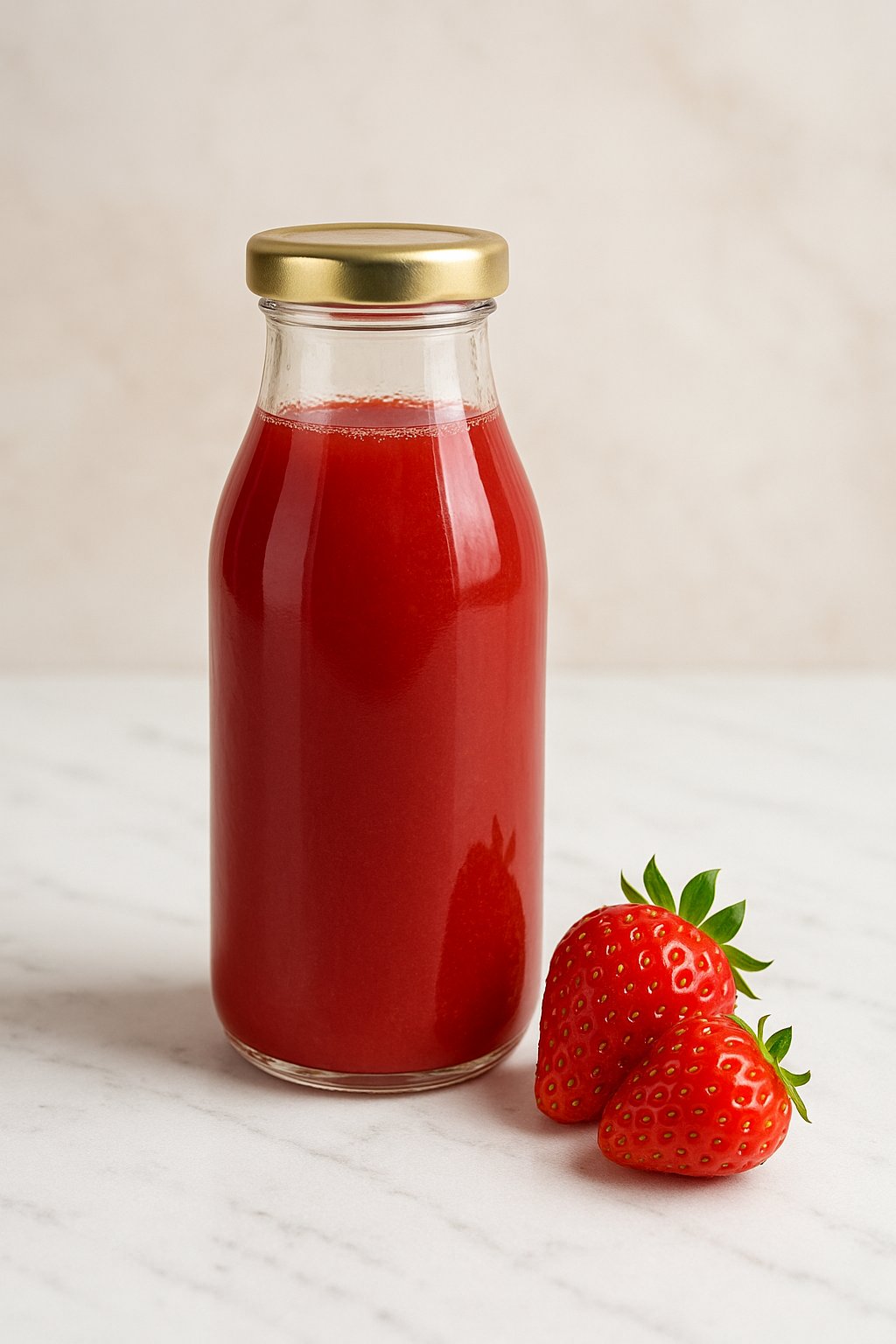
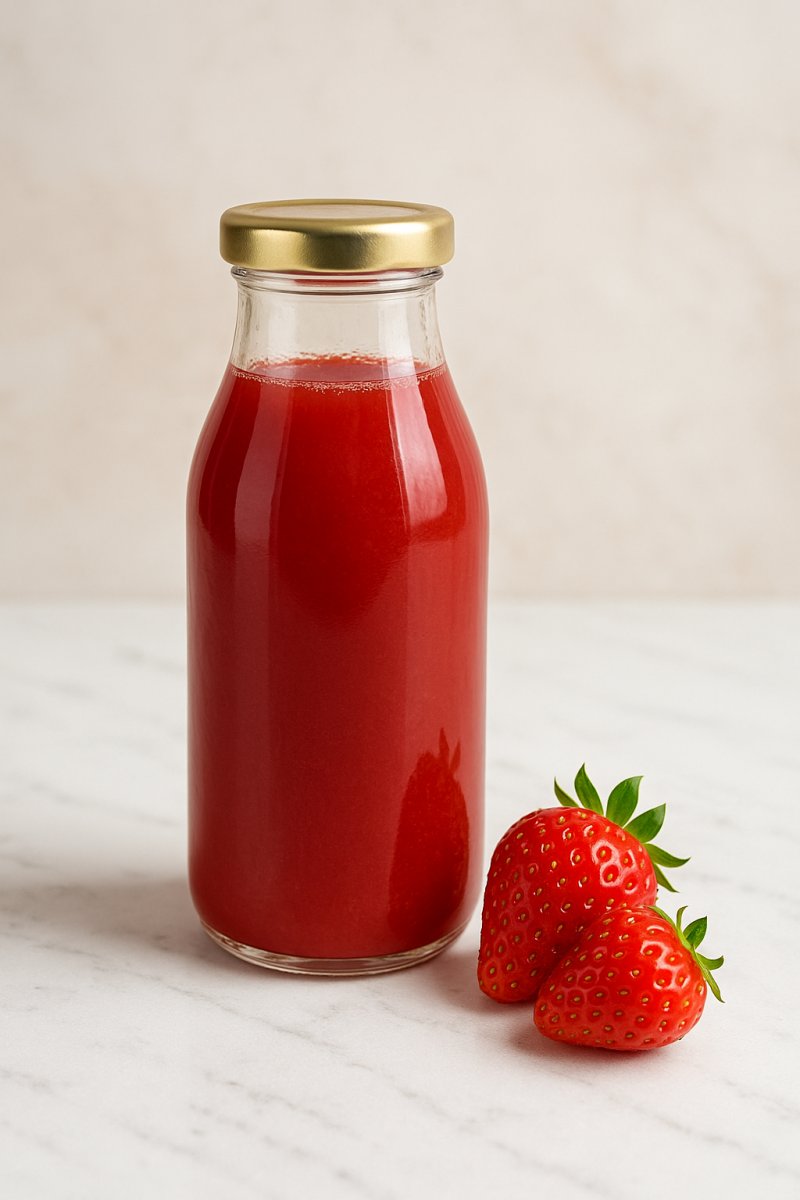
Strawberry juice is available in glass bottles, cartons (Tetra Pak) or as concentrate in cans. Freshly pressed juice is often sold at markets or farm shops. Many supermarkets carry packaged varieties and health-food stores often offer special variants.
Strawberry juice is available in glass bottles, cartons (Tetra Pak) or as concentrate in cans. Freshly pressed juice is often sold at markets or farm shops. Many supermarkets carry packaged varieties and health-food stores often offer special variants.
Practical tips
If you want a strong strawberry flavor, choose not-from-concentrate (direct) juice or cold-pressed. For an inexpensive, always-available option, concentrate is practical. Read the label to see if sugar has been added (“no added sugar” means it contains only fruit). Fresh alternatives can be found at markets in season; otherwise processed products are available year-round.
If you want a strong strawberry flavor, choose not-from-concentrate (direct) juice or cold-pressed. For an inexpensive, always-available option, concentrate is practical. Read the label to see if sugar has been added (“no added sugar” means it contains only fruit). Fresh alternatives can be found at markets in season; otherwise processed products are available year-round.
In summary: strawberry juice exists in many forms and qualities – from fresh direct juice in summer to concentrate in the supermarket year-round. Depending on whether you prioritize flavor, price or organic quality, you can choose the appropriate variant and check the label when buying.