Menu & categories

Spelt

Whole-grain cereal with a nutty flavor and high protein content

Wiki about spelt Nutri-Score B Vegan Yes Gluten-free No Lactose-free Yes Nut-free Yes
NUTRITION / 100 g
338 kcal 15.0 g Protein 70.0 g Kohlenhydrate 2.7 g Fett

Introduction

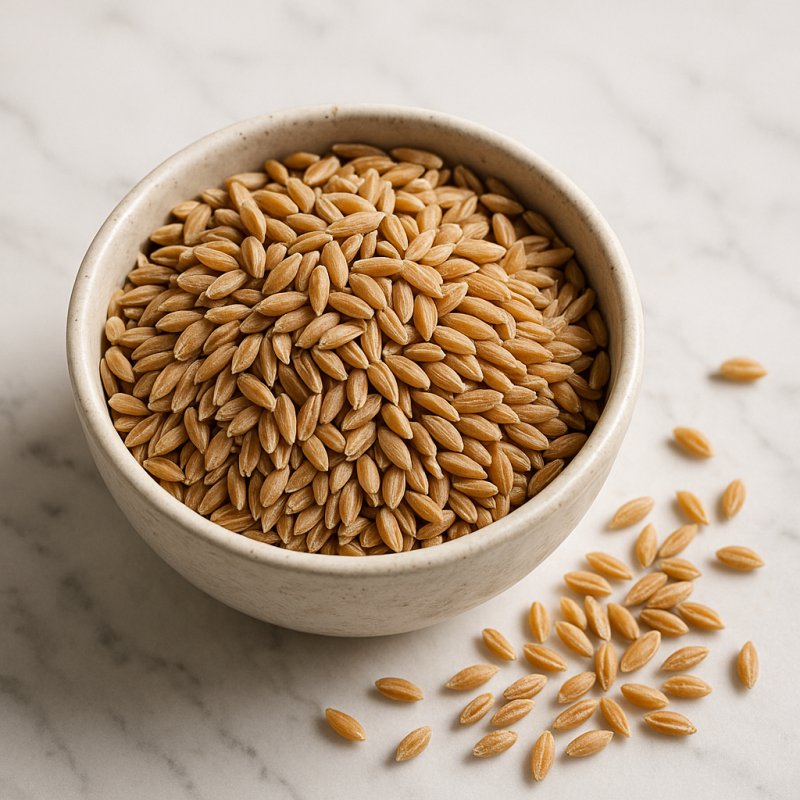
Spelt grains in a bowl
I must confess: spelt was for a long time something like my secret kitchen friend, one of those companions you only truly learn to appreciate when you meet it more often. The first time I found it simply practical – a nutty flavor, a slightly firmer bite than common wheat and the reassuring certainty that it makes good bread. A colleague of mine once brought a spelt loaf to work, and that quickly created a small discussion about texture and aroma that showed me how present spelt can be in good kitchens.

For me spelt is more than just a cereal; it is a bridge between tradition and modern cuisine. I still remember a Sunday market where a peasant baker explained to me that spelt is treated less than other wheat and is often grown in smaller quantities. You can taste that: the grain carries unmistakable, slightly nutty notes that come through in both savory breads and sweet baked goods.

What I particularly love is the versatility. Spelt flour is excellent for:

  • light yet substantial breads with a rustic crust
  • tender cookies that don't become too dry
  • homemade pasta with a slightly sweet depth
  • spreadable pancakes that are crispy outside and moist inside
I have often used spelt in combination with other flours to find the balance between structure and flavor. Once I experimented with a mix of wholemeal spelt and light wheat – the result was a bread my family immediately liked because it was both hearty and accessible. Such small experiments have shown me how flexibly spelt responds in recipes.

From a nutritional point of view I also find spelt interesting. It provides fiber, protein and some vitamins, and many people perceive it as easier to digest than modern wheat. That does not automatically mean gluten-free, but in a balanced diet spelt can be a beneficial alternative.

In the end spelt remains for me a cereal with character: it brings depth to dishes, works in rustic as well as refined recipes and always tells a bit of origin. Whenever I serve a spelt dish there are curious questions and satisfied faces – and that is probably the best compliment a simple grain can receive.

Availability & types

Availability and types of spelt

Spelt is a cereal that has been cultivated for many thousands of years. You can think of spelt as a distant relative of wheat: it looks similar but has some distinct characteristics. Spelt originally comes from the Near East and the area around today's Middle East and Europe. From there it spread with the people who practiced agriculture. Today spelt is being grown again more frequently because many people find it tasty and easier to digest.

Growing regions
Spelt grows well in various parts of Europe. Especially large amounts are grown in countries like Germany, Austria and Switzerland. But spelt fields are also found in other regions with a temperate climate, for example in parts of Eastern Europe. Compared with some modern wheats, spelt is often more robust: it tolerates somewhat colder temperatures and copes with less fertile soils. That is why spelt is often seen on smaller farms and in organic operations that prefer natural cultivation methods.

Available varieties and variants
Spelt is not just a single variety — like apples there are different types that differ in appearance, taste and use. Here are the main variants, explained simply:

  • Whole spelt (whole grain): This is the whole kernel with all parts — hull, germ and endosperm. It is very nutritious because many vitamins, minerals and fibers are contained in the hull. It can be used like whole grain bread or wholemeal flour. It has a somewhat stronger taste.
  • Hulled spelt (hull sometimes still on): Spelt has a firmer hull than modern wheat; this hull is called the glume. In hulled spelt the glume is removed so that the grain becomes lighter and finer. It is easier to bake or cook with.
  • Spelt flour (types): Just like wheat, spelt flour comes in different degrees of refinement. Lighter flours are more finely milled and are suitable for cakes or fine breads. Darker flours contain more outer layers and are more nutritious, therefore good for hearty breads.
  • Spelt flakes and semolina: Flakes are like rolled oats but made from spelt — great for muesli. Semolina is coarser ground grain and is suitable, for example, for porridge or certain pastas.
  • Germinable spelt: Some farmers sell kernels that can still germinate. These can be grown at home as sprouts or used as seed. Sprouts are very healthy and have a fresh taste.
  • Organic and conventional spelt: Organic spelt is grown without chemical pesticides or artificial fertilizers. Many people prefer it because it is seen as more natural and environmentally friendly. Conventional spelt can yield higher harvests but is cultivated with different methods.
How to find spelt in the store?
Spelt products are now available in most supermarkets, health food stores and natural food shops. Pay attention to the labels: they often say "whole spelt", "spelt flour type ..." or "spelt flakes". In health food stores and organic shops you will also often find special varieties or old spelt types. At weekly markets you can buy spelt directly from the farmer — there you sometimes also get fresher or more unusual variants.

In summary: spelt originally comes from the Near East and today grows mainly in Europe. There are many variants — from whole grain to flour to flakes — and you can find spelt products in supermarkets, organic stores and directly from producers. So there is something for almost every taste and cooking idea.
Details & nutrition

Property Value
Unit g
Calories per 100 338
Protein per 100 15.0
Carbohydrates per 100 70.0
Sugar per 100 1.0
Fat per 100 2.7
Saturated fat per 100 0.4
Monounsaturated fat 0.3
Polyunsaturated fat 1.6
Fiber per 100 10.0
Vitamin C (mg) per 100 0
Vitamin D (IU) per 100 0
Calcium (mg) per 100 27
Iron (mg) per 100 4.0
Nutri-Score B
CO₂ footprint 0.6
Origin Europe
Gluten-free No
Lactose-free Yes
Nut-free Yes
Vegan Yes
Note Nutritional values for raw spelt (grain/whole grain). Not suitable for people with gluten intolerance or celiac disease.

Technical & scientific information

Spelt (Triticum spelta), also known as hulled spelt or ancient spelt, is a cultivated cereal species of the genus Triticum. Botanically it belongs to the grass family (Poaceae) and is a tetraploid to hexaploid wheat form that genomically differs from common bread wheat (Triticum aestivum). Historically spelt has been cultivated since the Neolithic and is regaining importance today because of its nutritional properties and as an alternative to traditional wheat varieties.

Chemical composition and main constituents
The seeds of spelt typically consist of three main components: seed hull (glume), endosperm and germ. Chemically spelt is composed predominantly of carbohydrates (approx. 60–70 %), proteins (approx. 12–18 %) and lipids (approx. 2–4 %). The carbohydrates are mostly present as starch, where the amylose-to-amylopectin ratio and the fine-structured starch granules influence baking behaviour. Proteins consist primarily of storage proteins (glutenins and gliadins) as well as non-storage proteins; the total protein content is generally higher than in many modern wheat varieties.

Nutritional values and micronutrients
Spelt provides roughly 330–360 kcal per 100 g of wholemeal flour, with protein, complex carbohydrates, fiber and healthy fatty acids contributing to the energy balance. Minerals such as iron, magnesium, phosphorus and zinc are present at higher concentrations than in highly processed flours. B vitamins, particularly thiamine, niacin and pantothenic acid, as well as antioxidant polyphenols and phytosterols, are significant in whole spelt. The fiber fraction (especially soluble and insoluble arabinoxylans and beta-glucans) supports intestinal function and influences the glycemic response after meals.

Proteins and gluten
Spelt contains gluten proteins that in their functional properties are similar to those of wheat but can have different solubilities and cross-linking patterns. This leads to specific dough properties: spelt doughs often react more sensitively to over-kneading, show stronger water absorption and a different gas-holding capacity. People with celiac disease must not consume spelt, as the immunogenic epitopes of the gluten proteins can trigger cross-reactions; some sensitive individuals without celiac disease report better tolerance, but this is highly individual.

Processing methods
Spelt is processed in various forms: as whole grain (with hull), hulled or dehulled, as wholemeal flour, type flour or refined flour. The glume is often more tightly attached to the kernel in spelt, which is why special dehusking is necessary before a conventional mill can process the grain. Heat treatments, swelling and germination influence nutrient availability and modulate enzyme activities (e.g. amylases, proteases) that affect baking behaviour. Fermentative processes such as sourdough can reduce phytic acid and thereby improve mineral bioavailability.

Health aspects
Regular consumption of whole spelt is associated with positive effects on cardiometabolic health, including improved blood lipid profiles, moderate satiety and more favourable blood sugar responses compared with refined cereal products. The fibers and secondary plant compounds in spelt can have anti-inflammatory effects. However, allergies to spelt proteins are also possible, as are intolerances to fructans (non-digestible oligosaccharides), which can worsen symptoms in irritable bowel syndrome.

Practical usage notes
Spelt flours are suitable for bread, pastries and doughs with a slightly nutty aroma. Because of the higher water-binding capacity and the more delicate gluten structure, bakers recommend shorter kneading times, adjusted water additions and, if appropriate, sourdough fermentation. Wholegrain products retain most of the nutritionally relevant components better than highly refined variants. Industrial processing can affect nutrient content by enrichment or gentle treatment.

In summary, spelt is a nutrient-rich cereal with a particular chemical composition and specific technological properties that offers nutritionally interesting profiles, but because of its gluten content is not suitable for people with celiac disease. Scientifically relevant aspects concern the structure and function of its proteins and starches, mineral availability and the effects of processing and fermentation methods on nutrient balance and tolerance.

Wiki entry for: spelt
Active now: 17 visitors of which 2 logged-in members in the last 5 minutes