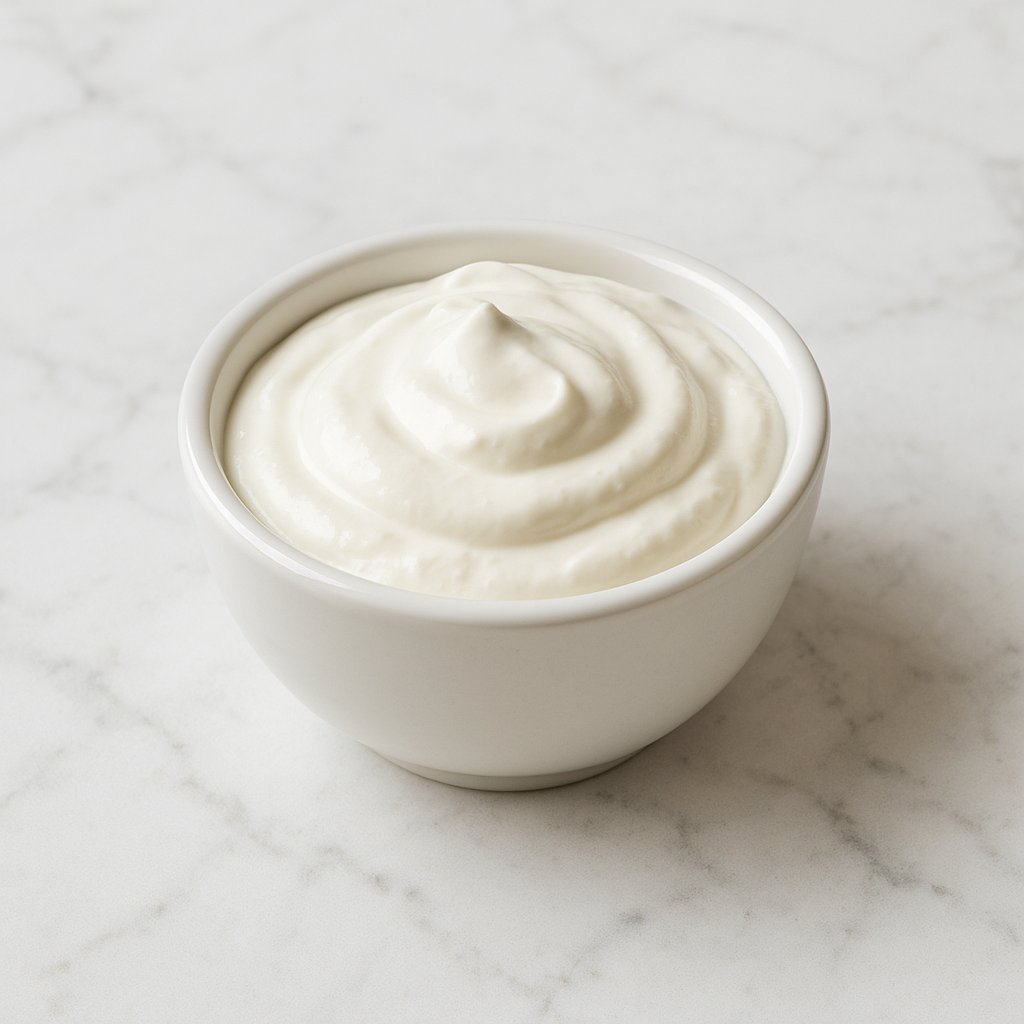
Sour half cream is a type of sour cream – cream that has been gently acidified with friendly bacteria. Imagine taking regular cream and adding small “helpers” (bacteria) that make the cream a bit thicker and fresh-tart in taste. That makes sour half cream tasty in dressings, soups, for baking or simply spread on bread.
Origin and production
Sour half cream comes from cow's milk. The milk is collected at a dairy, cleaned and heated. Then the cream (the fat-rich part of the milk) is separated and dosed with specific starter cultures. These starter cultures are nothing harmful – they are bacteria similar to those in yogurt and are responsible for the slightly sour flavor. After a few hours the cream thickens and sour half cream is ready.
Sour half cream comes from cow's milk. The milk is collected at a dairy, cleaned and heated. Then the cream (the fat-rich part of the milk) is separated and dosed with specific starter cultures. These starter cultures are nothing harmful – they are bacteria similar to those in yogurt and are responsible for the slightly sour flavor. After a few hours the cream thickens and sour half cream is ready.
Production regions
Sour half cream is not cultivated like vegetables; it is produced in dairies. In Germany, Austria and Switzerland many regional dairies produce sour half cream. Small farms often make traditional variants, larger companies supply supermarkets. You can therefore find it both in town and country: in supermarkets, organic shops and at farmers' market stalls.
Sour half cream is not cultivated like vegetables; it is produced in dairies. In Germany, Austria and Switzerland many regional dairies produce sour half cream. Small farms often make traditional variants, larger companies supply supermarkets. You can therefore find it both in town and country: in supermarkets, organic shops and at farmers' market stalls.
Available types and variants
- Sour cream / Sauerrahm – the lighter variant: somewhat more fluid and lower in fat, good for blending into sauces.
- Schmand – thicker and creamier, usually higher in fat and well suited for baking or as a dessert topping.
- Crème fraîche – even richer and very creamy; it is milder and works well for hot dishes because it is less likely to curdle when cooked.
- Sour half cream – the name says it: a middle ground between lighter sour cream and the fattier Schmand; often nicely creamy but not too heavy.
- Light or low-fat variants – for those watching fat: they contain less fat and are slightly thinner.
- Lactose-free or vegan alternatives – for people who can't tolerate milk or who are vegan: there are sour-style products based on soy, oats or coconut.
- Seasoned variants – mixed with herbs, garlic or chives; ready-seasoned in a tub and handy as a dip.
Packaging, availability and storage
Sour half cream is generally available year-round. You find it in tubs or small portion packs. Fresh products are in the refrigerated section; they must always be kept chilled. Pay attention to the best-before date. Homemade or farm-made variants are often found only at farmers' markets or directly from the farm and are sometimes only seasonally available, depending on how much milk is available.
Sour half cream is generally available year-round. You find it in tubs or small portion packs. Fresh products are in the refrigerated section; they must always be kept chilled. Pay attention to the best-before date. Homemade or farm-made variants are often found only at farmers' markets or directly from the farm and are sometimes only seasonally available, depending on how much milk is available.
In summary: sour half cream is a flavorful, slightly tart cream produced by dairies in many regions. It comes in different fat levels and flavor styles, from light to very creamy, and also as plant-based alternatives. That way you can find the variant that suits your dish or taste.