Menu & categories

Sour semi-fat cream

Mildly tangy cream to enrich sauces, soups and desserts.

Wiki about sour cream Nutri-Score D Vegan No Gluten-free Yes Lactose-free No Nut-free Yes
NUTRITION / 100 g
170 kcal 3 g Protein 3.5 g Kohlenhydrate 15 g Fett

Introduction

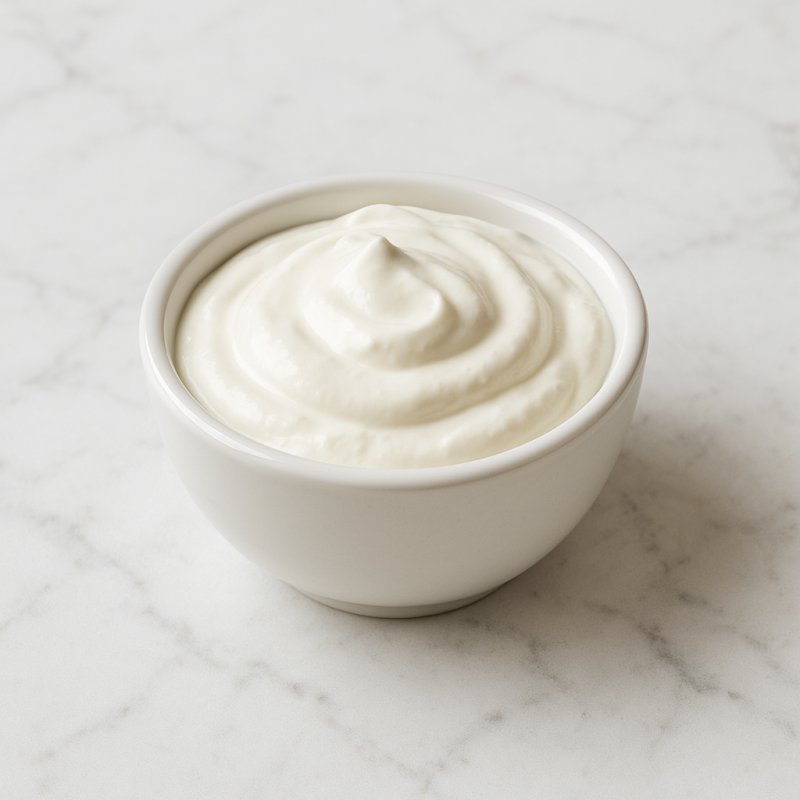
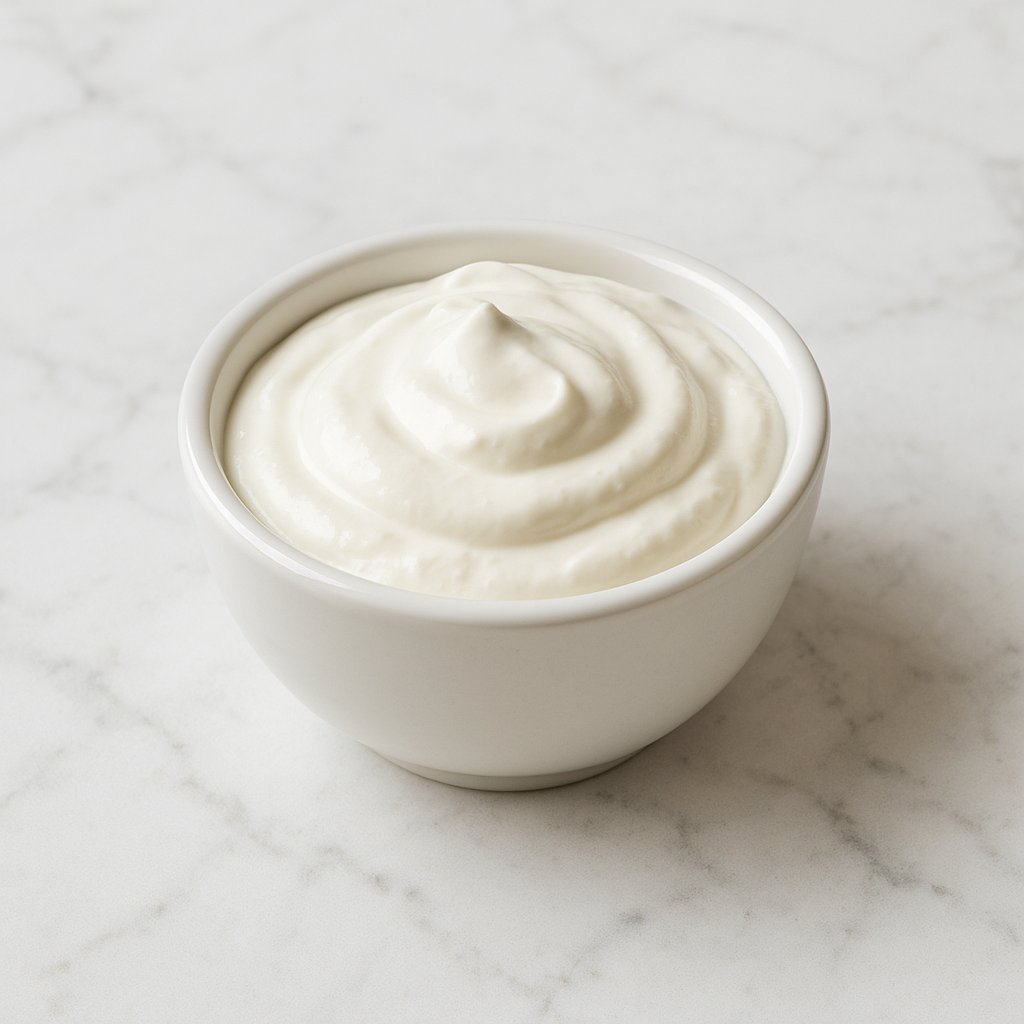
Sour semi-fat cream in a bowl

I have a small weakness for ingredients that look unassuming at first glance but can hold everything together in the kitchen. Sour half cream definitely belongs to that group. It is the milder, slightly tart variant of cream, fermented with lactic acid bacteria and thereby gaining a pleasant freshness. Its creamy texture is thicker than milk but lighter than full-fat Crème fraîche – which makes it versatile and easy to work with.

I still remember a rainy Saturday afternoon when I reheated a simple vegetable soup and stirred in a spoonful of sour half cream. The result was so surprisingly good that I briefly thought someone had secretly contributed a secret recipe. Since then a tub is always in the fridge. A colleague of mine swears by putting a dollop of sour half cream on hot potatoes, along with chives and freshly ground pepper — simple but foolproof.

The uses are wide-ranging:

  • As a topping for soups or chili, because it tolerates heat well and the acidity lifts the flavors.
  • In dressings and dips, where it provides a silky base without feeling too heavy.
  • In baking as a substitute for cream or butter in some doughs, to add moisture and a subtle acidic note.
Storage tips and substitutions: sour half cream keeps for a few days in the refrigerator after opening, preferably well sealed. If I want to replace it, I often use Greek yogurt or a mix of plain yogurt and a little cream. For particularly delicate sauces I sometimes mix sour half cream with a little lemon juice and stock to achieve a bright, slightly tangy note.

To me sour half cream is one of those kitchen companions that adds quiet accents and brings dishes to the point. Whether as a spoonful on hot stews, the base for a quick dip, or a small flavor explosion in a dressing — it is reliable, uncomplicated and simply likeable in its role.

Availability & types

Sour half cream is a type of sour cream – cream that has been gently acidified with friendly bacteria. Imagine taking regular cream and adding small “helpers” (bacteria) that make the cream a bit thicker and fresh-tart in taste. That makes sour half cream tasty in dressings, soups, for baking or simply spread on bread.

Origin and production
Sour half cream comes from cow's milk. The milk is collected at a dairy, cleaned and heated. Then the cream (the fat-rich part of the milk) is separated and dosed with specific starter cultures. These starter cultures are nothing harmful – they are bacteria similar to those in yogurt and are responsible for the slightly sour flavor. After a few hours the cream thickens and sour half cream is ready.

Production regions
Sour half cream is not cultivated like vegetables; it is produced in dairies. In Germany, Austria and Switzerland many regional dairies produce sour half cream. Small farms often make traditional variants, larger companies supply supermarkets. You can therefore find it both in town and country: in supermarkets, organic shops and at farmers' market stalls.


Available types and variants

  • Sour cream / Sauerrahm – the lighter variant: somewhat more fluid and lower in fat, good for blending into sauces.
  • Schmand – thicker and creamier, usually higher in fat and well suited for baking or as a dessert topping.
  • Crème fraîche – even richer and very creamy; it is milder and works well for hot dishes because it is less likely to curdle when cooked.
  • Sour half cream – the name says it: a middle ground between lighter sour cream and the fattier Schmand; often nicely creamy but not too heavy.
  • Light or low-fat variants – for those watching fat: they contain less fat and are slightly thinner.
  • Lactose-free or vegan alternatives – for people who can't tolerate milk or who are vegan: there are sour-style products based on soy, oats or coconut.
  • Seasoned variants – mixed with herbs, garlic or chives; ready-seasoned in a tub and handy as a dip.
Packaging, availability and storage
Sour half cream is generally available year-round. You find it in tubs or small portion packs. Fresh products are in the refrigerated section; they must always be kept chilled. Pay attention to the best-before date. Homemade or farm-made variants are often found only at farmers' markets or directly from the farm and are sometimes only seasonally available, depending on how much milk is available.

In summary: sour half cream is a flavorful, slightly tart cream produced by dairies in many regions. It comes in different fat levels and flavor styles, from light to very creamy, and also as plant-based alternatives. That way you can find the variant that suits your dish or taste.
Details & nutrition

Property Value
Unit g
Calories per 100 170
Protein per 100 3
Carbohydrates per 100 3.5
Sugar per 100 3.5
Fat per 100 15
Saturated fat per 100 10
Monounsaturated fat 4
Polyunsaturated fat 0.5
Fiber per 100 0
Vitamin C (mg) per 100 0
Vitamin D (IU) per 100 2
Calcium (mg) per 100 110
Iron (mg) per 100 0.1
Nutri-Score D
CO₂ footprint 0.35 kg CO2e/100 g
Origin Europe
Gluten-free Yes
Lactose-free No
Nut-free Yes
Vegan No
Note Sour semi-fat cream is a fermented cream with a medium fat content; when heated strongly it can curdle, so it is preferable to add it at the end.

Technical & scientific information


Sour half cream denotes a fermented cream with medium fat content that acquires a sour aroma and altered texture through targeted lactic acid fermentation. The term is used differently by region; typical fat content is in the range of about ten to twenty percent, while exact names and minimum requirements may depend on national regulations.

Composition and nutritional values
Chemically, sour half cream consists mainly of water and milk fat, complemented by milk proteins (mainly caseins and whey proteins), milk sugar (lactose), minerals (especially calcium and phosphate) and fat-soluble vitamins such as vitamin A. Typical nutrient ranges per 100 g for products with medium fat content are:

  • Energy: roughly 120–230 kcal (500–960 kJ), depending on fat content
  • Fat: approx. 10–20 g
  • Protein: approx. 2–4 g
  • Carbohydrates (mainly lactose): approx. 3–4 g
  • Water content: usually 70–85 %
These values are to be understood as orientation ranges; industrial standardization can concretely influence composition.
Manufacturing process
Production includes several characteristic steps:

  • Standardization: Adjusting the fat content by adding or removing cream or skimmed milk.
  • Pasteurization: Heating to inactivate pathogenic microbes and unwanted enzymes; temperature–time combinations vary depending on the process goal.
  • Homogenization (optional): Reducing fat globule size to improve stability and sensory properties.
  • Inoculation: Adding mesophilic lactic acid bacteria (e.g. Lactococcus or Leuconostoc strains), which metabolize lactose into lactic acid.
  • Fermentation: Incubation at moderate temperatures until the desired acidification is reached (pH usually around ~4.5–4.8).
  • Cooling and filling: Stopping fermentation by cooling, packaging under hygienic conditions.
Microbiology and aroma development
The characteristic acidity results from the production of lactate from lactose. Accompanying aroma components such as diacetyl and acetoin are produced, which shape the buttery, slightly tart profile. Some starter cultures produce exopolysaccharides that increase viscosity and create a creamier texture. Products that are not subsequently heated may contain live cultures.

Rheology and stability
The texture of sour cream is the result of an interplay between a fat–protein network. Acidification destabilizes casein micelles, leading to a fine gel structure. Higher fat content and homogenization influence emulsion stability; additions of stabilizers (e.g. starch, pectin) are used industrially to prevent phase separation during heating.

Health aspects and safety
Sour half cream is an important source of energy and fat; the content of saturated fatty acids should be considered. People with milk allergy or lactose intolerance should avoid the product or check tolerance. The acidic environment inhibits many pathogens but does not replace proper hygiene and cold chain maintenance. Improper storage can allow spoilage organisms or Listeria to pose a risk.

Application
Sour half cream is used both as a table product (e.g. as a dip or accompaniment) and as an ingredient in cold sauces, dressings or in some warm dishes. Because of the acidity and the delicate emulsion, heat stability is limited; higher fat contents and suitable stabilizers increase heat resistance.

In summary, sour half cream is a technologically refined dairy product with definable physicochemical properties, whose expression depends on fat content, starter culture, processing and additives. For consumers, the nutritional profile, allergens and storage conditions are decisive, while producers control microbiology and rheological stability to ensure the quality and safety of the final product.

Wiki entry for: sour cream
Active now: 15 visitors of which 2 logged-in members in the last 5 minutes