Menu & categories

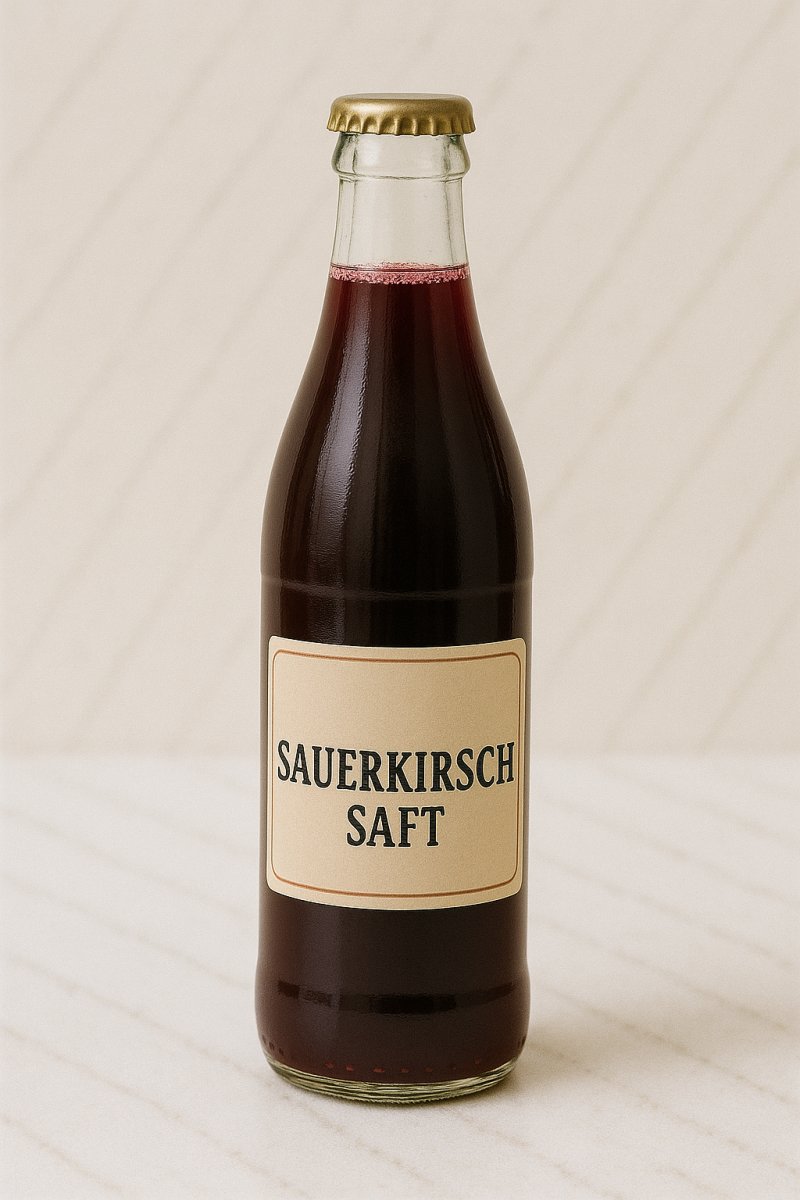
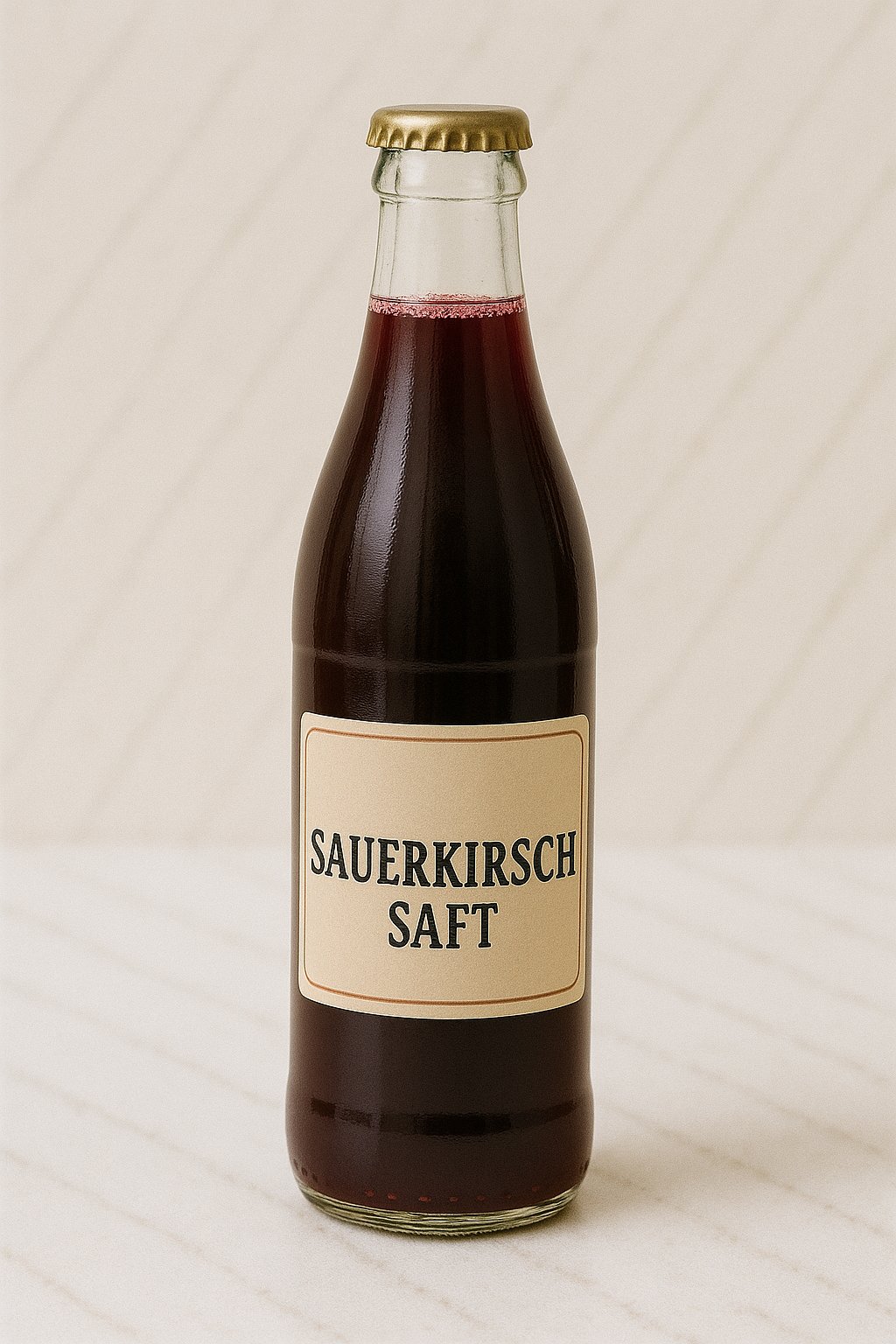
Sour cherry juice

Fruity juice from sour cherries – tart, intense and aromatic.

Wiki about sour cherry juice Nutri-Score C Vegan Yes Gluten-free Yes Lactose-free Yes Nut-free Yes
NUTRITION / 100 ml
46 kcal 0.7 g Protein 11.3 g Kohlenhydrate 0.2 g Fett

Introduction

Glass of sour cherry juice
I still remember how the scent of sour cherry juice filled my kitchen on a rainy autumn afternoon: warm, slightly tart and surprisingly cozy. Sour cherry juice feels to me like a culinary secret – it is not as sweet as juice from sweet cherries, but this acidity makes it versatile and exciting. At the first sip I thought: this is not an ordinary juice, this is a flavour with character.

In taste sour cherry juice is delicately tart, deep red and often with a slight tannic note.
It pairs with sweet desserts as well as hearty meat dishes and brings a refreshing, mildly bitter component to drinks. A colleague of mine swears by mixing it into his morning smoothie; I, on the other hand, appreciate the concentrated variant for seasoning game sauces.

What I particularly value are the versatile uses in the kitchen and beyond. Sour cherry juice can be reduced into a glaze, add surprising depth to dressings, or provide color and acidity in cocktails. In baking it can partially replace sugar and gives cakes a pleasant freshness. I once experimented with making a cherry shrub that delighted both guests and neighbours.

Practically speaking, when shopping I look for pure juice without added sweeteners and store concentrate tightly sealed in the refrigerator. When using it I like to try the following ideas:

  • Culinary pairings: with game, duck or roast pork
  • Drinks: as a mixer in long drinks, fresh with mineral water
  • Baking and desserts: as an addition to cake creams or sorbets
  • Well‑being: consumed in moderation as a complement to a balanced diet
Studies suggest that sour cherry juice contains antioxidant and anti‑inflammatory compounds, but I regard it above all as a flavourful enhancement. For me it remains an all‑rounder in the pantry: versatile, aromatic and always ready to provide a small culinary surprise.

Availability & types

Origin and basics
Sour cherry juice comes from a particular type of cherries that are not as sweet as the cherries eaten fresh from the tree. These cherries are called sour cherries or sometimes Morello cherries. They are smaller, darker and usually taste rather tart – this gives the juice its fresh, slightly bitter flavour. You can imagine sour cherry juice like a cherry lemonade: not necessarily very sweet, but pleasantly fruity and with a little kick.

Growing regions – where sour cherries are cultivated
Sour cherries are grown in many parts of the world. Important regions include:

  • Central Europe: Countries such as Poland, Hungary, Romania and Germany grow many sour cherries. In Germany there are smaller growing areas, especially in fruit‑growing regions.
  • Turkey and Eastern Europe: Many cherries are also grown there, often used for juice or preserves.
  • North America: In the USA, for example, Michigan is known for sour cherry production used for juices and baked goods.
The trees prefer sunny locations and do not like overly wet conditions. Because the harvest period is short, many cherries are processed quickly or frozen, so juice is available year‑round.

Available types and variants
There are different types of sour cherry juice that differ in taste and production. Here are the main terms explained simply:

  • Direct juice: This juice is made directly from freshly pressed cherries and bottled immediately. Imagine someone pressing the fruit and pouring the red liquid straight into the bottle – this keeps the flavour very natural.
  • Juice from concentrate: In this case water is first removed from the juice to create a thick concentrate. Before bottling water is added again. This is practical for transport and storage.
  • Nectar: Nectar often contains added water and some sugar because pure sour cherry juice can be very tart. Nectar therefore tastes milder, almost like diluted juice with a bit of sweetness.
  • Sweetening options: Some juices are unsweetened (100% juice), others have sugar or sweeteners added. The label often states “no sugar added” or “with added sugar”.
  • Organic variants: There is sour cherry juice from organic farming – this means farmers do not use synthetic pesticides and pay more attention to nature.
  • Processed forms: In addition to juice, you can find cherry preserves, fruit puree, syrup and frozen cherries – all suitable for making juice at home or for cooking.

Availability in everyday life
Fresh sour cherry juice is usually found in supermarkets, organic stores or online – practically year‑round, because much is processed, frozen or made from concentrate. Fresh sour cherries are seasonal, typically in summer. At farmers' markets or from growers in summer you can sometimes buy freshly pressed juice or fresh cherries.
In summary: sour cherry juice is available in many variants – from pure direct juice to sweet nectar or organic products – and thanks to processing like freezing or concentrating it is obtainable all year. Whether you prefer it stronger or milder, you can easily find the right type.
Details & nutrition

Property Value
Unit ml
Average weight per piece 1000
Calories per 100 46
Protein per 100 0.7
Carbohydrates per 100 11.3
Sugar per 100 10.2
Fat per 100 0.2
Saturated fat per 100 0.0
Monounsaturated fat 0.0
Polyunsaturated fat 0.1
Fiber per 100 0.2
Vitamin C (mg) per 100 5
Vitamin D (IU) per 100 0
Calcium (mg) per 100 10
Iron (mg) per 100 0.3
Nutri-Score C
CO₂ footprint ca. 0.06 kg CO2e/100 ml
Origin EU (depending on bottling, e.g. Germany or Poland)
Gluten-free Yes
Lactose-free Yes
Nut-free Yes
Vegan Yes
Note Nutritional values may vary depending on the juice (direct juice vs. from concentrate) and any added sugar.

Technical & scientific information

Sour cherry juice (also marketed as sour cherry nectar or sour cherry concentrate) is the liquid product obtained by pressing sour cherries (Prunus cerasus). It is characterized by an intense, tart‑fruity flavor, a dark red colour and a high content of secondary plant compounds. Technically, sour cherry juice is a water‑based food with dissolved solids (sugars, acids, phenols), minerals and volatile aroma compounds, whose physicochemical properties depend strongly on variety, ripeness and processing method.

Chemical composition and characteristic data

  • Soluble solids (Brix): Typically in the range of about 10–15 °Brix for direct juices; concentrates are significantly higher.
  • pH and acidity: Sour cherry juice is relatively acidic, usually pH 2.8–3.8; the titratable acidity is mainly due to malic and citric acid and in commercial juices is about ~0.6–1.5% expressed as formic/malic acid equivalent depending on the measurement method.
  • Main carbohydrates: Glucose, fructose and sucrose with total sugars around 8–14 g/100 ml in non‑concentrated juices.
  • Secondary plant compounds: Rich in anthocyanins (mainly cyanidin derivatives), other flavonoids and phenolic acids (e.g. chlorogenic acid). Total phenolic contents are typically in the order of several hundred mg gallic acid equivalents per liter, depending on extraction and concentration.
  • Minerals and vitamins: Relatively high potassium levels (frequently 150–350 mg/l), small amounts of calcium, magnesium and notable contributions of vitamin C, dependent on freshness and thermal treatment.
Processing methods

  • Harvesting and sorting: Removal of leaves, stems and damaged fruit.
  • Crushing and pressing: Mechanical crushing followed by cold pressing or hot extraction. Enzymatic treatment with pectinases increases yield and clarity.
  • Clarification and filtration: Use of bentonite, gelatin or membrane filtration (MF/UF) to remove particles and stabilize.
  • Preservation: Pasteurization, thermal treatment under vacuum or gentler methods such as High Pressure Processing (HPP) to preserve heat‑sensitive polyphenols.
  • Concentration and packaging: Vacuum evaporation for concentrates, freeze‑drying or aseptic filling for long‑term storage.
Nutritional and health aspects

Sour cherry juice is associated, due to its high content of anthocyanins and other antioxidants, with anti‑inflammatory and antioxidant effects. Clinical and animal studies report reductions in muscle soreness after exertion, a possible improvement in sleep quality (linked to small amounts of melatonin and effects on circadian markers) and a modest positive influence on inflammation and oxidation markers. These effects are dose‑dependent and not universally established; long‑term, large‑scale studies are often lacking.

Safety, storage and applications

Important for safety are microbiological stability after processing, residue controls (pesticides) and any labellable additives (sulphites). Sour cherry juice is suitable as a beverage, in smoothies, as an ingredient in sauces, glazes or as a raw material for concentrates, syrups and fermented products (cherry wine). For people with diabetes the sugar content should be considered; in gout patients the effect on uric acid is controversially discussed, so individual advice is recommended. Stored cool and protected from light, direct juices retain most nutrients, while concentrates have a longer shelf life.

Wiki entry for: sour cherry juice
Active now: 14 visitors of which 2 logged-in members in the last 5 minutes