Menu & categories

Smarties

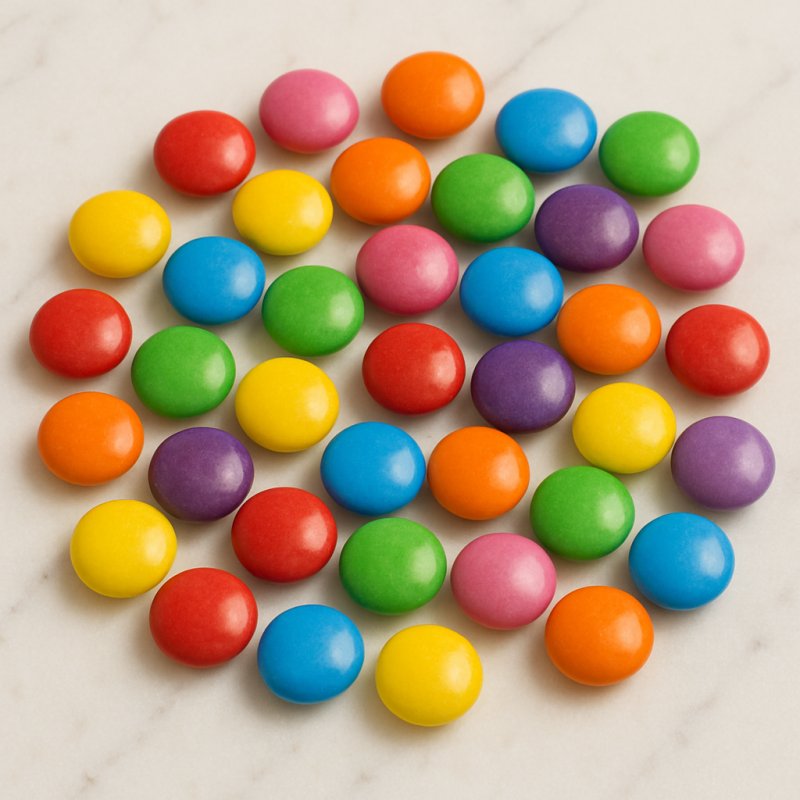
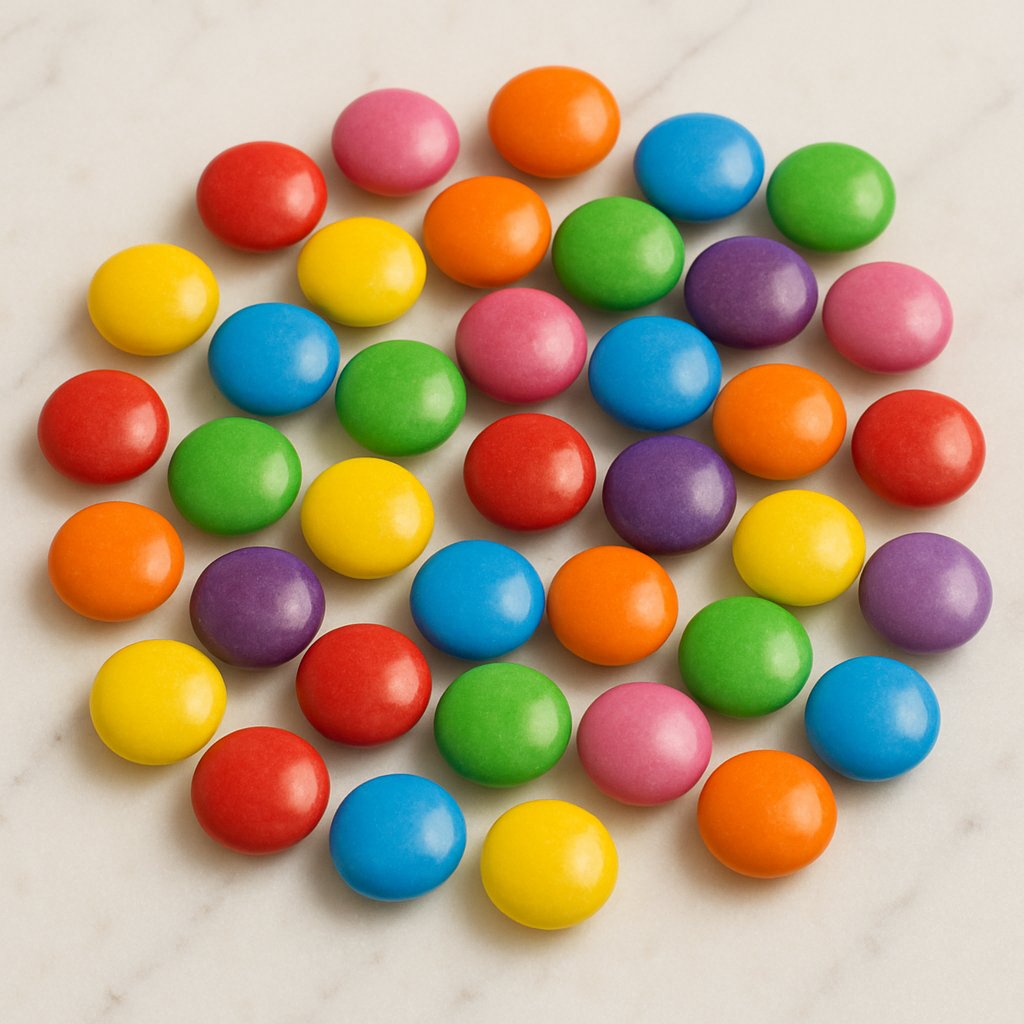
Colorful chocolate candies with a sugar coating

Wiki about Smartie Nutri-Score E Vegan No Gluten-free No Lactose-free No Nut-free No
NUTRITION / 100 g
470 kcal 6.0 g Protein 68.0 g Kohlenhydrate 18.0 g Fett

Introduction

Colorful Smarties chocolate lentils
I still remember well the first box of Smarties I secretly nicked from the pantry as a child: the shiny, colorful discs that made a slight crackling sound when chewed and immediately lifted the mood. Today I encounter Smarties as an ingredient in surprisingly many ways, from simple cake decorations to refined crunchy elements in ice cream or pastries. Although they are often dismissed as a children's candy, they have an astonishing versatility that I love to explore.

What defines Smarties is their uncomplicated joy: a thin, hard sugar shell that sparkles in bright colors, and a soft, chocolatey interior. I use them not only for decorating but also to add texture to desserts. A friend of mine has raved for years about my chocolate mousse with Smarties crunch, where the sweetness of the chocolate is contrasted by the slight tartness of the colored sugar coating. It's a simple play of flavor and mouthfeel that regularly surprises guests.

In the kitchen Smarties are surprisingly practical: they don't dissolve immediately, retain their bite for a long time and are excellent for baked goods cooked at moderate temperatures. I've stirred them into brownies, sprinkled them on just before baking to create pinpoint bursts of color. When baking, however, one should note that intense heat can change the colors. Therefore I recommend adding Smarties rather toward the end of the baking process or as a decoration after cooling.

Some creative applications I love:

  • Toppings: On cupcakes or glazes as a cheerful finish.
  • Inside: Baked into cookies for surprising islands of color and texture.
  • Crunch: Coarsely chopped and sprinkled over ice cream or mousse.
  • Mixes: With nuts and dried fruits for vivid trail-mix variations.
Smarties are not only a symbol of childhood but a small source of inspiration for playful cooking. I enjoy using them to create color contrasts, play with texture and make guests smile. Sometimes a single, colorful dot on a dessert is enough to evoke memories and turn shared enjoyment into a small celebration. Those moments are what make cooking personally so rewarding for me.

Availability & types

Availability and types of Smarties

Smarties are colorful chocolate lentils that many people know as a confection. Although they may sound like a single ingredient, Smarties are actually a finished product made of chocolate, sugar and a hard, colored shell. They are manufactured in factories and are easy to find in many countries. You can buy them in supermarkets, kiosks, vending machines or online. Sometimes they are also found on the confectionery shelf of bakeries or petrol stations.

Origin
Smarties were originally invented by the company Nestlé and come from the United Kingdom, but they are now produced by various manufacturers in several countries. The idea was to create small colored chocolate pieces with a crunchy sugar layer. Although the brand and appearance are similar, formulations and names can vary somewhat by country. Important to know: Smarties are a processed food, not a fresh plant or fruit.

Growing regions (for the ingredients)
Smarties themselves do not grow on trees – but the main ingredient, the chocolate, comes from cocoa beans. Cocoa beans are grown in warm countries, mainly in West Africa (e.g. Ivory Coast and Ghana), South America and parts of Asia. Sugar, another important ingredient, often comes from sugar beet or sugarcane. Milk powder in milk chocolate comes from cows that are typically kept in agricultural regions. The colorful dyes and sugar coating are then added in factories.

Available types and variants
Smarties are available in many different variants. Here are some typical types you might find in the store:

  • Classic Smarties – the colorful chocolate lentils with a hard sugar shell. They are like the "original" many people know.
  • Special or varied packaging – sometimes Smarties are sold in small boxes, giant packs or single-serve bags. This is convenient if you want to give them as a gift or share with friends.
  • Flavor variants – there are versions with white or dark chocolate instead of the usual milk chocolate. They taste slightly different but are similarly structured.
  • Sugar-free or reduced-sugar – some companies offer variants with less sugar or with sweeteners. They taste almost the same but are aimed at people who need to watch their sugar intake.
  • Vegan or lactose-free options – there are now Smarties-like products made without milk, so people who are lactose intolerant or follow a vegan diet can eat them.
  • Seasonal and limited editions – for special occasions like Christmas, Easter or Halloween there are often special colors or packaging, e.g. pastel Smarties at Easter or egg-shaped versions.
Why there are many variants
Manufacturers try out different varieties because people have different tastes and sometimes special dietary needs. Just as there are different kinds of juice or chips, there are many variants of Smarties. Some want more chocolate, others want less sugar or special colors for celebrations.

In summary, Smarties are easy to obtain because they are industrially produced and frequently sold. The main ingredients come from warm growing regions (cocoa, sugar), and through different recipes and packaging types there are many variants – from classic colored lentils to sugar-free or vegan alternatives. So almost everyone can find the Smarties form that fits best.
Details & nutrition

Property Value
Unit g
Average weight per piece 1
Calories per 100 470
Protein per 100 6.0
Carbohydrates per 100 68.0
Sugar per 100 67.0
Fat per 100 18.0
Saturated fat per 100 11.0
Monounsaturated fat 5.0
Polyunsaturated fat 0.5
Fiber per 100 1.5
Vitamin C (mg) per 100 0
Vitamin D (IU) per 100 0
Calcium (mg) per 100 200
Iron (mg) per 100 2.0
Nutri-Score E
CO₂ footprint 3.5
Origin Europe
Gluten-free No
Lactose-free No
Nut-free No
Vegan No
Note Nutritional values are average for typical commercial Smarties; exact values may vary slightly by manufacturer.

Technical & scientific information

Smarties are colored, rounded chocolate confections with a hard sugar shell, originally popularized by the company Nestlé (distributed by other manufacturers in some markets). Technically, Smarties are a composite product made up of several functional layers: an inner core of cocoa-containing milk chocolate, an intermediate layer with crystalline structures and an outer, glossy sugar glaze. This layered principle affects the product's texture, stability and melting behavior.

Composition and ingredients
The main components are cocoa mass, cocoa butter, milk powder (e.g. whole milk powder), sugar, and vegetable fats or emulsifiers such as soy lecithin to improve processing and consistency. The outer shell consists mainly of sugar (sucrose) as well as whitening and stabilizing agents such as gum arabic or other thickeners. Food colorings (e.g. natural colorants like E162 beetroot extract or synthetic azo dyes, depending on the region and product variant) and beeswax or candelilla/carnauba wax for gloss are used for the final surface treatment.

Nutritional values and energy density
Smarties are nutritionally typical for small chocolate confections: high in simple carbohydrates (sugar), moderate in fat (partly from milk and cocoa components), and low amounts of protein. Per 100 g calories are often in the range of 450–550 kcal; sugar content can be 50–70 g per 100 g, fat 20–35 g and protein 5–7 g. These values vary depending on formulation and the quality of chocolate used as well as the proportion of the sugar shell.

Manufacturing process
Production combines methods from confectionery and chocolate technology. First the milk chocolate is homogenized by conching and tempered, then formed into small pellets (e.g. by extrusion or flake forming). The pellets are coated in rotating pans or drum panning processes over multiple cycles with sugar solutions. Drying phases are inserted between layers to achieve a firm, smooth surface. Final coloring is achieved by applying colored sugar layers in succession, where fine control of viscosity, drying time and temperature is critical to avoid cracking or color bleed. Finally a thin wax layer is applied which acts as a protective film.

Physical and chemical properties
The crystalline structure of the chocolate in the core determines melting behavior; tempered chocolate preferably exhibits the stable beta(V) cocoa butter polymorph which provides gloss and a defined melting point. The hard sugar shell consists mostly of amorphous and crystalline sucrose; the proportion of crystalline sucrose influences bite firmness. Emulsifiers such as lecithin reduce shear forces during forming and improve flow properties during conching and extrusion.

Health aspects
From a nutritional perspective Smarties are considered an energy- and sugar-rich treat. Excessive consumption can contribute to increased calorie intake, risk of dental caries due to sugar and adverse metabolic effects with regular consumption. Allergens can include milk components, soy lecithin and in some variants traces of nuts. For sensitive individuals artificial colorings and flavors also play a role; some colorants are replaced by natural alternatives in certain countries to address intolerances and regulatory requirements.

Storage and shelf life
Smarties should be stored in a cool, dry and light-protected place to avoid fat bloom on the chocolate surface and moisture uptake of the sugar shell. A relative humidity below 50% and temperatures below 20 °C are advantageous. Packaging with barrier properties against moisture and oxygen prolongs quality.

Overall Smarties are a technical food produced by targeted combination of raw materials, layering techniques and physico-chemical processes. The recipe and process are designed to deliver an attractive sensory profile (crisp, melt, color) while nutritional and allergenic aspects must be taken into account on product labeling.

Wiki entry for: Smartie
Active now: 6 visitors of which 2 logged-in members in the last 5 minutes