Menu & categories

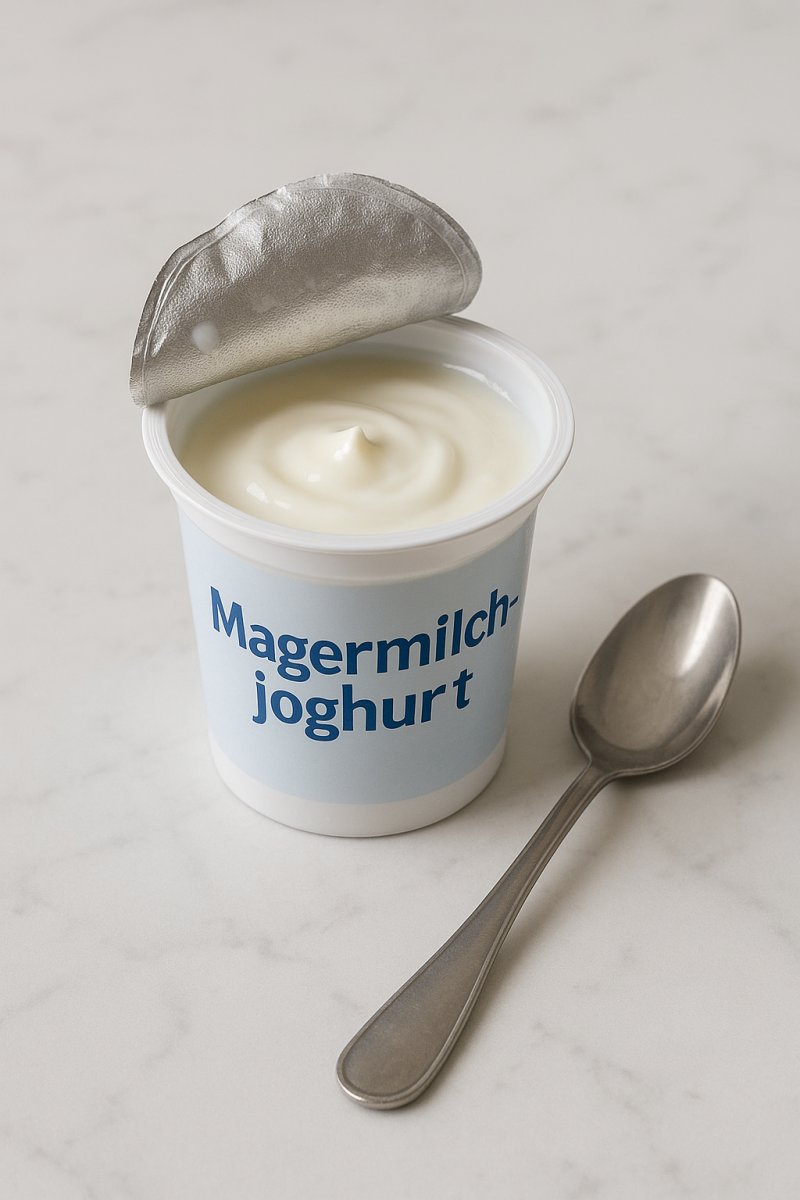
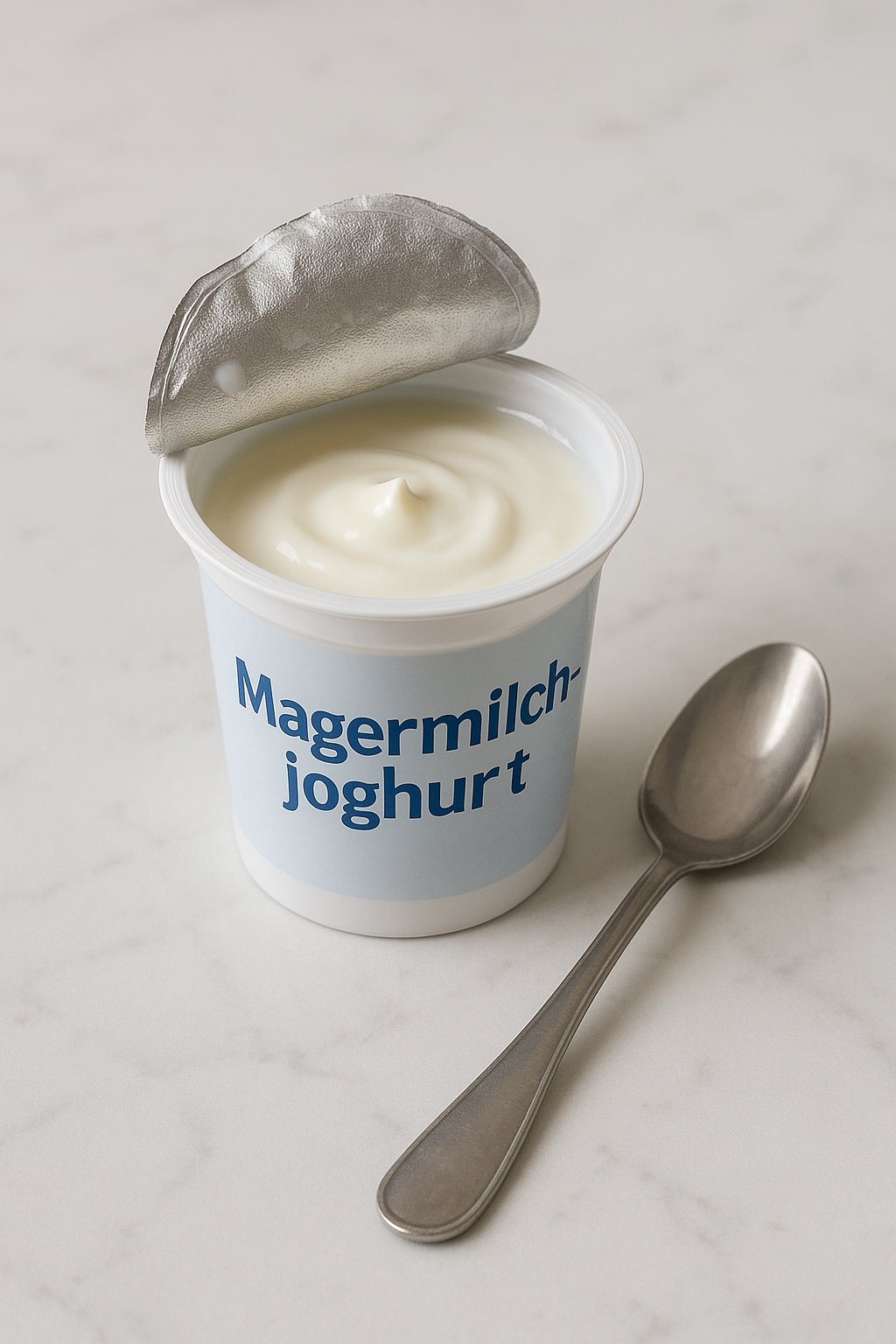
Skimmed milk yogurt

Creamy yogurt with high protein and low fat.

Wiki about skimmed milk yogurt Nutri-Score A Vegan No Gluten-free Yes Lactose-free No Nut-free Yes
NUTRITION / 100 g
40 kcal 4.6 g Protein 5.2 g Kohlenhydrate 0.2 g Fett

Introduction

Cup of skimmed milk yogurt

I have a particular weakness for simple ingredients that can do more than they first promise, and skimmed milk yogurt definitely belongs to that category. For me it's not just a low-calorie companion in the fridge, but a little all-rounder that enlivens breakfast, salads and sauces alike. I still remember a rainy Sunday when a jar of skimmed milk yogurt and a few fresh berries were enough to instantly lift my mood.

What I especially appreciate about skimmed milk yogurt is its uncomplicated versatility. It has a fresh acidity that rounds dishes without overpowering them. At the same time it provides protein and low fat, which makes it interesting for anyone who wants to eat consciously without giving up taste. A colleague of mine swears by using it as a substitute for sour cream in dips, and since then I serve his mixture at every office event.

Here is a short overview of typical characteristics that always surprise me:

  • High protein content despite low fat.
  • Neutral to slightly tangy taste that pairs well with other ingredients.
  • Good binding ability in dressings and marinades.
  • Easy to refine with herbs, honey or spices.
In my kitchen I use skimmed milk yogurt in many ways. I mix it with lemon zest and dill as a topping for roasted vegetables, spread it on wholegrain bread with salmon, or stir it into warm curries to mellow the heat. A small trick I learned: if I want a thicker texture, I let the yogurt drain in a muslin cloth over a bowl. This creates a creamier base that works for desserts or as a cream cheese substitute.

What I like most is that skimmed milk yogurt is reliable both in everyday life and on special occasions. It absorbs flavors, brings freshness to the dish and remains restrained enough to give other ingredients room. When I have guests, a small bowl of yogurt with nuts and honey is almost always part of the menu, because it's uncomplicated and makes people happy.

Availability & types

Skimmed milk yogurt is a yogurt made from milk from which almost all of the fat has been removed. You can call it the "lean" or "light" yogurt. It usually tastes a bit milder and is slightly more fluid than full-fat yogurt. In this section I explain where it comes from, where it is produced and what varieties exist – simply and with examples so it's easy to understand.


Origin:
Skimmed milk yogurt starts as regular cow's milk. The milk comes from farms where cows live and are milked. To turn it into skimmed milk yogurt, most of the milk fat is removed – it's like skimming the cream from a thick hot chocolate so that only the thinner part remains. After that, live yogurt cultures are added. These are tiny beneficial bacteria that turn milk into yogurt. They are about as harmless as the good helpers in our gut that aid digestion.

Growing/production areas:
Skimmed milk yogurt is made in almost every part of the world because cows give milk everywhere. In Europe many yogurts come from countries with large dairy sectors such as Germany, the Netherlands, France or Poland. In warmer countries, for example Spain or Italy, many dairies also produce yogurt. You can find it from large industrial brands as well as from small farmers who sell their yogurt directly on the farm. It's similar to buying apples either in the supermarket or at the farmers' market.
Available types and variants:
Skimmed milk yogurt comes in many different forms. Here is a simple overview so you can imagine what's available:

  • Plain – no sugar, no fruit, just yogurt. Good for mixing with muesli or fruit.
  • Fruit yogurt – with strawberry, peach, cherry or other fruits. Often some sugar or fruit juice is added to make it sweeter.
  • Drinking yogurt – more liquid, sold in bottles. Practical for on-the-go or packed lunches.
  • Greek style (light) – thicker and creamier because it is somewhat strained. Also available in a low-fat variant.
  • Organic / ecological – the milk comes from cows raised according to specific rules. This means more space and special feed for the animals.
  • Lactose-free – for people who do not tolerate regular milk sugar well. Here the sugar is already partially broken down.
  • With added cultures (probiotic) – contains particularly many "good bacteria" that are intended to support the digestive system.
  • Fat-free / Light – similar to skimmed milk yogurt, emphasizing the very low fat content.
Availability and packaging:
You can get skimmed milk yogurt in supermarkets, discounters, health food stores, at weekly markets and sometimes directly from the farmer. It is available almost year-round. Depending on the type, it comes in cups, multipacks, large family packs or small single-serve portions. Seasonal fruits in yogurt may be more common in summer when fresh strawberries or peaches are available.

In short: skimmed milk yogurt is easy to find everywhere, comes in many variants – from very plain to fruity-sweet – and there is a suitable version for almost every taste and need. It is a practical, often inexpensive choice for breakfast, a snack or as an ingredient in cooking.
Details & nutrition

Property Value
Unit g
Calories per 100 40
Protein per 100 4.6
Carbohydrates per 100 5.2
Sugar per 100 5.2
Fat per 100 0.2
Saturated fat per 100 0.1
Monounsaturated fat 0.1
Polyunsaturated fat 0
Fiber per 100 0
Vitamin C (mg) per 100 0
Vitamin D (IU) per 100 0
Calcium (mg) per 100 120
Iron (mg) per 100 0.05
Nutri-Score A
CO₂ footprint ca. 1.2 kg CO2e/kg
Origin Germany/EU (depending on manufacturer)
Gluten-free Yes
Lactose-free No
Nut-free Yes
Vegan No
Note Natural skimmed milk yogurt without additives may have slightly different nutritional values depending on the brand.

Technical & scientific information


Skimmed milk yogurt is a fermented dairy product made from skimmed or partially skimmed cow's milk and characterized by a very low fat content. Typical yogurt lactic acid bacteria are used in production, primarily Streptococcus thermophilus and Lactobacillus delbrueckii subsp. bulgaricus; in addition, probiotic strains such as Lactobacillus or Bifidobacterium species are often employed.

From a chemical and nutritional point of view skimmed milk yogurt mainly consists of:

  • Water (about 85–90 %), which forms the matrix of the product.
  • Proteins, mainly caseins and whey proteins, responsible for gel formation and nutritional value; protein content typically ranges from 3–5 g per 100 g.
  • Carbohydrates in the form of lactose (approx. 4–5 g/100 g), part of which is converted to lactic acid during fermentation.
  • Fats in very small amounts; commercial skimmed milk yogurts generally show fat contents in the range near 0 % up to about 0.5 %.
  • Minerals, particularly calcium and phosphorus, which are well bioavailable due to the protein-rich matrix, as well as smaller amounts of potassium, sodium and magnesium.
  • Vitamins, especially B vitamins like riboflavin (B2) and vitamin B12; the content of fat-soluble vitamins is lower in unsupplemented skimmed milk yogurt than in full-fat variants.
Processing includes several technically relevant steps: standardization of fat content, pasteurization to kill unwanted microorganisms, high-temperature treatment to denature whey proteins (to improve texture), cooling, addition of starter cultures and incubation at controlled temperature until the desired acidity is reached (typical pH ≈ 4.4–4.6). Depending on the manufacturing method either set yogurt (gel formation in the container) or stirred yogurt (mixing after incubation) is produced. In low-fat products thickeners such as pectin or corn starch are often used, and exopolysaccharide-producing bacterial strains contribute to a creamier consistency.

From a health perspective skimmed milk yogurt has several positive attributes. The high protein content promotes satiety and supports maintenance of muscle mass. The fermenting bacteria reduce lactose content and can improve tolerance in people with mild lactose intolerance because they exhibit lactase-like activity. Regular consumption can contribute to intake of calcium and B vitamins and positively influence the composition of the gut microbiota, provided live cultures are present. Drawbacks can include a lower content of fat-soluble vitamins and possible addition of sugar in flavored products. Also, skimmed milk yogurt is unsuitable for people with a cow's milk allergy.

Food-safety relevant aspects include the necessary pasteurization of the starting milk, hygienic production conditions and continuous cooling during storage and distribution to prevent post-fermentative changes such as continued acidification or growth of undesirable microorganisms. Legal definitions and labeling requirements set limits for maximum fat content and requirements for declaring added ingredients in many regions.

Overall skimmed milk yogurt is a nutrient-dense, low-calorie food with technically optimized texture and fermentation-driven sensory properties that fits well into a balanced diet provided attention is paid to added sugars and possible additives.

Wiki entry for: skimmed milk yogurt
Active now: 18 visitors of which 2 logged-in members in the last 5 minutes