Menu & categories

Sherry

Spanish fortified wine for enhancing sauces, soups and desserts.

Wiki about sherry Nutri-Score E Vegan No Gluten-free Yes Lactose-free Yes Nut-free Yes
NUTRITION / 100 ml
130 kcal 0.2 g Protein 3.5 g Kohlenhydrate 0.0 g Fett

Introduction

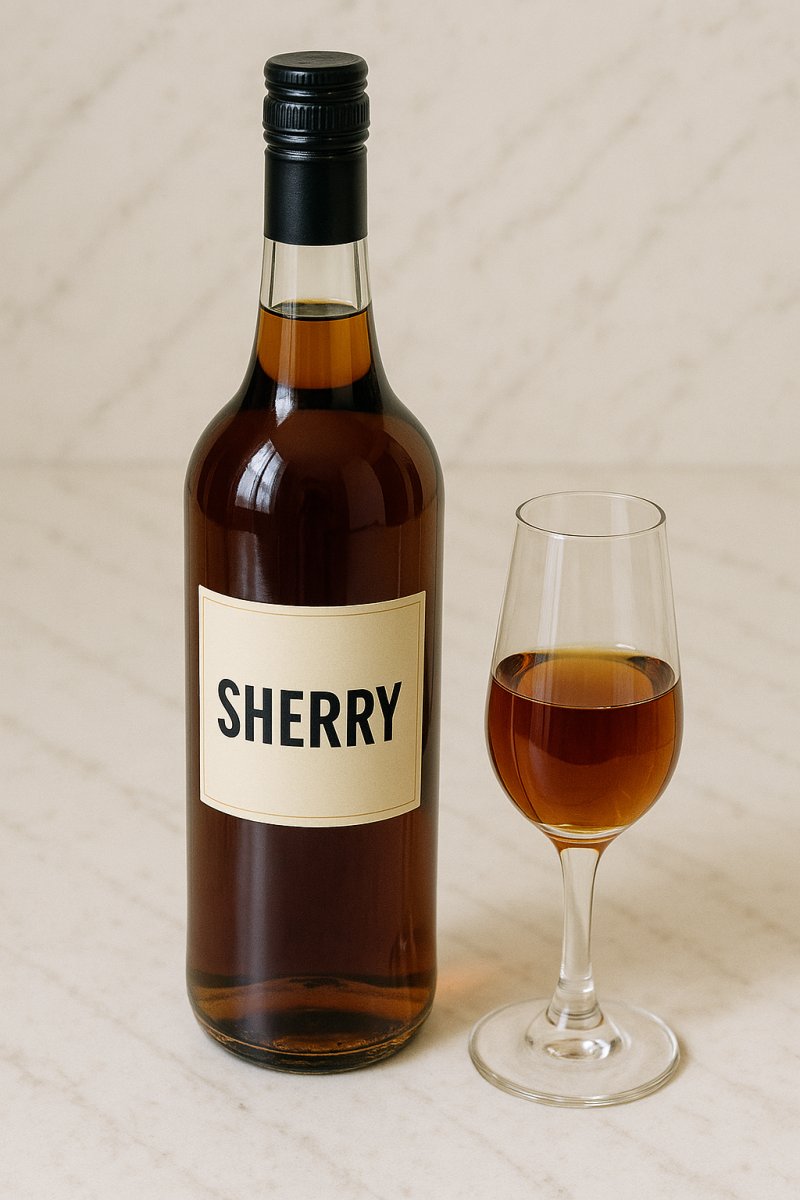
A glass of Sherry (Spanish fortified wine)
Sherry is, to me, one of the boldest and most versatile companions in the kitchen and in the glass. I still remember a rainy market day when I bought a bottle of Fino as a consolation prize and suddenly understood why some aromas can smell more like home than a dish. Since then sherry has had a permanent place in my pantry; it is the small, mysterious hero that rescues sauces, elevates desserts and turns aperitifs into conversations.

What fascinates me about sherry is its range. Fino and Manzanilla are light and flor-driven, ideal with tapas or as a refreshing start to an evening. Amontillado combines floral notes with a nutty depth, while Oloroso scores with more power and roasted notes. For sweet moments there is Pedro Ximénez, whose concentrated date and raisin notes lift desserts into an almost caramelized dimension.

  • Fino/Manzanilla: dry, fresh, with saline edges.
  • Amontillado: nutty, complex, versatile in the kitchen.
  • Oloroso: robust, spicy, ideal with red meat or hearty sauces.
  • PX (Pedro Ximénez): sweet, syrupy, perfect with ice cream or cheese.
Behind these styles is the traditional Solera method, a fascinating puzzle of barrels in which older wines are blended with younger ones. I once watched a cellar master tend the Solera with great calm, and learned that patience in sherry is an ingredient as important as grapes or yeast.

In the kitchen I use sherry to balance acidity and umami: a splash of Fino in risotto, some Amontillado in a creamy mushroom sauce, or a few drops of Oloroso in a dark gravy. A colleague of mine swears by PX over blue cheese — a combination that somehow works perfectly. Try sherry in desserts, marinades or simply neat, lightly chilled.

Sherry is more than just a wine; it is a small history lesson, an explorer of flavors and a reliable kitchen friend. I invite you to open a bottle and be surprised.

Availability & types

Availability and types of Sherry

Sherry is a distinctive wine from Spain, produced in the region around the city of Jerez in Andalusia. You can imagine this area as a large garden by the sea, where the grapes ripen particularly well. The main grape varieties are Palomino, Pedro Ximénez (PX) and Moscatel. Palomino makes most dry sherries, while PX and Moscatel are often used for sweeter styles.

How it grows: the vines stand in a warm, often sunny climate. Because it is near the Atlantic, the sea air helps the grapes — similar to a fan cooling on a hot day. After harvest the wine is sometimes boosted with a small addition of brandy. This is called fortification. A small comparison: if you mix juice with a bit of water and sugar, the taste changes too — with sherry a spirit is added to alter the process and preserve particular aromas.

Production is unique because sherry is often aged in a special system called the Solera. Picture many barrels like the shelves of a bookcase. A little is always taken from the lower barrels and they are refilled with wine from the upper barrels. That way younger and older wines blend and the flavor remains consistent, like a family recipe passed down through generations.

Common types of Sherry

  • Fino: very dry and light, often with a fine 'yeast cap' (the Flor layer) on the barrel. You can compare it to crusty bread with olive oil.
  • Manzanilla: similar to Fino but from the coastal town of Sanlúcar; even fresher, like sea air in a glass.
  • Amontillado: starts like a Fino but ages longer exposed to air and becomes nuttier — a mix of light and somewhat intense.
  • Oloroso: darker and more robust, ages oxidatively and tastes of nuts and chocolate, but dry.
  • Palo Cortado: rare and special, combining characteristics of Amontillado and Oloroso.
  • Cream and sweet sherries (e.g. made from PX): very sweet, practically a dessert in a glass. Pedro Ximénez is particularly syrupy and dense, often with raisin-like aromas.
Where to get Sherry

  • Supermarkets and wine shops: many carry common types like Fino, Oloroso or Cream.
  • Specialty shops and online stores: often offer rare or older vintages.
  • Restaurants and bars: especially Spanish venues often have several styles to taste.
Sherry is versatile: it is suitable for cooking, with tapas or as a dessert wine. After opening a dry sherry kept in the fridge will last a few days up to two weeks, a sweet sherry slightly longer. If you want to buy sherry, look at the label for the name (Fino, Amontillado, Oloroso, PX) — that will help you choose the right style for your taste.
Details & nutrition

Property Value
Unit ml
Calories per 100 130
Protein per 100 0.2
Carbohydrates per 100 3.5
Sugar per 100 3.0
Fat per 100 0.0
Saturated fat per 100 0.0
Monounsaturated fat 0.0
Polyunsaturated fat 0.0
Fiber per 100 0.0
Vitamin C (mg) per 100 0
Vitamin D (IU) per 100 0
Calcium (mg) per 100 5
Iron (mg) per 100 0.2
Nutri-Score E
CO₂ footprint 0.15 kg CO2e/100 ml
Origin Spain (Jerez de la Frontera, Andalusia)
Gluten-free Yes
Lactose-free Yes
Nut-free Yes
Vegan No
Note Contains alcohol; nutritional values vary depending on variety (dry to sweet) and alcohol content.

Technical & scientific information

Sherry is a classic fortified wine produced in Andalusia (Spain), distinguished by specific production methods and a wide spectrum of styles. Chemically, sherry is an alcoholic solvent mixture whose main components are ethanol and water. Typical alcohol levels vary by style from about 15 % to 22 % vol., since after alcoholic fermentation sherry is fortified with neutral grape spirit to the desired alcohol level. Fortification regulates microbiological processes and influences whether a biological yeast layer ("Flor") forms during aging or oxidative aging predominates.

Key chemical and sensory components include:

  • Sugar: dry sherries (e.g. Fino) have very low residual sugar values (< 5 g/L), while sweet wines such as Pedro Ximénez (PX) can contain several hundred grams of sugar per liter.
  • Organic acids: primarily tartaric acid, malic acid and small amounts of acetic acid influence freshness and the acidity profile.
  • Glycerol: contributes to body and mouthfeel; concentrations vary by style and fermentation.
  • Phenols and tannins: phenolic compounds from grape skins and oak determine bitterness, color and aging stability.
  • Volatile compounds: esters, higher alcohols, aldehydes (notably acetaldehyde in Flor sherries) and ketones produce characteristic aromas such as nutty, yeasty or oxidatively roasted notes. Sulfolon/ Sotolon can create spicy, curry-like aromas, especially in aged sweet styles.
  • Sulfites: are commonly used as preservatives; residues are relevant for sensitive individuals.
Production is based on some key stages: grape must (often from the Palomino variety for dry sherries; Pedro Ximénez and Moscatel for sweet wines), alcoholic fermentation by Saccharomyces yeasts, subsequent fortification and multi-stage aging in the Solera system. The Solera system is a dynamic blending method: older barrels are gradually mixed with younger lots so that an average age and a consistent aroma profile develop over years.

Biological aging under Flor is carried out by specific yeast strains of the genus Saccharomyces. These Flor yeasts form a film-like coating on the wine and chemically alter the composition by promoting ethanol and acetaldehyde metabolism and forming volatile compounds. Oxidative aging (without Flor) leads, through controlled oxygen contact, to greater polymerization of phenols, darkening of color and typical notes of nuts, caramel and wood.

From a nutritional and health perspective sherry, like other alcoholic beverages, provides energy (around 80–200 kcal per 100 ml, depending on alcohol and sugar content). Alcohol exposure can have short-term toxic effects and, long-term, contribute to liver, cardiovascular and cancer risks; therefore moderation is recommended. At the same time aged sherries contain secondary plant compounds and phenolic substances that may have antioxidant properties, but not enough to outweigh the associated risks.

Legally, the name Sherry is protected by the Denominación de Origen Jerez‑Xérès‑Sherry, which regulates production, grape varieties and geographic origin. Sensorially and chemically sherry is remarkably variable: from light, flor-driven Finos with high acetaldehyde levels to heavy, oxidatively aged Olorosos or syrupy PX wines with extremely high sugar contents. This interplay of microbial activity, controlled oxidation, wood interactions and Solera blending makes sherry a scientifically interesting and culinarily versatile product.

Wiki entry for: sherry
Active now: 6 visitors of which 2 logged-in members in the last 5 minutes