
Menu & categories

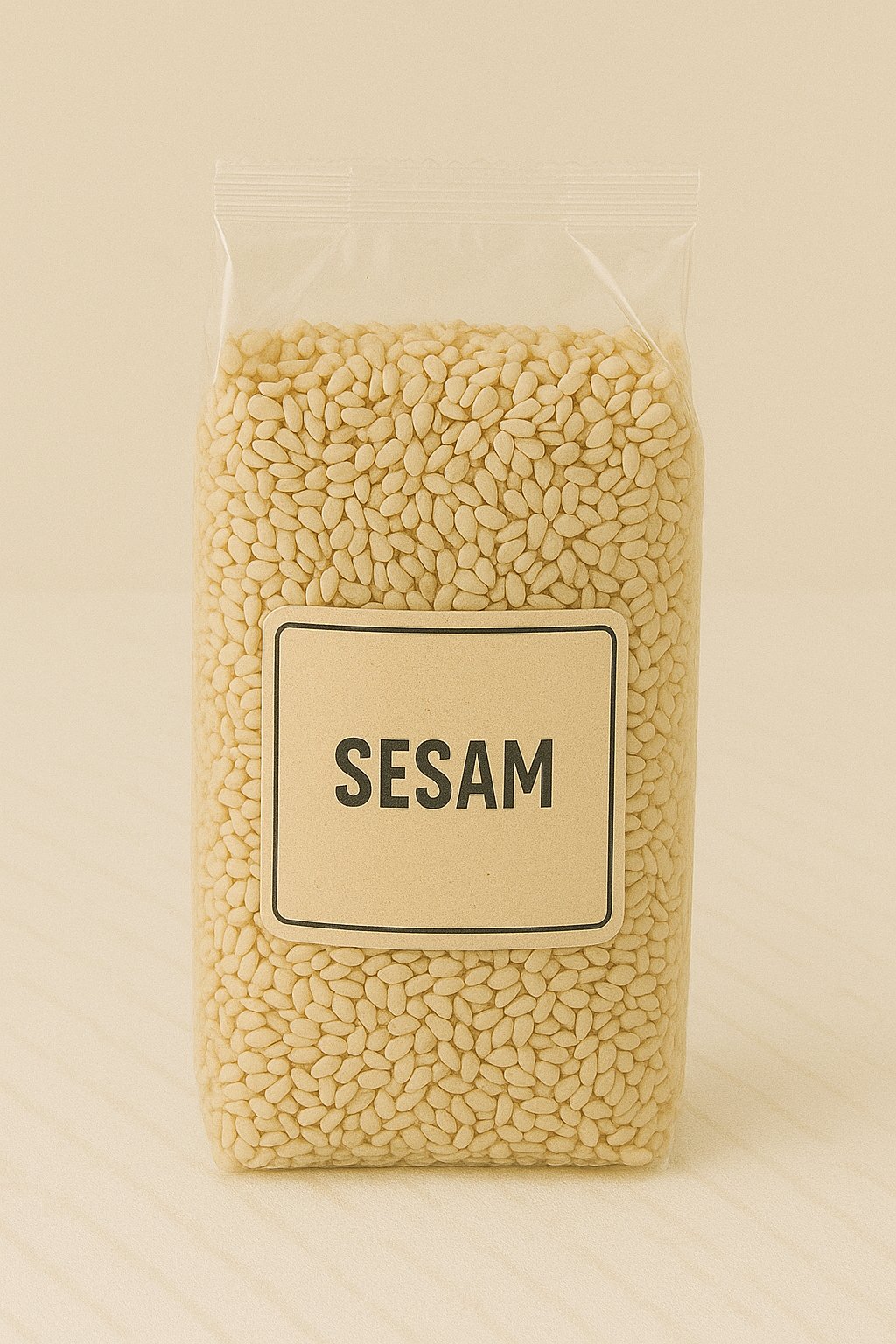
Sesame

Nutty-aromatic oilseed with high calcium and unsaturated fatty acids.

Wiki about sesame Nutri-Score C Vegan Yes Gluten-free Yes Lactose-free Yes Nut-free Yes
NUTRITION / 100 g
573 kcal 17.0 g Protein 23.5 g Kohlenhydrate 49.7 g Fett

Introduction

Sesame seeds
I often sit in my small kitchen and sprinkle a few sesame seeds over a simple salad – and immediately the dish seems more grown-up, rounder, almost like a secret one may share politely but decisively. Sesame has accompanied me for years, not as a loud ingredient but as a reliable companion: nutty, slightly bitter, sometimes sweet, depending on whether the seeds are raw, toasted or processed into Tahini.

I still remember a market visit when a vendor handed me a handful of freshly toasted, fragrant seeds to taste; the smell was so intoxicating that I bought a jar for home right away. A colleague of mine swears by black sesame in his desserts because it contributes a small earthy note that creates surprise and depth. Such small experiments have permanently changed my cooking.

Sesame is versatile: it appears on bread crusts, in sauces and dressings, in Asian cuisine as a seasoning and in Levantine cuisine as a base for tahini. You can use it whole, ground or press it for oil. Gomashio, a mixture of toasted sesame and sea salt, is a simple seasoning wonder that I like to sprinkle over steamed vegetables.

  • Toasting tip: Do not shorten the roasting time too much, because the aroma only develops with even, gentle roasting.
  • Storage: Whole seeds last longer; ground sesame and tahini should be stored cool.
  • Nutrition: Sesame provides valuable fats, minerals like calcium and iron, and secondary plant compounds.
Of course sesame is not only joy: it can trigger allergies that one should watch for. Still, I find that a little spirit of experimentation in the kitchen is often rewarded. Whether on evening bread, in a quick dressing or as an elegant finish to a menu – sesame has that small, fine power to elevate a dish and tell stories.

Availability & types

Availability and types of sesame

Sesame seeds are tiny seeds that come from a very old plant. Sesame has been found in stories and ancient texts for thousands of years. The plant originally comes from warm regions in Africa and South Asia, for example from areas that are today India and parts of Africa. Today sesame is grown on many continents because the plant tolerates heat and limited water well — this makes it particularly popular in warm countries.

Where is sesame grown?
Sesame grows mainly in tropical and subtropical regions. That means you frequently find it in:

  • Africa – countries like Sudan, Nigeria, Tanzania or Ethiopia produce a lot of sesame.
  • South Asia – especially India is a major producer.
  • East and Southeast Asia – China and Myanmar (Burma) are important locations for sesame.
  • Latin America – countries such as Paraguay or Mexico also cultivate sesame.
In your supermarket you will therefore find sesame year-round, because seeds are harvested, dried and shipped worldwide. Sesame stores well as long as it is kept dry and in the dark.

What varieties exist?
Sesame comes in different colors and forms. The main types are:

  • White sesame seeds – they are light and mild in taste. They are often used for rolls, pastries or as a topping.
  • Black sesame seeds – darker and more intense in flavor, they are used in many Asian dishes and sweets and also look attractive as a garnish.
  • Brown or yellow varieties – these fall in flavor between white and black and are used differently depending on the region.
Processed variants
Many products derived from sesame are also available to buy:

  • Hulled (shelled) vs. unhulled – hulled seeds have the outer hull removed and are lighter and milder. Unhulled seeds are somewhat stronger, contain more fiber and are darker.
  • Raw or toasted – toasted sesame tastes nuttier, like nuts roasted in the oven. Raw is more neutral.
  • Tahini – a paste made from ground sesame, used for example for hummus. You can think of it like peanut butter, but made from sesame.
  • Sesame oil – there is cold‑pressed oil with strong aroma and refined oil with a more neutral flavor.
  • Sesame products – these include sweets like halva, sesame brittle or sesame flour.
Where to find sesame in the store and how to store it?
Sesame is available in supermarkets, health food stores, Asian or African groceries and, of course, online. Whole seeds are long-lasting if kept dry, airtight and cool. Oil should be kept in the dark and preferably refrigerated because otherwise it can go rancid. So you can keep sesame at home like other staple ingredients.

In summary: sesame grows mainly in warm countries around the globe and is available in many colors and processed forms – from light to black seeds, raw or toasted, as paste or oil. Therefore you can find it almost everywhere and use it in many ways in the kitchen: as a crunchy topping on bread, as a nutty paste in dips or as a flavor carrier in many dishes.
Details & nutrition

Property Value
Unit g
Calories per 100 573
Protein per 100 17.0
Carbohydrates per 100 23.5
Sugar per 100 0.3
Fat per 100 49.7
Saturated fat per 100 7.0
Monounsaturated fat 18.8
Polyunsaturated fat 21.8
Fiber per 100 11.8
Vitamin C (mg) per 100 0
Vitamin D (IU) per 100 0
Calcium (mg) per 100 975
Iron (mg) per 100 14.6
Nutri-Score C
CO₂ footprint ca. 3,0 kg CO2e/kg
Origin India / Sudan (depending on origin and batch)
Gluten-free Yes
Lactose-free Yes
Nut-free Yes
Vegan Yes
Note Sesame is a declarable allergen; strictly avoid if allergic to sesame. Nutritional values may vary depending on variety (light/dark, hulled/unhulled).

Technical & scientific information

Sesame (botanical: Sesamum indicum) is the seed-fruit of an annual plant cultivated in tropical and subtropical regions. The small, oval seeds are widespread in cooking and oil production worldwide. Of scientific interest are their high lipid and secondary plant compound density and specific secondary metabolites that influence both sensory properties and nutritional effects.

Chemical composition and nutritional values
The seeds consist mainly of fat (typically 45–60 %), proteins (about 15–25 %) and carbohydrates including fiber (total 10–20 %). The energy content is about 570–600 kcal per 100 g. The fatty acid profile is characterized by a high proportion of unsaturated fatty acids: mainly monounsaturated oleic acid and polyunsaturated linoleic acid, supplemented by smaller amounts of saturated fatty acids such as palmitic and stearic acid. The seeds also provide important minerals, foremost calcium (especially in unhulled seeds), magnesium, phosphorus, iron and zinc, as well as fat-soluble tocopherols (vitamin E). The protein fraction contains a characteristic amino acid distribution with a relatively high share of methionine-containing amino acids, while lysine is often the limiting amino acid.

Secondary plant compounds
Particularly relevant are the lignans sesamin, sesamolin and their degradation product sesamol. These phenol-like compounds have antioxidant activity and contribute to the oxidation stability of sesame oil. The seeds also contain phytosterols (e.g., beta‑sitosterol), phenols and small amounts of flavonoids. Phytic acid and oxalates are present as well, which can reduce the bioavailability of certain minerals.

Processing methods
Technological processing includes cleaning, drying, sorting, optional hulling (removal of the outer shell) and thermal treatment (roasting). For oil production, mechanical pressing methods (cold pressing, hot pressing) and industrial solvent extractions are used. Refining of sesame oil involves processes such as degumming, neutralization, bleaching and deodorization; cold-pressed and toasted oils retain more aroma and secondary plant compounds than refined oil. Ground seeds are used to make tahini, a finely ground sesame paste; in production, roast degree and moisture affect flavor, texture and microbiological safety.

Physiological and health aspects
Epidemiological and clinical data suggest that sesame and sesame oil, through the combination of unsaturated fatty acids, phytosterols and lignans, may have favorable effects on lipid profiles and oxidative stress. Studies report moderate reductions in LDL cholesterol, antioxidant effects and possible anti-inflammatory modulation. On the other hand, sesame seeds contain antinutritional factors such as phytates that can inhibit mineral absorption; roasting partially reduces these compounds. Important for clinical practice is the allergenic relevance: sesame is considered a significant food allergen with potentially severe IgE-mediated reactions, so labeling and caution are required. Individuals prone to kidney stones should consider oxalate and calcium intake individually.

  • Applications: oil production, bakery products, tahini, garnish and spice.
  • Storage: because of the high fat content, sesame is prone to oxidation; cool, dark storage extends shelf life.
  • Quality parameters: flavor (nutty to roasted), content of tocopherols and lignans, free fatty acids and peroxide value as indicators of freshness and processing.
In summary, sesame is a nutrient- and secondary-compound-rich ingredient of high importance for nutrition and food technology. Its physicochemical properties make it both a valuable fat source and a carrier of antioxidant compounds, while processing steps and allergenic risks should be considered in use and labeling.

Wiki entry for: sesame
Active now: 17 visitors of which 2 logged-in members in the last 5 minutes