Menu & categories

Semolina

Finely milled cereal product, often made from durum wheat

Wiki about semolina Nutri-Score C Vegan Yes Gluten-free No Lactose-free Yes Nut-free Yes
NUTRITION / 100 g
360 kcal 11.0 g Protein 73.0 g Kohlenhydrate 1.0 g Fett

Introduction

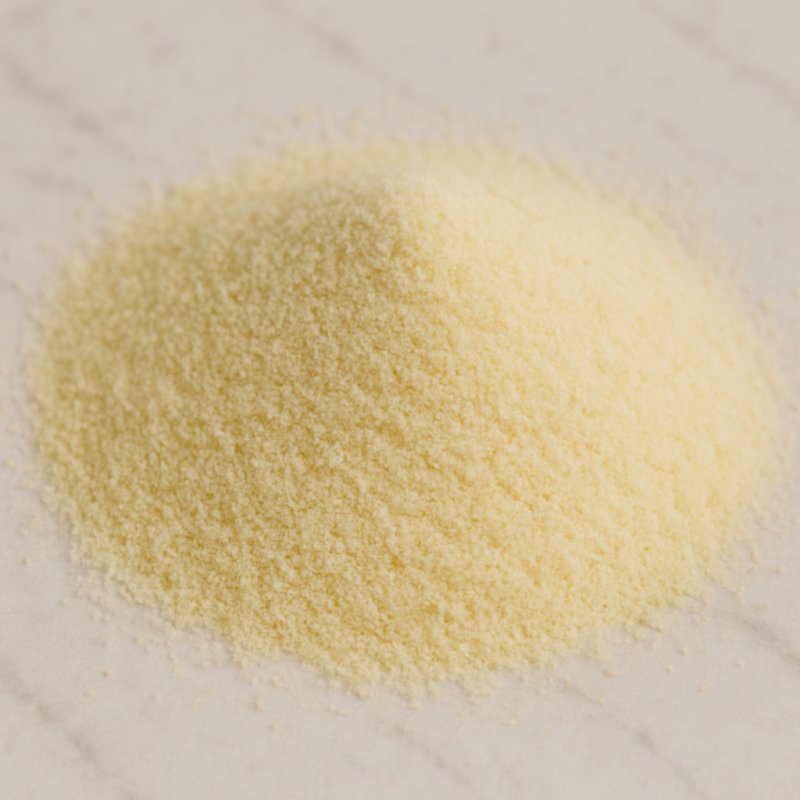
Bowl of light wheat semolina on a wooden surface
I still remember how semolina was always a small wonder to me as a child: from dry, grainy flakes, with a bit of milk and patience a silky porridge would form, the warm scent filled the kitchen and all worries seemed to shrink. Today, when I hold semolina in my hands, I see not only a staple food but an amazingly versatile ingredient that plays a shining role in sweet desserts, savory gratins and even in crispy coatings.

Semolina is essentially nothing other than coarsely milled grain, usually wheat or durum. Its texture makes it unique: finer than grits, coarser than flour. That explains why it binds liquids particularly well while adding body and bite. A colleague of mine insists that a tomato gratin without a layer of semolina underneath would never be as stable — and he is right; the granularity creates a pleasant structure that holds up when serving.

I like to use semolina for:

  • Creamy sweets, like classic semolina porridge or semolina pudding with cinnamon and lemon zest.
  • Savory gratins, where it soaks up liquid and provides a silky consistency.
  • Doughs and baked goods, where a pinch of semolina gives bread or cake more bite.
  • Breading, which becomes crispy on the outside without tasting too oily.
What I particularly appreciate is its reliability: semolina forgives, it doesn't fail as quickly as some fine flours. Once I completely lost track of time while cooking and the porridge stood too long — instead of turning to mush, it elegantly moved toward a pudding consistency, and with a dollop of fruit compote dinner was saved. Also, semolina is a real storage wonder; it sits in the pantry for months and is always ready for spontaneous cooking ideas.

When I tell others about semolina, the conversation usually starts with childhood memories but often ends in modern interpretations: polenta-like side dishes, semolina dumplings in a hearty broth or delicate baked desserts with a crisp crust. For me, semolina remains a loyal, unpretentious ingredient that deserves a chance in every kitchen.

Availability & types

Availability and types of semolina

Semolina is a common kitchen ingredient that you can buy in many supermarkets, health food stores or even at farmers' markets. It is made from grains, mostly wheat or durum wheat, and is processed so that only the larger, firmer parts of the kernels remain. Imagine roughly rubbing a grain so that small, grainy pieces form — that's semolina. Because it is so versatile, you'll find it almost anywhere cereal products are sold.

Origin and growing regions

Semolina mainly comes from cereal plants. The most common are:

  • Soft wheat – grows well in regions with a temperate climate. In Europe, particularly in countries such as Germany, France and Poland, a lot of soft wheat is grown.
  • Durum wheat (also called durum) – is the grain often used for pasta and certain semolinas. Durum wheat prefers warmer, drier regions, for example Italy, Spain or parts of North Africa and the Middle East.
The fields where these cereals grow look like wide, yellow seas in summer. Farmers sow the grain, care for the plants and harvest them when they are ripe. The kernels are then cleaned in mills and ground until semolina is produced.

Available varieties and variants

There are different kinds of semolina that vary in size, granularity, type of grain and processing. The most important and commonly purchased are:

  • Soft wheat semolina – finer and often used for puddings, semolina porridge or for thickening dishes. It is mild in flavor and easy to cook.
  • Durum semolina – somewhat coarser and firmer. It is often used for pasta or dishes like semolina gratin because it stays al dente when cooked.
  • Corn semolina (polenta) – made from maize, yellow and with a slightly sweet taste. Polenta is popular in Italian cuisine.
  • Semolina from other grains – for example from millet, spelt or rice. These variants are practical when someone prefers other grains or cannot tolerate certain foods.
Semolina is also sold in different degrees of fineness: from very fine (almost like flour) to coarse (with visible small grains). Fineness determines how soft or grainy the finished dish will be. You can imagine it like sand: fine sand feels very smooth, coarse sand has small grains you can feel.

Purchase and storage
You will usually find semolina in paper bags or boxes, sometimes in plastic bags. It is available as a conventional product and as an organic version, where the kernels were grown without chemical pesticides. If you have semolina at home, store it in a dry, dark place – in a closed container or cupboard – so it stays fresh longer and does not absorb moisture.

In summary: semolina is widely available, comes from cereal fields in many parts of the world, and there are different varieties such as soft wheat semolina, durum semolina, corn semolina and semolina from other grains. Each type has its own flavor and texture, so you can always find the right semolina for different recipes.
Details & nutrition

Property Value
Unit g
Calories per 100 360
Protein per 100 11.0
Carbohydrates per 100 73.0
Sugar per 100 0.6
Fat per 100 1.0
Saturated fat per 100 0.2
Monounsaturated fat 0.1
Polyunsaturated fat 0.4
Fiber per 100 3.5
Vitamin C (mg) per 100 0
Vitamin D (IU) per 100 0
Calcium (mg) per 100 17
Iron (mg) per 100 1.3
Nutri-Score C
CO₂ footprint 0.7
Origin Typically made from durum wheat (Triticum durum), cultivated mainly in Europe and North America
Gluten-free No
Lactose-free Yes
Nut-free Yes
Vegan Yes
Note Nutritional values refer to dry wheat semolina (durum wheat), without additives.

Technical & scientific information

Semolina refers to coarsely milled grain with a particle size between flour and coarse grits. In European cuisine wheat semolina is the most widespread, though durum semolina, corn semolina (polenta), spelt semolina, rice semolina and buckwheat semolina are also used. Semolina is produced by a milling process in which the kernel structure is deliberately broken down to obtain larger particles that create a different texture when cooked or baked compared to fine flour.

Manufacturing process
The production of semolina involves several steps: cleaning of the grain, dehulling or partial dehulling (removal of husks in wholegrain variants), subsequent grinding in roller or hammer mills and sieving to classify particle size. For durum semolina (semola/semolina) a wet treatment and centrifugation are often performed to separate starch and bran and to obtain a yellowish color and a more granular structure. Particle size is standardized because it affects cooking behavior and sensory properties.

Chemical composition and nutrients
Semolina consists mainly of carbohydrates in the form of starch, which can make up 60–75 % of the dry weight. Protein content varies by grain: soft wheat semolina typically contains 8–12 % protein, durum semolina 11–15 %, with gluten proteins dominating in wheat products. Fat contents are relatively low (about 1–3 %), mainly unsaturated fatty acids. Minerals such as magnesium, phosphorus and iron as well as B vitamins (especially thiamine, niacin and folate) are present in varying concentrations and are concentrated more in wholegrain semolina where the bran is retained.

Functional properties
The physical properties of semolina are crucial for its use: coarseness provides structure in puddings, gnocchi or pasta, while starch gelatinization on heating leads to thickening. In durum semolina the protein composition supports the formation of a stable dough matrix, important for shaping and drying pasta. Corn and rice semolina lack gluten, so binding properties must be achieved differently, for example by adding eggs or binding agents.

Nutritional values (typical values per 100 g, rounded)

  • Energy: approx. 350–370 kcal
  • Protein: 8–13 g
  • Carbohydrates: 70–75 g, mostly starch
  • Fat: 1–3 g
  • Fiber: 2–6 g, considerably higher in wholegrain variants
Health aspects
Semolina can be part of a balanced diet, supplying readily available energy from starch and, depending on type, valuable proteins and micronutrients. Wholegrain semolina offers additional fiber, which can be beneficial for gut health and blood sugar control. For people with celiac disease or significant gluten intolerance, wheat and spelt semolina are not suitable; gluten-free alternatives like corn or rice semolina are available. When preparing semolina-based dishes, portion sizes should be considered because starchy foods can raise blood glucose quickly.

Food technology aspects
Semolina is used in many applications: as a base for semolina porridge and puddings, as a component of pasta and couscous, in baked goods for structure or as a breading. Technological factors such as particle size, moisture content and germination potential influence storage stability and processing properties. With prolonged storage lipids can oxidize and species- and quality-dependent changes such as rancidity or microbial spoilage may occur; dry, cool storage minimizes these risks.

Safety and quality controls
Industry and trade test semolina for foreign bodies, mold contamination, moisture, microbial counts and pesticide residues. Sensory tests for odor, color and taste complement analytical measurements. Labeling includes information on the grain type, wholegrain status and, if applicable, allergen warnings such as gluten.

In summary, semolina is a versatile cereal product with characteristic granularity and functional properties that depend on the choice of grain and processing steps. Nutritional values vary by type and milling degree, with wholegrain variants generally nutritionally preferable. Technological requirements and quality controls ensure its use in numerous traditional and industrial products.

Wiki entry for: semolina
Active now: 17 visitors of which 2 logged-in members in the last 5 minutes