Availability and types
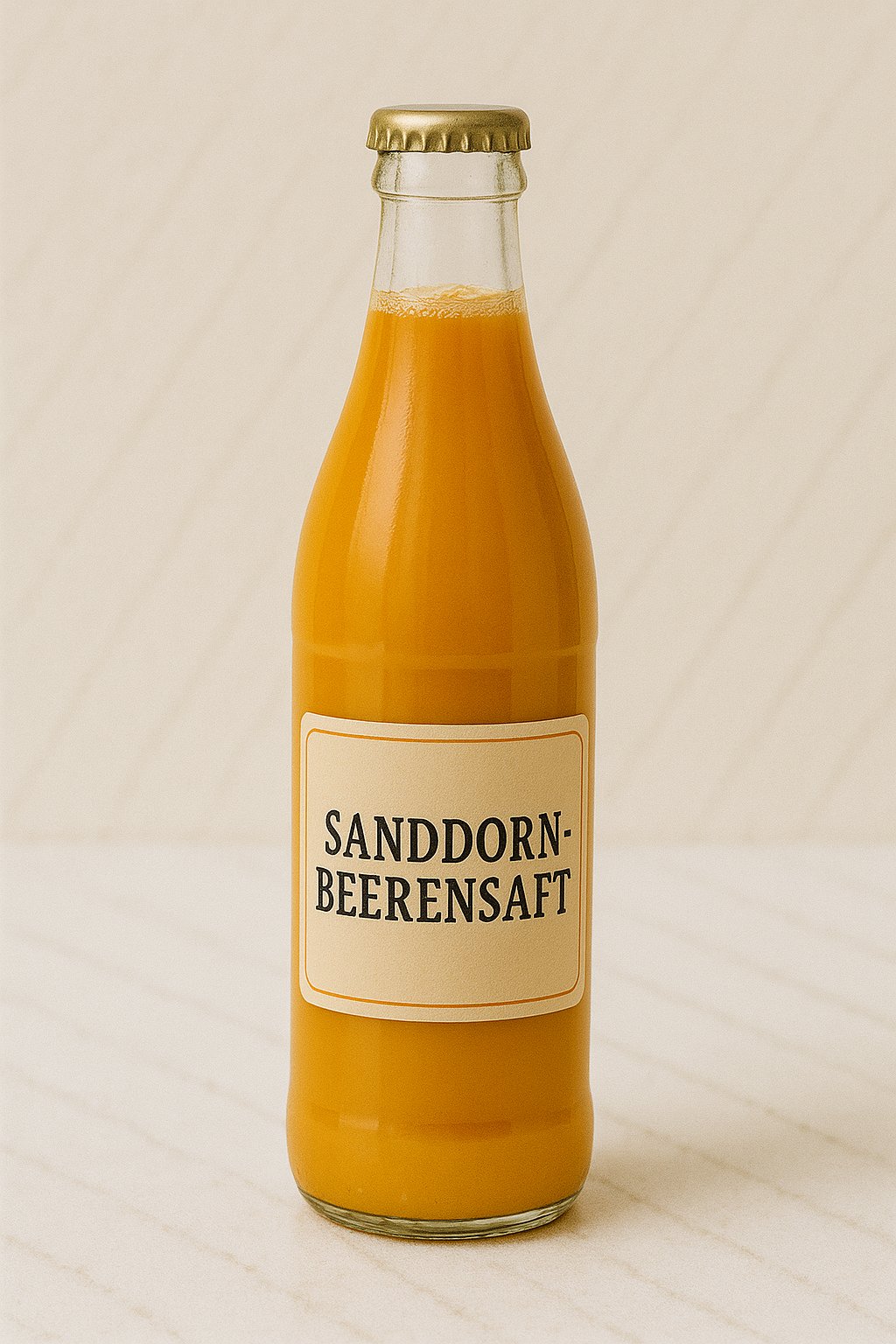
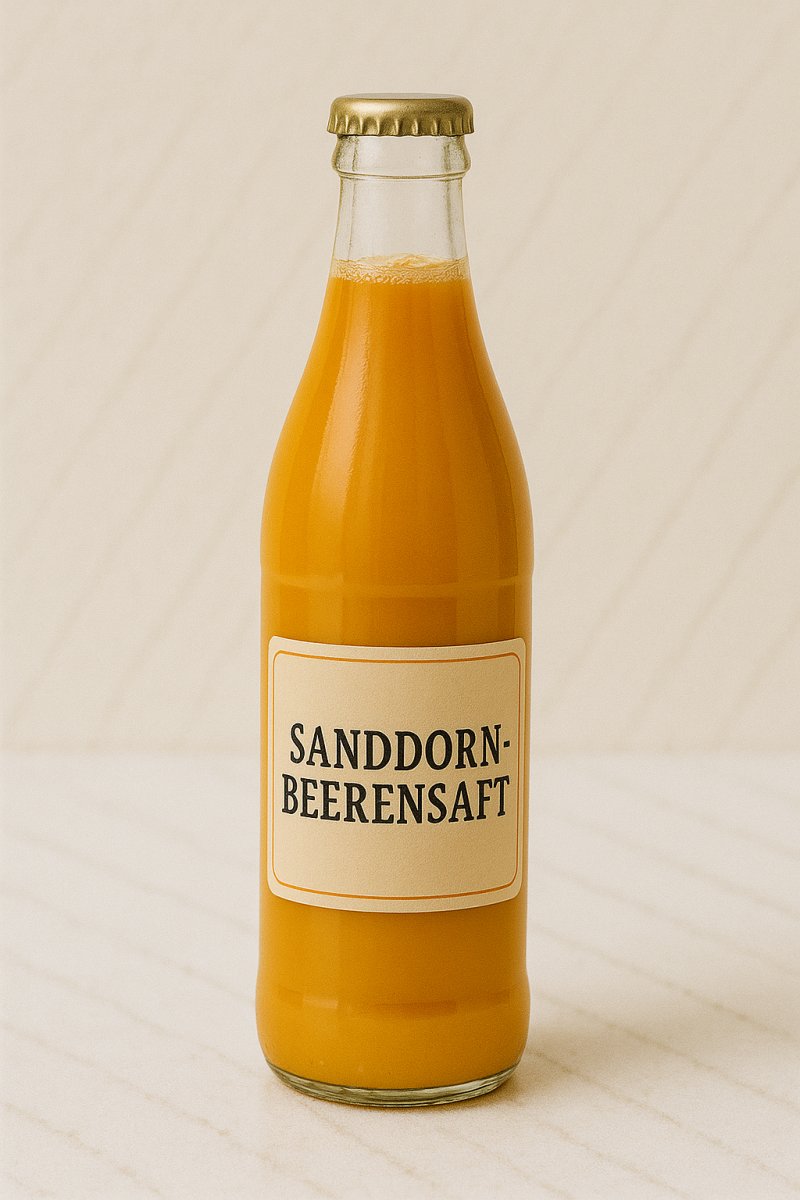
Sea buckthorn berry juice comes from the small orange fruits of sea buckthorn. Originally sea buckthorn grew wild on coasts and in cool regions of Europe and Asia. Today it is also cultivated intentionally. You can therefore find the juice both in rural areas where farmers tend sea buckthorn shrubs and in supermarkets or online. If you walk in autumn and see yellow to orange berries on thorny shrubs, that is often sea buckthorn.
Where does it come from?
Sea buckthorn grows particularly well on windy, salty coasts and in cool mountainous regions. Important growing areas include:
Sea buckthorn grows particularly well on windy, salty coasts and in cool mountainous regions. Important growing areas include:
- Germany: North Sea and Baltic coast, especially the islands and coastal regions.
- Scandinavia: Norway and Sweden have much sea buckthorn in coastal zones.
- Eastern Europe and Russia: large areas, often used for juice and oil production.
- China: produces large quantities for international markets.
Some fruits are wild-collected, others come from plantations. In plantations the bushes are planted in rows, similar to fruit trees on a farm. This makes mechanical harvesting easier.
What varieties and product types exist?
By “varieties” one can mean two things: plant varieties (different sea buckthorn species) and juice variants (how the juice was processed). Here are the main variants, explained simply:
By “varieties” one can mean two things: plant varieties (different sea buckthorn species) and juice variants (how the juice was processed). Here are the main variants, explained simply:
- Direct juice: juice made from pressed berries and usually only heated to remove microbes. It tastes strong and somewhat sour.
- Concentrate: here the juice is thickened by removing water so it keeps longer and is easier to transport. Before drinking it is often mixed with water.
- Nectar or blended juice: sea buckthorn is very sour — it is often mixed with apple or orange juice or sugar. This is called nectar and tastes milder.
- Syrup and cream: thicker products used for sweetening, as a spread or for desserts.
- Frozen puree: berries are pureed and deep-frozen. This preserves the fresh taste as if picked in autumn.
- Organic and conventional: organic means fewer or no chemical pesticides were used in cultivation. This is often stated on the label.
- Pasteurized vs. raw: pasteurized means briefly heated to prevent microbes. Raw means the juice was not heated — it can taste fresher but has a shorter shelf life.
- Clear vs. cloudy juices: clear juices are filtered, cloudy juices contain pulp and often have a stronger flavor.
How to find it in the store?
Sea buckthorn juice is usually located in the beverages section, health food shops, or on the shelf with juices and syrups. Because it is very healthy and strongly flavored, it is also easy to order online. On the label you will find important information: whether it is direct juice, concentrate or organic, and whether sugar was added.
Sea buckthorn juice is usually located in the beverages section, health food shops, or on the shelf with juices and syrups. Because it is very healthy and strongly flavored, it is also easy to order online. On the label you will find important information: whether it is direct juice, concentrate or organic, and whether sugar was added.
Overall sea buckthorn berry juice is available in many forms: strong and pure for people who like intense flavor, or mixed and sweeter for children and everyday drinking. This way almost every family can find and try the suitable variant.