Menu & categories

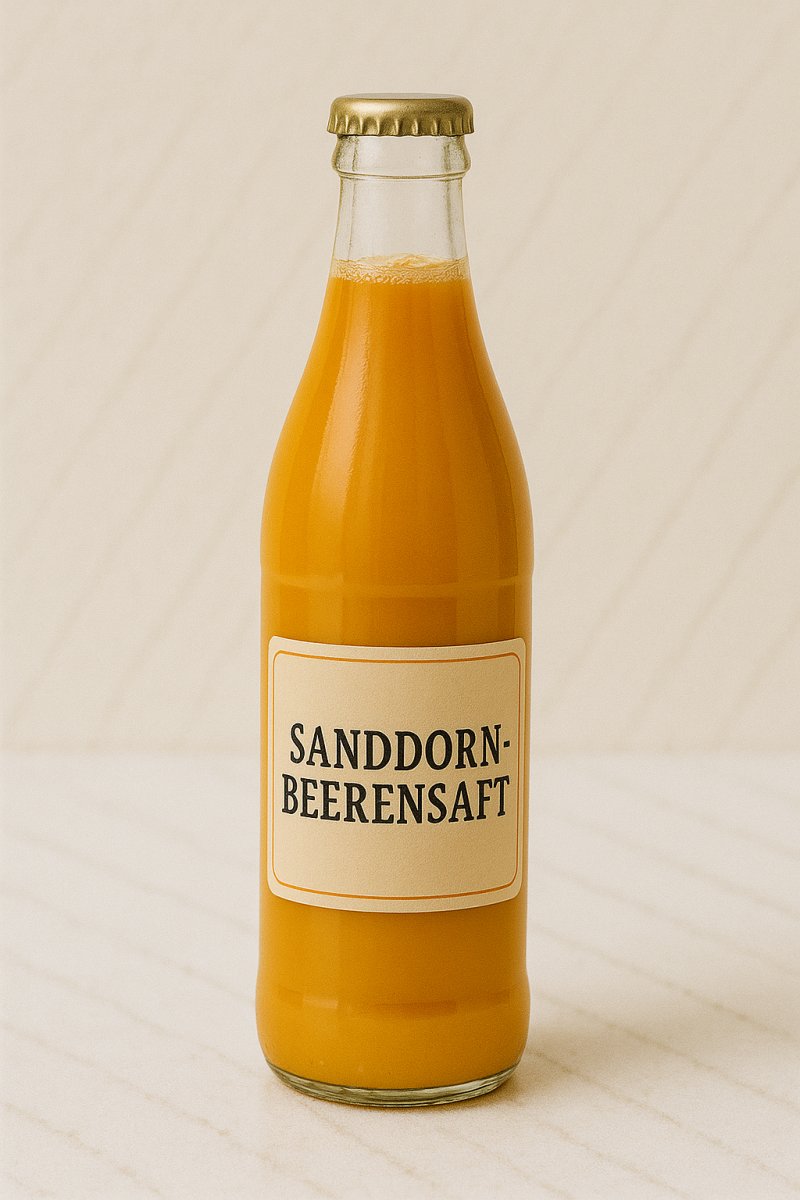
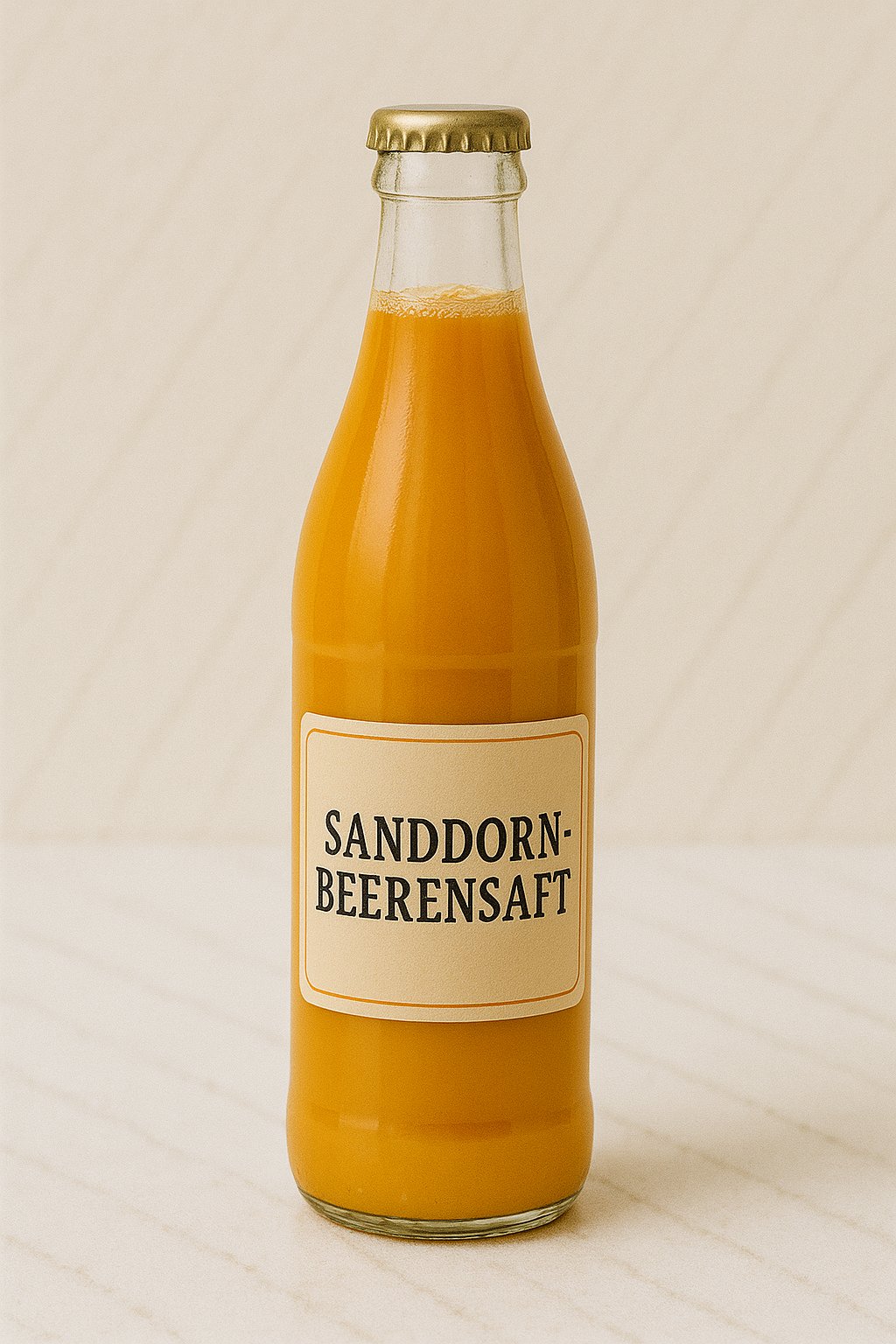
Sea buckthorn berry juice

Tart-acidic juice with natural vitamin C content.

Wiki about sea buckthorn juice Nutri-Score B Vegan Yes Gluten-free Yes Lactose-free Yes Nut-free Yes
NUTRITION / 100 ml
50 kcal 0.6 g Protein 11.0 g Kohlenhydrate 0.5 g Fett

Introduction

Glass with sea buckthorn juice
I still remember my first sip of sea buckthorn berry juice like a small flavor explosion: bright, tart-acidic aroma, a color like a sunset in a glass, and a short, cheeky surprise on the tongue. Since then this ingredient has stuck with me. For me it’s an invigorator in winter and at the same time a summery, fizzy insider tip, depending on how I use it.

Sea buckthorn, that inconspicuous shrub fruit from North Sea coasts and windy slopes, yields a juice that is rich in vitamin C, carotenoids and antioxidants. That may explain why I often feel more awake after a glass, without it seeming artificial. A colleague of mine swears by drinking it with a sip of warm water when he’s chilled; I prefer combining it with some honey and a squeeze of lemon to balance the acidity.

What I especially like is the versatility: sea buckthorn berry juice can be enjoyed pure as a strong shot, diluted into a refreshing long drink on sparkling wine or mineral water, or used as a component in desserts and marinades. I even once tried a risotto with a hint of sea buckthorn — surprising but nice, because the acidity brightened the dish.

  • As a drink: with water, sparkling wine, or as a cocktail base.
  • In the kitchen: glazes, dressings, sorbets and sauces.
  • Preservation: as syrup or frozen in portions.
Tips from my kitchen: never drink the juice undiluted in large amounts, because the concentrated acidity can irritate the stomach. Those who want a milder taste mix sea buckthorn with apple juice or carrot juice. When buying, look for organic origin or sustainably harvested produce — wild-harvested sea buckthorn often has a more intense aroma.

In the end sea buckthorn berry juice remains for me one of those ingredients that tell stories: of rough wind, coastal paths and small experiments in the home kitchen. It is wild, sunny and a little cheeky — and that’s exactly what makes it so appealing.

Availability & types

Availability and types

Sea buckthorn berry juice comes from the small orange fruits of sea buckthorn. Originally sea buckthorn grew wild on coasts and in cool regions of Europe and Asia. Today it is also cultivated intentionally. You can therefore find the juice both in rural areas where farmers tend sea buckthorn shrubs and in supermarkets or online. If you walk in autumn and see yellow to orange berries on thorny shrubs, that is often sea buckthorn.

Where does it come from?
Sea buckthorn grows particularly well on windy, salty coasts and in cool mountainous regions. Important growing areas include:

  • Germany: North Sea and Baltic coast, especially the islands and coastal regions.
  • Scandinavia: Norway and Sweden have much sea buckthorn in coastal zones.
  • Eastern Europe and Russia: large areas, often used for juice and oil production.
  • China: produces large quantities for international markets.
Some fruits are wild-collected, others come from plantations. In plantations the bushes are planted in rows, similar to fruit trees on a farm. This makes mechanical harvesting easier.

What varieties and product types exist?
By “varieties” one can mean two things: plant varieties (different sea buckthorn species) and juice variants (how the juice was processed). Here are the main variants, explained simply:

  • Direct juice: juice made from pressed berries and usually only heated to remove microbes. It tastes strong and somewhat sour.
  • Concentrate: here the juice is thickened by removing water so it keeps longer and is easier to transport. Before drinking it is often mixed with water.
  • Nectar or blended juice: sea buckthorn is very sour — it is often mixed with apple or orange juice or sugar. This is called nectar and tastes milder.
  • Syrup and cream: thicker products used for sweetening, as a spread or for desserts.
  • Frozen puree: berries are pureed and deep-frozen. This preserves the fresh taste as if picked in autumn.
  • Organic and conventional: organic means fewer or no chemical pesticides were used in cultivation. This is often stated on the label.
  • Pasteurized vs. raw: pasteurized means briefly heated to prevent microbes. Raw means the juice was not heated — it can taste fresher but has a shorter shelf life.
  • Clear vs. cloudy juices: clear juices are filtered, cloudy juices contain pulp and often have a stronger flavor.
How to find it in the store?
Sea buckthorn juice is usually located in the beverages section, health food shops, or on the shelf with juices and syrups. Because it is very healthy and strongly flavored, it is also easy to order online. On the label you will find important information: whether it is direct juice, concentrate or organic, and whether sugar was added.

Overall sea buckthorn berry juice is available in many forms: strong and pure for people who like intense flavor, or mixed and sweeter for children and everyday drinking. This way almost every family can find and try the suitable variant.
Details & nutrition

Property Value
Unit ml
Calories per 100 50
Protein per 100 0.6
Carbohydrates per 100 11.0
Sugar per 100 6.0
Fat per 100 0.5
Saturated fat per 100 0.1
Monounsaturated fat 0.2
Polyunsaturated fat 0.2
Fiber per 100 0.2
Vitamin C (mg) per 100 150
Vitamin D (IU) per 100 0
Calcium (mg) per 100 15
Iron (mg) per 100 0.6
Nutri-Score B
CO₂ footprint ca. 0.8 kg CO2e pro Liter (Richtwert, abhängig von Anbau/Transport/Verarbeitung)
Origin Europe (e.g. Germany, Baltic states or Eastern Europe; depending on bottling)
Gluten-free Yes
Lactose-free Yes
Nut-free Yes
Vegan Yes
Note Naturally cloudy juice may show varying vitamin C and sugar levels depending on the product; unsweetened variants are very tart.

Technical & scientific information


Sea buckthorn berry juice (juice from the fruits of the genus Hippophae, mostly H. rhamnoides) is a juicy, intensely colored food valued as a functional ingredient for its high content of fat- and water-soluble micronutrients as well as secondary plant compounds. The juice is produced either by direct pressing of whole berries or by extraction of the pulp and thus differs markedly in composition and fat content from pure seed or pulp oil.

Chemical composition and main constituents
Sea buckthorn berry juice contains a complex mixture of vitamins, carotenoids, polyphenols, fatty acids (when pulp is pressed), organic acids and minerals. Typical components include:

  • Vitamin C: very high content compared with many other fruits; concentrations vary greatly by variety, maturity and processing.
  • Carotenoids: beta‑carotene and various xanthophylls give the characteristic orange‑red color and contribute to antioxidant capacity.
  • Tocopherols (vitamin E): mainly alpha‑ and gamma‑tocopherol are present and stabilize lipophilic components.
  • Polyphenols and flavonoids: include quercetin, isorhamnetin and kaempferol derivatives as well as phenolic acids, which may have antioxidant and inflammation‑modulating properties.
  • Fatty acids: when pulp including the lipid content is processed, palmitic, oleic, linoleic acids and notably palmitoleic acid (omega‑7) are found, which is rare in plant oils.
  • Organic acids and sugars: citric and malic acid dominate the acid profile; sweetness is provided by glucose and fructose, making the juice more acidic than many fruit juices.
  • Minerals: potassium, calcium, magnesium and small amounts of iron and trace elements are present.
Processing methods
Production of sea buckthorn berry juice includes harvesting, de-stemming, crushing/pressing, clarification, preservation treatment and filling. Important technical aspects are:

  • Mechanical pressing or cold pressing of whole berries or pulp; press residues contain concentrates of oil and fiber.
  • Enzymatic pre-treatment to increase juice yield by degrading pectin.
  • Filtration and protection against excessive oxygen exposure to avoid oxidation of carotenoid‑ and vitamin C‑rich components.
  • Preservation by pasteurization, ultra‑high temperature treatment or aseptic filling; thermal treatment however reduces sensitive micronutrients.
  • Concentration by vacuum evaporation or freeze‑drying (dry juice production), with gentle methods preferred to preserve color and nutrients.
Nutritional and health aspects
Sea buckthorn berry juice has a high antioxidant capacity due to the combination of vitamin C, carotenoids, tocopherols and phenols. Observations and preclinical studies suggest these components may reduce oxidative stress and support cellular protective mechanisms. Evidence from nutritional studies indicates possible positive effects in areas such as immune function, skin health (particularly with topical use of oil) and lipid metabolism, although robust conclusions about therapeutic efficacy in humans remain limited.

At high doses potent sources of vitamin C can cause gastrointestinal discomfort. Because nutrient content varies greatly with variety, growing conditions and processing, caution is warranted with supplements. Individuals with existing health issues or on medications should consult a physician before regular high‑dose use.

Sensory and culinary use
Sea buckthorn berry juice is characteristically tart, aromatic and intensely colored; it is used as concentrate, direct juice, in mixed beverages, jams or as an ingredient in sauces and baked goods. Because of its acidity and intense aroma it is often combined with other juices or sweeteners.

Overall sea buckthorn berry juice is a nutrient‑rich but variably composed ingredient whose health effects are influenced by quality characteristics and processing methods. Scientific research provides indications of nutritional benefits, while careful processing and conservative evaluation of health claims are recommended.

Wiki entry for: sea buckthorn juice
Active now: 14 visitors of which 2 logged-in members in the last 5 minutes