Menu & categories

Schwarzplenten flour

Gluten-free buckwheat flour for savory and sweet dishes

Wiki about Schwarzplenten flour Nutri-Score A Vegan Yes Gluten-free Yes Lactose-free Yes Nut-free Yes
NUTRITION / 100 g
343 kcal 13.3 g Protein 71.5 g Kohlenhydrate 3.4 g Fett

Introduction

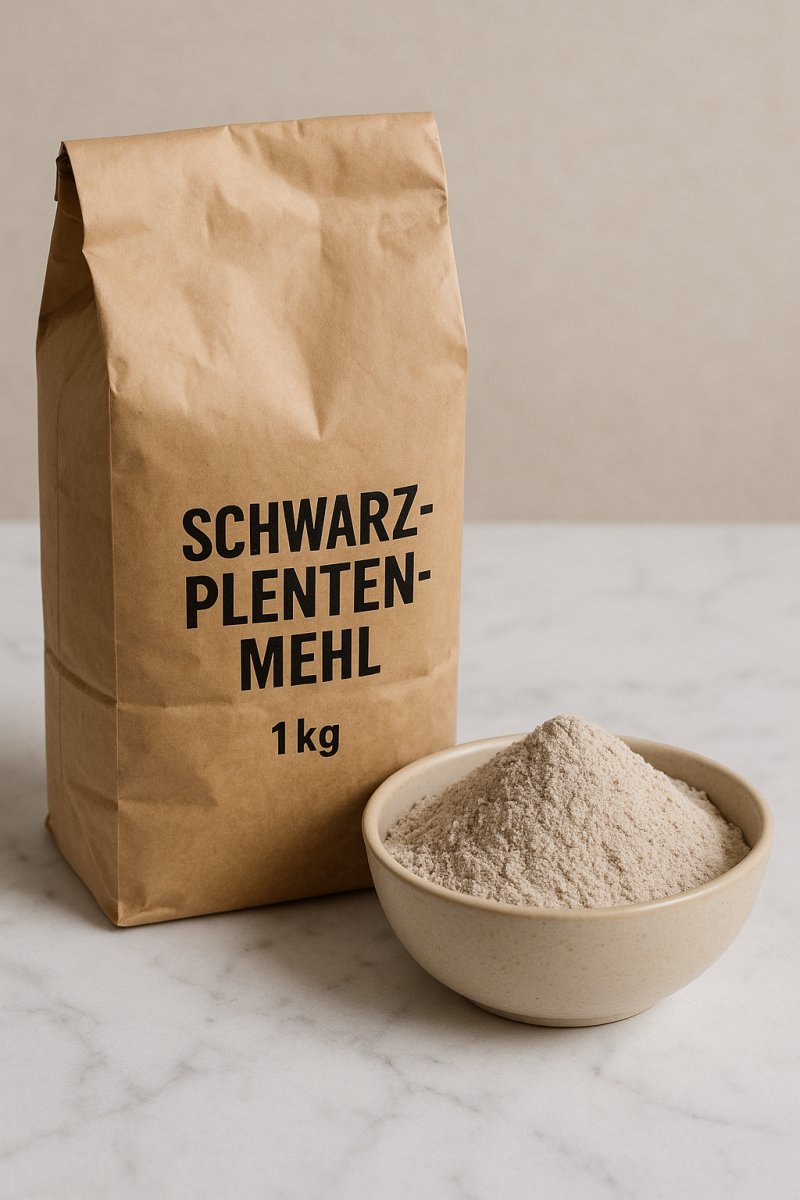
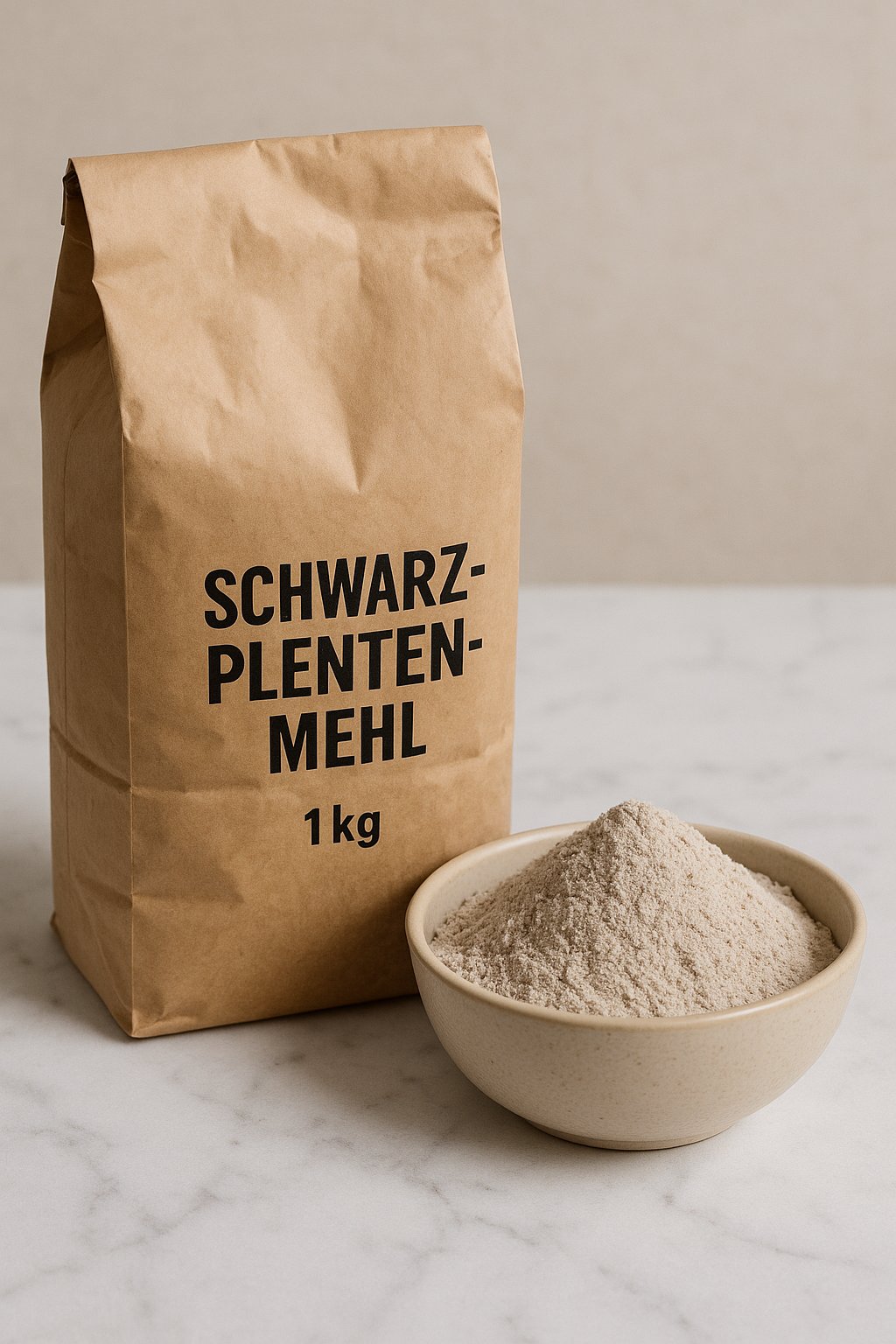
Schwarzplenten flour in a bowl with buckwheat grains beside it
When I first heard about Schwarzplenten flour, I pictured a mysterious ingredient from a remote Alpine village. In reality it is much more down‑to‑earth and yet equally fascinating: a dark, strongly aromatic flour made from special, often heirloom‑like cereal varieties that adds surprising accents in both savory and sweet cooking. I still remember the scent when I first tried it in a small bakery — smoky, nutty and somehow earthy, like a walk after the rain.

What immediately appealed to me about Schwarzplenten flour is its versatility. It works excellently for rustic breads, savory pancakes and even for robust cookies. A colleague once joked that you could even turn an apple pie into a culinary adventure with it, and he was right: the dark color and deep aroma give familiar recipes a new, almost theatrical note.

For those who are curious, I have summarized the key characteristics:

  • Taste: nutty, slightly smoky, earthy
  • Texture: somewhat coarser than wheat, gives structure to baked goods
  • Use: bread, pancakes, cookies, crusts for fish or vegetables
  • Special feature: often from old varieties, with regional character
When baking with Schwarzplenten flour I make sure to combine it with moister ingredients or mix it partially with wheat flour so the result stays moist. A personal favorite combination is a dark farmhouse loaf with some rye content, topped with coarse salt and a splash of malt beer — it gives an impressive crust and an intense aroma when sliced. I once brought such a loaf to a picnic, and it was declared a local sensation by skeptical friends within a very short time.

I enjoy experimenting with this ingredient because it transforms recipes in unexpected ways. Schwarzplenten flour is not a fad but a small flavor expedition for those who like to play with textures and depth. So if you are ready to pick up the baking spoon and give a familiar recipe a dark twist, this flour could become your next culinary secret.

Availability & types

Availability and types

Schwarzplenten flour is a flour made from a special cereal plant that sometimes looks a bit unusual. The name can be confusing, but picture it like rye or wheat — just a different variety. This flour is milled from the grains of a plant that grows in various regions. Today it is increasingly available on the market, especially where people like to try new or heritage cereal varieties.

Origin
Schwarzplenten flour usually comes from countries where small or old cereal varieties are preserved. It often originates in Europe, but also in parts of Asia or North America, where farmers are reintroducing heirloom varieties. Originally, this type of grain was grown in small regions because it adapted well to the local climate. Today organic farmers and food enthusiasts are reintroducing such varieties so they do not disappear.

Growing regions
The plants used for Schwarzplenten flour generally prefer cooler climates and can also grow on soils that are not very fertile. Therefore you often see fields in:

  • Central Europe (for example Germany, Poland)
  • parts of Scandinavia
  • some regions of Eastern Europe
  • occasionally in parts of North America and Asia where farmers cultivate heirloom varieties
Comparison: Whereas wheat likes to grow in large, flat fields, this plant sometimes fares better in smaller plots or on land that is not ideal for modern arable farming.

Available types and variants
There is not just one kind of Schwarzplenten flour. Just like apples (which also come in many varieties with different flavor notes), the flour comes in different variants. The main distinctions are:

  • Whole-grain Schwarzplenten flour: This flour contains the whole kernel – the outer hull (seed coat), the germ and the endosperm. It is darker, has more flavor and contains many nutrients. It's like eating a whole apple rather than just the juice.
  • Sifted or lighter flour: Parts of the hull have been removed, making the flour finer and lighter. It tastes milder and is suitable when you want a airier bread or fine pastries.
  • Coarse grind: Sometimes the grain is only coarsely milled. This produces a flour with small pieces that gives crispier textures when baking, similar to coarse semolina.
  • Fine grind: Very finely milled flour is better suited for cakes or delicate doughs.
  • Organic and conventional variants: Organic flour comes from farmers who do not use synthetic pesticides or chemical fertilizers. Conventional flour comes from standard agriculture. Many people choose organic because they want to support traditional farming methods.
Where to buy it
Schwarzplenten flour is not always found on the regular supermarket shelf, but there are several ways to get it:

  • Health food stores and organic shops: they often carry old or unusual cereal varieties.
  • Online shops: many small mills or sellers offer the flour on the internet.
  • Directly from farmers or regional farm shops: especially when local farmers grow heirloom varieties.
If you're curious, try a small package first and see which variety you and your family like best. Schwarzplenten flour offers a nice way to discover old cereal varieties and bake more diversely.
Details & nutrition

Property Value
Unit g
Calories per 100 343
Protein per 100 13.3
Carbohydrates per 100 71.5
Sugar per 100 0.9
Fat per 100 3.4
Saturated fat per 100 0.7
Monounsaturated fat 1.0
Polyunsaturated fat 1.7
Fiber per 100 10.0
Vitamin C (mg) per 100 0
Vitamin D (IU) per 100 0
Calcium (mg) per 100 18
Iron (mg) per 100 2.2
Nutri-Score A
CO₂ footprint 1.2
Origin Typical of Alpine regions, particularly South Tyrol and northern Italy
Gluten-free Yes
Lactose-free Yes
Nut-free Yes
Vegan Yes
Note Schwarzplenten flour is a regional name for buckwheat flour and is naturally gluten-free. It is traditionally used for Schwarzplenten dumplings, nocken and pancakes. May contain traces of gluten or other allergens if not explicitly labeled as gluten-free.

Technical & scientific information

Schwarzplenten flour refers to a finely milled flour produced from the seeds of the plant Raphanus sativus var. niger or related brassicas, and traditionally used in certain regions as a seasoning and milled product. The term can vary regionally; it generally refers to dark-colored, oil-rich seeds that after drying and roasting are milled into a dark flour. Due to its specific flavor profile and composition, Schwarzplenten flour is used both in cooking and in niche areas of food technology.

Botanical and processing background
The starting seeds belong to the Brassicaceae family, which typically have a high proportion of storage oils, proteins and secondary plant compounds. The raw materials are harvested, cleaned and dried. Before milling, roasting or gentle heating is often performed to enhance flavors, inactivate enzymes and reduce germinability. The seeds are then finely milled under controlled conditions; depending on the desired end product, fractionation by sieving (e.g. to different particle sizes) may be carried out.

Chemical composition and nutritional values
The macronutrient distribution of Schwarzplenten flour is similar to that of other oilseeds, with typical ranges (values may vary depending on origin and processing):

  • Fat: 25–40% of the mass, mostly as storage triglycerides; the fatty acid profile can have a high proportion of unsaturated fatty acids, particularly monounsaturated (oleic acid) and polyunsaturated fatty acids (linoleic acid).
  • Protein: 20–30%; the protein composition includes storage proteins with an amino acid profile that may include sulfur-containing amino acids such as methionine and cysteine as well as arginine-rich fractions.
  • Carbohydrates: 15–30%, mostly non-starch polysaccharides and fiber; a proportion of resistant carbohydrates contributes to satiety and prebiotic effects.
  • Minerals and vitamins: mineral components such as calcium, potassium, magnesium and iron are present in low to medium concentrations; B vitamins and vitamin-like compounds occur, with their content influenced by roasting.
Secondary plant compounds and sensory properties
Like other brassicas, Schwarzplenten flour contains secondary plant compounds, including glucosinolates and their hydrolytic products (isothiocyanates), which can be responsible for sharp, mustard‑like flavors. Roasting processes also promote Maillard reactions and lipid oxidations, which produce the dark color and a nutty‑roasted flavor profile. The content of volatile compounds determines sensory perception and can vary strongly depending on variety and processing.

Processing properties and applications
Due to its fat and protein content, Schwarzplenten flour affects texture and moisture binding in baked goods, marinades and spice mixes. It can be used in small proportions as a flavor and nutrient supplier, for example to enrich bread, crackers or vegetarian products. Technologically, attention must be paid to the fact that the fat content affects dough development and shelf‑life; defatting or blending with starch‑rich flours is often practiced.

Health aspects
The unsaturated fatty acids and plant proteins present can be nutritionally valuable. Glucosinolates and isothiocyanates are being biochemically investigated because they have shown antioxidant effects and influence on enzyme systems in model studies; at the same time, high concentrations may promote gastrointestinal complaints or drug interactions in sensitive individuals. Because of the content of mustard‑ and cabbage‑like components, caution is advised for allergy sufferers and people with thyroid problems, especially if unprocessed seeds are consumed in large amounts.

Storage and quality criteria
For the quality of Schwarzplenten flour, freshness, odor and microbiological safety are crucial. The high fat content makes the flour prone to oxidation; storage low in light, heat and oxygen in airtight containers and cool rooms prolongs shelf life. Analytical tests include moisture determination, peroxide value (as a measure of lipid oxidation), glucosinolate content and microbiological examinations.

Summary
Schwarzplenten flour is a dark‑colored, oil‑ and protein‑rich plant flour from brassica seeds with a characteristic, spicy‑roasted aroma. Its nutrient composition makes it an interesting ingredient for culinary and technological applications, while secondary plant compounds are responsible for sensory properties and potential health‑related effects. In utilization and storage, processing steps, oxidation protection and possible adverse effects in sensitive individuals should be considered to ensure quality and tolerability.

Wiki entry for: Schwarzplenten flour
Active now: 18 visitors of which 2 logged-in members in the last 5 minutes