Menu & categories

Salami

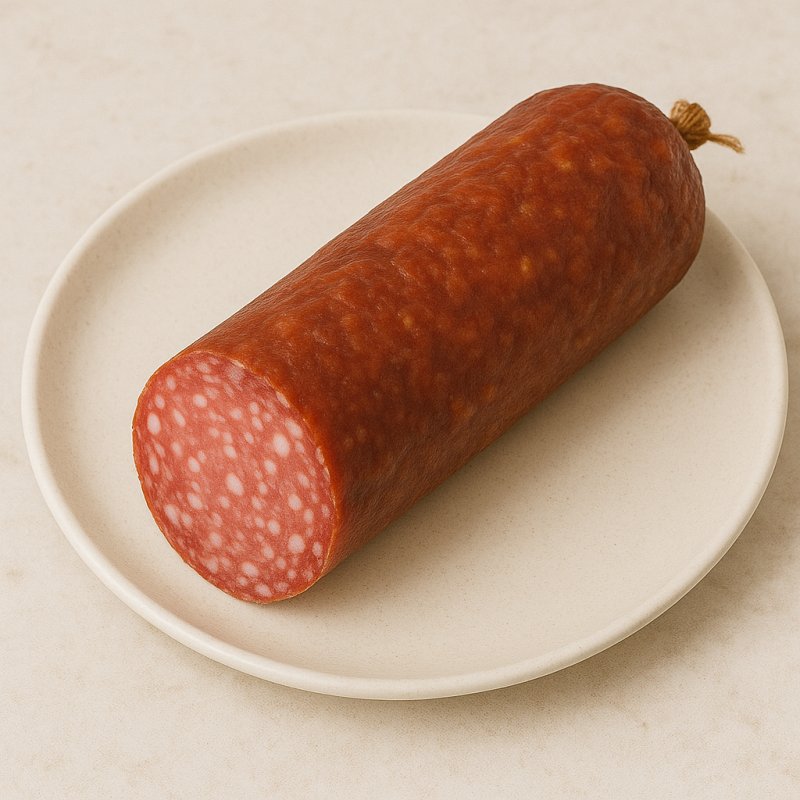
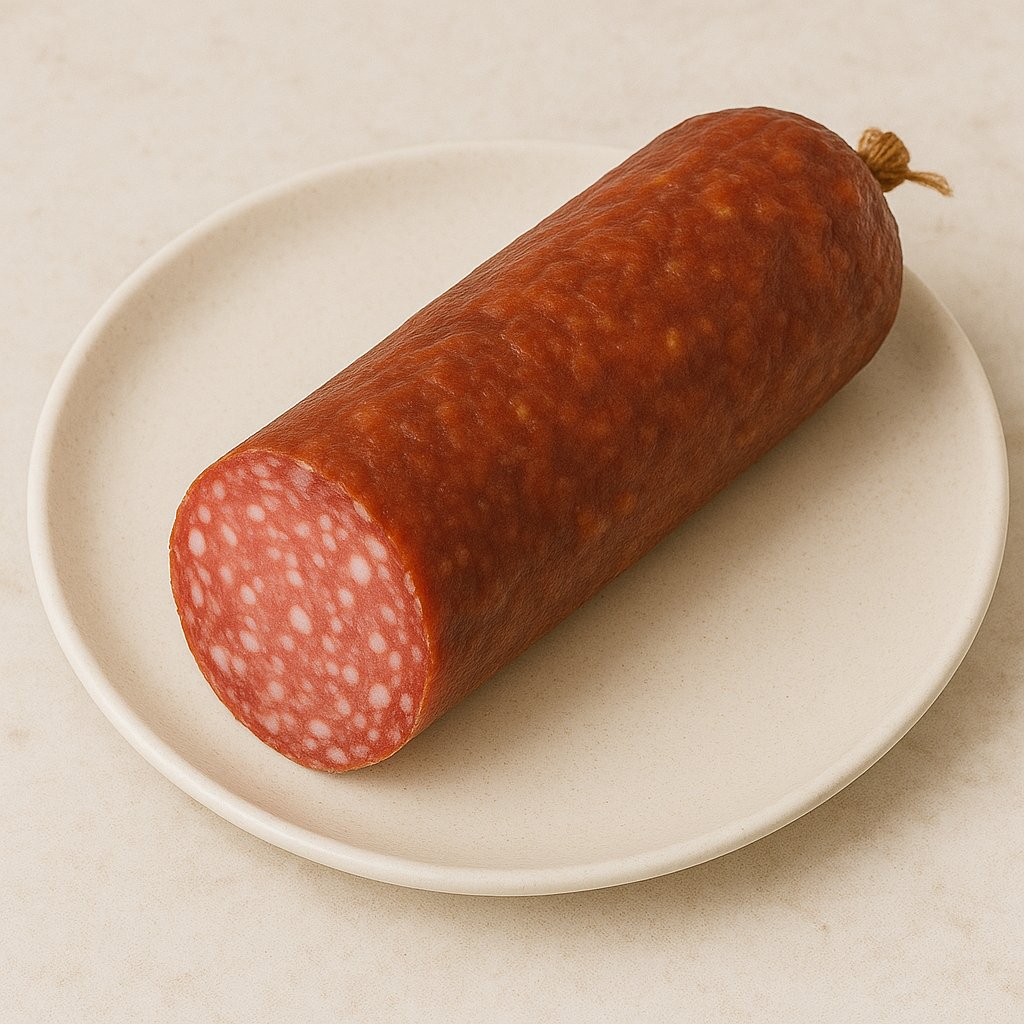
Savory, air-dried or smoked raw sausage made from meat

Wiki about salami Nutri-Score E Vegan No Gluten-free Yes Lactose-free Yes Nut-free Yes
NUTRITION / 100 g
410 kcal 21 g Protein 1 g Kohlenhydrate 36 g Fett

Introduction

Sliced salami on a wooden board
I still clearly remember my first conscious encounter with salami: it was at a weekly market, where the scent of spices and smoked meat filled the air. A stallholder handed me a thinly sliced piece, and with the first bite the world felt a little warmer and cozier. This combination of spice, fat and smoke is for me more than just a cold cut; it is a piece of cultural history that convinces on the tongue.

Salami is so versatile that I take it out on countless occasions – for a quick supper, on a picnic-like blanket in the sun, or as a mysterious ingredient in a pasta dish that no one expects. Sometimes I slice it paper-thin and place it on crunchy bread, accompanied by a small dollop of mustard. Another time I dice it and fry it in a hot pan until the edges caramelize and release smoky aromas.

What particularly fascinates me about salami:

  • Tradition: Many varieties carry stories in their recipes that have been passed down through generations.
  • Variety of flavors: From mild and harmonious to strong and piquant, everything is possible.
  • Practicality: It keeps for a long time and is therefore a natural companion on travels and for spontaneous invitations.
I have learned that quality varies greatly. A friend once brought me a salami from a small producer whose spice composition was so unusual that I wanted to guess its origin. Such discoveries make the search for the perfect slice exciting. At the same time I remember a dreary supermarket attempt where I was almost disappointed – a reminder that fresh, artisan-made products often make the difference.

For me salami is therefore not just food but a topic of conversation: it brings people to a table, awakens memories and invites small culinary experiments. Every time I try a new variety a small chapter of regional culinary art opens – and I enjoy reading, sharing and occasionally stealing a piece of it before someone else discovers it.

Availability & types

Availability and types

Salami is a sausage that can be found almost everywhere in the world. It originally comes from Europe and is especially popular in countries like Italy, Spain and Germany. There people developed various recipes over many years, so today there are very many kinds of salami. You can buy salami in supermarkets, at weekly markets, from the butcher or even in specialist delicatessens. It is often packaged in slices in the refrigerated section, sometimes also as a whole rope or in rolls.

Where does salami come from?

Originally salami comes from regions with warm, dry air, because in the past there was no refrigerator and food had to be preserved. The best-known origin is Italy, where many varieties were invented. But there are also long traditions in Germany and Spain. Today salami is produced in many countries because the recipe can be easily adapted to climatic and cultural differences.

Which cultivation or production areas exist?

Salami is not "grown" like vegetables, but produced. Important regions are:

  • Italy: Famous for varieties like Milano or Napoli salami. Italian salamis are often more piquant and have specific spices.
  • Germany: There are many regional variants here, for example pepper salami. German butchers place value on local ingredients.
  • Spain: Known for air-dried sausages, often seasoned with paprika.
  • Other countries: Salami is produced in the USA, France, Hungary and many other countries, often with their own flavour profiles.
These places influence how the salami tastes: climate, spices and traditions ensure that each region has its typical variant.

What types are there?

Salami comes in many forms. Here are some common types, simply explained:

  • Milano/Milan salami: Finely chopped, mild and good for pizza or bread. It feels somewhat tender, almost like a soft pillow.
  • Neapolitan/Napoli salami: Slightly coarser and spicier, with a stronger flavour.
  • Pepper salami: With whole peppercorns that can crack when bitten. Like little pepper balls that burst in the mouth.
  • Hungarian salami: Usually robust with paprika, therefore slightly red-colored and spicy.
  • Air-dried salami: Hangs for a long time in dry rooms and loses water, becoming firmer and more intense in flavour.
  • Ham- or cured-ham-like variants: Some salamis are very mild and resemble ham because they mature for a long time.
Fresh vs. long-lasting varieties

There are salamis that are very long-lasting because they have been dried and matured. These varieties are firm and drier. Others are found vacuum-packed in the refrigerated section; these are softer and must be eaten sooner. A simple comparison: dried salami is like a hard bread that stays fresh for a long time, while fresh packaged salami is more like a soft roll that should be eaten more quickly.

Special varieties

  • Salami for children: mildly seasoned, without too much pepper or hot spices.
  • Vegetarian/vegan salami alternatives: without meat, made from plant-based ingredients, for people who do not want to eat meat.
  • Specialties: regional, handmade varieties from small butchers, sometimes with unusual spices like garlic, fennel or red wine.
In summary: salami is available worldwide and originally comes from Europe. Depending on where it is made and how long it matures, taste and texture differ. There are mild varieties for children, spicy variants with pepper or paprika, air-dried, very long-lasting types and even vegetarian alternatives. So almost everyone finds the salami that suits their taste.
Details & nutrition

Property Value
Unit g
Calories per 100 410
Protein per 100 21
Carbohydrates per 100 1
Sugar per 100 0.5
Fat per 100 36
Saturated fat per 100 13
Monounsaturated fat 17
Polyunsaturated fat 3
Fiber per 100 0
Vitamin C (mg) per 100 0
Vitamin D (IU) per 100 0
Calcium (mg) per 100 20
Iron (mg) per 100 1.7
Nutri-Score E
CO₂ footprint 6.5
Origin Varies by producer, often Germany or Italy
Gluten-free Yes
Lactose-free Yes
Nut-free Yes
Vegan No
Note Average values for classic pork salami; exact nutritional values may vary depending on recipe and producer.

Technical & scientific information

Salami is a group of cured and fermented raw sausages made from chopped pork or mixed meats, preserved by drying, aging and microbially controlled fermentation. Historically rooted in Europe, salami combines physical, chemical and microbiological processes that determine texture, flavor and preservation properties. Typical production includes chopping muscle meat and fat, mixing in salt, nitrite curing salt, spices and starter cultures, stuffing into casings and subsequent fermentation and drying.

Chemical composition and ingredients
Salami consists mainly of water, proteins and lipids. Typical proportions are about 25–35% water, 20–30% proteins and 30–40% fat, depending on variety and recipe. The protein composition largely corresponds to the muscle protein mixture (myosin, actin) as well as connective tissue proteins (collagen). Lipids come from intramuscular fat and fat deposits; they contain saturated and unsaturated fatty acids, with the share of saturated fatty acids in pork being higher than in poultry. Furthermore, salami contains electrolytes (mainly sodium due to curing), B vitamins, iron and other trace elements.

Nutritional values
The energy density of salami is comparatively high, typically 300–500 kcal per 100 g, depending on fat content. Nutritional values vary; a typical standard value is about 350 kcal, 20–25 g protein and 25–35 g fat per 100 g, with carbohydrates being negligible. Sodium content is significantly increased by added curing salt; nitrite as an additive is present at low concentrations to stabilize colour and improve microbial safety.

Processing methods
Essential steps in industrial and artisanal production are:

  • Trimming and comminution: Meat and fat pieces are chopped to certain particle sizes to achieve the desired texture.
  • Curing: Addition of table salt and curing salt (sodium nitrite or nitrite curing salt) for preservation, flavour development and colour formation.
  • Spicing and mixing: Spices such as pepper, garlic, paprika and sugar are added; in many cases starter cultures (lactic acid bacteria, sometimes cocci) are used to control fermentation.
  • Stuffing and fermentation: The mass is stuffed into casings and fermented under controlled temperature and humidity, during which lactic acid bacteria break down sugars to lactic acid, lower pH and thus inhibit the growth of unwanted microbes.
  • Drying and aging: Slow moisture removal and enzymatic activities lead to proteolysis and lipolysis, which loosen the texture and develop aroma. Aging times range from weeks to months.
Microbiology and safety
Controlled fermentation promotes beneficial lactic acid bacteria (e.g. Lactobacillus spp.), which lower the pH. Starter cultures minimize risks from pathogenic microbes such as Listeria monocytogenes or Salmonella spp. Nitrite additionally contributes to inhibiting certain microbes, but under certain conditions can lead to the formation of known nitrosamines, which are considered carcinogenic. Modern production methods and legal limits for nitrite aim to minimize this risk.

Health aspects
Salami is a dense source of calories, saturated fats and sodium, which when consumed excessively can increase cardiometabolic risks. At the same time it provides high-quality protein, vitamin B12 and iron. Preservatives like nitrite and potential nitrosamine formation are health-relevant; recommendations advise moderate consumption of processed meats. People with special dietary requirements (high blood pressure, cardiovascular diseases) should pay attention to fat and salt content.

Final remark
Salami is a complex food product whose quality and safety depend on raw material selection, recipe, microbiological control and maturation conditions. Scientific knowledge about proteolysis, lipolysis, fermentation and preservation is used to produce sensorially appropriate, stable and safe products, while nutritional and toxicological aspects should be taken into account in formulation and consumption.

Wiki entry for: salami
Active now: 17 visitors of which 2 logged-in members in the last 5 minutes