Menu & categories

Salad cream

Light, creamy alternative to mayonnaise for salads and spreads

Wiki about salad cream Nutri-Score D Vegan No Gluten-free Yes Lactose-free Yes Nut-free Yes
NUTRITION / 100 g
280 kcal 1 g Protein 10 g Kohlenhydrate 26 g Fett

Introduction

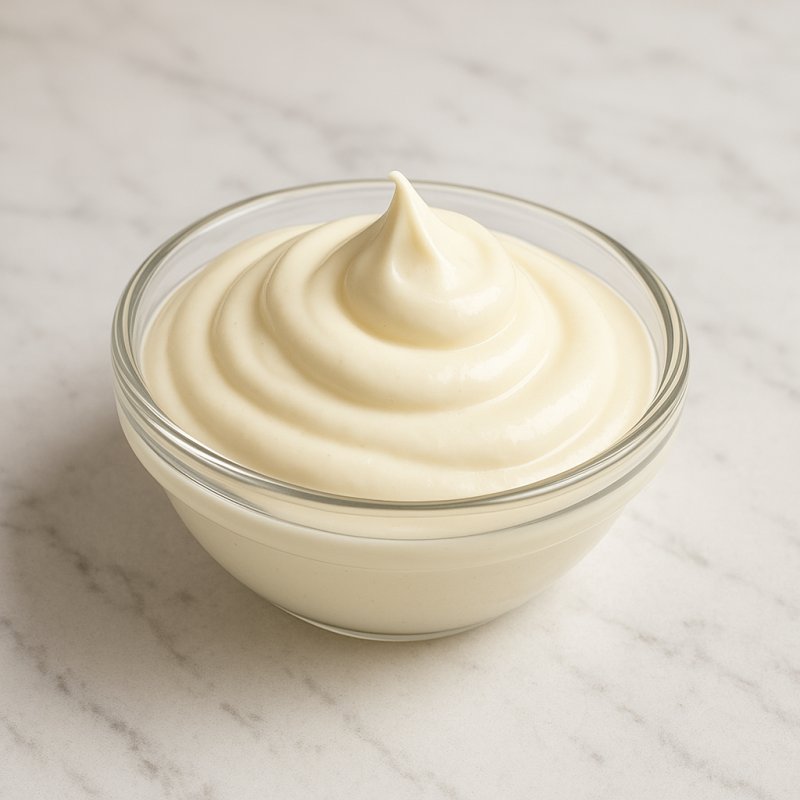
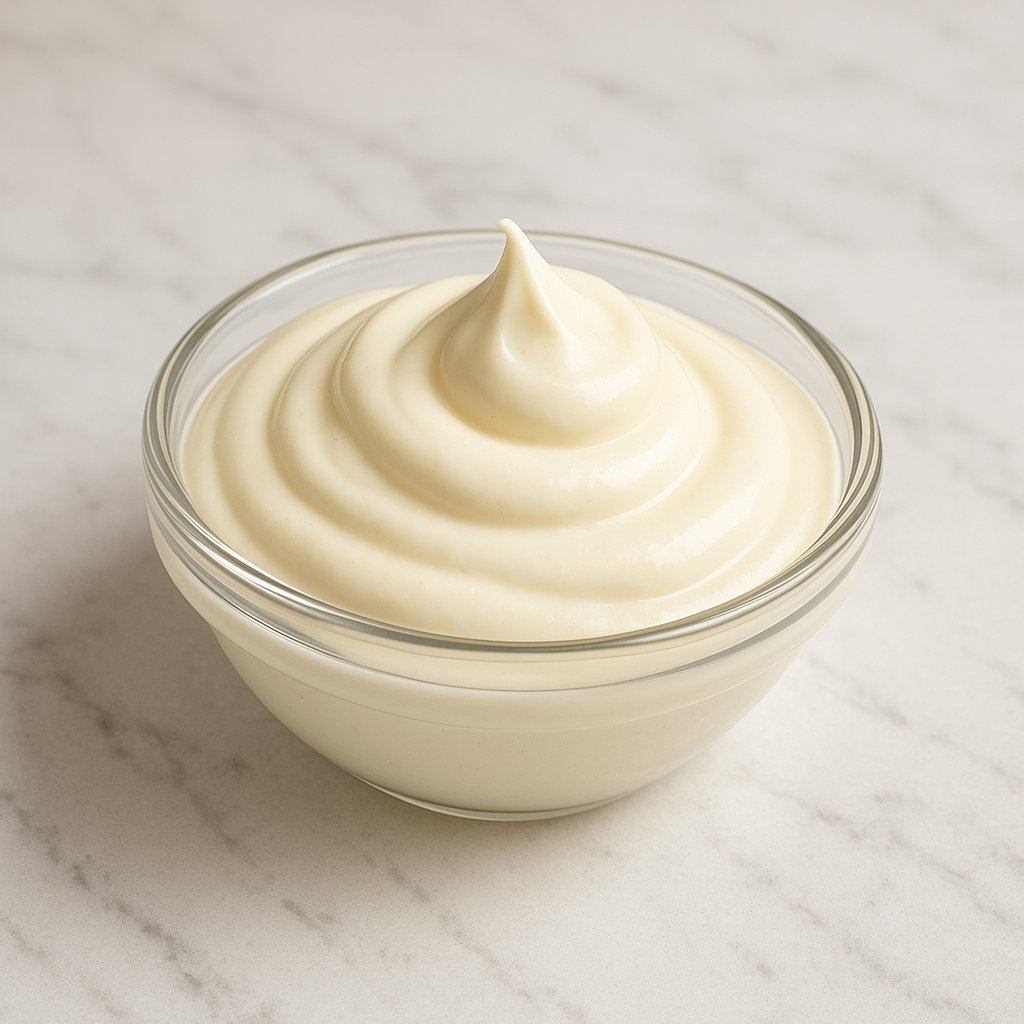
A jar of salad cream with a spoon on a table
I still clearly remember the first drawer in my grandmother's kitchen, where all kinds of bottles with colorful labels jostled. Between mustard and vinegar there often rested an unassuming tube or bottle with the inscription salad cream. For me back then it was a little kitchen magician: quickly stirred, seasoned a bit and the salad was no longer just a side dish, but the centerpiece of the plate.

Salad cream for me is more than a ready-made dressing; it is a handy all-rounder that opens the door to improvised cooking in many households. It combines creaminess and acidity, often with a slight sweetness, thereby providing a versatile base for green salads, potato salads or even as a refreshing sauce for grilled vegetables. A colleague of mine swears by mixing it with a little lemon juice and chopped dill – the result reminds him of warm summer evenings by the river.

The ingredient list usually includes vegetable oil, vinegar, spices, sugar and sometimes egg yolk or starch as a binder. This combination explains why salad cream tastes pleasantly rounded without feeling heavy. I particularly like that it appeals to beginners and professionals alike: those short on time achieve immediate balance with a dollop of salad cream; those who like to experiment refine it with mustard, garlic or herbs for a personal touch.

  • Advantages: Quick, stable, long shelf life.
  • Uses: Salads, dressings, marinades, sandwiches.
  • Tips: Stretch with yogurt, brighten with vinegar or lemon.
As a small kitchen rule I've adopted: less is often more. Using too much can cover other ingredients, but well dosed salad cream becomes the invisible glue that holds flavors together. Sometimes, on a rainy afternoon, I quickly whip up a version with honey, mustard and herbs and serve it with roast potatoes — then I see how familiar flavors find new friends. Salad cream for me is a cosy, reliable companion in the kitchen, allowing both creative experiments and quick, tasty solutions.

Availability & types

Availability and types

Salad cream is a popular seasoning sauce that can be found in many supermarkets and even in small corner shops. It originally comes from Germany and established itself there over decades as an alternative to mayonnaise and classic dressings. Today salad cream is manufactured and sold in many countries because it tastes familiar and is versatile in use.

Where does it come from and where is it produced?
Salad cream was first developed by large food manufacturers in Central Europe. The ingredients are usually basic materials like vegetable oils, vinegar, mustard, sugar and spices. These ingredients are combined in factories to ensure a consistent taste. Because the required ingredients are grown or produced everywhere, factories can make salad cream in many countries: in Germany, other European countries, but also in North America or Asia. Thus it is almost always easy to obtain.

Which growing regions are important?
Salad cream itself does not grow like a vegetable, but the ingredients come from specific regions:

  • Vegetable oil: Sunflower, rapeseed (canola) or soybean oil are often used. Sunflower is widely grown in Europe and North America, rapeseed mainly in Europe and Canada, and soy in North and South America as well as Asia.
  • Vinegar: Vinegar is produced by fermented alcohol derived from fruit or grain. Wine or apple vinegar comes from grape- or apple-growing regions.
  • Mustard: Mustard seeds are grown in many countries, for example in Europe, Canada and India. Mustard often gives salad cream its characteristic flavor.
  • Spices and sugar: These ingredients can come from various regions of the world, depending on the varieties used.
What varieties and versions exist?
Salad cream is not a single type – there are many variants to suit every taste. Some are mild, others more strongly flavored. Here are the most common types, explained simply:

  • The classic salad cream: This tastes slightly sour, a bit sweet and is nicely creamy. You can use it as a sauce over mixed salad or as a dressing.
  • Lower-fat variants: These contain less oil and are lighter. They are a good choice if someone watches calories. Imagine using less butter on bread — the taste is similar but less fatty.
  • With herbs or garlic: These contain small green herbs or garlic. That makes the salad cream spicier, almost like a herbed yogurt.
  • Vegan versions: Some salad creams contain no animal ingredients (such as egg) and are therefore suitable for vegans. These are made with plant-based ingredients, for example soy or special stabilizers.
  • With spice notes (e.g. curry or paprika): These variants have an additional flavor kick, for example slightly spicy or smoky. They are good if you like variety.
  • Homemade salad cream: Many people make their own salad cream at home. Then you can choose the ingredients and exact taste – more mustard, less sugar or extra herbs.
How do I find the right salad cream?
In supermarkets products are often located near mayonnaise, dressings or preserves. Check the label: it will indicate whether it is lower-fat, vegan or herbed. If you're unsure, try small packages or ask in the store for samples. That way you'll quickly find your favorite variety.

Overall salad cream is a very accessible ingredient: it is produced worldwide, the ingredients come from many growing regions, and there are numerous varieties so that there is something for every taste and dietary preference.
Details & nutrition

Property Value
Unit g
Calories per 100 280
Protein per 100 1
Carbohydrates per 100 10
Sugar per 100 6
Fat per 100 26
Saturated fat per 100 3
Monounsaturated fat 16
Polyunsaturated fat 7
Fiber per 100 0
Vitamin C (mg) per 100 0
Vitamin D (IU) per 100 0
Calcium (mg) per 100 15
Iron (mg) per 100 0.1
Nutri-Score D
CO₂ footprint 2.0
Origin Industrial condiment sauce, typically used in Europe
Gluten-free Yes
Lactose-free Yes
Nut-free Yes
Vegan No
Note Nutritional values are average values for commercially available reduced-fat salad cream compared to mayonnaise; exact composition may vary by brand.

Technical & scientific information

Salad cream is a ready-to-use seasoning and emulsion ingredient with a mayonnaise-like base, used in the kitchen mainly for preparing salads, dressings and cold sauces. Traditionally salad cream consists of a mixture of vegetable oils, water, acidulants, emulsifiers, thickeners, salt, sugar and spices; commercial formulations are designed to provide a stable, spreadable texture at room temperature and a long shelf life.

Chemical composition and mode of action
The basis of salad cream is an oil-in-water emulsion. Oils (usually rapeseed/canola, sunflower or soybean oil) provide the lipid phase, while water and aqueous components form the continuous phase. Emulsifiers such as mono- and diglycerides or egg-yolk emulsifiers (in traditional recipes) reduce interfacial tension and stabilize finely dispersed oil droplets. Without emulsifiers oil and water would separate rapidly because of their differing polarity.

Ingredients in detail

  • Oils and fats: Main energy source; influence texture, mouthfeel and smoke point when heated.
  • Water and diluents: Serve as carriers and as solvents for water-soluble additives.
  • Acidulants: Acetic acid or citric acid lower pH, improve taste and microbiological stability.
  • Emulsifiers: Enable homogeneous distribution of the fat phase and prevent phase separation.
  • Stabilizers and thickeners: (e.g. modified starch, guar gum, xanthan) increase viscosity and prevent particle settling.
  • Salt, sugar and spices: Determine the flavor profile and can act as preservation modifiers.
  • Preservatives: Present in some products to prevent spoilage; alternatives include lower pH or pasteurization.
Nutritional profile
Salad cream typically has a high energy content due to its fat content, which depending on the formulation can make up 20–80% of the total mass. Typical nutritional values per 100 g range from about 200–700 kcal, with fat being the largest component. The saturated fat content depends on the oils used; unsaturated fatty acids are typically dominant in vegetable oils. Carbohydrates (including added sugar) and sodium are other nutritionally relevant components.

Manufacturing and processing methods
Industrial production includes several steps: homogenization of phases, emulsification using high-pressure or rotor-stator systems, pasteurization to reduce microbial load, and filling under hygienic conditions. The order of addition (water phase first, then oil droplets under shear) and temperature control are critical for particle size distribution and stability. Stabilizers are often incorporated in dissolved or dispersed form to avoid syneresis (weeping of liquid).

Health considerations
From a nutritional standpoint salad cream can have both positive and negative aspects. Positives include provision of essential fatty acids and fat-soluble vitamins if high-quality vegetable oils are used. Negatives include high energy density and, in some products, high levels of added sugar, salt or saturated fats. People with allergies must watch for declarable ingredients such as eggs or soy. Through appropriate recipe adjustments (reduced fat levels, use of unsaturated oils, omission of certain additives) nutritional properties can be improved.

Sensory properties, use and storage
Sensory-wise salad cream is characterized by a creamy consistency, mild acidity and savoury notes. It is used cold and is not recommended for frying, as high temperatures can change texture and flavor. It should be stored cool and protected from light; opened containers should be consumed promptly to avoid oxidation-related rancidity.

Overall salad cream is a technically sophisticated food whose properties result from the interplay of emulsion physics, chemical additives and nutritional choices. Through variant formulation and technological adjustments, stability, taste and nutritional value can be controlled, making the ingredient flexible for use in both home and industrial kitchens.

Wiki entry for: salad cream
Active now: 15 visitors of which 2 logged-in members in the last 5 minutes