Menu & categories

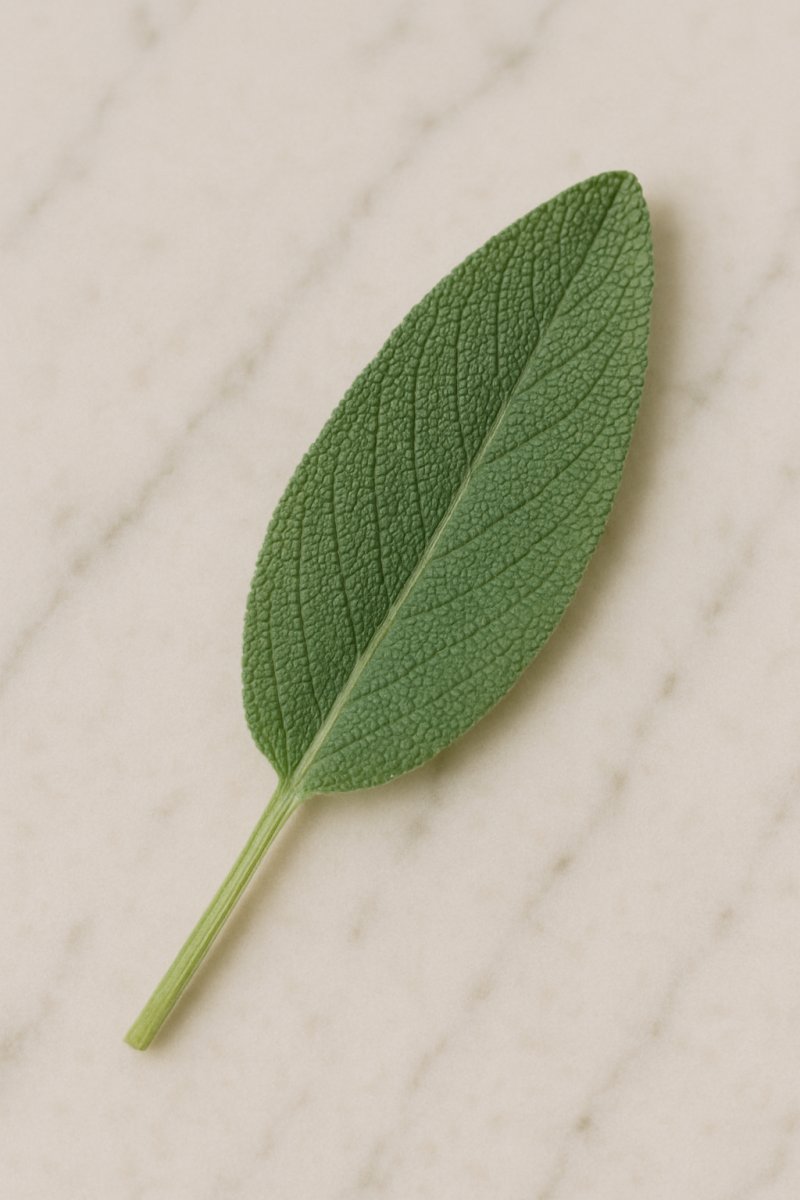
Sage leaf

Aromatic culinary and medicinal herb with an intense flavor

Wiki about sage leaf Nutri-Score A Vegan Yes Gluten-free Yes Lactose-free Yes Nut-free Yes
NUTRITION / 100 g
315 kcal 11 g Protein 60 g Kohlenhydrate 12.8 g Fett

Introduction

Fresh green sage leaves on a wooden board
I love the sage leaf. When I smell it, I am reminded of a rainy afternoon in a small market hall, where an old vendor pressed a bundle into my hand saying: 'This is gold for the kitchen.' Since then I associate that slightly spicy, bitter‑balsamic scent with warmth, memory and the unmistakable crackle that occurs when a leaf fries in hot butter.

The sage leaf is much more than just a garnish herb. It has a long history in kitchens and home remedies, and you can tell from its versatility. I like to use it very simply: a few leaves in melted butter on polenta or on crispy gnocchi — from a few ingredients dishes grow that demand more. A friend once suggested putting sage on caramelized onions; the result was so surprisingly rounded and aromatic that since then I rarely cook onions without a sage leaf.

What makes the sage leaf special is its ability to bind strong flavors without covering them. It pairs wonderfully with fatty meats like lamb or duck, but also with vegetable dishes and cheese. In my pantry I always keep dried leaves, yet freshly picked ones have a greener, livelier note that I prefer in summer recipes.

  • Taste: herbaceous, slightly bitter, with balsamic and mildly peppery notes.
  • Use: roasting, frying, infusions for oil and vinegar, teas.
  • Effect: adds depth, balances fat, provides aromatic and soothing qualities.
A small personal trick: when I fry sage leaves I place them on kitchen paper as soon as they are crisp — they become surprisingly delicate chips that give any plate an elegant finish. I also like how a single leaf in a simple risotto is enough to make the dish a memory anchor. For me the sage leaf is a kitchen companion that does not need to be loud, but with quiet presence carries whole dishes and evokes memories.

Availability & types

Availability and types

The sage leaf comes from the sage plant, an herbaceous plant with soft, slightly hairy leaves. Sage originally comes from the Mediterranean region, so from countries like Italy, Greece and Spain. It grows well there because it is warm and sunny. Today sage is grown in many parts of the world where the climate is not too cold or too wet. This makes the plant very popular and the leaves are often readily available.

If you want to buy sage leaves, you will find them in different forms and types. Here are the main varieties, simply explained:

  • Fresh sage leaves: these leaves look as if they were just picked from the plant. They are soft and have a strong aroma. You usually find fresh leaves in produce sections, at farmers' markets or in your own garden. Fresh leaves are ideal if you plan to use them right away, for example for frying or in sauces.
  • Dried sage leaves: these leaves have been gently dried to make them last longer. Dried sage is practical because you can store it for a long time. It is not as bright green as fresh sage, but the aroma is preserved. Dried sage is usually sold in small jars or packets.
  • Chopped or ground sage: sometimes sage is finely chopped or turned into a powder. This is convenient when you only need a little or when you want to mix it into doughs or spice blends. Powder dissolves more quickly in foods than whole leaves.
  • Sage as a potted plant: many people grow sage on the windowsill or in the garden. This is a great way to always have fresh leaves on hand. A potted plant needs only some sun, little water and occasional fertilizer.
Besides these supply forms there are also different cultivars of sage. The best known are:

  • Common sage (Salvia officinalis): this is the classic variety most commonly seen and used. It has larger, slightly rough leaves and a strong flavor.
  • Shrub sage: this type often blooms with attractive flowers and is grown as an ornamental plant in gardens. The leaves are sometimes a bit milder in flavor.
  • Varieties with silvery leaves: some sage species have particularly pale or silvery‑shining leaves. They are decorative and often have a somewhat different aroma – sometimes milder, sometimes more intense.
  • Varieties with distinctive scents: there are also cultivars bred to smell differently, for example with a hint of citrus or peppermint. These suit special dishes or beverages well.
Availability often depends on the season: fresh sage is easiest to find in spring and summer when the plants are growing vigorously. Dried sage is available year‑round. If you want to be sure to get good quality, look for fresh green leaves or for gently dried leaves that have not been exposed to excessive heat. In supermarkets, markets, health food shops and garden centers you will normally find all the variants mentioned.

In summary: sage leaves originate from the Mediterranean but are now available worldwide. They come fresh, dried, ground and as potted plants, and in various cultivars with different aromas. This way you can choose the appropriate form according to your needs and taste.
Details & nutrition

Property Value
Unit g
Average weight per piece 1
Calories per 100 315
Protein per 100 11
Carbohydrates per 100 60
Sugar per 100 1.7
Fat per 100 12.8
Saturated fat per 100 7
Monounsaturated fat 1.9
Polyunsaturated fat 1.8
Fiber per 100 40
Vitamin C (mg) per 100 32
Vitamin D (IU) per 100 0
Calcium (mg) per 100 1650
Iron (mg) per 100 28
Nutri-Score A
CO₂ footprint 1.2
Origin Mediterranean region and Europe; cultivated worldwide in temperate climates
Gluten-free Yes
Lactose-free Yes
Nut-free Yes
Vegan Yes
Note Nutritional values refer to dried sage leaves; fresh leaves contain significantly less energy per 100 g due to their higher water content.

Technical & scientific information

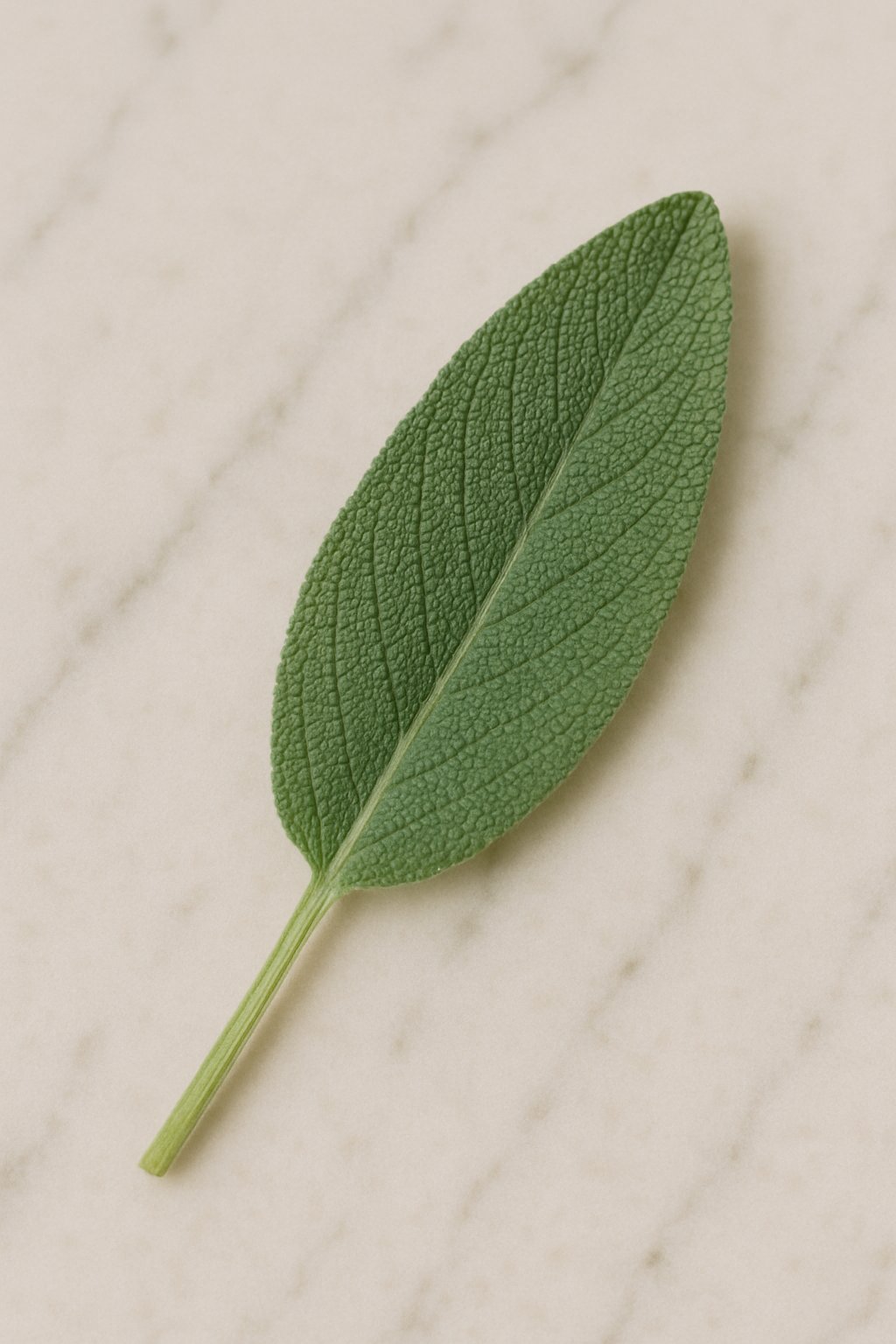
Sage leaf refers to the leaf structure of various species in the genus Salvia, with Salvia officinalis (common sage) being the most used in cooking and traditional medicine. Botanically they are narrow, lanceolate to elliptic leaves with a velvety surface, used as an aromatic botanical drug. External morphology affects harvest and processing: younger leaves are tender and milder in aroma, while older leaves often develop more concentrated essential oils and a slightly bitter‑spicy note.

Chemical composition and constituents: the characteristic effects and flavor of sage leaves are based on a complex mixture of secondary plant metabolites. Main components are essential oils (typically 0.5–3.5 % of fresh weight), whose dominant terpenic and phenylpropanoid constituents include thujone, 1,8‑cineole, camphor, caryophyllene and linalool. In addition, noteworthy amounts of the following are present:

  • Flavonoids (e.g. luteolin, apigenin): contribute to antioxidant properties.
  • Diterpenes (e.g. carnosic acid, carnosol): show antimicrobial and anti‑inflammatory activities in studies.
  • Phenolic acids (e.g. rosmarinic acid): act as radical scavengers and can contribute to extract stability.
  • Tannins and resins: influence astringency and shelf life.
  • Minerals and small amounts of vitamins, particularly vitamin K and B‑group vitamins.
Nutritional values: fresh sage leaves provide few calories per 100 g and consist mainly of water, fiber and small amounts of protein and fat. Because only small amounts are consumed, sage is mainly relevant as a flavoring agent rather than a significant nutrient source. Dried leaves concentrate the constituents, however they also increase the relative intake of compounds such as thujone.

Processing methods: sage is used fresh, dried or as an extract. Common procedures include:

  • Drying: air‑drying at moderate temperatures preserves aromas better than high heat; industrial drying often takes place in ovens with controlled air circulation.
  • Distillation: steam distillation isolates the essential oil; yield depends on harvest time and plant material.
  • Extraction: alcoholic, aqueous or CO2 extracts concentrate particular fractions such as phenols or diterpenes for medicinal preparations.
  • Heat application in cooking: blanching or brief frying softens bitter components and alters aroma through thermal transformation of volatile compounds.
Health aspects and safety: traditionally sage has been used for inflammations of the mouth and throat, mild digestive complaints and excessive sweating. Experimental studies support antimicrobial, antioxidant and partially anti‑inflammatory effects of certain extracts. Pharmacological activity is particularly attributed to carnosol/carnosic acid and other phenols. However, sage contains thujone, a neuroactive monoterpene that can be toxic at high doses. For this reason authorities advise moderation and caution with prolonged internal use of highly concentrated sage preparations, especially during pregnancy, breastfeeding, in children and in people with epilepsy or liver disease.

Quality factors and storage: fresh leaves should be stored cool and airy; dried leaves lose aroma when exposed to light and moisture, so opaque, dry containers are recommended. Content analyses (e.g. GC‑MS for essential oils, HPLC for phenols) are used for quality control and can provide information on origin, harvest time and processing.

In summary, the sage leaf is a versatile plant part with a complex chemical composition, used in cooking, traditional medicine and cosmetics. Its biologically active constituents give it medicinal potential, while certain components such as thujone require appropriate use and awareness of dosage.

Wiki entry for: sage leaf
Active now: 38 visitors of which 2 logged-in members in the last 5 minutes