Menu & categories

Rye flour Type 815

Medium rye flour for hearty breads and mixed doughs

Wiki about rye flour type 815 Nutri-Score A Vegan Yes Gluten-free No Lactose-free Yes Nut-free Yes
NUTRITION / 100 g
322 kcal 7.5 g Protein 68.0 g Kohlenhydrate 1.7 g Fett

Introduction

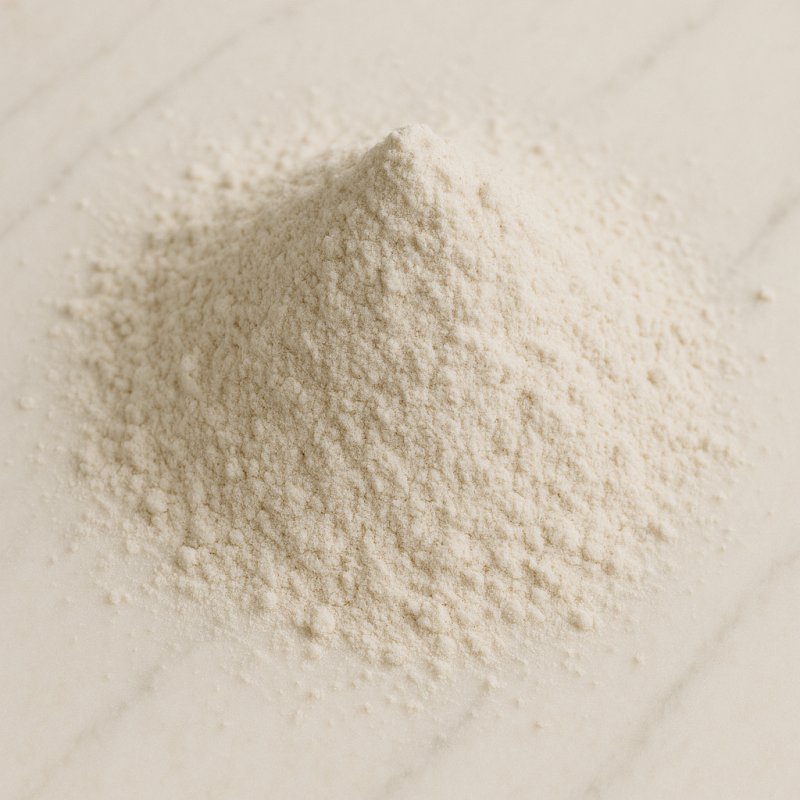
Rye flour Type 815 in a bowl with a wooden spoon
I still remember exactly the first scent of freshly baked rye bread that drew me through an open window into a small bakery on a rainy afternoon. Since then Rye flour Type 815 has held a permanent place in my kitchen – not only for its distinctive flavor but also for its versatility and solid baking properties.

Rye flour Type 815 sits stylistically for me between whole grain and light flours: it contains enough bran to provide depth and aroma, yet it remains fine enough to work smoothly in blends. I like to use it in combination with wheat flour for rustic breads, dark rolls, or savory focaccia variations. A colleague of mine swears that a small share of rye in pizza dough makes the crust feel more 'earthier' — and at our spontaneous test evening real magic did happen.

What technically distinguishes rye flour is its content of pentosans instead of gluten-forming proteins, so the dough behaves differently than wheat. That means: less elastic gluten development, higher moisture retention and a denser, more aromatic crumb. Therefore patience and the right hydration are important factors when baking with Type 815. I have learned that longer autolyse periods or sourdough methods often offer the best reward.

Practical tips I no longer want to miss in my kitchen:

  • Recipe adjustment: rye can replace wheat by 10–30%, depending on the desired flavor and texture.
  • Moisture: doughs with rye often require a little more water; a sticky consistency is normal.
  • Sourdough: for full aromatics and better shelf life, sourdough is the dream combination.
Sensorially Type 815 offers a warm, malty note with slightly nutty and sometimes tangy nuances – perfect with strong toppings like pâté, aged cheese, or smoked fish. I remember how a simple evening meal with rye rolls and goat cheese turned an ordinary meal into a small celebration.

If you are new to baking with rye, be experimental and don't be discouraged by initially somewhat denser results. With time, a few trials and a pinch of curiosity, Type 815 becomes a reliable, aromatic tool that strengthens traditional recipes and enriches modern baking ideas.

Availability & types

Availability and types of Rye flour Type 815

Rye flour Type 815 is a variety of rye flour found in many bakeries and supermarkets. But where does this flour actually come from and what variants exist? I'll explain it as simply as possible so that even a 12-year-old can easily understand.

Origin and growing regions
Rye is a cereal crop that grows especially well in cooler, more northern regions. Rye fields are commonly found in countries such as Germany, Poland, Russia and the Scandinavian countries. These regions often have long, cool winters and not-so-hot summers — conditions rye prefers. Compared with wheat, rye is more robust: it copes better with poor soils and windy weather. That's why many farmers grow rye where the climate or soil make other crops more difficult.

How does the flour get to the shop?
Flour is made from rye kernels. The kernels are cleaned, cracked and milled. Type 815 refers to a certain fineness and composition of the flour: it is not as fine as light wheat flour but lighter than a very dark wholemeal flour. You can imagine it like sanding wood — the finer the sanding, the softer the result. Rye flour Type 815 still contains some of the hull and germ of the kernel, which is why it tastes stronger and has more color than very light flour.

Available kinds and variants
There are different variants of rye flour, and Type 815 is just one of them. Here are the main variants, explained simply:

  • Type 815: This is the variety discussed here. It is medium-light, has a bit more fiber and flavor than very light flour. Many bakers use it for mixed breads or breads with a typical 'rye' aroma.
  • Whole-grain rye flour: This flour contains the whole kernel. It is darker, coarser and high in fiber. Whole-grain flour is like a sandwich with crust and filling — nothing has been removed.
  • Rye flour Type 997 or 1150: These numbers indicate how much minerals are in the flour; the higher the number, the darker and stronger the flour. Type 997 is a bit darker than 815, and 1150 is even darker. It's similar to different shades of a color.
  • Cracked rye / rye grits: These are coarse pieces of the kernel, not finely milled. You can add them to bread to make it crunchy and nutty, like adding nuts to a cake.
Where can you buy Rye flour Type 815?
Rye flour Type 815 is available in supermarkets, organic stores, health food stores and at the baker. It is often on the shelf with other flours or in a section for bread-baking ingredients. If you want to buy regional products, you can also find it at local mills or farmers' markets. In many countries rye flour is especially common in regions where rye has traditionally been grown — there it is often cheaper and fresher.

Short comparison to orient
Imagine flour types like colors: Type 815 is a middle shade between very light (like Type 405 for wheat) and very dark (like wholemeal). It is versatile — not too fine and not too coarse — and works well when you want a bread with rye flavor but not too heavy a bite.

In summary: Rye flour Type 815 comes from rye kernels grown mainly in cooler regions. It is available in many variants, from lighter to very dark types, and you can easily find it in stores or at regional mills. It is a good choice if you want to bake breads with an authentic rye aroma.
Details & nutrition

Property Value
Unit g
Calories per 100 322
Protein per 100 7.5
Carbohydrates per 100 68.0
Sugar per 100 1.0
Fat per 100 1.7
Saturated fat per 100 0.3
Monounsaturated fat 0.2
Polyunsaturated fat 1.0
Fiber per 100 8.0
Vitamin C (mg) per 100 0
Vitamin D (IU) per 100 0
Calcium (mg) per 100 25
Iron (mg) per 100 2.5
Nutri-Score A
CO₂ footprint 0.6
Origin Europe
Gluten-free No
Lactose-free Yes
Nut-free Yes
Vegan Yes
Note Nutritional values may vary slightly depending on the mill and brand; information refers to unprocessed rye flour Type 815.

Technical & scientific information

Rye flour Type 815 is a milling grade common in Central Europe for rye (Secale cereale), characterized by a medium mineral content and a balanced mixture of bran fragments and starchy endosperm. The type number 815 refers to the residual ash in milligrams per 100 g of flour and corresponds to a moderately milled product that contains higher proportions of fiber, protein and micronutrients compared with white flours.

Chemical composition and constituents
Rye flour Type 815 consists predominantly of carbohydrates (starch); relevant amounts of protein, fiber and lipids are also present. Typical average values per 100 g flour are about 60–70 g carbohydrates, 8–11 g protein, 2–3 g fat and 5–8 g fiber, although exact values can vary with cultivation, variety and milling process. Mineral content (ash) is around 0.8–0.9 g/100 g, with potassium, magnesium, phosphorus and traces of iron and zinc being the main elements. Rye also contains various B vitamins (notably thiamine, niacin and riboflavin) and small amounts of vitamin E.

Structure and functional properties
Unlike wheat flour, rye flour does not form an elastic gluten network, since rye proteins (especially secalin) exhibit different viscoelastic properties. Rye doughs typically show higher water absorption, a stickier dough structure and lower gas retention capacity. Pentosans, water-binding non-starch polysaccharides, have a decisive influence on baking behavior: they are responsible for viscosity and moisture retention and significantly affect the volume and crumb of rye bread. Enzymatic activity, particularly from amylases, is often higher in rye flour than in wheat flours and influences starch conversion during the baking process.

Processing methods
Rye flour Type 815 is produced by roller or stone milling, with targeted sieving and separation techniques to regulate the proportion of bran fragments and germ. For baking, classical techniques such as sourdough fermentation are preferred, because lactic acid bacterial fermentation improves dough stability, regulates enzymes and positively affects flavor and shelf life. With higher amylase values, a longer acidification is often necessary to prevent excessive starch gelatinization and a sticky crumb. To optimize performance, improvers or specific baking aids are sometimes used to control consistency and fermentation behavior.

Nutritional value and health aspects
Rye flour provides complex carbohydrates as well as soluble and insoluble fibers, which can have beneficial effects on gut health, glycemic response and satiety. The arabinoxylans and beta-glucans in rye contribute to intestinal viscosity and the fermentative activity of the gut microbiota. For people with celiac disease or gluten intolerance, rye is not suitable due to its gluten content. People with wheat sensitivity may also experience reactions, since some proteins can be immunogenic. Rye products often show a lower glycemic index than comparable wheat products, which can be advantageous for blood sugar regulation.

Applications and sensory characteristics
Rye flour Type 815 is versatile for mixed breads, whole-grain rye breads with moderate fineness, traditional sourdough loaves and baked goods where a strong aroma and a dense, moist crumb are desired. Sensorially, rye is characterized by slightly tangy, malty and nutty flavors. The crust can become dark and intensely flavored, the crumb from fine- to medium-porous, and it stays moist longer due to the water-retaining components.

Storage and quality criteria
Cool, dry and light-protected conditions are advantageous for storing rye flour to minimize rancidity from lipid oxidation and enzymatic activity. Freshness, uniform milling results and a defined ash content are quality indicators; also relevant are smell (neutral to slightly nutty), correct storage conditions (pest-free) and homogeneous particle size for reproducible baking results.

Rye flour Type 815 thus offers a balanced ratio between nutrient density and baking properties, which particularly in traditional sourdough processes reveals its advantages and provides specific nutritional and technological benefits over more highly refined white flours.

Wiki entry for: rye flour type 815
Active now: 11 visitors of which 2 logged-in members in the last 5 minutes