Menu & categories

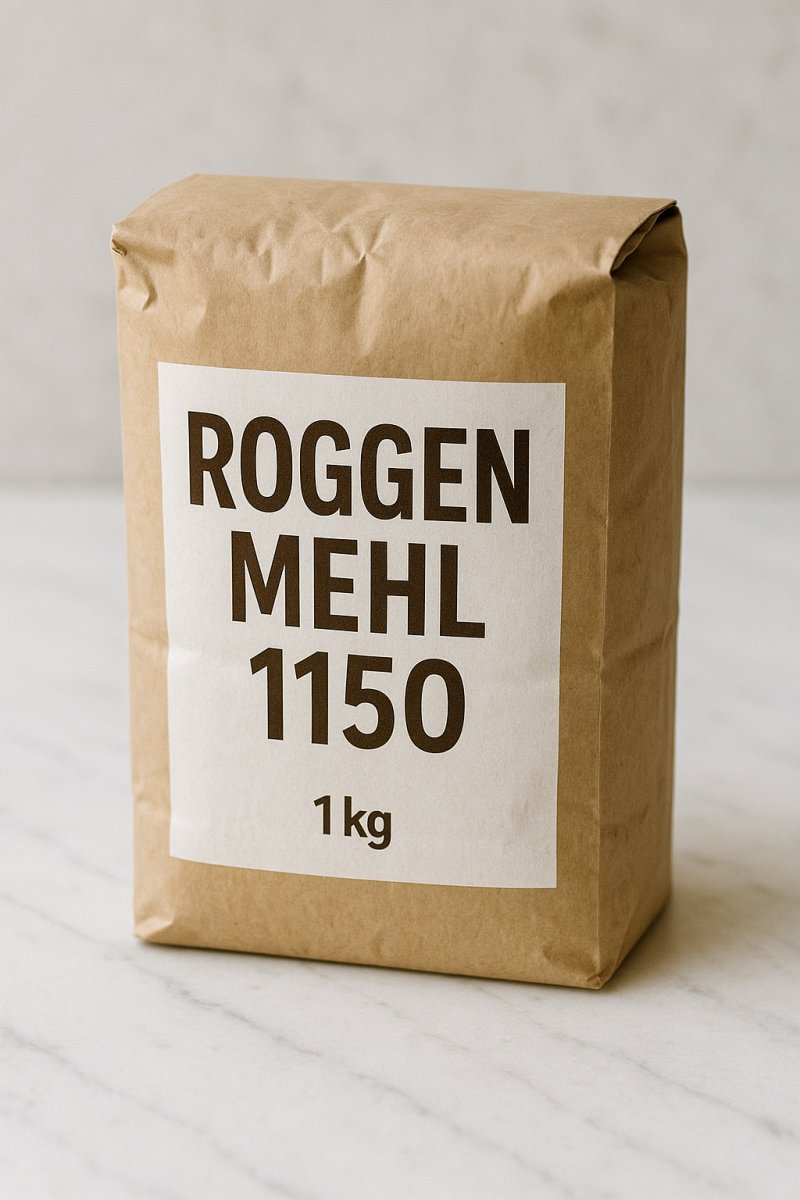
Rye flour Type 1150

Medium rye flour with a balanced mineral content for bread and rolls

Wiki about rye flour 1150 Nutri-Score B Vegan Yes Gluten-free No Lactose-free Yes Nut-free Yes
NUTRITION / 100 g
321 kcal 8.5 g Protein 69 g Kohlenhydrate 1.7 g Fett

Introduction

Rye flour Type 1150 in a bowl with some flour on the work surface
I still remember my first attempt to bake with rye flour 1150 very well: the kitchen was warm from the oven, an old, slightly dusty recipe sheet lay on the table, and I had the desperate hope that from this dark, quite strong flour a bread with soul would emerge. Rye flour 1150 is for me like a good novel – not simple, but rewarding. It sits between light and dark rye flours and brings exactly that balance of flavor and structure that makes breads wonderfully hearty and still easy to shape.

What I particularly value about this flour is its versatility. It is suitable not only for traditional sourdough breads, but also gives savory cakes, dark rolls and rustic pizza bases a deep note. A colleague once brought a rye roll that smelled so intensely I thought I could smell the whole bakery – that was 1150, baked with a pinch of malt and a pinch of patience.

For success there are a few things I always pay attention to in my kitchen:

  • Hydration: Rye absorbs water differently than wheat, often needing a bit more liquid.
  • Dough resting: Longer rest and sourdough times promote aroma and crumb development.
  • Blends: 1150 combined with wheat flour provides better elasticity and even more interesting flavors.
When baking with rye flour 1150 I keep learning to be patient. I once tried to rush a rye loaf – the result was dry and compact. Since then I give myself more time, stir the dough lovingly and watch the process as it matures, almost as if watching a small treasure ripen.

In the kitchen rye flour 1150 is for me a reliable friend: down-to-earth, flavorful and full of character. It demands respect and attention, but rewards with deep, malty aromas and a sturdy structure that makes every bite exciting. If I may give a recommendation: try it in a simple sourdough loaf and let the aroma do its work – that is pure baking magic.

Availability & types

Availability and types

Rye flour 1150 is easy to find in many bakeries, supermarkets and health food stores. The number “1150” describes how much mineral content is in the flour – the higher the number, the more bran parts of the grain remain. You can imagine it like different types of apple juice: clear juice is fine and light, direct-pressed juice has more fruit content and tastes stronger. Rye flour 1150 lies somewhere in between: it is noticeably darker and more flavorful than very light flour, but not as coarse as wholegrain.

Origin and growing regions
Rye grows best in cooler regions with less fertile soils, which is why it is particularly popular in Northern Europe. Well-known growing areas include:

  • Central Europe, especially Germany and Poland – where a lot of rye bread is eaten.
  • Scandinavia (Sweden, Denmark) – cold and windy, good for rye.
  • Parts of North America and Russia – there are also large rye-growing areas there.
Rye is hardy: it can thrive on soils where wheat performs less well. That makes it attractive for farmers in cooler or sandy regions. The grains are milled after harvest, producing, for example, rye flour 1150.

Available types and variants
Even though the number “1150” sounds precise, there are different variants and similar products. Here are the main ones so you can understand the difference well:

  • Rye flour 1150 (Type 1150): the typical flour with this designation. It still contains many minerals and fibers. It is ideal for robust rye breads and mixed breads.
  • Wholegrain rye: this flour contains the whole grain, so even more fiber and nutrients than 1150. It is darker and has a very hearty taste.
  • Rye flour 997 or 815: these types are lighter than 1150. They are suitable if you want a slightly lighter rye bread or light breads with a rye portion.
  • Coarse meal and cracked rye: these are coarsely ground grains. They are often mixed into flour or added to bread to obtain a coarse, nutty texture.
  • Organic rye flour: rye grown without chemical pesticides or fertilizers. For people who value ecological farming.
In many shops you will find rye flour 1150 in packages of different sizes – from small 500 g packs for home use to large 2–5 kg bags for frequent bakers. Some bakeries and mills also offer freshly milled rye flour, which can be more aromatic because it has been stored for less time.

For children as an image: imagine rye flour 1150 is like a homemade hot cocoa that is not as fine as instant powder, but not as coarse as chocolate shavings – it has exactly the right mix of flavor and body. This middle form makes it versatile in the kitchen and explains why rye flour 1150 is used in many breads and recipes.

In summary: rye flour 1150 is readily available, often comes from cooler regions of Europe, and there are different variants – from lighter types to robust wholegrain or organic rye. This way everyone can choose the right type for their bread or baked goods.

Details & nutrition

Property Value
Unit g
Calories per 100 321
Protein per 100 8.5
Carbohydrates per 100 69
Sugar per 100 1.1
Fat per 100 1.7
Saturated fat per 100 0.2
Monounsaturated fat 0.2
Polyunsaturated fat 1.0
Fiber per 100 8.0
Vitamin C (mg) per 100 0
Vitamin D (IU) per 100 0
Calcium (mg) per 100 25
Iron (mg) per 100 2.6
Nutri-Score B
CO₂ footprint 0.55
Origin Europe
Gluten-free No
Lactose-free Yes
Nut-free Yes
Vegan Yes
Note Rye flour Type 1150 is a medium-extraction flour with a higher mineral content than light rye flour and is preferred for mixed breads and rye breads.

Technical & scientific information

Rye flour 1150 denotes a medium-dark rye flour classified according to the German flour type system and positioned between wholegrain flour and lighter types such as rye flour 815. The number 1150 stands for the mineral content in milligrams per 100 grams of flour in terms of the type number, which indicates a relatively high share of bran and germ material. As a result, rye flour 1150 has a darker color, a more pronounced aroma and different baking properties than light rye flours or wheat flours.

Chemical composition and constituents
Rye flour 1150 consists mainly of carbohydrates in the form of starch, but also contains significant amounts of fiber, protein, lipids, vitamins and minerals. Typical components are:

  • Starch: main component, but compared with wheat it tends to show stronger water binding and different gelling characteristics.
  • Dietary fiber: arabinoxylans and other non-starch polysaccharides are particularly abundant in rye and affect texture, moisture retention and digestive behavior.
  • Proteins: rye proteins differ in amino acid composition and solubility from wheat proteins. Rye has lower gluten quality; the gluten protein is less elastic, which is why typical sourdough techniques are required.
  • Lipids: present in small amounts; they are mainly located in the germ and outer layers and contribute to aroma and shelf life.
  • Minerals and vitamins: due to the type number 1150, higher amounts of potassium, magnesium, phosphorus and iron as well as B vitamins (e.g. niacin, thiamine) are to be expected than in lighter flours.
Nutritional values (approx.)
Nutritional values may vary by producer. Typical per 100 g of flour are about 330–360 kcal, 8–10 g protein, 1.5–2.5 g fat, 60–70 g carbohydrates and 8–12 g fiber. The higher fiber and mineral content distinguishes rye flour 1150 from lighter types and affects satiety and glycemic response.

Processing methods and baking-specific characteristics
Because of the lower gluten content rye flour 1150 is particularly suitable for sourdough breads and mixed breads with a wheat proportion. Sourdough supports dough stability, promotes flavor development and improves shelf life. Important processing aspects are:

  • Moisture content: rye dough requires more water than wheat dough, because arabinoxylans and other polysaccharides bind a lot of water.
  • Acidification: lactic and acetic acid formation in the sourdough stabilizes enzymes and inhibitors and reduces gluten properties in a controlled way.
  • Dough handling: longer resting times and controlled temperature are often required to achieve optimal gas retention and crust formation.
Enzymatic and chemical processes
Rye flour contains active enzymes, particularly amylases, which split starch into malt sugar. With inappropriate processing this can lead to excessive liquefaction of the dough. Sourdough can regulate enzyme activity because a lower pH inhibits certain enzymes. Fermentation also affects phytic acid content via phytases, making minerals more bioavailable.

Health aspects
Rye flour 1150 offers nutritional advantages over highly refined flours due to its higher fiber and mineral content. Fibers such as soluble arabinoxylans can promote gut health, support early satiety and moderate the postprandial blood sugar response. People with celiac disease or pronounced wheat allergy must avoid rye, as rye gluten (secalin) can also be immunologically relevant. For most people, however, rye flour 1150 is a valuable ingredient in a balanced diet.

Storage and quality
The oils contained in the germ and outer layers make rye flour more susceptible to oxidation and rancid odors than highly refined light flours. Kept dry, cool and airtight, it remains usable for several months; cooler storage extends freshness. Sensory signs such as musty odor, discoloration or pest infestation indicate quality deterioration.

In summary, rye flour 1150 is a nutrient-rich, versatile raw material with characteristic chemical and baking properties. It is particularly suitable for sourdough and mixed breads, provides good fiber and mineral levels and requires adapted processing due to enzymatic activity and lower gluten content. Choosing this flour influences the flavor, texture, shelf life and nutritional effect of baked goods.

Wiki entry for: rye flour 1150
Active now: 20 visitors of which 2 logged-in members in the last 5 minutes