Menu & categories

Roast chicken

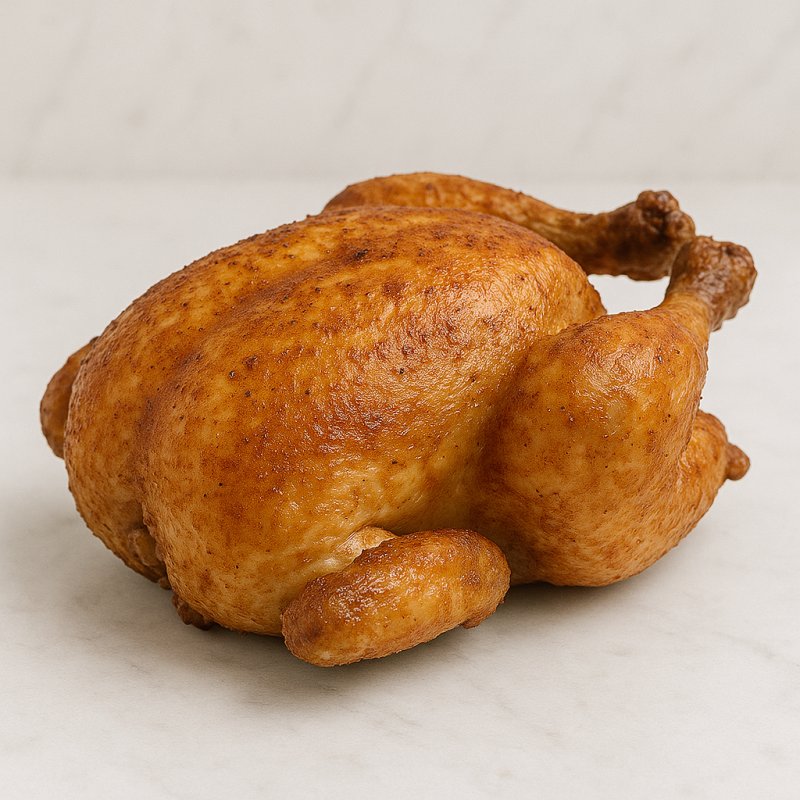
Crisp roasted chicken with high protein content

Wiki about roast chicken Nutri-Score C Vegan No Gluten-free Yes Lactose-free Yes Nut-free Yes
NUTRITION / 100 g
215 kcal 27 g Protein 0 g Kohlenhydrate 11 g Fett

Introduction

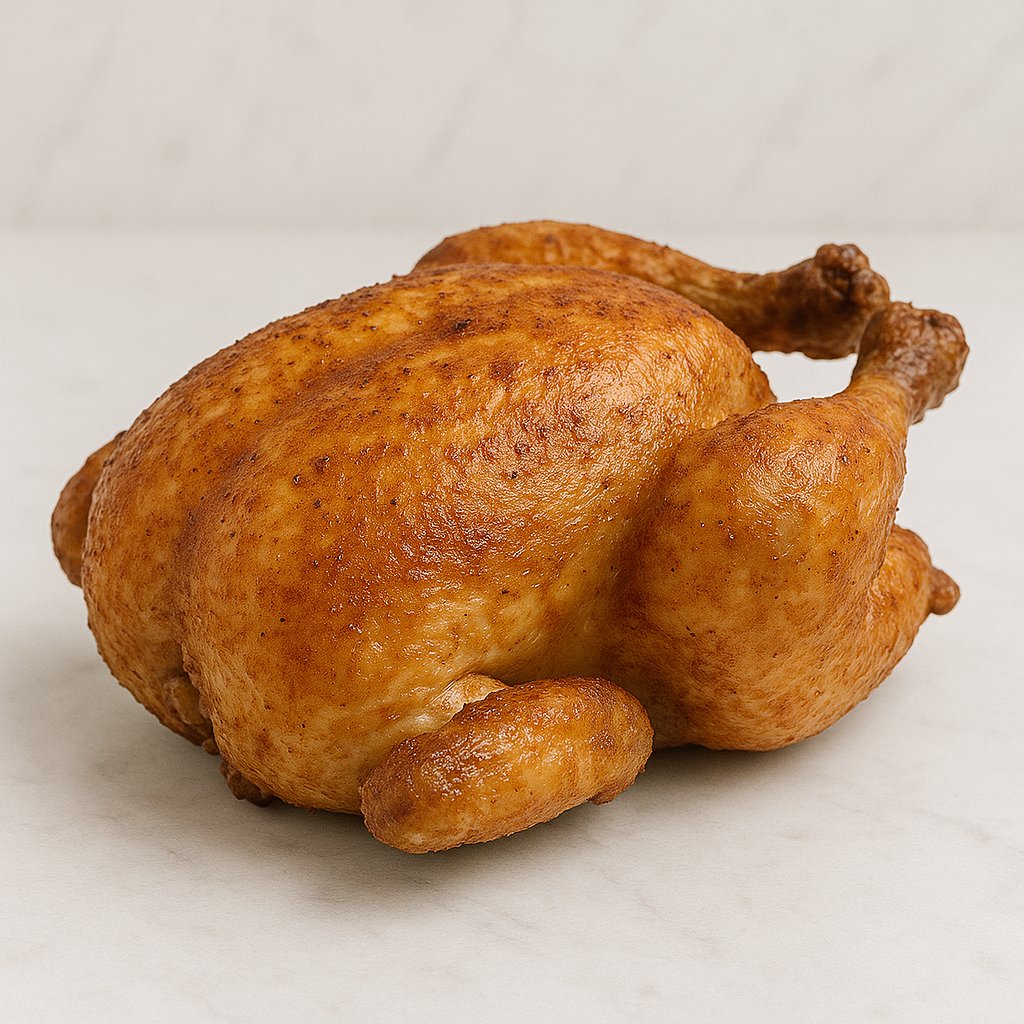
Crisp roasted chicken on a plate
I still remember the first time the smell of roast chicken spread through the house: crispy skin, savory roasted notes and a warm, comforting aroma that immediately drew everyone to the kitchen. For me roast chicken is more than just a dish; it's a feeling of home, an unfussy feast and an invitation to make something great with few ingredients. It's the recipe I turn to when guests stay unexpectedly, the Sunday roast that cooks worries away, and the small culinary triumph that always succeeds.

What I especially love about roast chicken is its versatility. You don't need much: a good-quality chicken, salt, pepper and a splash of oil. Yet in this simplicity lies the craft. A colleague swears by a mix of smoked paprika and lemon zest, another friend brushes the chicken with honey and soy sauce. Both work — and show how easily regional flavors or personal preferences can be incorporated.

The preparation has almost meditative qualities for me. Rubbing in the spices, filling the roasting pan with onions and herbs, occasionally basting the bird — such rituals build anticipation. And then the crackling of the skin in the hot oven: a promise the chicken never fails to keep. When the skin is golden brown and the juices run clear, I know the reward is near.

Here are some practical tips I like to share:

  • Pat the chicken dry before roasting so the skin becomes crispy.
  • Cook slowly at moderate heat so the meat stays juicy.
  • Leftovers are great for salads, sandwiches or a hearty soup.
At the end of the day, roast chicken is a bit of everyday luxury for me: down-to-earth, reliable and still open to experimentation. It brings people together around a table, evokes memories and gives small everyday pauses under a crispy skin. So if I had to choose one dish that allows both comfort and creativity, it's this simple, wonderful roast chicken.

Availability & types

Availability and types of roast chicken

A roast chicken is a whole chicken particularly suitable for roasting. You can find it almost everywhere: in supermarkets, at the butcher, at the weekly market or directly from a farm. Sometimes the packaging also states "roast chicken" or "roasting chicken" to indicate that the bird has a good size and fat distribution for roasting. This makes it easy to get golden skin and juicy meat at home in the oven.

Origin
Chickens are raised in many countries, so a roast chicken may come from nearby or from further away. In Europe and North America there are many farms that breed chickens. If a place is printed on the packaging, it helps to know where the chicken comes from. Sometimes it is labeled "regional", which means the chicken was raised locally — often better for the environment because transport distances are shorter.

Housing and rearing systems
Chickens do not need land like plants, but we still speak of “rearing systems” rather than cultivation areas. Here is a simple overview:

  • Conventional housing: Many animals are kept in barns. This is often cheaper.
  • Free-range: Chickens are allowed outside during the day. They have more movement and can peck and scratch; this is more natural for them.
  • Organic rearing: Stricter rules apply here: more space, organic feed without certain additives and outdoor access. Organic chickens are often regarded as higher quality.
  • Local farms: Small farms sometimes offer roast chickens — the animals grow more slowly and often have more space.
Available varieties and options
There are different kinds of roast chicken you can buy. It's a bit like ice cream: vanilla and chocolate are both ice cream, but they differ in taste and production. With chickens the differences matter for flavor, size and price:

  • Standard roast chicken: The most common variant, usually inexpensive and available in many sizes.
  • Bresse, poulet or special breeds: Some chickens come from specific regions and breeds known for particularly flavorful meat. They are often more expensive.
  • Young chicken / soup hen: A young roast chicken is more tender and well suited for roasting. A soup hen is often older with firmer meat, better for soups.
  • Seasoned or marinated packaged chickens: Supermarkets also offer pre-seasoned roast chickens. They save time, but you should read the ingredient list if you want to avoid certain items.
  • Ready-to-eat: Many butchers or supermarkets sell already roasted chickens that you can simply take away and eat warm.
Tips for recognizing good quality
When choosing a roast chicken, look for:

  • a fresh appearance without unpleasant odor,
  • skin that is firm, not too soft,
  • packaging information about rearing method (e.g. "free-range" or "organic") and origin.
In summary: roast chickens are easy to obtain and come in many variants — from inexpensive standard birds to more costly organic or regional chickens. Which type is best depends on how much you want to spend, how important animal husbandry is to you and which flavor you prefer. That way you can always find a roast chicken that fits your meal.
Details & nutrition

Property Value
Unit g
Average weight per piece 1100
Calories per 100 215
Protein per 100 27
Carbohydrates per 100 0
Sugar per 100 0
Fat per 100 11
Saturated fat per 100 3
Monounsaturated fat 4.5
Polyunsaturated fat 2.5
Fiber per 100 0
Vitamin C (mg) per 100 0
Vitamin D (IU) per 100 15
Calcium (mg) per 100 15
Iron (mg) per 100 1.3
Nutri-Score C
CO₂ footprint 5.5
Origin Varies depending on the producing farm
Gluten-free Yes
Lactose-free Yes
Nut-free Yes
Vegan No
Note Nutritional values refer to cooked, seasoned roast chicken without breading and without skin attached to the bone; actual values may vary depending on preparation and spice blend.

Technical & scientific information

Roast chicken refers in culinary terms to a whole chicken or chicken pieces that have been roasted whole or are intended for roasting. As an ingredient, roast chicken is both a prepared meat product and a term for the usable meat of the domestic chicken (Gallus gallus domesticus) that has been cooked by heat treatment. Key features include the combination of white breast meat and darker thigh meat, a variable fat content, crispy skin with appropriate preparation and a characteristic aroma profile produced by Maillard reactions and melting of intramuscular fat.

Chemical composition and nutritional values
Chicken meat consists mainly of water (approx. 65–75 % raw), protein (approx. 18–24 %), fat (depending on the cut 2–15 % raw) and small amounts of carbohydrates and minerals. Proteins are rich in essential amino acids such as lysine, methionine and leucine and have high biological value. Fat is concentrated in the skin and subcutaneous deposits; it consists of triglycerides with variable composition of saturated, monounsaturated and polyunsaturated fatty acids, including oleic acid (C18:1) and linoleic acid (C18:2). Minerals such as iron, zinc and phosphorus and B vitamins, particularly niacin (B3) and pyridoxine (B6), are nutritionally relevant.

Changes during roasting
Several chemical and physical processes occur during roasting. Heat-induced denaturation of myofibrillar proteins leads to increased firmness and water loss, affecting texture. The Maillard reaction between amino acids and reducing sugars produces browning pigments and volatile aroma compounds that shape the typical roasted and meaty aroma. Thermal melting of fat leads to flavor transfer and increased juiciness, especially if the meat is not overcooked. A crispy skin is formed by dehydration and collagen gelatinization in the surface layer.

Processing methods
Typical processing steps for roast chicken include evisceration, plucking, cleaning, optional portioning, and seasoning and marinating before roasting. Marinades with acids, salt and enzymes influence protein denaturation and can increase juiciness. Low-temperature cooking (e.g. 65–75 °C core temperature) preserves juiciness, while high temperatures (>180 °C) brown the surface quickly. Sous-vide pre-treatment followed by high-heat searing to develop Maillard flavors combines even cooking with robust aromas.

Food safety and health aspects
Raw poultry can carry pathogenic microorganisms such as Salmonella and Campylobacter; complete cooking to safe internal temperatures (recommended ≥74 °C for light meat in some guidelines, in other systems ≥70 °C with an appropriate hold time) reduces this risk. Cross-contamination during processing is a common cause of foodborne illness. Nutritionally, roast chicken is a good protein source with moderate fat; omitting or reducing the skin significantly lowers fat and calorie content. However, high-temperature cooking or improper methods can produce small amounts of potentially harmful compounds such as polycyclic aromatic hydrocarbons (PAHs) or heterocyclic aromatic amines (HAAs); their formation can be reduced by avoiding charring and controlling cooking times.

Sensory and culinary relevance
The aroma of roast chicken is shaped by a mix of Maillard products, lipid-derived volatiles (aldehydes, ketones) and thermostable amino acid degradation products. Texture and juiciness vary with doneness and cut; breast meat tends to dry out when overcooked, while thigh and leg pieces retain moisture and tenderness longer due to higher connective tissue and fat content.

In summary, roast chicken is a versatile, protein-rich ingredient with characteristic chemical changes during roasting that determine flavor, texture and nutritional values. Scientific knowledge of protein denaturation, Maillard chemistry, fat distribution and microbial risks enables targeted preparation methods to maximize quality, safety and nutritional benefit.

Wiki entry for: roast chicken
Active now: 24 visitors of which 2 logged-in members in the last 5 minutes