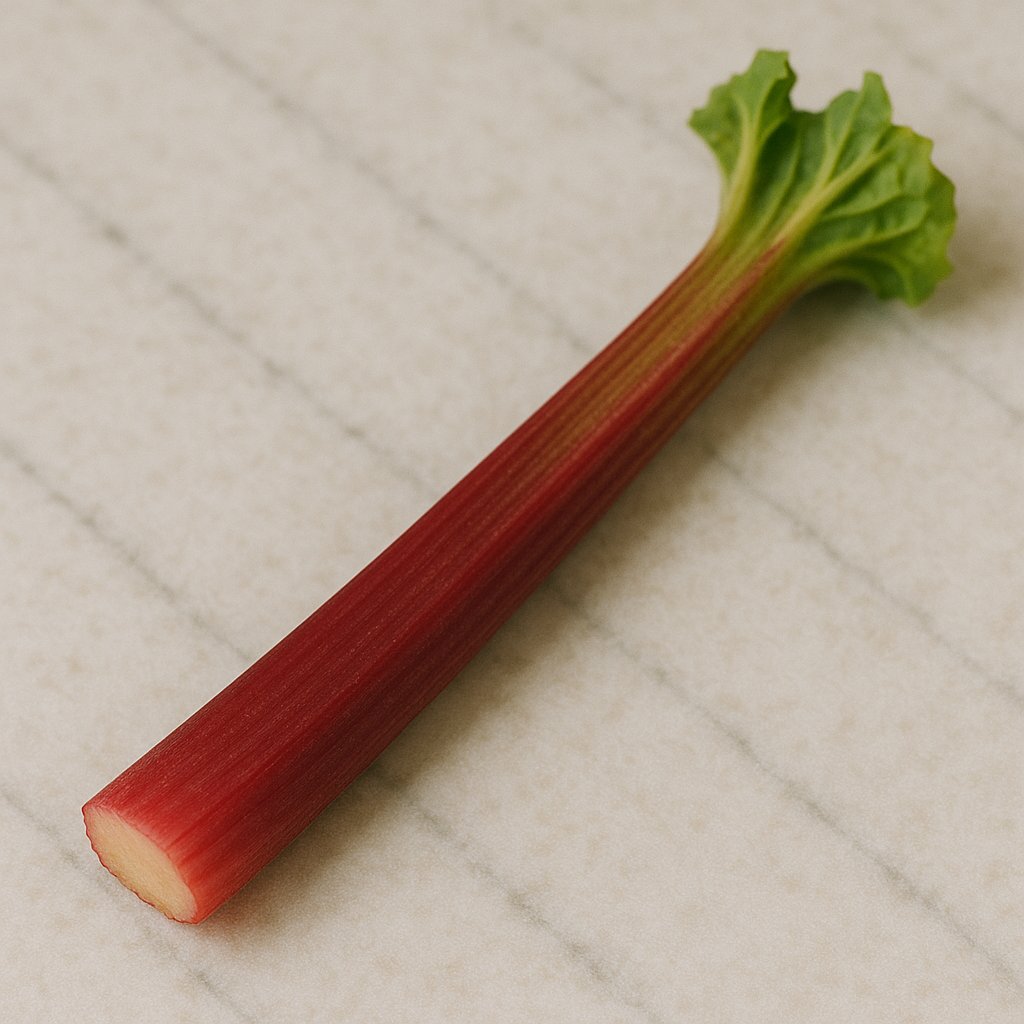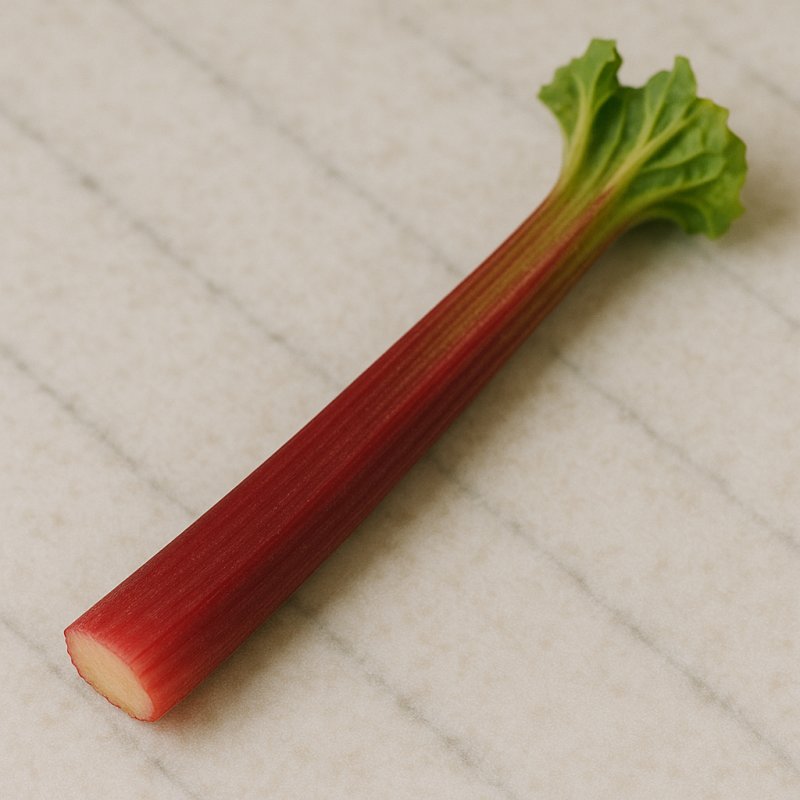
Availability and types of rhubarb
Rhubarb is an interesting plant that many people use for compote, cakes or syrup. Although it often appears fruit-like, botanically rhubarb is classified as a vegetable. Its long, juicy stalks are edible, while the large green leaves are not – they contain too many natural compounds that are unhealthy for us. To help you get to know rhubarb, let's look at where it comes from, when it's available to buy and which varieties and types exist.
Origin: where does rhubarb come from?
Rhubarb originally comes from regions in Asia, especially Tibet and China. There it was used long ago as a medicinal plant. In the 18th and 19th centuries it came to Europe and spread quickly because it is hardy and grows well in cool climates. Today rhubarb is cultivated in many countries, for example in Germany, the Netherlands, Poland, Great Britain and parts of Northern Europe. It is also popular in North America.
Availability: when is fresh rhubarb available?
Rhubarb is a true seasonal vegetable. You mainly get it in spring and early summer. The key times are:
- First harvest: usually from April, sometimes already late March depending on the weather.
- Peak season: from April to June selection is largest and quality particularly good.
- End of season: traditionally rhubarb is harvested until 24 June (St John's Day). After that the plants are given a rest so they can build strength for the next year.
Outside the season you can sometimes find rhubarb frozen or processed, for example as compote, jam or juice. Fresh