Menu & categories

Rhubarb

Tart-fresh stem vegetable for compote and cakes

Wiki about rhubarb Nutri-Score A Vegan Yes Gluten-free Yes Lactose-free Yes Nut-free Yes
NUTRITION / 100 g
21 kcal 0.9 g Protein 4.5 g Kohlenhydrate 0.2 g Fett

Introduction

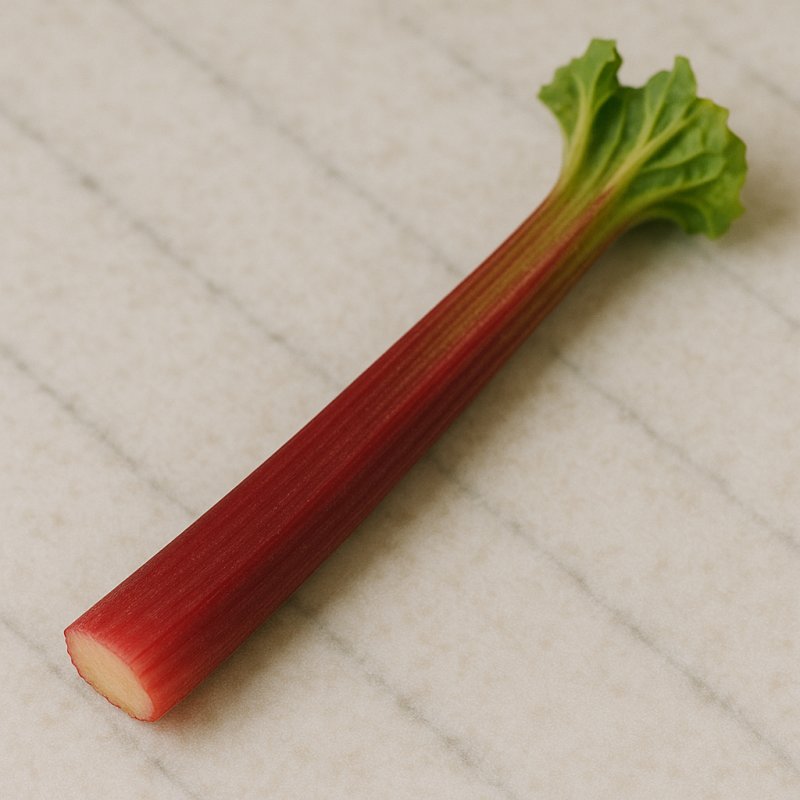
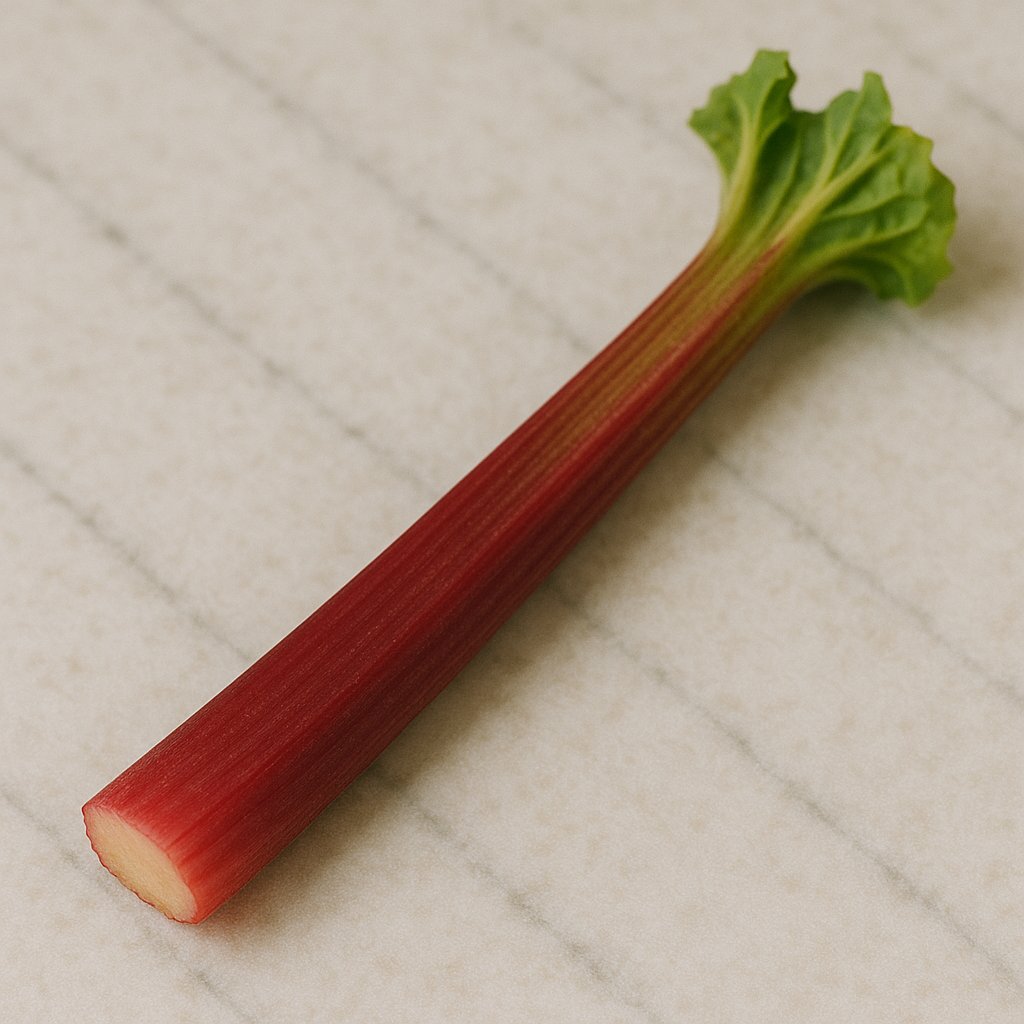
Fresh rhubarb stalks
Rhubarb for me is more than just a seasonal ingredient – it's a scent from childhood, a crisp spring greeting, and a culinary wake-up call after long, gray winters. I'm 35, I live and work as an editor in Europe, and every year I look forward to the moment when the first rosy stalks appear at the market. This plant, which is so often treated like a fruit in the kitchen, combines refreshing acidity, a delicate fruitiness and an astonishing versatility in both sweet and savory recipes. That's exactly what makes rhubarb an ingredient I keep rediscovering.

When I think of rhubarb, I don't just see compote and cakes. I see my grandmother's garden, where the hardy plant reliably shoots up every year. My colleague Jonas swears by pairing rhubarb with ginger and vanilla – “It takes the acidity to a new level,” he claims, and to be honest he's right. A friend from Denmark roasts the stalks with honey and a little cardamom in the oven. She serves the result warm over skyr. It's as simple as it is brilliant: soft, tart, creamy, with aromatic depth. Anecdotes like these show how versatile the ingredient is interpreted in European kitchens.

Botanically, rhubarb (Rheum rhabarbarum) belongs to the knotweed family. Its large, poisonous leaves are left out of the kitchen, while the colorful stalks – from pale green through salmon to ruby red – take the stage. Interestingly, red varieties often taste milder, while green ones are stronger and more acidic. These nuances can be used deliberately, for example when aiming for a balance between sweetness and acidity. Generally, the classic harvest season in Europe ends around St John's Day at the end of June so the plants can regenerate.

In terms of taste, rhubarb provides a precise, clear acidity that asserts itself in pastries as well as in drinks or savory dishes. I love it in a quick pan sauce for seared salmon – it sounds eccentric, but it works surprisingly well because of the fresh, acid-driven structure. Another colleague

Availability & types

Availability and types of rhubarb

Rhubarb is an interesting plant that many people use for compote, cakes or syrup. Although it often appears fruit-like, botanically rhubarb is classified as a vegetable. Its long, juicy stalks are edible, while the large green leaves are not – they contain too many natural compounds that are unhealthy for us. To help you get to know rhubarb, let's look at where it comes from, when it's available to buy and which varieties and types exist.

Origin: where does rhubarb come from?

Rhubarb originally comes from regions in Asia, especially Tibet and China. There it was used long ago as a medicinal plant. In the 18th and 19th centuries it came to Europe and spread quickly because it is hardy and grows well in cool climates. Today rhubarb is cultivated in many countries, for example in Germany, the Netherlands, Poland, Great Britain and parts of Northern Europe. It is also popular in North America.

Availability: when is fresh rhubarb available?

Rhubarb is a true seasonal vegetable. You mainly get it in spring and early summer. The key times are:

  • First harvest: usually from April, sometimes already late March depending on the weather.
  • Peak season: from April to June selection is largest and quality particularly good.
  • End of season: traditionally rhubarb is harvested until 24 June (St John's Day). After that the plants are given a rest so they can build strength for the next year.
Outside the season you can sometimes find rhubarb frozen or processed, for example as compote, jam or juice. Fresh
Details & nutrition

Property Value
Unit g
Average weight per piece 150
Calories per 100 21
Protein per 100 0.9
Carbohydrates per 100 4.5
Sugar per 100 1.1
Fat per 100 0.2
Saturated fat per 100 0.05
Monounsaturated fat 0.03
Polyunsaturated fat 0.07
Fiber per 100 1.8
Vitamin C (mg) per 100 8
Vitamin D (IU) per 100 0
Calcium (mg) per 100 86
Iron (mg) per 100 0.2
Nutri-Score A
CO₂ footprint 0.2 kg CO2e/kg
Origin Seasonal in Europe, spring to early summer
Gluten-free Yes
Lactose-free Yes
Nut-free Yes
Vegan Yes
Note High oxalic acid content; do not eat the leaves. Better tolerated when combined with calcium-rich foods.

Technical & scientific information

Rhubarb (Rheum rhabarbarum) is an herbaceous, perennial crop plant in the knotweed family (Polygonaceae). Botanically notable are the robust, often reddish leaf stalks, while the large, heart-shaped leaf blades are not suitable for consumption because of their content of oxalic acid and other antinutritional substances. The plant forms underground rhizomes from which new shoots emerge in spring. Originally native to Central Asia, rhubarb reached Europe in the 18th and 19th centuries as a useful plant and became established both in agricultural systems and in home gardens.

The morphological structure of rhubarb is characterized by fleshy, cylindrical to slightly angular leaf stalks whose color can vary from green through pink to ruby red. The coloration correlates with pigment profiles, particularly anthocyanins such as cyanidin- and pelargonidin-derived compounds. While color influences sensory expectations, chemical-analytical studies show that sugar content differs only moderately between green and red varieties; the perceived sweetness impression results primarily from the interplay of acids, aroma compounds and texture.

Components and nutritional profile: rhubarb is low in calories (typically about 20–25 kcal/100 g) and high in water. It provides fiber, small amounts of protein and minerals such as potassium, calcium, magnesium and traces of iron and manganese. Vitamins are present in moderate concentrations, especially vitamin K, vitamin C and folate. Characteristic is the high acid content (mainly malic and citric acid), complemented by oxalic acid, which can form insoluble calcium oxalate with calcium. This results in sensory and nutritional particularities: the pronounced tart taste and the potential influence on calcium bioavailability. Oxalic acid content varies by cultivar and tissue and is highest in the leaves; only the stalks are edible.

Phytochemistry and secondary plant compounds:</

Wiki entry for: rhubarb
Active now: 18 visitors of which 2 logged-in members in the last 5 minutes