Menu & categories

Remoulade

Creamy spiced sauce for sandwiches, fish and fries

Wiki about remoulade Nutri-Score D Vegan No Gluten-free Yes Lactose-free Yes Nut-free Yes
NUTRITION / 100 g
650 kcal 1 g Protein 3 g Kohlenhydrate 70 g Fett

Introduction

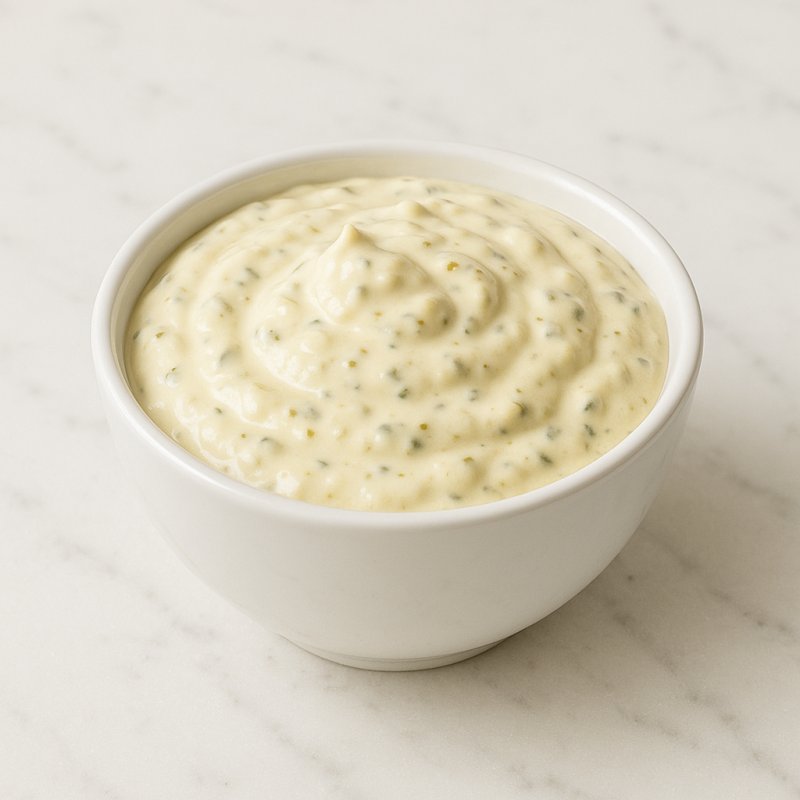
Bowl of remoulade
As a 35-year-old editor from Europe, I connect remoulade with a mix of everyday life and culinary curiosity. In my childhood it was often on the table at family gatherings, alongside crispy potatoes, fish fillets and pickled cucumbers. Today I encounter it in delicatessens as well as in street-food stalls. What is fascinating about remoulade: it combines tradition, versatility and flavor in a creamy, aromatic cloak. It is more than just a sauce – it is a familiar anchor in European cuisine and at the same time an invitation to add new accents.

Remoulade is classically based on an emulsion of oil and egg yolk or on mayonnaise, refined with sour, piquant and herbaceous components. Typical ingredients are pickles, capers, mustard and fresh herbs like parsley, dill or tarragon. Depending on the region, shallots, anchovies, lemon juice or cornichons are added. In Northern Europe the sauce is often sweet-and-sour and a bit more punchy; in France it appears more elegant, with a fine herb freshness; in Denmark it must not be missing on the classic hotdog or with fried fish. A colleague of mine swears by seasoning remoulade with a hint of curry — a small deviation from the original that wonderfully rounds off the aroma.

Anyone who wants to understand remoulade should consciously perceive its texture and character: creamy but not heavy; fresh but not intrusive; flavorful but harmonious. The balance between fat and acidity is what makes it appealing. I remember a recipe development where we spent two days adjusting only the ratio of lemon to pickle brine. In the end half a teaspoon more acid was enough and the sauce suddenly seemed more lively. That shows how sensitive remoulade behaves — and how much small tweaks can make a difference.

In modern kitchens remoulade has established itself as a universal companion. It goes well with fish, seafood, cold roasted meat, fries, vegetable sticks, sandwiches and burgers. It is especially popular as a dip for crispy fish: a friend from the North likes to say that “a fried fish without remoulade is like rain without puddles” —

Availability & types

Availability and types of remoulade

Remoulade is a spicy, creamy sauce made from a base like mayonnaise or yogurt and refined with herbs, spices and often finely chopped vegetables. It is known and liked in many countries, especially in Europe. For you as a 12-year-old: imagine remoulade as a clever, flavorful sister of mayonnaise that brings extra taste. It pairs great with fish, fries, sandwiches, eggs and salads.

Origin
The roots of remoulade lie in France. The word “rémoulade” probably comes from the French “rémola,” which is linked to horseradish or a spice mixture. In French cuisine remoulade was originally a cold sauce with herbs like tarragon and parsley, often served with celery salad or fish. From there it spread to Denmark, Germany and other countries and acquired new variants — depending on which ingredients were popular and readily available locally.

Everyday availability
Remoulade is very easy to get today:

  • Supermarkets: In the chilled section or on the shelf with sauces and mayonnaise. Branded products are available in tubes, bottles or jars.
  • Delicatessens: Often offer high-quality or special varieties with distinctive herbs or organic ingredients.
  • Snack bars and restaurants: Especially with fish sandwiches, fries, hotdogs (e.g. in Denmark) or sandwiches.
  • Online shops: Large selection of international variants, e.g. Danish, French or vegan remoulades.
  • Homemade: You can whip up remoulade in minutes — ideal if you want to know exactly what’s in it.
Shelf life and storage
Purchased remoulade often keeps unopened for several months. After opening, store it in the fridge and use within a few weeks. Homemade remoulade is more delicate and keeps,
Details & nutrition

Property Value
Unit g
Average weight per piece 15
Calories per 100 650
Protein per 100 1
Carbohydrates per 100 3
Sugar per 100 2
Fat per 100 70
Saturated fat per 100 8
Monounsaturated fat 42
Polyunsaturated fat 20
Fiber per 100 0
Vitamin C (mg) per 100 0
Vitamin D (IU) per 100 0
Calcium (mg) per 100 10
Iron (mg) per 100 0.2
Nutri-Score D
CO₂ footprint 2.1 kg CO2e/kg
Origin EU
Gluten-free Yes
Lactose-free Yes
Nut-free Yes
Vegan No
Note Classic remoulade is based on mayonnaise with herbs and pickles; recipes may vary. Vegan only in egg-free versions.

Technical & scientific information

Remoulade is an emulsified, cold seasoning sauce of European origin, made from a base of oil, egg yolk or whole egg, acidic components and thickening and flavoring ingredients. Technologically it belongs to oil-in-water emulsions and is important in culinary, industrial and food-chemical contexts. It is characterized by a creamy mouthfeel, a balanced acid-fat profile and plant inclusions such as pickles, capers, herbs or onions that provide texture and aromatic complexity.

Definition and classification:
Remoulade is often understood as an enhanced variant of mayonnaise but with a noticeably broader aromatic profile. Classical variants use egg yolk as the emulsifier, while industrial versions often use pasteurized whole egg or egg yolk powder. Plant-based emulsifiers like modified starch, soy protein or mustard flour are common, especially in vegan formulations. Fat content typically ranges between 35 and 80%, depending on the target profile (light vs. delicate). pH values usually lie between 3.5 and 4.2, which contributes to microbiological stability.

Historical context and variants:
Originally from the French culinary canon, remoulade has strongly diversified regionally: Danish remoulade often contains chopped pickles, turmeric for a yellowish color and sweet‑sour notes; German variants tend toward finely diced vegetables and herb accents; in Belgium and France there are varieties with tarragon, capers and anchovies. Modern interpretations use yogurt portions or aquafaba as egg substitutes to achieve texture and stability with reduced cholesterol.

Food technology and emulsion chemistry:
The stability of remoulade relies on the finely dispersed oil phase in a continuous aqueous phase. Key parameters are the shear energy during emulsification, droplet size distribution (typically 1–10 µm in the finished product), emulsifier concentration and viscosity management. Mustard oils, lecithins and proteins adsorb at the oil‑water surface

Wiki entry for: remoulade
Active now: 15 visitors of which 2 logged-in members in the last 5 minutes